Synopsis
Ichigo Kurosaki lives with his father and two younger sisters in Karakura Town, where his ability to see spirits is treated as an inconvenient but familiar part of daily life. That routine ends when Rukia Kuchiki enters his home while hunting a Hollow, a dead human soul transformed into a predatory monster. After Rukia is wounded, Ichigo accepts her Soul Reaper power and defeats the creature, but he absorbs far more energy than either expected. With Rukia unable to return immediately to her duties, he becomes Karakura Town’s substitute Soul Reaper.
The early chapters alternate between supernatural cases and the lives of Ichigo’s classmates. Orihime Inoue, Yasutora Sado, and Uryū Ishida become increasingly involved as spiritual disturbances awaken or reveal their own abilities. Ichigo also meets Kisuke Urahara, the deceptively casual proprietor of a shop supplying supernatural goods, and Kon, an artificial soul whose comic behavior conceals the unsettling purpose for which his kind was created.
Rukia’s unauthorized transfer of power brings the laws of Soul Society down upon her. Ichigo and his companions cross into the afterlife to prevent her punishment, entering a fortified society governed by noble families and defended by the thirteen divisions of the Gotei 13. The rescue mission introduces captains, lieutenants, rival institutions, and long-standing political tensions, transforming the series from episodic ghost hunting into a succession of large-scale supernatural wars without abandoning Ichigo’s central determination to protect the people before him.
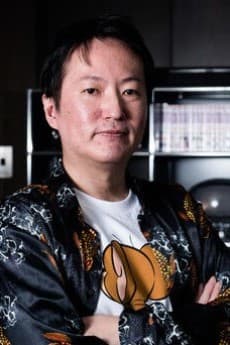
Created by
Characters
 MAIN
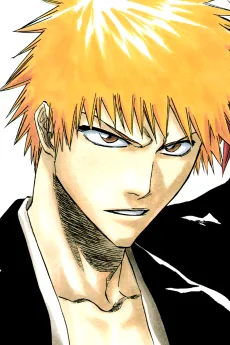
MAINIchigo Kurosaki
BleachA sharp temper, startling spiritual power, and an instinctive need to protect others define Ichigo Kurosaki, the orange-haired protagonist of Bleach. Although his ability to see gh
 MAIN
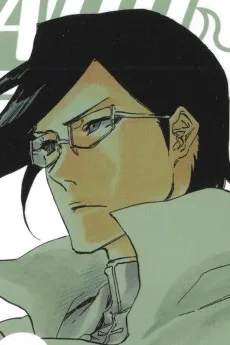
MAINUryuu Ishida
BleachUryū Ishida is a Quincy archer and one of Ichigo Kurosaki’s classmates in Bleach. He enters the conflict in Karakura Town determined to surpass Ichigo and defend the honor of the n
 MAIN
MAINOrihime Inoue
BleachOrihime Inoue is one of the main characters in *Bleach* and a close friend of Ichigo Kurosaki. Initially introduced as an ordinary high school student with an optimistic personalit
 SUPPORTING
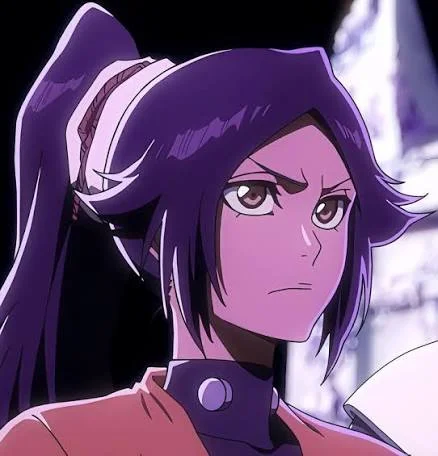
Yoruichi Shihouin
BleachYoruichi Shihouin operates from the Human World as a master of stealth, hand-to-hand combat, and high-speed movement. The 156 cm former Soul Reaper captain can also transform into
 MAIN
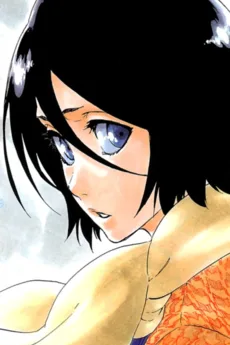
MAINRukia Kuchiki
BleachRukia Kuchiki serves in the Gotei 13’s Thirteenth Division, patrolling the Human World and purifying Hollows with her ice-type Zanpakutō, Sode no Shirayuki. Her encounter with Ichi
 SUPPORTING
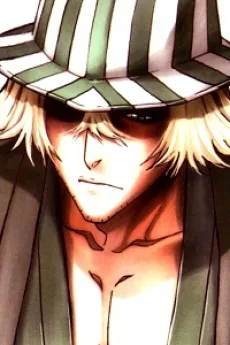
Kisuke Urahara
BleachKisuke Urahara is one of the central supporting characters in *Bleach*. Introduced as the eccentric owner of the Urahara Shop in Karakura Town, he initially appears to be a quirky
 MAIN
MAINRenji Abarai
BleachRenji Abarai is one of the principal supporting characters in *Bleach* and a Soul Reaper of the Gotei 13. Introduced as the lieutenant of the 6th Division, he initially appears as
 MAIN
MAINYasutora Sado
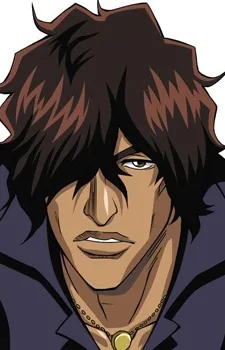
BleachYasutora "Chad" Sado is one of the main supporting characters in *Bleach* and one of Ichigo Kurosaki's closest friends. Despite his imposing physique and intimidating appearance, C
Community
No posts yet.
Be the first to postWorks
Manga & TV
6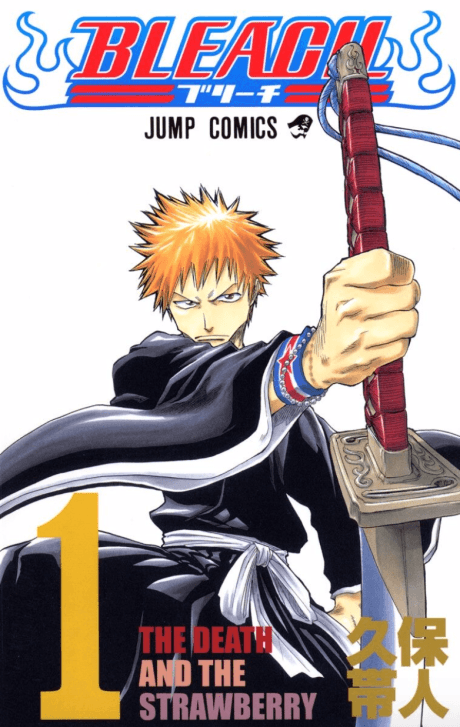
Bleach
Finished
Bleach
Finished
BLEACH: Thousand-Year Blood War
Finished
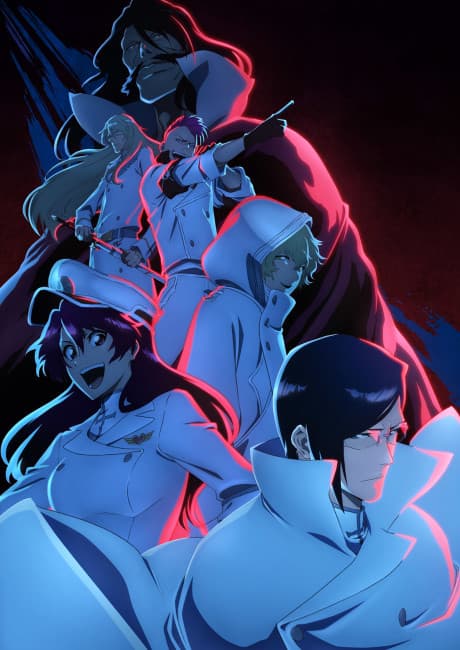
BLEACH: Thousand-Year Blood War - The Separation
Finished
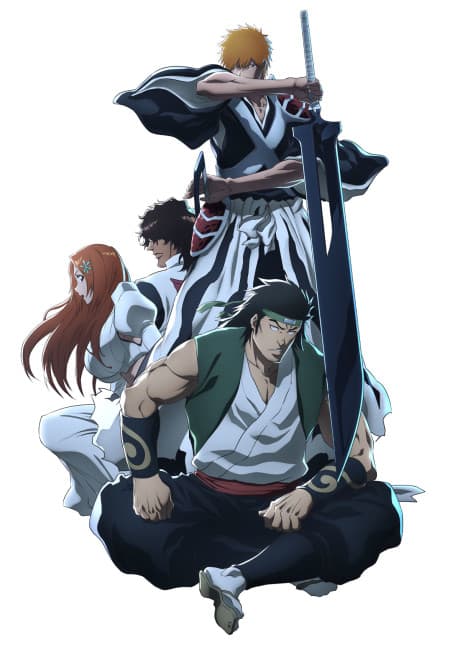
BLEACH: Thousand-Year Blood War - The Conflict
Finished
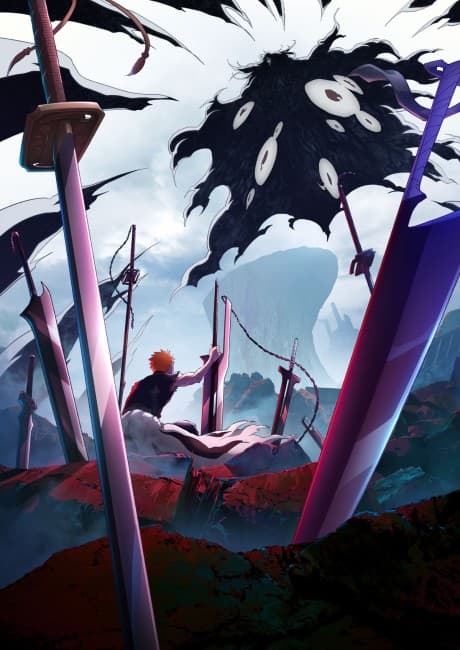
BLEACH: Thousand-Year Blood War - The Calamity
Releasing
Movies
4
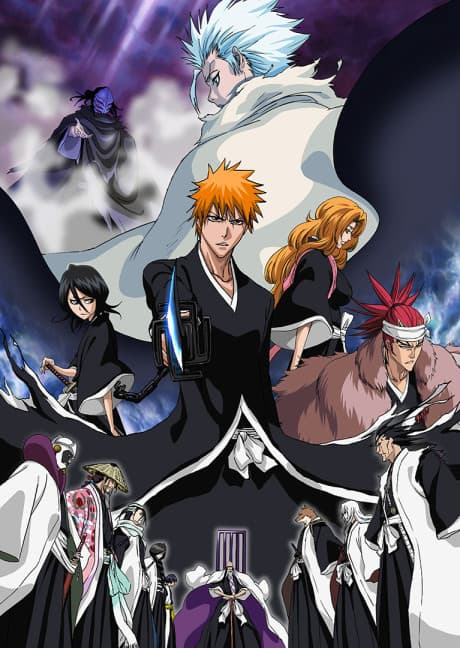
Latest Volumes
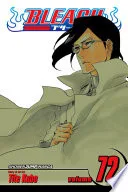
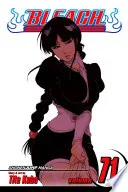
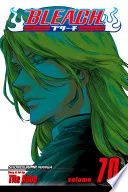
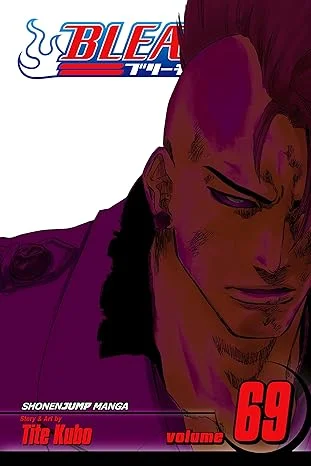
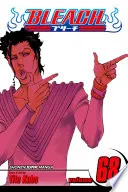
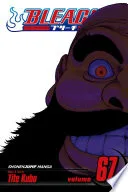
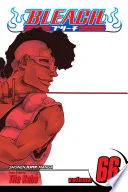

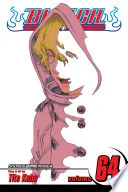


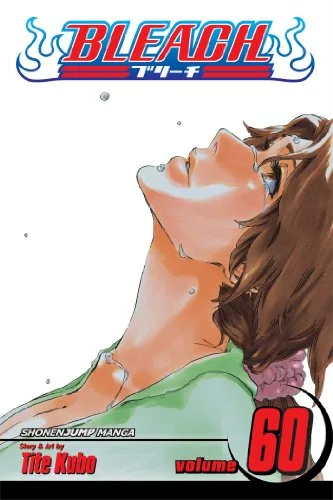
About Bleach
Karakura Town teenager Ichigo Kurosaki has seen ghosts for as long as he can remember. When a predatory spirit attacks his family and Soul Reaper Rukia Kuchiki is injured defending them, Ichigo takes her powers and inherits the work of guiding the dead to the afterlife while destroying corrupted souls called Hollows.
Bleach follows Ichigo from street-level encounters with spirits into conflicts spanning the Human World, Soul Society, and other supernatural realms. His expanding circle includes classmates with unusual abilities, veteran Soul Reapers, artificial souls, and former enemies, all drawn into disputes over the balance between life and death.
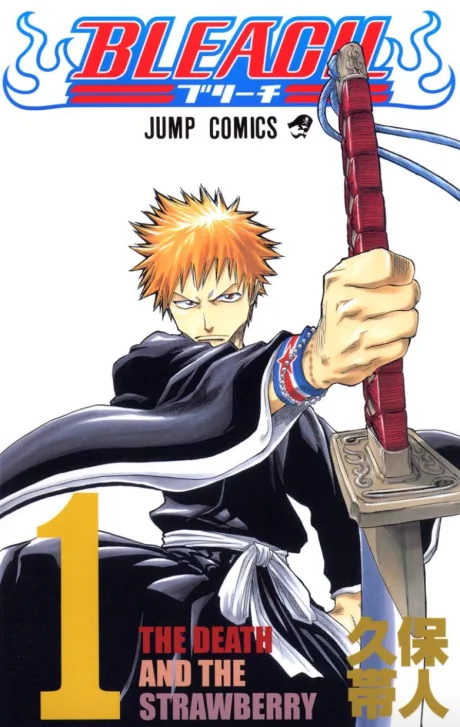
Tite Kubo serialized the manga in Weekly Shōnen Jump from 2001 to 2016, producing 74 collected volumes. Its stark character designs, fashion-conscious presentation, large ensemble, and elaborate sword-based combat made it one of the magazine’s defining international successes of the 2000s, commonly grouped with One Piece and Naruto as the era’s “Big Three.”
Quick Facts
Themes & Style
Bleach repeatedly examines obligation: duties imposed by family, military rank, inherited identity, friendship, and personal conscience. Ichigo rarely pursues power for prestige. He becomes stronger because another person is endangered, yet each new responsibility exposes a larger system whose rules may conflict with that protective instinct. Rukia’s divided loyalties, Uryū’s Quincy heritage, and the rigid hierarchy of Soul Society extend the same tension across characters raised under very different expectations.
Names, clothing, weapons, and silhouettes carry much of the characterization. Kubo favors broad areas of black and white, sparse backgrounds during decisive moments, and figures posed with the visual confidence of fashion illustration. Chapter title pages frequently place the cast in modern clothing unrelated to the immediate setting, while poems printed at the beginning of collected volumes condense a featured character’s fears or desires into a few lines.
Combat centers on spiritual pressure, tactical mismatches, and the revelation of hidden abilities. Soul Reapers wield sentient swords called Zanpakutō, each with a released form reflecting its owner, while other groups use distinct systems of spiritual combat. Battles often unfold through reversals: an apparent advantage is answered by a newly disclosed property, transformed weapon, or change in the combatants’ understanding of one another.
The tone moves freely between horror, deadpan comedy, school life, and extended warfare. Grotesque Hollows and severe institutional violence coexist with exaggerated arguments and visual gags. Kubo’s dialogue is often terse at climactic points, allowing an expression, weapon design, or interrupted action to carry information that a longer explanation might otherwise provide.
Publication History
Before Bleach, Tite Kubo created the short-lived series Zombiepowder., which ran in Weekly Shōnen Jump from 1999 to 2000. He subsequently developed a story about Soul Reapers wearing black robes, initially building concepts around Rukia before shifting the principal viewpoint to Ichigo. Bleach began serialization in Weekly Shōnen Jump on August 7, 2001.
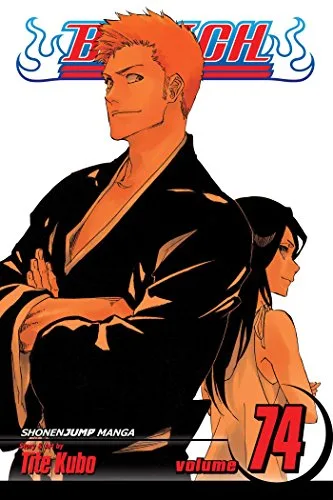
Shueisha collected the manga in 74 tankōbon volumes. Volume 1 was released in Japan on January 5, 2002, and the final volume followed on November 4, 2016. The complete run comprises 686 regularly numbered chapters together with 12 negative-numbered chapters, for a total of 698. Shueisha also issued anniversary compilations and several official character books containing profiles, artwork, and supplementary material.
Viz Media began the North American collected edition in July 2004. Bleach later ran in the company’s English-language Shonen Jump magazine and moved to the digital Weekly Shonen Jump Alpha service, where new chapters appeared near their Japanese publication dates. Viz released the 74th English volume in October 2018 and also published the manga in three-in-one omnibus editions and box sets.
The weekly serialization ended on August 22, 2016, after approximately fifteen years. Kubo returned to the setting in 2021 with the anniversary one-shot “No Breaths from Hell,” set after the main series. The chapter introduced a new supernatural disturbance but was published as a standalone work rather than the beginning of a formally announced regular serialization.
Reception & Legacy
Bleach received the 50th Shogakukan Manga Award in the shōnen category in 2005. Its worldwide circulation has surpassed 130 million copies, placing it among the highest-circulating manga series. Individual volumes regularly appeared near the top of Japanese sales rankings during the manga’s principal publication period.
The series became a major part of Weekly Shōnen Jump’s international expansion in the 2000s. Alongside One Piece and Naruto, it acquired the unofficial “Big Three” label used by English-speaking readers and anime audiences for the three long-running Jump properties that dominated overseas discussion during that period.
Kubo’s visual approach proved especially influential. The black robes of the Soul Reapers, individualized Zanpakutō, faction insignia, typography, and extensive casual-fashion illustrations gave the franchise an identity readily adapted to merchandise, games, music packaging, and promotional collaborations. Characters such as Ichigo, Rukia, Byakuya Kuchiki, and Sōsuke Aizen became widely recognizable beyond the manga’s readership.
Critical discussion has often praised the clarity of Kubo’s character silhouettes, his command of high-impact page composition, and the scale of the Soul Society storyline. Later portions of the weekly run drew more divided responses over pacing, repeated battle reversals, and the compressed conclusion. The subsequent anime adaptation of the final arc expanded several sequences with Kubo’s participation, renewing interest in material that had originally appeared near the end of the manga’s demanding weekly schedule.
Bleach also helped establish a durable model for supernatural action series built around competing organizations, individualized weapon releases, and extensive supporting casts. Its terminology, transformations, and faction debates remain prominent in anime and manga fan culture years after the original serialization concluded.
Adaptations
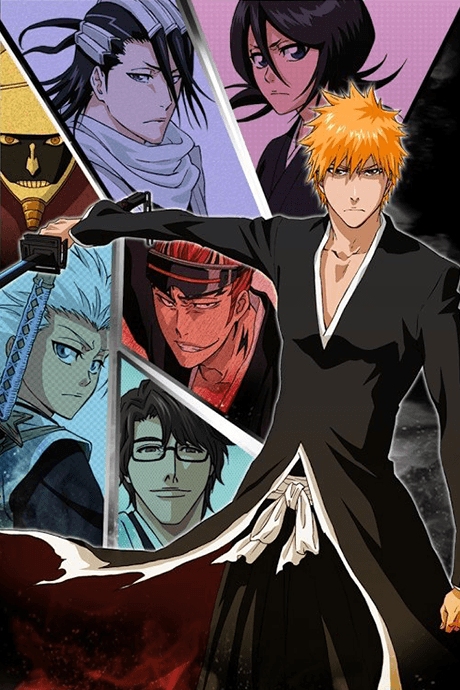
Studio Pierrot adapted the manga as the television series Bleach, which began broadcasting on TV Tokyo in October 2004. The original run produced 366 episodes and ended in March 2012 after adapting through the Lost Agent storyline. Because it aired while the manga was still in progress, the production included several anime-original arcs and standalone episodes alongside its manga-based material.
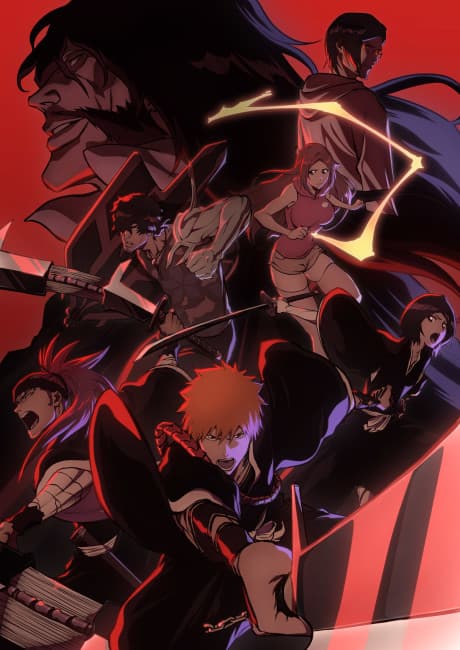
The concluding manga storyline received a later adaptation as Bleach: Thousand-Year Blood War, which premiered in October 2022. Tomohisa Taguchi directed the new production, with Kubo involved in supervision and in supplying additional material. The project was divided into multiple cours and restored cast and staff members from the earlier anime, including composer Shirō Sagisu and character designer Masashi Kudō.
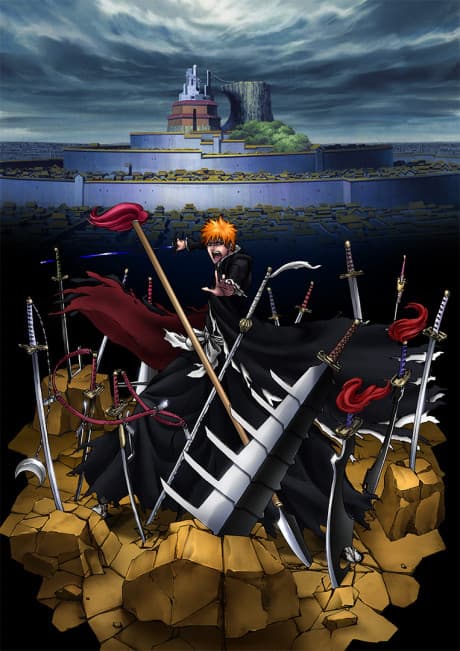
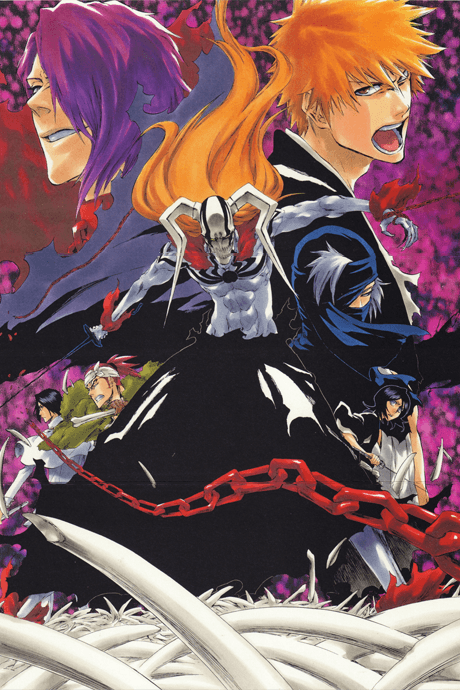
Four animated theatrical features were produced: Bleach the Movie: Memories of Nobody, Bleach the Movie: The DiamondDust Rebellion, Bleach the Movie: Fade to Black, and Bleach the Movie: Hell Verse. The franchise also received original video animations and the short anniversary production “Burn the Witch #0.8” belongs to Kubo’s related Burn the Witch setting rather than serving as a direct Bleach adaptation.
Warner Bros. Japan released a live-action Bleach film in 2018, directed by Shinsuke Satō and starring Sōta Fukushi as Ichigo. The film concentrates on the manga’s earliest substitute Soul Reaper material, adapting Ichigo’s meeting with Rukia and several conflicts from the opening volumes.
The manga has generated light novels written by several authors, including Bleach: The Death Save the Strawberry, Bleach: Spirits Are Forever with You, and the three-volume Bleach: Can’t Fear Your Own World. Kubo supplied illustrations and varying degrees of story or setting input. Additional adaptations include the long-running Rock Musical Bleach stage productions, radio dramas, guidebooks, and character songs.
More than twenty Bleach-branded video games have appeared across consoles, handheld systems, computers, and mobile devices. Major lines include the Bleach: Heat the Soul fighting games, Bleach: The Blade of Fate, Bleach: Dark Souls, Bleach: Soul Resurrección, Bleach: Brave Souls, and Bleach: Rebirth of Souls. Ichigo, Rukia, Aizen, and other cast members have also appeared in crossover games based on Weekly Shōnen Jump properties.
Full Credits
- Tite KuboOriginal CreatorCharacter DesignKey Animation ReferenceAnimation SupervisorChief Supervisor
- Noriyuki AbeDirector
- Masashi KudouCharacter DesignChief Animation Director (ED)Key Animation (OP)
- Shirou SagisuMusic
- Michiko YokoteScript
- Natsuko TakahashiScript
- Keiji GotouKey Animation
- Minoru MuraoKey AnimationStoryboard (eps 310, 320, 326)
- Wendee LeeADR Director (English)
- Fumiko OrikasaTheme Song Performance (ED)
- Takanori NishikawaTheme Song Performance
- Kirk ThorntonADR Director (English)
- Masakazu MoritaTheme Song Performance (ED)
- Mary Elizabeth McGlynnADR Director (English)
- Thiago KeplmairADR Director (Brazilian Portuguese)
Studios
- Studio PierrotAnime
- PIERROT FILMSAnime
- AniplexAnime
- TV TokyoAnime