Appears In

Quick Facts
| Gender | Male |
| Age | 15-29 |
| Also known as | Ichi-nii, Substitute Soul Reaper, Itsygo, Ryoka Boy |
| Role | MAIN |
| Series | Bleach |
| Full Name | Ichigo Kurosaki |
| Japanese Name | 黒崎一護 |
| Gender | Male |
| Species | Human |
| Birthday | July 15 |
| Age | 15 at debut; 17 after the time skip |
| Height | 174 cm at debut; 181 cm after the time skip |
| Hair Color | Orange |
| Eye Color | Brown |
| Occupation | Student; Substitute Soul Reaper |
| Affiliation | Karakura Town; Soul Society |
| Zanpakutō | Zangetsu |
| Father | |
| Mother | |
| Sisters | |
| Mentors | |
| Spouse | [Orihime Inoue](#spoiler) |
| Child | [Kazui Kurosaki](#spoiler) |
| Debut | Manga Chapter 1, “Death & Strawberry” |
Contents
Background
Background
Ichigo is born and raised in Karakura Town as the eldest child of Isshin and Masaki Kurosaki. From an early age, he possesses the ability to perceive spirits clearly. This sensitivity distinguishes him from most humans but does not initially give him a formal understanding of the afterlife. He treats ghosts much as he treats living people: as individuals whose dignity should be respected and whose suffering should not be ignored.
As a young child, Ichigo is cheerful, strongly attached to his mother, and eager to make her proud. His disposition changes after Masaki is killed while protecting him from the Hollow Grand Fisher. Believing that his actions led to her death, Ichigo internalizes profound guilt. He becomes more guarded and confrontational, while his childhood desire to protect his mother expands into a determination to protect as many people as possible.
His supernatural life begins in earnest when Rukia enters the Kurosaki home while pursuing a Hollow. After she is gravely wounded defending his family, Ichigo accepts her Soul Reaper power and transforms to defeat the creature. Rather than receiving only a portion of her strength, he absorbs nearly all of it, revealing the exceptional spiritual potential he already carries.
Ichigo subsequently serves as Karakura Town’s Substitute Soul Reaper, purifying Hollows and guiding ordinary souls to Soul Society. His position brings him into contact with Soul Reapers, Quincy, spiritually empowered humans, Arrancar, Fullbringers, and other beings whose histories are closely connected to his own. His unusual nature is eventually explained by his inheritance from multiple spiritual lineages: Human, Soul Reaper, Quincy, and Hollow.
Personality
Personality
Ichigo’s severe expression, blunt speech, and readiness to fight often make him appear antisocial. He is nevertheless compassionate, observant, and deeply attentive to other people’s emotional states. He frequently notices distress that others conceal and will intervene even when the person in question refuses to ask for help.
Protection is the central principle of Ichigo’s personality. His name itself becomes associated in his mind with safeguarding others, and he measures his strength according to whether he can prevent loss. This creates both courage and vulnerability. He is willing to challenge overwhelming enemies, but each failure can damage his confidence because he interprets defeat not merely as personal weakness, but as an inability to fulfil his responsibility.
Ichigo dislikes authority that demands obedience without earning trust. He argues openly with captains, disregards rigid customs, and judges individuals by their conduct rather than their status. Despite this rebellious attitude, he does not seek to destroy Soul Society’s system or replace its leaders. His involvement is personal: he intervenes when its decisions threaten people he believes should be protected.
He is also academically capable and more disciplined than his delinquent appearance suggests. Aware that his naturally orange hair attracts suspicion, he works hard enough at school to prevent teachers from using his grades as another reason to criticize him. Around close friends, his seriousness is balanced by sarcasm, embarrassment, and an easily provoked temper, particularly when subjected to Isshin’s theatrical behaviour or the eccentric methods of his mentors.
Appearance
Appearance
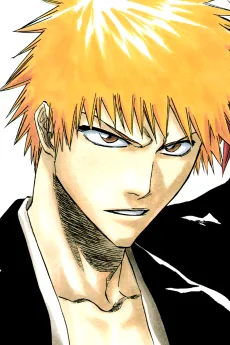
Ichigo is recognizable by his naturally bright orange hair, brown eyes, tall frame, and habitual scowl. At the beginning of the series, he has a lean teenage build and wears the uniform of Karakura High School: a white shirt, grey trousers, and a jacket that he does not always wear formally. His appearance leads strangers and school authorities to mistake him for a delinquent, an assumption reinforced by his readiness to confront bullies.
In Soul Reaper form, Ichigo wears a black shihakushō with white underlayers and sandals. Unlike most Soul Reapers, he initially carries an oversized, unreleased sword without understanding the nature of a Zanpakutō. After training with Urahara, his weapon becomes the large cleaver-like Zangetsu, typically carried across his back with a cloth wrapping that functions as a strap.
His Bankai radically alters both weapon and clothing. Zangetsu becomes a compact black blade, while Ichigo’s shihakushō gains a long, fitted black coat with a torn or ragged hem. Later transformations introduce Hollow masks, altered robes, armour-like features, horns, and changes to the shape or number of his swords. These visual shifts reflect the changing balance among the spiritual powers within him.
After the time skip, Ichigo is taller and more mature in appearance. His hair is slightly shorter, and his features are more angular. In adulthood, he retains his orange hair and generally dresses in casual civilian clothing while working as a translator.
Abilities & Powers
Abilities & Powers
Ichigo possesses an immense natural reserve of spiritual energy. Even before becoming a Substitute Soul Reaper, he can see ghosts with unusual clarity and attract spiritually aware beings. His power is initially difficult to control, often leaking outward and influencing people who spend significant time near him.
As a Soul Reaper, Ichigo excels in direct sword combat. His style is largely self-taught and lacks the formal refinement of academy-trained fighters, but it is supported by strong instincts, adaptability, physical power, and an ability to learn under extreme pressure. He frequently studies an opponent’s rhythm during combat and develops counters while the battle is still underway.
Speed is one of his defining strengths. Through training with Yoruichi, he learns high-speed movement and becomes capable of keeping pace with captain-class Soul Reapers. His Bankai concentrates his power into a smaller weapon and compresses his spiritual energy around his body, dramatically increasing his speed and close-range combat ability.
Ichigo also demonstrates extraordinary endurance. He continues fighting through severe wounds, spiritual exhaustion, broken bones, and psychological trauma. His recovery is enhanced at various points by his spiritual constitution and Hollow power, although he remains vulnerable to sufficiently powerful attacks and can be incapacitated when his spiritual balance is disrupted.
His spiritual perception allows him to locate individuals across great distances, distinguish between different types of spiritual pressure, and sense the emotional character behind an opponent’s blade. This sensitivity contributes to his unusual capacity to understand enemies through combat, even when he rejects their goals.
Ichigo’s powers originate from several interconnected sources. His father is a former Soul Reaper captain, while his mother was a pure-blood Quincy infected by the experimental Hollow White. The Hollow fused with the Soul Reaper power Ichigo inherited, becoming the authentic foundation of his Zanpakutō. The figure Ichigo initially knows as Zangetsu is instead the manifestation of his Quincy power, taking the appearance of Yhwach from an earlier age.
Ichigo’s Quincy heritage grants him instinctive spiritual absorption, defensive manifestations resembling Blut Vene, and the capacity to interact with Quincy power. His Hollow nature provides heightened aggression, regeneration under exceptional circumstances, mask-based amplification, and access to transformations that blur the distinction between Soul Reaper and Hollow.
By reconciling these conflicting aspects of himself, Ichigo reaches a more complete understanding of Zangetsu. His reforged Zanpakutō initially takes the form of two blades, representing the balance between his Hollow–Soul Reaper power and his Quincy power. He later combines these aspects in battle, producing a horned form whose attacks integrate Soul Reaper, Hollow, and Quincy abilities.
Named Techniques
Named Techniques
-
Getsuga Tenshō: Ichigo channels spiritual energy through Zangetsu and releases it from the blade as a powerful crescent-shaped projectile. It is his principal offensive technique and can be used at varying ranges and intensities.
-
Black Getsuga Tenshō: A darker version of Getsuga Tenshō associated with Tensa Zangetsu and Ichigo’s Hollow power. It possesses greater density and destructive force than his standard attack.
-
Bankai — Tensa Zangetsu: Ichigo compresses his expanded power into a compact black sword and close-fitting coat. Rather than creating a massive external effect, the Bankai enhances his speed, reflexes, and close-combat performance.
-
Hollow Mask: Ichigo manifests a white Hollow mask over his face, sharply increasing his strength, speed, durability, and spiritual pressure. Early use is limited by the risk of losing control to his inner Hollow.
-
Getsuga Jūjishō: A cross-shaped attack created by releasing intersecting Getsuga Tenshō slashes from Ichigo’s two reforged blades.
-
Gran Rey Cero: After consciously integrating his Hollow heritage, Ichigo can release a Cero strengthened with blood, combining it with his own spiritual power.
-
Horn of Salvation: A merged state in which Ichigo deliberately awakens his Hollow power while retaining conscious control. The transformation produces a single horn and significantly amplifies his offensive abilities.
-
Mugetsu: The culmination of the Final Getsuga Tenshō. Ichigo becomes the embodiment of Getsuga itself and releases an enormous wave of darkness, but using the technique causes him to lose his Soul Reaper power.
-
Fullbring — Clad-Type Manifestation: Ichigo draws power from the Substitute Soul Reaper badge, first producing a weapon-like energy projection and later a black, armour-like covering. The Fullbring is stolen before reaching its intended potential, though traces of it remain integrated into his restored Soul Reaper power.
Relationships
Relationships
Ichigo’s relationship with Masaki is the emotional foundation of his protective nature. As a child, he views his mother as the centre of his world and feels safe whenever she is present. Her death leaves him convinced that he failed the person who protected him most. Learning the full circumstances of her death eventually allows him to understand that her sacrifice arose from love rather than his supposed inadequacy.
Isshin presents himself as an absurd, overdramatic father who attacks Ichigo without warning and turns family conversations into physical comedy. Beneath this behaviour, he carefully observes his son’s emotional condition and gives him space when direct intervention would be harmful. When Isshin reveals that he is a former captain of the Thirteenth Court Guard, he becomes an important source of truth about Ichigo’s parents and inherited powers.
Ichigo is protective of Karin and Yuzu, although both sisters resist being treated as helpless. Yuzu manages much of the household and openly worries about him, while Karin shares his stubbornness and possesses considerable spiritual awareness. Ichigo attempts to shield them from his supernatural conflicts, but his unexplained injuries and disappearances repeatedly expose the distance created by secrecy.
Rukia is the catalyst for Ichigo’s transformation and one of the most influential people in his life. She gives him Soul Reaper power, teaches him the basic responsibilities of the role, and helps him translate grief into purposeful action. Ichigo’s decision to invade Soul Society and prevent her execution demonstrates how completely he rejects the idea of abandoning someone who once saved him. Their bond is defined by mutual trust, blunt encouragement, and an ability to restore one another’s resolve.
Urahara serves as Ichigo’s first major combat mentor. His training methods are dangerous and frequently manipulative, but they force Ichigo to discover his own Soul Reaper power rather than depend on Rukia’s. Ichigo remains suspicious of Urahara’s secrecy, particularly when the former captain withholds information that directly affects his friends, yet he repeatedly relies on Urahara’s knowledge.
Yoruichi trains Ichigo in high-speed movement and supervises his attempt to achieve Bankai within three days. Her confidence encourages him to challenge limits considered fixed even within Soul Society. She also acts as a practical guide to its institutions and personalities, balancing Urahara’s indirect methods with more immediate instruction.
Orihime Inoue is a close friend whose compassion and emotional resilience profoundly affect Ichigo. He becomes fiercely protective of her, while she offers support without reducing him to his strength. Her abduction leads him into Hueco Mundo, but their relationship is not entirely one-sided: Orihime repeatedly protects, heals, and steadies him. They eventually marry and have a son, Kazui.
Uryū Ishida begins as a rival who challenges Ichigo’s understanding of Soul Reapers and Hollows. Their competition develops into dependable friendship, although neither readily describes it that way. Their contrasting backgrounds—Substitute Soul Reaper and Quincy—create ideological tension, but they repeatedly entrust their lives to one another. Uryū’s apparent alignment with the Wandenreich deeply wounds Ichigo, who refuses to accept that their bond can be discarded without explanation.
Yasutora Sado, usually called Chad, is one of Ichigo’s closest and most reliable friends. Their bond begins when Ichigo defends Chad from attackers and protects the coin Chad received from his grandfather. Chad’s calm temperament balances Ichigo’s volatility, and both share a belief that strength should be used for another person’s sake.
Renji Abarai first appears as an enemy enforcing Rukia’s arrest. After Ichigo defeats him and demonstrates his determination to save her, Renji becomes an ally and recurring rival. Their relationship combines argument, competition, and genuine respect, particularly because each recognizes the other’s refusal to abandon Rukia.
Byakuya Kuchiki represents the authority Ichigo opposes during the Soul Society conflict. Their battle is not simply a contest of strength: Ichigo challenges Byakuya’s willingness to place law above his sister’s life. Byakuya’s eventual acknowledgment of Ichigo marks a turning point in both men’s understanding of duty.
Ichigo’s relationship with Zangetsu is central to his identity. He initially treats Zangetsu as a source of power that must be summoned in battle, only gradually learning that a Zanpakutō reflects its wielder’s soul. The revelation that both the Quincy manifestation and the inner Hollow are components of Zangetsu forces Ichigo to stop rejecting parts of himself he fears or misunderstands.
His inner Hollow is initially perceived as a hostile double determined to seize control. The figure embodies Ichigo’s combat instinct, aggression, and fear of becoming a danger to others. Their struggle intensifies whenever Ichigo doubts himself. Ichigo’s later acceptance that the Hollow is not an external invader but a genuine part of his power resolves one of his deepest internal divisions.
Grimmjow Jaegerjaquez becomes one of Ichigo’s most persistent combat rivals. Grimmjow seeks battle for dominance and personal satisfaction, whereas Ichigo initially insists that he fights only to rescue Orihime. Their confrontation forces Ichigo to acknowledge that he also possesses a genuine desire to defeat powerful opponents, even though that impulse does not replace his protective motives.
Ulquiorra Cifer challenges Ichigo’s faith in emotion, human connection, and the intangible concept of the heart. Their conflict pushes Ichigo into one of his most frightening transformations. After losing conscious control and mortally wounding Ulquiorra, Ichigo is horrified by the unequal conclusion and demands that the battle be made fair, demonstrating that victory without moral agency has no value to him.
Sōsuke Aizen is the architect of many conflicts that shape Ichigo’s development. Aizen treats him as both an experiment and a potential obstacle, claiming to have influenced many events surrounding his growth. Ichigo ultimately confronts him not from institutional loyalty but because Aizen threatens his home, friends, and the balance among worlds.
Yhwach is connected to Ichigo through his Quincy heritage and represents a threat to the boundaries that sustain life and death. The appearance of Ichigo’s Quincy manifestation reflects Yhwach’s younger form, while Yhwach’s power over Quincy blood makes Ichigo vulnerable to manipulation during the struggle over the Soul King.
Story Role
Story Role
Ichigo serves as the principal viewpoint through which the hidden spiritual world is introduced. His early duties as a Substitute Soul Reaper establish the functions of Hollows, Zanpakutō, Soul Society, and soul burial. Because Ichigo begins outside Soul Society’s institutions, he approaches their customs without reverence and allows the narrative to question rules that established characters have learned to accept.
During the Soul Society conflict, Ichigo changes from a local protector into a figure capable of confronting captain-class Soul Reapers. His attempt to rescue Rukia draws together his human friends, sympathetic Soul Reapers, and former exiles. The invasion exposes corruption surrounding her execution and indirectly contributes to major changes within the Thirteenth Court Guard.
The Arrancar conflict broadens his struggle from external opponents to internal instability. As Aizen’s forces target Karakura Town, Ichigo must control his Hollow power without surrendering his identity to it. His journey to Hueco Mundo places him against enemies who mirror different aspects of instinct, isolation, despair, sacrifice, and the desire for battle.
After defeating Aizen, Ichigo experiences ordinary life without the spiritual awareness that had defined him. The Fullbring conflict explores his dependence on the ability to protect others and the desperation produced by losing it. His restoration as a Soul Reaper reaffirms that the bonds he formed in Soul Society have become reciprocal: the people he once saved now act to restore him.
In the Thousand-Year Blood War, Ichigo becomes central to the conflict between Soul Society and the Wandenreich. His mixed ancestry gives him the potential to influence the structure of the spiritual realms and makes him one of the individuals considered capable of replacing the Soul King. His final battles require him to understand his parents, accept every source of his power, and fight alongside former enemies against Yhwach.
After the war, Ichigo returns to the Human World rather than accepting a permanent position in Soul Society. Years later, he is married to Orihime, works as a translator, and raises Kazui while remaining connected to his Soul Reaper allies.
Character Development
Character Development
Ichigo’s development is structured around changing definitions of strength. At first, he believes strength means defeating the immediate threat before it harms someone. Each major failure complicates that belief. He learns that power without understanding can become destructive, that protecting everyone is not always possible, and that refusing help can endanger the same people he wants to save.
His fear of the inner Hollow reflects a broader rejection of impulses he considers violent or inhuman. Ichigo tries to suppress this part of himself, creating an internal struggle in which fear weakens his ability to fight. Training with the Visored teaches him to control the Hollow mask, but genuine resolution comes only when he accepts that his conflicting powers are not separate contaminants—they are all parts of him.
The loss of his Soul Reaper abilities after using Mugetsu forces Ichigo to live without the role that gave purpose to his grief. Although he attempts to embrace normality, he becomes frustrated by his inability to perceive or assist the spiritual world. This vulnerability makes him susceptible to manipulation during the Fullbring conflict and reveals how closely he has tied his self-worth to usefulness.
Learning the truth about Masaki, Isshin, White, and his Quincy inheritance transforms his relationship with Zangetsu. Instead of demanding power from a spirit he only partially understands, Ichigo acknowledges both manifestations as Zangetsu and accepts responsibility for wielding their combined strength. His declaration that he will fight through his own power represents not independence from Zangetsu, but recognition that the blade and wielder are inseparable.
By the conclusion of the main story, Ichigo has not abandoned his desire to protect. He has learned to share that responsibility with others and to accept that vulnerability does not invalidate strength. His return to family life suggests that protection is no longer defined solely by battle; it also exists in presence, trust, work, friendship, and parenthood.
Etymology
Etymology
Ichigo’s given name is written with the kanji 一護. The first character, 一, means “one,” while 護 carries the sense of protection or guardianship. Within the story, the name is associated with Masaki’s wish that he protect one thing or one person, an idea that becomes the foundation of his personal philosophy.
“Ichigo” is also a homophone for the Japanese word for strawberry, 苺. This wordplay appears in the title of the first manga chapter, “Death & Strawberry,” and in recurring strawberry motifs associated with him.
The syllables “ichi” and “go” can additionally be read as the numbers one and five. References to fifteen appear throughout Ichigo’s visual symbolism, including clothing and room decorations. His birthday, July 15, reinforces the association.
“Kurosaki” is written 黒崎. 黒 means “black,” while 崎 refers to a cape, promontory, or projecting landform. The surname’s first character also complements the black clothing traditionally worn by Soul Reapers.
Trivia
Trivia
-
Ichigo’s natural orange hair frequently causes strangers to assume that he dyes it and contributes to his reputation as a delinquent.
-
He performs well academically partly because he does not want teachers to use his appearance as justification for treating him unfairly.
-
Before his spiritual battles dominate his life, Ichigo studies martial arts and develops considerable physical strength in his human body.
-
His bedroom contains prominent references to the number fifteen, reflecting the numerical wordplay in his name.
-
Ichigo’s Substitute Soul Reaper badge serves as identification, a means of separating his soul from his body, a Hollow-detection device, and later the focus of his Fullbring.
-
Unlike most Soul Reapers, Ichigo does not graduate from the Shin’ō Academy and receives much of his training through dangerous, accelerated methods.
-
His Zanpakutō is unusual in remaining in a constant released state for much of the story, although later revelations complicate the accuracy of that description.
-
Ichigo’s theme of crossing boundaries extends to nearly every aspect of his identity: human and spirit, living and dead, Soul Reaper and Hollow, as well as Soul Reaper and Quincy.
Quotes
Quotes
“I’m not fighting because I want to win.” — Explaining that his purpose is to protect.
“If fate is a millstone, then we are the grist.” — Reflecting on humanity’s struggle against fate.
“Zangetsu… you are me.” — Accepting the nature of his power.
In Other Media
In Other Media
The television anime closely follows Ichigo’s central role in the manga while expanding his participation through anime-original story arcs. These include conflicts involving the Bount, the Kasumiōji family, the Zanpakutō spirits, and the Reigai. Although these narratives are not part of the original manga continuity, they generally preserve his established role as a protector drawn into threats against friends, Karakura Town, or Soul Society.
Ichigo is the protagonist of the animated films Bleach: Memories of Nobody, Bleach: The DiamondDust Rebellion, Bleach: Fade to Black, and Bleach: Hell Verse. Each film places him against an original supernatural crisis, often emphasizing his connection with Rukia, his family, or the responsibilities of a Substitute Soul Reaper.
In the 2018 live-action film adaptation, Ichigo is portrayed by Sota Fukushi. The film condenses material from the early Substitute Soul Reaper storyline, focusing on his first encounter with Rukia, his conflict with Grand Fisher, and the arrival of Soul Society’s agents.
Ichigo appears as a playable or featured character in numerous games based on the franchise, including the Heat the Soul, Blade Battlers, Soul Resurrección, Brave Souls, Rebirth of Souls, and Mirrors High titles. His available forms commonly include his early Shikai, Bankai, Hollow mask, Full Hollow transformation, Final Getsuga Tenshō, Fullbring-enhanced appearance, and Thousand-Year Blood War abilities.
He also represents the series in crossover games featuring characters from Weekly Shōnen Jump, including Jump Super Stars, Jump Ultimate Stars, J-Stars Victory VS, and Jump Force. These appearances position him alongside protagonists from other major manga franchises.
Reception
Reception
Ichigo has consistently ranked among the most popular characters in Bleach. He placed first in several official Weekly Shōnen Jump character polls, although later polls saw characters such as Tōshirō Hitsugaya surpass him. Zangetsu has also ranked highly in official polls focused on Zanpakutō.
Critical discussion of Ichigo often emphasizes the difference between his motivation and that of many action-manga protagonists. He does not pursue a prestigious title, political office, or universally recognized status; his goals remain centred on protecting a relatively small circle that continually expands as he forms new bonds. This personal motivation, combined with his confrontational visual design and emotional restraint, has made him one of the most recognizable action heroes associated with twenty-first-century manga.
His orange hair, black Bankai attire, Hollow mask, and oversized sword have become enduring visual symbols of the franchise. Official English-language promotion continues to present him as one of anime’s enduring heroes, while his voice actors—Masakazu Morita in Japanese and Johnny Yong Bosch in English—remain closely associated with the role.
Ichigo’s broader cultural prominence is tied to Bleach’s position as one of the internationally successful manga and anime franchises of its era. His appearances in crossover games, merchandise, live-action adaptation, and renewed animation of the Thousand-Year Blood War have maintained his visibility beyond the original manga’s serialization.
Related Characters
 MAIN
MAINOrihime Inoue
BleachOrihime Inoue is a teenage girl who lives by herself in Karakura Town, being a close friend of Ichigo Kurosaki. Orihime is alot of things, being friendly, kind, sensitive, and humo
 MAIN
MAINUryuu Ishida
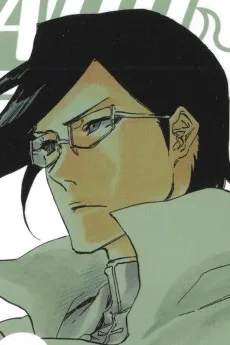
BleachUryuu is a friend of Ichigo Kurosaki and one of the last surviving Quincy. Uryuu is generally shy and quiet, but tries harder to act cool when other people are around. In addition,
 MAIN
MAINYasutora Sado
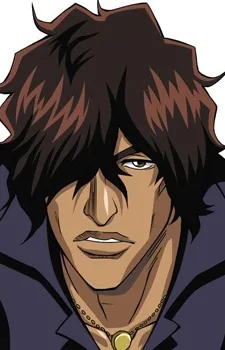
BleachYasutora Sado, or as his friends call him, Chad, is a teenager of Mexican descent who is close friends with Ichigo Kurosaki. He is extremely tall and appears to be much older than
 MAIN
MAINRenji Abarai
BleachIn terms of personality, Renji is same as any other Shinigami. His personality varies from cocky and eccentric, to being depressed after he's defeated, all the way to being clueles
 SUPPORTING
Byakuya Kuchiki
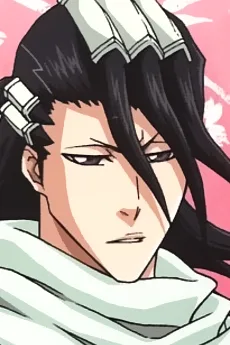
BleachByakuya Kuchiki is the captain of the 6th Division in the Gotei 13 and the 28th head of the noble Kuchiki clan. His lieutenant is Renji Abarai. Byakuya Kuchiki is a part of one of
 SUPPORTING
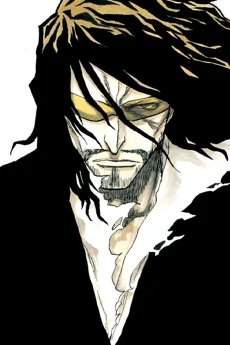
Zangetsu
BleachIchigo's zanpakutou is named Zangetsu. The spirit of Zangetsu resembles a 30 to 40 year-old man, and Ichigo calls him "old man" as a result. Zangetsu is portrayed as wise and calm
 SUPPORTING
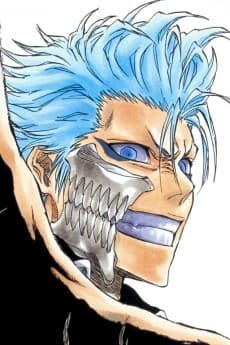
Grimmjow Jaegerjaquez
BleachGrimmjow appears to be a laid back and irreverent individual, but this scruffy appearance hides an impulsive, excessively violent personality and a lethally short temper. He is blu
 SUPPORTING
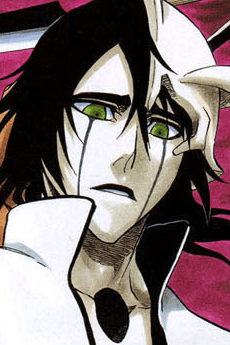
Ulquiorra Cifer
BleachUlquiorra is a male arrancar with a melancholic appearance. Ulquiora is the 4th ranked espada. Ulquiorra is also analytical; during his and Yammy's first visit to the human world,
 SUPPORTING
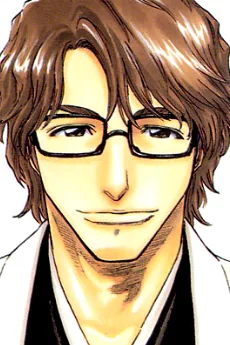
Sousuke Aizen
BleachAizen is a polite, soft-spoken intellectual, often addressing his subordinates by their given names. He rarely shows any sign of alarm or distress and often has entire situations p
 SUPPORTING
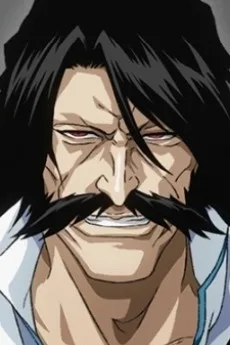
Yhwach
BleachThe current leader of the Vandenreich, the military organization of the Quincies. About 1000 years ago Yamamoto Genryuusai failed to kill him, although the circumstances remain unk
 SUPPORTING
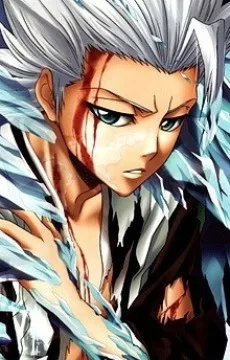
Toushirou Hitsugaya
BleachHitsugaya comes from Junrinan, District 1 of Rukongai. There, he lived with an old woman (said to be his grandmother), Momo Hinamori, and possibly other people. Little else is know