Appears In
Quick Facts
| Gender | Male |
| Role | MAIN |
| Series | Berserk |
| Height | 178 cm |
| Age | Approximately 24 |
| Gender | Male |
| Weight | 66 kg |
| Eye Color | Blue |
| Hair Color | White |
| Voice Actor (JP) | Toshiyuki Morikawa (1997 anime); Takahiro Sakurai (Golden Age films, 2016 anime) |
| Voice Actor (EN) | Kevin T. Collins (1997 anime, Golden Age films); Steve Staley (2016 anime) |
| Affiliation | Band of the Hawk |
| Aliases | White Hawk |
| Debut | "Golden Age (4)" |
Contents
Background
Background
Griffith grows up without noble status or inherited power. From childhood, he becomes fascinated by a distant castle and develops the conviction that he will someday possess a kingdom of his own. Rather than accepting the social position into which he was born, he builds a mercenary company capable of giving him the military and political influence needed to move upward.
The Band of the Hawk begins with other young fighters drawn to Griffith's confidence and ambition. His charisma is matched by practical ability: he is an excellent swordsman, understands battlefield tactics and can assess people well enough to place them where their talents will be most useful. Under his leadership, the Hawks win engagements against larger and better-equipped forces and gradually establish a reputation far beyond that of ordinary mercenaries.
Casca becomes one of his earliest devoted followers after Griffith intervenes when a nobleman attempts to assault her. Instead of simply rescuing her, he gives her a sword and the opportunity to defend herself. Casca subsequently joins the Hawks and eventually becomes one of Griffith's senior commanders.
Griffith later encounters Guts, a wandering mercenary whose extraordinary swordsmanship immediately captures his interest. After Guts defeats several Hawks, Griffith challenges him personally and wins. He declares that Guts belongs to him, bringing the fiercely independent swordsman into a group he initially has no interest in joining.
Guts eventually becomes captain of the Hawks' Raiders and one of the most important elements of Griffith's military success. With Griffith directing strategy and Guts breaking through enemy positions, the Band of the Hawk becomes instrumental in Midland's Hundred-Year War against Tudor.
Griffith's ambitions extend beyond military prestige. He carefully navigates court politics, develops connections with the royal family and understands that victory on the battlefield is only one stage in acquiring the political legitimacy necessary to approach his ultimate dream.
Personality
Personality
Griffith is composed, charismatic and extraordinarily ambitious. He speaks about acquiring a kingdom not as a fantasy but as a concrete objective, and much of his appeal comes from the certainty with which he treats an apparently impossible goal.
He is highly skilled at understanding other people. Griffith recognizes useful abilities quickly, adjusts his behavior to different social environments and can inspire intense loyalty without constantly asserting authority. Many soldiers follow him because participation in his dream gives their own dangerous lives a larger sense of purpose.
His emotional self-control is usually formidable. Griffith can speak calmly during military disasters, negotiate with nobles who despise his common origins and conceal personal reactions when revealing them would weaken his position. That restraint makes the rare occasions when his emotions overpower judgment particularly significant.
The dream of a kingdom governs his moral reasoning. Griffith accepts that soldiers will die following him and understands that each step toward his goal rests partly on the lives of people who believed in him. Rather than pretending those sacrifices do not matter, he treats abandoning the dream as something that would retroactively make those deaths meaningless.
His relationship with Guts exposes an important contradiction. Griffith tells Princess Charlotte that he considers a true friend someone who possesses a dream of his own and would oppose him if necessary rather than merely following his ambitions. Yet when Guts begins acting according to precisely that standard, Griffith finds the prospect of losing him extremely difficult to accept.
Griffith is also deeply possessive. His early declaration that Guts belongs to him initially sounds consistent with his treatment of a newly recruited soldier, but his later reactions make clear that Guts occupies a psychological position unlike that of the other Hawks.
His public image and private emotions therefore differ substantially. The commander seen by his followers appears almost destined for greatness; beneath that composure is a young man whose certainty depends partly on maintaining control over the path he has chosen.
Appearance
Appearance
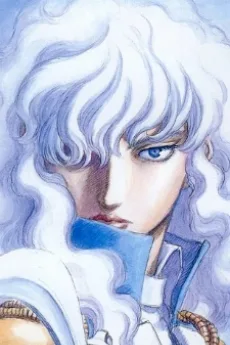
Griffith is approximately 178 cm tall and weighs about 66 kg according to the Berserk Official Guidebook, which estimates his age at 24 during later material. His build is lean and athletic rather than heavily muscular.
He has long white hair, blue eyes and delicate facial features that are repeatedly described as unusually beautiful. His appearance distinguishes him immediately from the rougher mercenaries surrounding him and contributes significantly to his almost aristocratic presence before he acquires any formal noble status.
During the Golden Age, Griffith commonly wears polished armor suited to a cavalry commander. His equipment often incorporates white or silver tones, reinforcing the hawk imagery associated with both him and his mercenary company.
His primary weapon is a slender saber. The relatively light blade suits his speed, precision and technical swordsmanship, contrasting with the increasingly massive weapons favored by Guts.
Griffith's posture and expressions are usually controlled. He rarely appears physically hurried or emotionally disordered, even during battle, which strengthens the impression among his followers that he is always several steps ahead.
After becoming Femto, Griffith's appearance changes into a dark, inhuman form associated with the God Hand. The transformation replaces the luminous White Hawk imagery of his human life with black, wing-like armor and an avian silhouette.
Following his later incarnation in the physical world, Griffith again possesses a human-looking body closely resembling his Golden Age appearance. His restored form retains the white hair, fine features and almost supernatural beauty associated with his earlier self.
Abilities & Powers
Abilities & Powers
Before any supernatural transformation, Griffith is already one of the most capable human warriors and commanders shown during the Golden Age. His greatest strengths are swordsmanship, tactical intelligence and the ability to turn individual talent into coordinated military force.
His saber technique emphasizes precision and speed. Griffith can redirect heavier weapons, exploit small openings and defeat opponents whose raw physical strength exceeds his own. His ability to defeat Guts during their first encounters demonstrates the difference between technical control and straightforward power.
He is also an accomplished cavalry fighter. Griffith commands from horseback during large engagements and is comfortable transitioning between strategic leadership and direct combat.
His tactical ability is arguably more important than his personal swordsmanship. Griffith repeatedly defeats armies with superior numbers or resources by identifying terrain advantages, psychological weaknesses and opportunities for rapid assault.
He understands political strategy almost as well as warfare. Court alliances, military prestige and public reputation are treated as interconnected components of the same campaign toward legitimacy.
His charisma functions as a practical form of power. The Hawks are willing to endure extraordinary risks because Griffith gives them confidence that their individual struggles contribute to something greater. Even outsiders frequently respond to him with fascination, admiration or unease.
As Femto, Griffith acquires supernatural abilities far beyond anything available to his human incarnation. His power operates through the astral nature of the God Hand and makes ordinary physical attacks largely irrelevant against him.
Femto demonstrates the ability to manipulate or distort space and physical trajectories. During the Eclipse, attacks directed toward him can be deflected without ordinary bodily movement, and he exhibits control over forces that Guts cannot counter through conventional swordsmanship.
After returning to the physical world, Griffith retains abilities associated with his supernatural existence while presenting himself outwardly in human form. His presence can influence astral beings, and his relationship to causality allows events surrounding him to unfold with an extraordinary sense of inevitability.
Griffith can command apostles despite their normally predatory nature. Under his leadership, beings that would ordinarily slaughter humans indiscriminately function as disciplined soldiers alongside human forces.
His later connection to the World Tree and astral transformation of the world further expands the scale on which his existence influences reality. Falconia's rise cannot be separated from the supernatural conditions created around Griffith's return.
Named Techniques
Named Techniques
Griffith does not use a formally named human sword style. His combat ability is based on technical mastery, speed and tactical judgment rather than announced techniques.
Saber Swordsmanship is his principal human fighting method. Griffith uses a light curved blade for rapid thrusts, cuts, parries and counterattacks, often redirecting stronger opponents rather than contesting their strength directly.
Mounted Swordsmanship combines his saber technique with cavalry movement, allowing him to command from horseback while remaining personally effective in combat.
Battlefield Command is Griffith's defining non-dueling skill. He coordinates infantry, cavalry and specialized units around precise strategic objectives rather than relying on numerical superiority.
Psychological Warfare appears repeatedly in his campaigns and political maneuvering. Griffith understands how fear, confidence and reputation affect both enemy armies and allies.
Spatial Manipulation describes Femto's ability to influence physical trajectories and the space around attacks, making conventional attempts to strike him extraordinarily difficult.
Apostle Command allows Griffith's later army to coordinate human soldiers and supernatural apostles under one military structure, suppressing conflicts that would ordinarily make such cooperation impossible.
Relationships
Relationships
Guts becomes the person who most visibly disrupts Griffith's emotional control. Griffith defeats Guts after their first meeting and declares ownership over him, but Guts gradually becomes far more than a useful soldier. As captain of the Raiders, Guts repeatedly achieves objectives upon which Griffith's military plans depend, while Griffith increasingly treats him with an informality and personal attention uncommon in his other relationships.
Griffith's definition of friendship becomes central to Guts's decision to leave the Hawks. Griffith tells Charlotte that someone who merely follows another person's dream cannot be an equal; a true friend must possess an ambition of his own. Guts takes those words seriously, defeats Griffith in a duel and leaves to discover his own purpose. Griffith's inability to stop him produces one of the rare moments when his normally rigid self-control collapses.
The relationship becomes openly antagonistic after Griffith sacrifices the Band of the Hawk and becomes Femto. Guts' later life is shaped by hatred of Griffith, while Griffith insists after his incarnation that Guts no longer emotionally affects him. Their subsequent encounters repeatedly complicate that claim.
Casca becomes one of Griffith's earliest followers after he gives her the means to defend herself from a predatory nobleman. Casca devotes herself to Griffith's dream and becomes one of his most dependable commanders. Griffith values her competence, although he does not reciprocate the romantic feelings she develops toward him in the manner she hopes.
The Eclipse permanently destroys their former relationship. After becoming Femto, Griffith sexually assaults Casca while Guts is restrained nearby, an act intertwined with the trauma that shapes both survivors afterward.
Princess Charlotte develops a strong romantic attachment to Griffith during his rise through Midland. Griffith deliberately cultivates intimacy with Princess Charlotte because marriage into the royal family would move him closer to his kingdom, although his behavior also suggests genuine tenderness toward her at various points.
After Guts leaves, Griffith impulsively seeks Charlotte and sleeps with her, abandoning his usual political caution. The encounter leads directly to his arrest and torture when the king discovers it.
Following Griffith's later return, Charlotte recognizes him as the White Hawk she has awaited and publicly supports him. Their relationship becomes central to his political legitimacy in the new order surrounding Falconia.
Judeau is a loyal member of the original Hawks and one of Griffith's most perceptive soldiers. Judeau supports Griffith's dream while also recognizing emotional tensions among Griffith, Guts and Casca that the commander rarely acknowledges directly.
Pippin serves Griffith as one of the Hawks' strongest fighters. Pippin's quiet loyalty exemplifies the devotion Griffith inspires among soldiers who believe that following him offers a future beyond ordinary mercenary work.
Corkus joins the Hawks after initially leading a group of thieves. Corkus embraces Griffith's rise because it offers social advancement that would otherwise have been impossible for someone of his background.
Rickert is one of the youngest original Hawks. Rickert initially idolizes Griffith like many members of the company. After learning what happened during the Eclipse and seeing what Griffith has become, Rickert refuses to join his new order and openly rejects him.
Zodd first encounters Griffith and Guts as an overwhelmingly powerful apostle. Zodd recognizes the Crimson Beherit carried by Griffith and warns Guts that Griffith's destiny will eventually bring catastrophe to those around him.
[In the later story, Zodd serves Griffith directly as one of the most powerful warriors in the reborn Band of the Hawk. His submission emphasizes the extraordinary authority Griffith possesses over apostles.](#spoiler)
Nosferatu Zodd and Griffith's later relationship also develops into an unusual battlefield partnership, with Griffith using the apostle's released form as both mount and weapon during major engagements.
Skull Knight stands opposed to the supernatural order with which Griffith becomes associated. Skull Knight attempts to strike Griffith during the confrontation with Emperor Ganishka, but Griffith redirects the attack into Ganishka, helping produce the transformation that reshapes the physical and astral worlds.
Emperor Ganishka refuses to submit to Griffith despite being an apostle himself. Ganishka's Kushan empire becomes the principal military obstacle facing Griffith's later forces, creating a war in which both sides possess supernatural armies.
Charlotte's Father, the King of Midland, initially views Griffith as a useful common-born commander but becomes increasingly threatened by his proximity to Charlotte. After discovering Griffith's night with Charlotte, the king orders him imprisoned and personally participates in his prolonged torture, revealing his own obsessive attachment to his daughter.
Minister Foss becomes one of Griffith's most dangerous political opponents during the Golden Age. Minister Foss participates in conspiracies intended to eliminate Griffith, but Griffith recognizes the plot and manipulates events until Foss becomes useful to him instead.
[Sonia becomes one of Griffith's most devoted later followers. Sonia's psychic abilities allow her to communicate with supernatural members of the reborn Hawks, and she sees Griffith as a sacred figure rather than merely a military commander.](#spoiler)
[Mule Wolflame initially approaches Griffith's forces as a young noble warrior and becomes increasingly devoted to him. Through Mule Wolflame's perspective, the later Griffith is often presented as the heroic savior perceived by ordinary people.](#spoiler)
[Locus voluntarily pledges himself to Griffith after seeking a ruler worthy of his loyalty. Locus becomes one of the principal commanders of the reborn Band of the Hawk and acts as an intermediary between its human and apostle members.](#spoiler)
[Grunbeld serves Griffith as another elite apostle commander. Grunbeld's martial pride and immense combat ability place him among the strongest members of Griffith's new force.](#spoiler)
[Irvine joins Griffith's later army as a supernatural archer. Irvine is considerably more solitary than many of the other commanders but nevertheless follows Griffith's campaign.](#spoiler)
[Rakshas is one of the more openly sinister apostles serving Griffith. Rakshas's presence demonstrates how Griffith's new Hawks can contain monstrous individuals while maintaining the public appearance of a heroic army.](#spoiler)
[Moonlight Boy has an intimate supernatural connection to Griffith's physical existence. Moonlight Boy's body and identity are tied to the child conceived by Guts and Casca, creating a connection between Griffith and the two survivors that remains important long after the Eclipse.](#spoiler)
Story Role
Story Role
Griffith enters the Golden Age as the leader who brings Guts into the Band of the Hawk. From that point, his ambition provides the political and military framework around which much of the arc develops.
The Hawks' rise demonstrates his ability to turn an impossible personal dream into material progress. Each military victory produces greater recognition from Midland, moving Griffith from mercenary captain toward noble status and proximity to the royal family.
His relationship with Guts runs alongside that ascent. Guts is simultaneously Griffith's most effective soldier and the person whose independence challenges the idea that Griffith can control every important element of his path.
The campaign to capture Doldrey represents the peak of the original Hawks' public success. Griffith's strategy and the actions of Guts, Casca and their soldiers give Midland a decisive victory in the Hundred-Year War.
That triumph is followed by collapse when Guts chooses to leave. Griffith loses their duel and, in a rare moment of emotional instability, goes to Charlotte. His subsequent arrest, imprisonment and torture destroy the immediate political future he spent years constructing.
The Hawks eventually rescue him, but Griffith's body has been mutilated so severely that returning to his previous life as a warrior and commander appears impossible. The Crimson Beherit returns to him during his lowest point and initiates the Eclipse.
During the Eclipse, Griffith accepts the God Hand's offer and sacrifices the Band of the Hawk in exchange for rebirth as Femto. Most of the mercenary company is slaughtered by apostles, while Guts and Casca escape carrying Brands of Sacrifice.
The 1997 television anime and Golden Age film adaptations cover these events, making the Eclipse and Griffith's transformation part of the most widely adapted portion of Berserk. Later developments remain substantially less represented on screen.
During the Conviction Arc, events surrounding the Egg of the Perfect World create the conditions for Griffith to incarnate physically again. He returns in a human-looking body and begins assembling a second Band of the Hawk.
The reborn Hawks combine humans with apostles under Griffith's leadership. He presents himself publicly as the prophesied Hawk of Light and leads forces resisting the Kushan invasion of Midland.
Griffith's confrontation with Ganishka eventually produces the Great Wave of the Astral World, merging previously separated layers of physical and supernatural existence. Monsters and mythological creatures begin appearing openly throughout the world.
In the transformed world, Griffith establishes Falconia, a vast fortified city that becomes humanity's principal refuge from supernatural dangers. To ordinary inhabitants, he appears to have fulfilled the role of savior promised by prophecy.
The later Elfhelm storyline reunites Griffith directly with Guts and Casca through the Moonlight Boy. Guts attempts to strike him with the Dragon Slayer but cannot inflict meaningful harm. Griffith then takes Casca from the island before Elfhelm collapses.
The post-Elfhelm story places Griffith at the center of preparations for further expansion from Falconia, while Guts' group and Kushan forces begin converging around the consequences of his actions.
Character Development
Character Development
Griffith begins with a dream he treats as more permanent than any individual relationship. He understands that soldiers will die helping him achieve it and deliberately chooses to continue because abandoning the goal would leave those sacrifices without the meaning he has assigned them.
His success reinforces this worldview. The Hawks repeatedly win, nobles are forced to acknowledge him and Charlotte's affection provides a plausible route from common-born mercenary to the royal family.
Guts introduces something Griffith cannot incorporate comfortably into that structure. He first treats Guts as something he owns, yet Guts gradually becomes the person around whom Griffith behaves least like the calculating commander seen elsewhere.
The friendship speech to Charlotte exposes the contradiction. Griffith insists an equal must possess an independent dream, but when Guts pursues exactly that independence, Griffith attempts to prevent it through force.
Losing the duel therefore becomes more than losing a soldier. Griffith's immediate response abandons years of careful political strategy, leading him directly into the actions that destroy his position in Midland.
His year of torture removes nearly every external quality on which his ambition depended. He cannot wield a sword, command effectively or even communicate normally, confronting him with the possibility that his dream has become physically impossible.
The Eclipse provides an answer at the cost of the people who followed him. Griffith chooses the dream over the Hawks themselves, accepting the logic that their lives were always part of the path toward the castle he saw as a child.
As Femto and later as the reincarnated Griffith, he appears far more emotionally distant. He claims that the feelings binding him to Guts no longer control him and pursues his ambition with a degree of supernatural certainty impossible during the Golden Age.
His later success creates an unsettling inversion of his earlier story. Griffith finally possesses the military, political and supernatural authority necessary to create a kingdom, and Falconia becomes a genuinely safe refuge for enormous numbers of people even though the path to its creation is inseparable from catastrophic sacrifice and manipulation.
The connection with the Moonlight Boy complicates his apparent emotional detachment. Feelings originating from the child tied to Guts and Casca can affect Griffith in ways that do not fit neatly with his claim that his former human attachments have disappeared.
Etymology
Etymology
The name Griffith is an established Welsh surname and masculine given name derived from forms such as Gruffudd or Gruffydd. Its historical interpretations commonly relate to ideas of lordship or strength, although Berserk itself does not provide a canonical linguistic explanation for why Griffith bears the name.
The avian imagery surrounding him is much more explicitly meaningful within the story. His mercenary company is the Band of the Hawk, and Griffith becomes widely known as the White Hawk because of both his appearance and leadership.
Prophetic imagery later distinguishes between the Hawk of Light and darker interpretations of the same symbol. The hawk therefore functions simultaneously as military emblem, religious symbol and representation of Griffith himself.
The name Femto is given to Griffith's God Hand incarnation. "Femto-" is the SI prefix representing 10^-15, but the manga does not explicitly explain why that scientific prefix was selected for the character.
Kentaro Miura stated that the relationship between Griffith and Guts drew partly on his own friendship and rivalry with fellow manga artist Kouji Mori. Miura developed Griffith as someone close enough to Guts that betrayal would carry substantially more emotional force than hostility from a stranger.
Trivia
Trivia
-
The Berserk Official Guidebook estimates Griffith at 24 years old, 178 cm tall and 66 kg during later material.
-
Toshiyuki Morikawa voices Griffith in the 1997 Japanese anime, while Takahiro Sakurai performs the role in the Golden Age films and 2016 adaptation.
-
Kevin T. Collins voices Griffith in the principal English versions of the 1997 anime and Golden Age films.
-
His signature Golden Age weapon is a saber, contrasting with Guts' increasingly enormous two-handed swords.
-
Griffith possesses the Crimson Beherit, an unusually important Beherit associated with selection by the God Hand.
-
Miura drew partly upon his relationship with Kouji Mori when developing the bond and rivalry between Griffith and Guts.
-
Griffith's appearance was deliberately designed with an almost ethereal beauty that contrasts with Guts' rougher, heavily physical design.
-
The original Band of the Hawk is known as the Band of the Falcon in some translations because the Japanese word taka can correspond broadly to hawk or falcon.
In Other Media
In Other Media
Griffith is one of the central characters of the 1997 television anime adaptation of Berserk. Toshiyuki Morikawa voices him in Japanese and Kevin T. Collins in English. The series concentrates on the Golden Age and follows Griffith's rise from mercenary commander through the Band of the Hawk's campaigns and the collapse of his relationship with Guts.
The 1997 adaptation establishes much of Griffith's visual and vocal identity for anime audiences: measured speech, elegant swordsmanship and an almost serene public demeanor are placed against increasingly visible emotional dependence on Guts.
The Berserk: The Golden Age Arc film trilogy retells the same period with Takahiro Sakurai voicing Griffith in Japanese. Kevin T. Collins reprises the role in English. The films cover his recruitment of Guts, the Hundred-Year War, political advancement, imprisonment and the Eclipse.
Berserk: The Golden Age Arc – Memorial Edition subsequently re-edits and expands the film material for television, adding scenes omitted from the original theatrical versions while retaining the same principal cast.
Griffith also appears in the 2016–2017 Berserk anime, voiced again by Takahiro Sakurai in Japanese and Steve Staley in English. This adaptation moves beyond the Golden Age into Conviction and Falcon of the Millennium Empire material, allowing the later Griffith to appear on screen rather than limiting him to the mercenary period. The 2016 and 2017 series consisted of two twelve-episode seasons.
No released anime adaptation has covered the much later Elfhelm storyline or the current manga developments involving Falconia and Kushan territory. Those portions therefore remain manga-only and have been spoiler-marked above.
Griffith is a major playable character in Berserk and the Band of the Hawk. Different versions represent his Golden Age swordsmanship and later supernatural abilities, allowing the game to distinguish sharply between the military commander and his transformed incarnation.
He also appears prominently in Berserk: Millennium Falcon Hen Seima Senki no Shō, which adapts material surrounding his later campaigns, and has appeared as a crossover character in games including Shin Megami Tensei: Liberation Dx2.
Reception
Reception
Griffith is widely recognized as the central antagonist of Berserk, but much of his reputation depends on the fact that the Golden Age initially presents him as one of the narrative's principal heroic figures rather than as an obvious enemy. He is Guts' commander, friend and source of belonging long before their conflict becomes the axis of the larger story.
Critical discussion frequently centers on the relationship between ambition and intimacy. Griffith can manage armies, manipulate noble politics and accept battlefield deaths with calculated resolve, yet his inability to process Guts' departure causes a collapse in judgment that military defeat never achieved.
His design reinforces the same ambiguity. Long white hair, delicate features, polished armor and the White Hawk imagery give him the appearance of a heroic fantasy prince. Against Guts' dark armor and brutal physicality, Griffith can visually resemble the conventional protagonist even when their narrative positions become increasingly complicated.
Miura specifically discussed Griffith as a character whose antagonistic role grew out of the need to give Guts an emotionally meaningful target for his rage. Rather than making that target an unrelated murderer or monster, Miura chose someone close to Guts and partially drew on the competitive friendship he shared with Kouji Mori.
The Golden Age adaptations strengthened this dual image internationally. Viewers spend most of the arc watching Griffith achieve victories, protect his soldiers' larger prospects and resist class barriers before learning how far he is prepared to go when his dream appears permanently lost.
His later role intensifies the ambiguity by presenting him publicly as humanity's savior. Griffith defeats threats that ordinary armies cannot confront, gives refugees the secure city of Falconia and inspires cooperation between humans and supernatural warriors. Those accomplishments exist alongside the knowledge of what was sacrificed to create the figure now receiving that devotion.
The continued conflict with Guts consequently operates on two incompatible perceptions of the same person. To the world gathering around Falconia, Griffith is the Hawk of Light who offers safety in an increasingly monstrous world; to Guts and Casca, he remains inseparable from the destruction of the original Band of the Hawk and the Eclipse. The distance between those perspectives remains one of the central tensions of the later manga.
Related Characters
 MAIN
MAINCasca
BerserkCasca was the only female soldier in the original Band of the Hawk and is behind only to Guts and Griffith in swordsmanship. Her ambivalent relationship to both of them makes her m
 MAIN
MAINGuts
BerserkGuts is the protagonist of Berserk. He is a tall, muscular man that swings a huge sword called the Dragon Slayer, he has a prosthetic left forearm that has a magnetic grip that als
 SUPPORTING
Charlotte
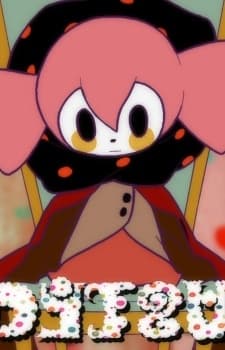
BerserkThe witch of desserts. Her nature is tenacity. What she desires is everything. She will never give up. Though she is capable of creating infinite amounts of any dessert she desires
 SUPPORTING
Judeau
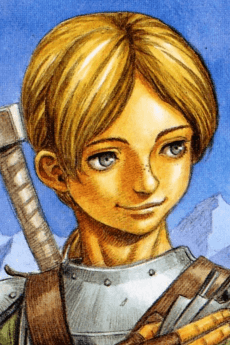
BerserkThe old Band of the Hawk's friendly mediator. A former circus performer who wielded throwing knives, Judeau was also well-aware of the world around him and was seen as a confidant
 SUPPORTING
Pippin
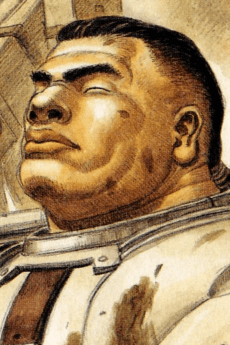
BerserkA massive dark-skinned man who wielded an equally massive mace. A former miner, Pippin lent his strength to the old Band of the Hawk. He was often associated with Rickert, who he s
 SUPPORTING
Corkus
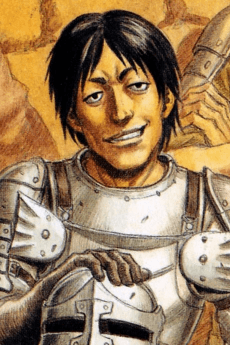
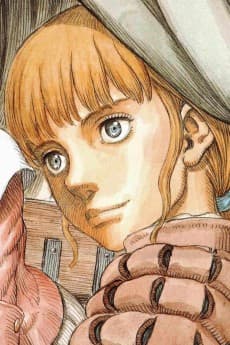
BerserkA loud-mouthed ex-thief. Corkus was fond of delusions of grandeur and constantly at odds with Guts. He was the leader of his own band of thieves before he joined the old Band of th
 SUPPORTING
Zodd
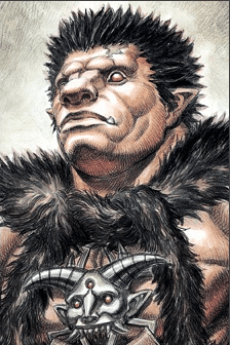
BerserkAlso known as Nosferatu Zodd, or Zodd the Immortal, an apostle who has lived for three centuries fighting countless battles in search of worthy opponents. Zodd has the ability to t
 SUPPORTING
Ganishka
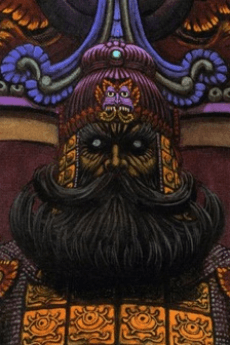
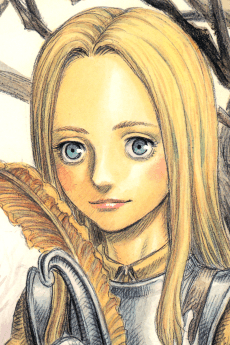
BerserkThe Emperor of the Kushans, Ganishka is an Apostle who defies the Hawk, and plans on defeating him and conquering the world with his familiars and demons. He can manifest himself i
 SUPPORTING
Sonia
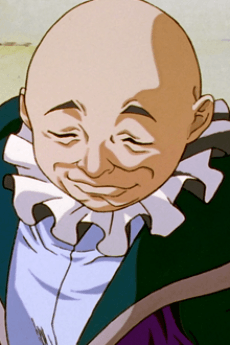
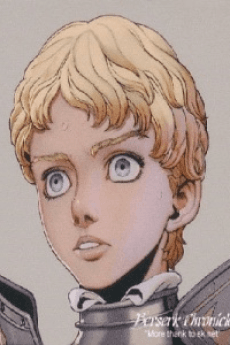
BerserkSonia is part of Griffith's reformed Band of the Hawk and is extremely devout in her admiration of him. Her parents were killed when Kushans came to her village. She was held priso
 SUPPORTING
Mule Wolflame
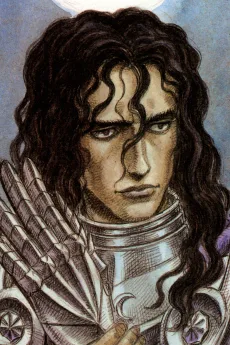
BerserkOne of the leftovers of Midland's army, Mule was caught by Griffith's aura and joined the new Band of the Hawk along with his fellow soldiers. Seems to be a guardian of sorts for S
 SUPPORTING
Locus
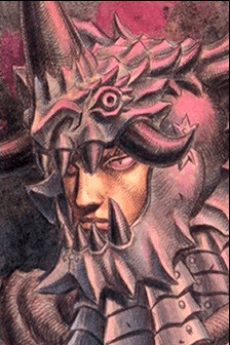
BerserkLeader of the new Band of the Hawk's demon lancer squad, Locus would be a true stereotype of a proud knight, were it not for his demonic power. With a lance that seemingly bends to
 SUPPORTING
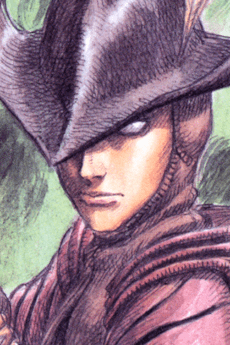
Grunbeld
BerserkA member of the reformed Band of the Hawk, and an exceedingly strong apostle. He is a giant, red-haired man in scale plate armour that resembles a dragon. Armed with a warhammer an
 SUPPORTING
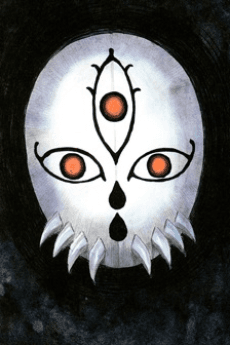
Irvine
BerserkIrvine is a prominent archer in the new Band of the Hawks. He has never spoken to anyone on page but Sonia. His eyes have neither pupils nor irises. A self-described hunter and lon
 SUPPORTING
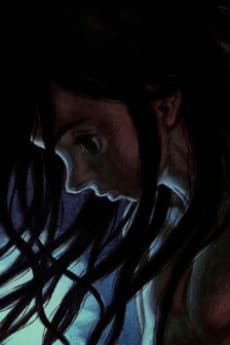
Rakshas
BerserkOnce a member of the Bākiraka Clan, Rakshas now supposedly serve the new Band of the Hawk. His entire body is covered by a black cloak and a mask, which seems to appear and disappe
 SUPPORTING
Moonlight Boy
BerserkAlong the sea shore, Guts' party came across a young male child who not only looks similar to Guts and Casca but shows an attraction to both of them. When Guts began to be consumed