Appears In
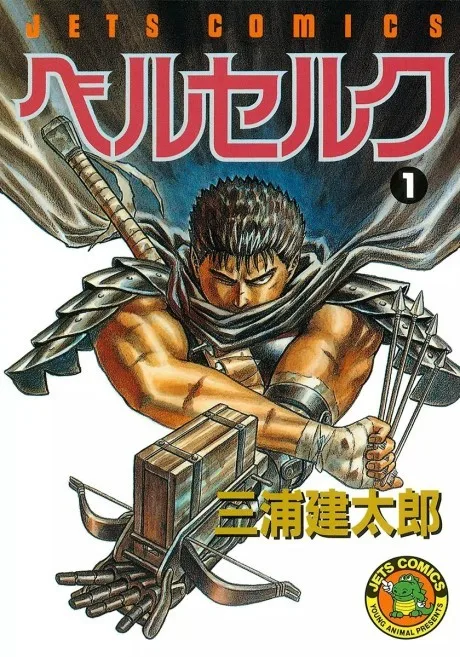
Quick Facts
| Gender | Female |
| Role | MAIN |
| Series | Berserk |
| Height | 165 cm |
| Age | Approximately 24 |
| Gender | Female |
| Weight | 50 kg |
| Eye Color | Brown |
| Hair Color | Dark brown |
| Voice Actor (JP) | Yuko Miyamura (1997 anime); Toa Yukinari (Golden Age films, 2016 anime) |
| Voice Actor (EN) | Carrie Keranen (1997 anime, Golden Age films); Wendee Lee (2016 anime) |
| Affiliation | Band of the Hawk; Guts' Traveling Party |
| Aliases | Captain Casca |
| Debut | "The Guardians of Desire" |
| Partner | |
| Commander |
Contents
Background
Background
Casca is born into a poor rural family with several children. Her parents struggle to provide enough food, leaving them vulnerable when a nobleman offers to take Casca away in exchange for money. The arrangement is presented as employment, but the nobleman's intentions become clear almost immediately after he takes her from her family.
Griffith encounters the situation while still building the Band of the Hawk. Rather than simply killing the nobleman himself, he throws Casca a sword and tells her that if she has something she wishes to protect, she must take up the weapon herself. Casca kills her attacker and chooses to follow Griffith afterward. The encounter becomes the foundation of her devotion to him: he gives her both the means to defend herself and a place in a world where she previously had almost no control over her future.
She becomes one of the earliest and most capable members of the Band of the Hawk. Casca develops into a skilled swordswoman, cavalry fighter and commander trusted to lead troops independently. In a company dominated by male mercenaries, she maintains authority through battlefield competence rather than inherited rank.
Her loyalty to Griffith is personal as well as military. Casca believes deeply in his ambition to acquire his own kingdom and sees supporting that dream as the purpose that gave meaning to her life. She also recognizes that Griffith belongs to a world of ambition and nobility she cannot fully enter, producing a painful tension between devotion and the knowledge that he may never return her feelings in the way she desires.
Guts' arrival disrupts the order Casca has built around Griffith. She immediately resents the newcomer because Griffith takes an unusual personal interest in him and because Guts appears indifferent to the Band of the Hawk's existing hierarchy. Their repeated clashes gradually give way to mutual respect as Guts proves himself in battle and assumes command of the Hawks' Raiders.
The Hundred-Year War turns both into celebrated commanders. Casca participates in major campaigns for Midland, including the Hawks' rise from mercenaries to an elite force trusted with operations that conventional noble armies have repeatedly failed to complete.
Guts eventually leaves the Band of the Hawk after defeating Griffith in a duel, and Griffith's subsequent collapse leads to his imprisonment and the Hawks being declared criminals. Casca assumes practical leadership over the surviving company during the year Griffith remains captive, keeping the fugitives together despite relentless pursuit.
After Guts returns, Casca initially struggles with both anger over his departure and relief at seeing him again. Their relationship becomes explicitly romantic before the Hawks mount their rescue of Griffith.
Personality
Personality
Casca is disciplined, proud and intensely committed to responsibility. Within the Band of the Hawk she frequently acts as the counterweight to Guts' independence and Griffith's distant charisma, concerning herself with troop readiness, command structure and the immediate consequences of battlefield decisions.
Her temper is especially visible around Guts. His refusal to respect her authority during their early encounters infuriates her, while Griffith's fascination with him intensifies resentment she is reluctant to admit. Casca initially interprets Guts as someone who has entered the Hawks and effortlessly taken a place beside Griffith that she spent years earning.
That hostility masks considerable emotional perceptiveness. Casca understands the pressures surrounding Griffith more clearly than most ordinary soldiers and is conscious of the political barriers separating mercenaries from nobility. She recognizes that military victories alone cannot guarantee the future Griffith wants.
She is compassionate despite the hardened personality required by mercenary life. Casca worries about wounded soldiers, takes command seriously and does not view members of the Hawk simply as expendable pieces. Her authority comes partly from the confidence that she will stand in the same danger she expects others to face.
Casca's loyalty can become self-denying. For much of the Golden Age, she organizes her sense of value around serving Griffith's dream. She accepts that Griffith may never reciprocate her feelings but still treats helping him advance as sufficient purpose.
Her growing connection with Guts challenges that structure. Guts sees her not simply as Griffith's officer but as a person with frustrations and desires of her own. Their conflicts eventually create an intimacy that neither relationship with Griffith could provide.
Casca also possesses substantial emotional resilience. She survives years of warfare, assumes command under disastrous circumstances and continues making decisions for the Hawks even when their original structure has collapsed.
The trauma of the Eclipse overwhelms that resilience. Casca's later mental condition is not simply fear or grief but a severe psychological regression that leaves much of her previous personality inaccessible for an extended period.
Appearance
Appearance
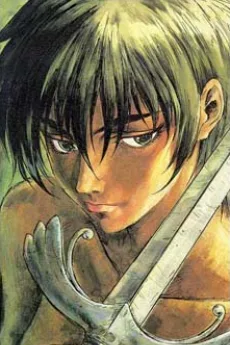
Casca is approximately 165 cm tall and weighs about 50 kg in the Berserk Official Guidebook, which estimates her later age at roughly 24. Her build is lean and athletic, shaped by years of sword training, riding and campaigning rather than the exceptional raw muscularity associated with Guts.
She has dark brown skin, short dark-brown hair and brown eyes. Her hair is kept practical during the Golden Age, generally falling around her jaw and neck without interfering with armor or sword fighting.
As a Band of the Hawk commander, Casca wears armor appropriate to a mobile mercenary officer. Her equipment varies across campaigns but usually includes plate protection over the torso and shoulders combined with lighter sections that preserve movement.
She normally fights with a one-handed sword suited to a balance of speed and reach. Unlike Guts, whose enormous weapon becomes inseparable from his silhouette, Casca uses comparatively conventional equipment and depends more heavily on technique and battlefield awareness.
Her visual presentation changes considerably after the Golden Age. Following the Eclipse, Casca's hair grows longer and her clothing becomes less martial because she is no longer functioning as a soldier. She also bears a Brand of Sacrifice on her chest.
Later in the manga, after her mind is restored, Casca's appearance again begins reflecting the trained warrior she once was. She can wear practical clothing, communicate normally and move with the physical confidence established during the Golden Age, even though the consequences of her trauma remain visible in her reactions.
Abilities & Powers
Abilities & Powers
Casca is an ordinary human without innate magical abilities. Her effectiveness comes from professional military training, extensive battlefield experience and years spent fighting alongside some of Midland's most capable mercenaries.
Her swordsmanship is highly developed. She can defeat trained soldiers in individual combat, fight multiple opponents under battlefield conditions and maintain sufficient control to command troops while personally participating in engagements.
Speed and agility are important components of her style. Casca does not attempt to replicate the overwhelming force of fighters such as Guts. She relies instead on efficient sword movement, positioning and exploiting openings.
She is also an experienced cavalry fighter. The Band of the Hawk operates as a highly mobile mercenary force, and Casca is comfortable fighting and commanding from horseback during major campaigns.
Her tactical ability distinguishes her from fighters who are dangerous only in individual combat. Griffith trusts Casca to command units independently, and she understands formations, retreats, defensive positions and the morale of troops under pressure.
Casca demonstrates strong endurance throughout the Golden Age. She remains operational through extended campaigns, forced marches and injuries while continuing to fulfill command responsibilities.
Her greatest military achievement may be leadership during the Hawks' period as fugitives. After Griffith's capture, Casca keeps the remaining Band of the Hawk together for approximately a year while Midland forces hunt them. Maintaining a mercenary company under those conditions requires both tactical competence and the continued loyalty of soldiers who no longer have Griffith physically present to lead them.
Her later condition prevents her from making consistent use of these abilities for a long period. Although physical instincts sometimes remain visible, trauma blocks the deliberate battlefield judgment that defined Captain Casca.
After her psychological restoration, some of Casca's old combat instincts re-emerge rapidly. She demonstrates that years of mental impairment did not erase the fundamental training and reflexes acquired during her life as a mercenary.
Named Techniques
Named Techniques
Casca does not use formally named combat techniques. Her fighting style comes from practical mercenary swordsmanship rather than a codified martial system.
One-Handed Swordsmanship is her primary combat method. Casca uses controlled slashes, thrusts and defensive movements rather than relying on overwhelming weapon mass.
Mounted Combat combines swordsmanship with horseback maneuvering, allowing her to fight effectively during cavalry engagements and rapidly changing battlefield situations.
Unit Command is not an attack but represents one of Casca's most important skills. She coordinates soldiers while continuing to fight personally, making her valuable beyond individual duels.
Defensive Countering suits her lighter build. Casca frequently avoids meeting stronger opponents through pure force, instead using timing and position to create opportunities for counterattacks.
Battlefield Adaptation reflects years spent fighting in changing military conditions. She is capable of transitioning between personal combat, troop leadership, retreat and protection of wounded comrades without requiring detailed orders from Griffith.
Relationships
Relationships
Guts begins as someone Casca intensely dislikes. Casca resents Guts's refusal to respect the Hawks' hierarchy and Griffith's immediate fascination with him. Their rivalry is sharpened by Casca's belief that Guts receives personal attention from Griffith that she has never been able to obtain despite years of loyalty.
Their relationship changes when Guts and Casca are separated from the rest of the Hawks during a campaign. Forced to rely on each other, they speak more openly about Griffith and their respective histories. Guts learns how Casca joined the Hawks, while Casca begins seeing the loneliness behind Guts' abrasive independence.
Casca gradually develops romantic feelings for Guts, though both struggle to express vulnerability directly. After Guts returns to the fugitive Hawks, the two finally acknowledge their feelings and begin a sexual relationship. Guts' willingness to stop when memories of childhood abuse overwhelm him becomes an especially important moment of trust between them.
Their relationship becomes one of the central motivations of Guts' later life. After initially abandoning Casca to pursue revenge, he eventually recognizes that protecting and healing her matters more than continuing alone. Casca's restored consciousness later reveals that affection remains, but memories associated with Guts can also trigger overwhelming trauma because he is inseparable from what happened during the Eclipse.
Griffith saves Casca as a child and gives her the sword with which she defends herself. Casca follows Griffith from that point onward, becoming one of his earliest and most devoted officers. She loves him and commits herself to his ambition despite recognizing that his dream takes precedence over personal relationships.
Casca's feelings toward Griffith change as she comes to understand his vulnerability and her own relationship with Guts. The Eclipse destroys the foundation of that devotion when Griffith sacrifices the Band of the Hawk and, after becoming Femto, sexually assaults Casca in front of Guts. The event becomes central to Casca's trauma and permanently transforms the relationships among all three characters.
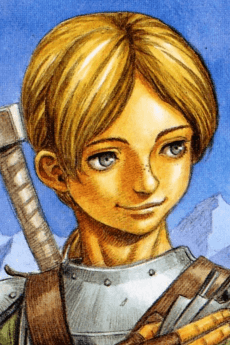
Judeau is one of Casca's closest comrades in the Band of the Hawk. Judeau understands her feelings for both Griffith and Guts with unusual clarity and encourages her to recognize the possibility of choosing a life outside devotion to Griffith. During the Eclipse, Judeau dies while protecting Casca, attempting to lead her to safety even after sustaining fatal injuries.
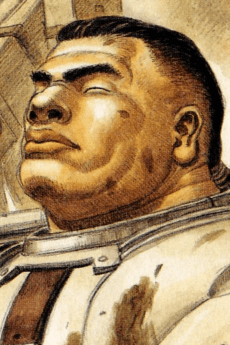
Pippin is another trusted Hawk companion. Pippin's physical strength and quiet dependability make him valuable during the same campaigns Casca helps command. He is killed during the Eclipse along with most of the original Band of the Hawk.
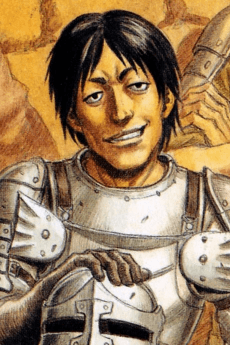
Corkus serves alongside Casca as one of the Hawks' senior members. Corkus is more cynical and self-interested than she is, but both remain committed to the company through its rise and subsequent outlaw period. Corkus is also killed during the Eclipse.
Rickert is among the youngest members of the Band of the Hawk. Casca occupies a senior role relative to Rickert, and both share the history of Griffith's original mercenary company. Rickert avoids the Eclipse because he is absent from the rescue party, making him one of the few surviving links to Casca's former life.
Puck becomes an important companion during Casca's later travels. Puck's healing abilities and awareness of supernatural phenomena repeatedly help the group deal with the creatures attracted by the Brand of Sacrifice.
Farnese initially enters Guts' life as an adversary but eventually becomes one of Casca's principal caregivers. Farnese helps feed, bathe and protect Casca while learning patience and responsibility through that relationship. Her later magical training becomes essential when she accompanies Schierke inside Casca's fragmented inner world to help restore her consciousness.
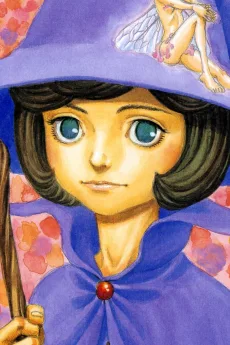
Schierke joins the group with magical knowledge unavailable to its other members. Schierke assists in protecting Casca against astral threats and gradually understands how profoundly Casca's mind has been damaged. On Elfhelm, Schierke and Farnese enter Casca's dreamscape and reconstruct the fragments of her psyche, directly enabling her return to conscious adulthood.
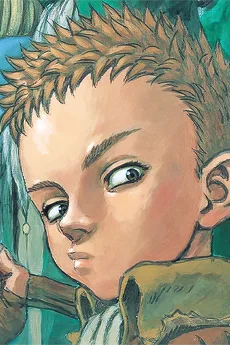
Isidro travels with Casca as one of the younger members of Guts' party. Isidro participates in protecting her during attacks even though he initially knows little about her history.
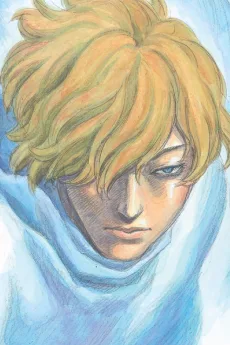
Serpico joins the traveling party primarily through his attachment to Farnese. Serpico's tactical ability becomes useful in the group's efforts to keep Casca safe during encounters with supernatural enemies.
Skull Knight is responsible for Casca escaping one of the most catastrophic events in her life. During the Eclipse, Skull Knight enters the sacrificial dimension and carries Guts and Casca away from the God Hand and apostles, making their survival possible.
Elaine is the name used for Casca during the period when her identity and memories are inaccessible. It is not a separate character but a name given to the mentally regressed Casca by people caring for her.
[Moonlight Boy displays an immediate, unusually intimate connection with Casca. She responds to him maternally even when her conscious memories remain fragmented. The child's presence repeatedly calms both Casca and Guts during their journey.](#spoiler)
[Moonlight Boy's existence is tied to the child conceived by Casca and Guts before the Eclipse, whose body was altered through Griffith's actions and later became entangled with Griffith's incarnated physical form.](#spoiler)
Story Role
Story Role
Casca is introduced during the Golden Age material as one of the Band of the Hawk's senior officers and the woman most openly suspicious of Guts. Her hostility establishes that Griffith's decision to bring Guts into the company disrupts relationships that existed long before his arrival.
As the Hawks rise through Midland's military hierarchy, Casca demonstrates that her position is earned through ability rather than proximity to Griffith. She commands troops in battle, participates in high-risk engagements and remains one of the commanders Griffith relies upon most heavily.
Her developing relationship with Guts gives the Golden Age an emotional structure independent of Griffith's political ambitions. Their antagonism gradually gives way to respect, then intimacy, while both begin reconsidering the lives they have constructed around Griffith.
Guts' departure places Casca in the middle of the consequences. She understands why he wants an independent purpose but also sees directly what his absence does to Griffith and the Band of the Hawk.
When Griffith is imprisoned and the Hawks become fugitives, Casca assumes practical leadership of the surviving company. She keeps the group together for approximately a year before Guts returns and joins the rescue operation.
The Eclipse destroys the Band of the Hawk and radically alters Casca's role in the story. Griffith sacrifices his followers to the God Hand; apostles slaughter the company; and Casca is assaulted by the newly transformed Femto while Guts is forced to witness it.
The post-Golden Age narrative initially presents Casca as someone requiring protection rather than the commander she once was. That change is deliberately severe because readers know the capability and authority she possessed before her trauma.
Guts spends an extended period pursuing apostles as the Black Swordsman while Casca remains under protection elsewhere. His eventual return marks a shift from revenge toward responsibility for someone who survived the same catastrophe.
The Conviction Arc brings Casca back into the central narrative when religious and supernatural forces converge around Albion. Her Brand and unusual circumstances make her a target amid escalating mass hysteria.
Afterward, Guts decides to travel toward a place where magical knowledge may offer Casca genuine help. The group forming around them gradually changes the journey from a two-person burden into a collective effort.
The voyage to Elfhelm is ultimately motivated in large part by the hope that the island's magical inhabitants can restore Casca's mind. When the party arrives, Schierke and Farnese eventually enter her inner world and rebuild the fragmented representation of her consciousness.
Casca returns to full awareness, recovering her speech, memories and adult personality. The restoration does not eliminate trauma: seeing Guts triggers intrusive memories of the Eclipse, preventing the reunion both had implicitly hoped for.
Her recovery nevertheless restores her agency. Casca can again communicate, make decisions and interact with the world as herself rather than existing solely as someone others must protect.
That renewed stability is interrupted when Griffith reaches Elfhelm through his connection with the Moonlight Boy. Casca is overwhelmed by memories associated with him and is subsequently taken away as Elfhelm collapses.
Later chapters place Casca within Falconia, separated from Guts and the companions who spent years bringing her to Elfhelm. Her circumstances again make personal autonomy a central concern, but now she possesses the restored consciousness necessary to understand what is happening around her.
Character Development
Character Development
Casca's earliest sense of self is built around Griffith. Before meeting him, she is a poor child whose family has so little power that she can effectively be sold to a nobleman. Griffith gives her a weapon and forces her to recognize that survival can depend on her own action.
The lesson empowers her, but it also creates dependency of another kind. Casca devotes herself so completely to Griffith's dream that she struggles to imagine a separate ambition. Becoming one of the Hawks' finest commanders still feels, to her, like contributing to his future rather than building her own.
Guts challenges that worldview because he refuses to remain satisfied as one component of Griffith's ambition. Casca initially regards his decision to leave as selfish, yet his search for an independent purpose raises questions she has avoided about her own life.
Their growing intimacy creates the possibility of choosing something for herself. Casca can care about Griffith and the Hawks without making those loyalties the only measure of her existence.
Her year leading the fugitives proves that she does not need Griffith physically present to function. She carries responsibility for frightened, exhausted soldiers and continues protecting the company under circumstances very different from the victorious campaigns of earlier years.
The Eclipse interrupts that development through catastrophic trauma. The loss of the Hawks, Griffith's transformation and the assault Casca suffers break down the personality readers have watched become increasingly independent.
The long period afterward is therefore defined by absence as much as change. Casca retains emotional instincts, fear responses and attachments, but the articulate commander established during the Golden Age cannot consciously process what happened to her.
Her dependence on others creates development for the entire traveling party. Guts must learn that protecting her requires patience rather than merely killing threats. Farnese develops responsibility through caring for her. Schierke eventually provides a form of help that physical strength cannot supply.
The restoration of Casca's consciousness is not presented as a magical erasure of trauma. She remembers her history, recognizes companions and regains her intelligence, yet the memories associated with Guts and the Eclipse remain psychologically overwhelming.
This distinction becomes crucial to her later characterization. Recovery means Casca can make choices again; it does not mean she becomes the Golden Age commander untouched by everything that happened afterward.
Her later separation from Guts consequently places renewed emphasis on agency. The question is no longer simply whether others can protect or heal Casca, but what Casca herself will choose and do now that her conscious identity has returned.
Etymology
Etymology
Casca's name is written キャスカ (Kyasuka) in Japanese and officially romanized as Casca.
No definitive canonical explanation for the name's origin has been published in the manga. Linguistic similarities to real-world words in Portuguese, Spanish, Latin and other languages have produced fan theories, but those interpretations are not established enough to present as creator-confirmed etymology.
The name may also remind readers of Publius Servilius Casca, one of the historical conspirators involved in the assassination of Julius Caesar, but no documented statement from Kentaro Miura establishes this as the character's intended namesake.
Unlike Guts' "Black Swordsman" or Griffith's titles, Casca is normally identified simply by her personal name or military position. Her authority within the Band of the Hawk does not depend upon an elaborate battlefield epithet.
The later name Elaine is not her true identity or an alias she consciously chooses. It is used during the period when Casca cannot communicate her original name and therefore should not replace "Casca" in basic character information.
Trivia
Trivia
-
The Berserk Official Guidebook estimates Casca at 165 cm tall, 50 kg and approximately 24 years old during later material.
-
Casca is one of the earliest members of the Band of the Hawk and eventually becomes one of its senior battlefield commanders.
-
She is an experienced swordswoman and cavalry officer, not merely a member of Griffith's personal entourage.
-
Yuko Miyamura voices Casca in the 1997 Japanese anime adaptation.
-
Toa Yukinari voices Casca in the Golden Age Arc film trilogy, Memorial Edition and the 2016–2017 anime continuity.
-
Casca's dark skin and short hair create a strong visual distinction from many of the noblewomen appearing during the Golden Age, reinforcing her identity as a soldier rather than a court figure.
-
Her relationship with Guts develops from outright hostility into one of the central personal relationships of the manga.
-
Casca was ranked among the more popular major characters in longstanding Berserk reader polling, although no current worldwide official franchise poll provides a definitive universal ranking.
In Other Media
In Other Media
Casca is a major character in the 1997 television adaptation of Berserk, where Yuko Miyamura voices her in Japanese and Carrie Keranen performs the best-known English dub. The series concentrates primarily on the Golden Age and therefore depicts Casca chiefly as the capable Hawk commander whose relationships with Griffith and Guts develop alongside Midland's war.
The 1997 adaptation preserves much of her military importance. Casca participates in campaigns, commands soldiers and serves as one of the clearest indicators that Guts' entry into the Hawks disrupts an established group rather than creating one around himself.
The Berserk: The Golden Age Arc film trilogy retells the same broad period with Toa Yukinari taking over the Japanese role. The films give substantial attention to Casca's childhood encounter with Griffith, her evolving relationship with Guts and the events that eventually lead the Band of the Hawk toward the Eclipse.
That trilogy was later reworked as Berserk: The Golden Age Arc – Memorial Edition, which restored and expanded material for television broadcast. Toa Yukinari again voices Casca.
Casca also appears in the 2016–2017 television anime, which advances beyond the Golden Age into the Conviction and Falcon of the Millennium Empire material. Toa Yukinari continues in Japanese, while the English-language production uses Wendee Lee for this version of the character.
The screen adaptations do not reach the much later manga developments surrounding the completion of the voyage to Elfhelm and Casca's subsequent storyline. Those events therefore remain manga-only material and have been spoiler-marked above.
Casca appears in multiple Berserk video games. Sword of the Berserk: Guts' Rage takes place during the period when Guts is traveling with Casca and Puck, while Berserk: Millennium Falcon Hen Seima Senki no Shō adapts later manga material.
She is also playable in Berserk and the Band of the Hawk, where Golden Age Casca fights as an agile swordswoman. Her gameplay emphasizes speed and conventional sword technique rather than the enormous area-clearing attacks associated with Guts.
Reception
Reception
Casca is one of the central figures in discussion of Berserk because the Golden Age establishes her as a protagonist-level presence alongside Guts and Griffith. Her military role, personal ambitions and emotional conflicts exist before her romantic relationship with Guts fully develops.
Her early characterization is notable for placing a female commander inside the brutal military culture of the Band of the Hawk without removing the pressures associated with gender in that environment. Casca's authority is repeatedly demonstrated through competence, but the story also shows circumstances in which being a woman changes how enemies and allies treat her.
The relationship with Griffith has generated extensive discussion because it contains several forms of dependency at once. Griffith genuinely changes Casca's life by giving her the means to protect herself, but that moment also leads her to spend years measuring her worth through his ambition.
Guts provides a contrasting relationship. He and Casca initially hurt and antagonize one another, but their eventual intimacy depends on each learning aspects of the other's history that are not visible to the rest of the Hawks.
The Golden Age adaptations have made this version of Casca particularly recognizable. Yuko Miyamura's performance in the 1997 anime and Toa Yukinari's later portrayal emphasize her shifts between battlefield authority, frustration with Guts and private vulnerability.
Her later treatment has also generated substantial critical and fan discussion. The long period in which Casca cannot consciously function as her former self places her largely in a dependent role despite the extraordinary agency she possessed during the Golden Age, making the eventual restoration of her mind one of the manga's most anticipated developments.
That restoration deliberately avoids presenting trauma as something that disappears when a spell succeeds. Casca regains her identity and memories but cannot simply resume the relationship with Guts where it stopped, giving her later characterization room to address the difference between remembering one's former self and actually being able to live with what happened afterward.
The current manga further restores Casca to a position where her own decisions can matter directly. Her separation from Guts after Elfhelm means that future development no longer concerns only whether Guts can protect or reach her; it also concerns how the experienced commander and survivor Casca has again become will respond to Griffith and Falconia on her own terms.
Related Characters
 MAIN
MAINGuts
BerserkGuts is the protagonist of Berserk. He is a tall, muscular man that swings a huge sword called the Dragon Slayer, he has a prosthetic left forearm that has a magnetic grip that als
 MAIN
MAINGriffith
BerserkGriffith was the founder and leader of the mercenary unit known as the Band of the Hawk, named for his helmet which was forged in the shape of a Hawk's head. Extraordinarily charis
 SUPPORTING
Judeau
BerserkThe old Band of the Hawk's friendly mediator. A former circus performer who wielded throwing knives, Judeau was also well-aware of the world around him and was seen as a confidant
 SUPPORTING
Pippin
BerserkA massive dark-skinned man who wielded an equally massive mace. A former miner, Pippin lent his strength to the old Band of the Hawk. He was often associated with Rickert, who he s
 SUPPORTING
Corkus
BerserkA loud-mouthed ex-thief. Corkus was fond of delusions of grandeur and constantly at odds with Guts. He was the leader of his own band of thieves before he joined the old Band of th
 MAIN
MAINPuck
BerserkA wind spirit from Elfhelm, a utopia on the island Skellig in the Western Sea. Elves in Berserk can only be seen by the open-minded; the devoutly religious cannot see Puck at all,
 MAIN
MAINSchierke
BerserkSchierke is a young witch-in-training, a disciple of the witch Flora. She is accompanied by an elf, Evarella. She aided Guts's group with a troll infestation in the nearby village
 MAIN
MAINIsidro
BerserkA runaway brat turned thief, Isidro dreams of becoming a great swordsman, which made him tag along with Guts. Despite his lack of strength and skill, he utilizes his small size and
 MAIN
MAINSerpico
BerserkSerpico is Farnese's companion and unbeknownst to her, her paternal half-brother. During his time with the Holy See, Serpico was Herald for the Holy Iron Chain Knights. When aggres
 SUPPORTING
Elaine
BerserkElaine is King's sister, and the Guardian Saint of the Fountain of Youth. She has long and thin eyelashes, and cut hair that reaches her neck. She wears a single white one-piece dr
 SUPPORTING
Moonlight Boy
BerserkAlong the sea shore, Guts' party came across a young male child who not only looks similar to Guts and Casca but shows an attraction to both of them. When Guts began to be consumed