Appears In
Quick Facts
| Gender | Male |
| Role | MAIN |
| Series | Berserk |
| Height | 204 cm |
| Age | Approximately 24 |
| Gender | Male |
| Weight | 115 kg |
| Eye Color | Brown |
| Hair Color | Black |
| Voice Actor (JP) | Nobutoshi Canna (1997 anime); Hiroaki Iwanaga (Golden Age films, 2016 anime) |
| Voice Actor (EN) | Marc Diraison (1997 anime, Golden Age films); Kaiji Tang (2016 anime) |
| Affiliation | Band of the Hawk; Guts' Traveling Party |
| Aliases | Black Swordsman; Hundred Man Slayer; Captain of the Hawks' Raiders |
| Debut | "The Black Swordsman" |
Contents
Background
Background
Guts enters the world under horrific circumstances. His newborn body is discovered beneath the corpse of his mother, who had been hanged from a tree alongside other dead villagers. A mercenary woman named Shisu takes him in despite the objections of the soldiers around her and raises him during his earliest years within a wandering mercenary company.
After Shisu dies of plague, Guts is raised primarily by Gambino, the mercenary leader whom he comes to regard as a father. Gambino begins training him with a sword while he is still a small child, giving him blades too large for his body and forcing him to adapt through constant practice. Guts consequently learns from childhood that food, shelter and approval have to be earned through violence.
The relationship with Gambino becomes increasingly abusive. Guts is beaten, treated as a burden and ultimately betrayed by the man whose approval he desperately wants. The resulting experiences establish several traits that persist into adulthood: difficulty accepting physical contact, instinctive distrust of affection and a tendency to rely only on his own ability to survive.
Guts eventually leaves Gambino's company and spends his adolescence moving from battlefield to battlefield as an independent mercenary. Fighting becomes both profession and identity. His unusual willingness to wield oversized swords turns him into a formidable soldier, but he has little sense of purpose beyond surviving the next contract.
His life changes when he encounters Griffith and the Band of the Hawk. After defeating several Hawk soldiers, Guts is challenged by Griffith and loses. Griffith claims him as a member of the company, and Guts joins despite strongly resenting the idea that another person can own him.
Within the Band of the Hawk, Guts becomes captain of the Raiders and one of Griffith's most valuable fighters. His combat ability, willingness to lead assaults and personal loyalty help the Hawks rise from a mercenary company into a force recognized by Midland's nobility.
The period also gives Guts something he has rarely possessed: companionship. Soldiers such as Judeau, Pippin, Corkus, Rickert and Casca gradually become people he identifies with rather than temporary comrades on another battlefield.
A conversation in which Griffith describes what he considers a true friend profoundly affects Guts. Griffith says that such a person would possess a dream of his own rather than simply following Griffith's. Guts begins questioning whether living entirely inside Griffith's ambition means he has failed to develop a life that belongs to him.
Guts eventually leaves the Band of the Hawk after defeating Griffith in a duel. His departure destabilizes Griffith, whose subsequent actions lead to imprisonment, torture and the collapse of the Hawks' political position.
When Guts returns, he helps the surviving Hawks rescue Griffith. Their reunion ultimately leads into the Eclipse, where Griffith sacrifices the Band of the Hawk to the God Hand and becomes Femto. Guts loses his left forearm and right eye while surviving the massacre, and he and Casca are marked with Brands of Sacrifice.
Personality
Personality
Guts is guarded, confrontational and intensely independent. His childhood teaches him that dependence can be dangerous, so he frequently reacts to concern as though it were an attempt to control him. Early in his life, this self-reliance is less a philosophy than a survival mechanism.
He is not naturally emotionless. On the contrary, many of his harshest decisions arise because he feels attachment intensely and does not know how to manage the vulnerability it creates. The more someone matters to him, the more threatening the possibility of losing that person becomes.
Guts is also highly competitive. Powerful opponents attract his attention because combat is one of the few areas where he initially understands his own value clearly. Defeating stronger soldiers provides measurable proof that he has improved, even when he cannot explain what he ultimately wants that improvement for.
His relationship with Griffith exposes the tension between independence and belonging. Guts hates being told that he belongs to another person, yet the Band of the Hawk becomes the first community in which he voluntarily remains for years. Leaving the Hawks is therefore not a rejection of those relationships but an attempt to become someone who can stand beside Griffith as an equal.
He possesses a strong protective instinct even when his behavior appears brutal. Guts repeatedly places himself between danger and people who cannot defend themselves, though he is often uncomfortable acknowledging that protection as heroism.
After severe trauma, rage becomes one of his dominant emotions. The Black Swordsman period shows a Guts willing to use cruelty, intimidation and apparently reckless tactics when hunting apostles. He often treats compassion as something that will only slow him down.
That brutality coexists with guilt. Guts remembers people harmed by his choices and is capable of recognizing that revenge is consuming the parts of his life still worth preserving. His later development increasingly depends on whether he can live with anger without allowing it to determine every action.
He also possesses an extremely dry sense of humor. Around people he trusts, Guts can tease, argue and show moments of genuine relaxation that sharply contrast with the threatening image associated with the Black Swordsman.
Appearance
Appearance
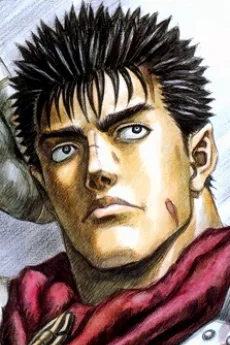
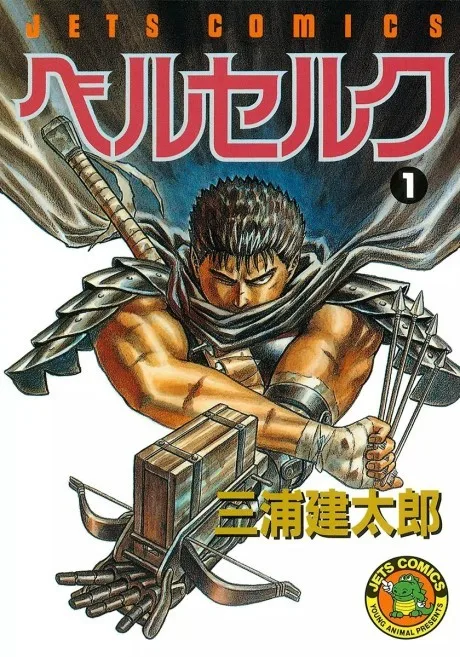
Guts is exceptionally tall and heavily built. The Berserk Official Guidebook gives an estimated height of 204 cm and weight of 115 kg during the later story, matching the increasingly massive physique depicted after years of constant combat.
He has short, spiked black hair and brown eyes. His face is angular and usually marked by a severe expression, with numerous scars accumulated through mercenary work and supernatural battles.
During the Golden Age period, Guts is younger and less physically massive. He wears relatively conventional mercenary armor and carries increasingly large two-handed swords, culminating in weapons that establish the basic silhouette later associated with the Dragon Slayer.
[After the Eclipse, Guts loses his left forearm below the elbow and his right eye. The missing arm is replaced by a mechanical prosthesis designed by Godot, while the closed right eye and numerous additional scars become permanent parts of his Black Swordsman appearance.](#spoiler)
His Black Swordsman equipment includes a dark cloak, heavy armor, throwing knives, explosives and the enormous Dragon Slayer strapped across his back. The design trades the relative practicality of his mercenary equipment for something built specifically around fighting apostles.
His prosthetic arm resembles an iron mechanical hand but contains hidden weapons. The forearm conceals a miniature cannon powerful enough to attack enemies at close range, and the hand can be locked around the Dragon Slayer's grip when ordinary muscular strength would no longer be sufficient.
The Berserker Armor later transforms his silhouette completely. Its dark plates reshape themselves around his body, while the helmet takes on a beast-like form corresponding to Guts' inner rage. The armor enables extraordinary physical performance at the cost of suppressing his body's natural safety mechanisms.
As prolonged use accumulates, Guts develops visible physical consequences. Portions of his hair turn white, and his senses and bodily condition deteriorate under the strain imposed by repeated battles and the Berserker Armor.
Abilities & Powers
Abilities & Powers
Guts possesses no conventional magical ability of his own. His effectiveness comes from extreme physical conditioning, decades of combat experience beginning in childhood and equipment specifically designed to let a human fight supernatural beings.
His strength is extraordinary even before supernatural equipment enters his arsenal. Guts swings swords too large for most men to lift effectively, breaks armor with physical strikes and carries the Dragon Slayer through prolonged battles without relying upon magical enhancement.
His endurance is equally important. Guts continues fighting through broken bones, major blood loss, stab wounds, burns and internal injuries. This durability is not presented as invulnerability; he survives because of exceptional conditioning, experience and a willingness to continue moving while seriously injured.
His swordsmanship is based less on elegant formal technique than on battlefield efficiency. Guts understands range, timing, momentum and how to redirect the enormous weight of his weapon rather than repeatedly stopping and restarting each swing.
Years of fighting professional soldiers give him excellent tactical awareness. He can analyze formations, exploit terrain, identify command structures and understand when an opponent's style creates predictable openings.
Against supernatural enemies, Guts becomes especially skilled at observing unfamiliar abilities quickly. Apostles frequently possess bodies that invalidate ordinary sword tactics, forcing him to identify weak points during the battle rather than relying on prior knowledge.
The Dragon Slayer becomes his primary weapon during the Black Swordsman period. Created by Godot as an absurdly oversized sword capable of killing a dragon, it is dismissed as impractical until Guts discovers that his own strength allows him to use it effectively.
Because the Dragon Slayer repeatedly cuts apostles, spirits and other astral beings, it becomes saturated with supernatural essence. This eventually allows the blade to harm entities whose existence extends beyond an ordinary physical body.
Guts' prosthetic arm functions as both replacement limb and weapon platform. The hand can hold objects, lock around his sword and conceal devices that ordinary opponents do not anticipate.
The built-in arm cannon provides devastating close-range firepower. Guts frequently uses the recoil tactically, allowing the explosion to combine with or redirect a sword attack.
He also carries a repeating crossbow that attaches to the prosthetic arm. This gives him a way to engage multiple enemies at range without relinquishing access to the Dragon Slayer.
Throwing knives, miniature explosives and other tools round out his equipment. Guts is comfortable using anything available rather than treating swordsmanship as a ceremonial discipline.
The Berserker Armor becomes his greatest enhancement. It removes the body's instinctive restrictions against self-injury, allowing Guts to exert extreme force even when bones are broken or muscles would normally refuse to move.
The armor can force damaged limbs back into functional positions by driving its components into Guts' flesh. This does not heal him; it merely allows the body to continue operating while becoming progressively more damaged.
Its greatest danger is psychological. The armor encourages Guts' rage and bloodlust, making it increasingly difficult to distinguish enemies from people he wants to protect. Schierke's ability to reach his consciousness becomes essential to keeping that violence under control.
Named Techniques
Named Techniques
Guts does not use a formal catalog of named sword techniques. His fighting style is improvisational, and most identifiable maneuvers come from equipment or recurring tactical applications rather than announced attacks.
Dragon Slayer Cleave describes the basic use of the Dragon Slayer's enormous mass. Guts' swings can cut through several opponents, heavy armor or large supernatural bodies in a single arc.
Momentum Combination uses the Dragon Slayer's weight continuously rather than stopping after every strike. Guts rotates his body around the blade's momentum, changing direction to chain attacks together.
Arm Cannon fires the cannon concealed within his prosthetic left arm. It is especially effective when an enemy believes the artificial limb has already been disabled or restrained.
Cannon-Sword Combination uses the arm cannon's recoil to accelerate or alter the trajectory of a Dragon Slayer attack, turning the explosion into part of the sword technique.
Repeating Crossbow mounts a rapid-fire crossbow mechanism onto his prosthetic arm, allowing Guts to attack groups or airborne targets at range.
Throwing Knives provide fast ranged attacks for situations where drawing or redirecting the Dragon Slayer would be too slow.
Miniature Bombs give Guts another means of damaging large or regenerating enemies, particularly when conventional cuts are insufficient.
Berserker Armor Release allows the armor to remove the normal limits imposed by pain and self-preservation, dramatically increasing Guts' speed, strength and aggression.
Beast of Darkness Manifestation is not a formal technique but describes the psychological influence that becomes particularly dangerous inside the Berserker Armor. Guts' violent impulses take on a recurring beast-like form within his consciousness.
Relationships
Relationships
Griffith is the person whose relationship with Guts most profoundly shapes his life. Griffith defeats Guts shortly after they meet and declares that Guts belongs to him, bringing the independent mercenary into the Band of the Hawk. Guts initially resents that claim but gradually becomes Griffith's most dependable battlefield commander and one of the few people capable of challenging him personally.
The relationship between Guts and Griffith develops beyond ordinary commander and subordinate loyalty. Guts is fascinated by Griffith's ambition and charisma while also becoming increasingly troubled by the idea that his own life exists only as an extension of Griffith's dream. Guts' decision to leave the Hawks after hearing Griffith's definition of friendship contributes directly to Griffith's emotional collapse. The Eclipse subsequently transforms their bond into the central hatred driving much of Guts' later life.
Casca initially clashes with Guts because she resents Griffith's obvious interest in him. Casca considers Guts reckless and disruptive, while Guts sees her hostility as another obstacle within the Hawks. Shared battles gradually produce respect, especially after the two are separated from the company and forced to survive together.
Their relationship becomes romantic before the Eclipse. Casca helps Guts confront the trauma surrounding physical intimacy, while Guts begins imagining a future in which his personal journey could eventually include returning to her. The Eclipse violently destroys that possibility and leaves both carrying different forms of severe trauma.
Protecting Casca eventually becomes more important to Guts than immediate revenge against Griffith. His decision to return for her after years as the Black Swordsman marks one of the most important changes in his priorities.
Puck becomes Guts' earliest consistent companion during the Black Swordsman period. Puck's compassion clashes with Guts' brutality, and the elf repeatedly criticizes him for treating bystanders as disposable. Puck's healing abilities also allow Guts to survive injuries that would otherwise accumulate even faster.
Judeau is one of Guts' closest comrades in the original Band of the Hawk. Judeau recognizes emotional tensions among Guts, Griffith and Casca earlier than most of them acknowledge openly and often acts as a perceptive intermediary within the group.
Pippin fights alongside Guts as one of the Hawks' strongest soldiers. Pippin's quiet dependability contributes to the sense of genuine camaraderie that makes the Hawks fundamentally different from the mercenary companies of Guts' childhood.
Corkus maintains a more antagonistic relationship with Guts. Corkus resents his rapid advancement and close relationship with Griffith, frequently interpreting Guts' independence as arrogance. Even so, they remain comrades through years of warfare.
Rickert is among the youngest members of the Band of the Hawk and later becomes one of the surviving connections to Guts' earlier life. Rickert respects Guts as a senior warrior and ultimately learns enough blacksmithing and engineering from Godot to contribute materially to his equipment.
Godot is the blacksmith who forges the Dragon Slayer and later helps equip Guts for supernatural combat. Godot also challenges Guts emotionally, particularly when Guts becomes consumed by revenge and neglects the people still within his reach.
Erica lives with Godot and treats Guts with uncomplicated affection. Erica's presence creates a domestic contrast to his violent life and reminds him that ordinary relationships continue to exist outside revenge.
Skull Knight repeatedly intervenes at crucial points in Guts' struggle against apostles and the God Hand. Skull Knight possesses knowledge of causality, Beherits and the supernatural world far beyond Guts' own understanding. His history also suggests a possible warning about what a life consumed by revenge against the God Hand can become.
Serpico initially regards Guts as a threat to Farnese and fights him under circumstances where direct strength would heavily favor Guts. Serpico's intelligence and use of terrain make him one of the human opponents best able to exploit the disadvantages of the Dragon Slayer.
Farnese first encounters Guts while serving the Holy Iron Chain Knights and attempting to capture him. Farnese's worldview is destabilized by the supernatural events surrounding Guts, and she eventually joins his travels. Her development from captor to companion becomes tied closely to witnessing realities her previous religious certainty could not explain.
Isidro attaches himself to Guts because he wants to become a great swordsman. Isidro effectively treats Guts as a reluctant mentor, though Guts offers far less structured teaching than the boy expects.
Schierke becomes one of Guts' most important later companions. Schierke's magical knowledge allows the group to understand astral threats that Guts previously fought through instinct alone. Her connection to Guts becomes particularly important once he acquires the Berserker Armor, as she can enter his consciousness and help prevent the armor's rage from consuming him completely.
Flora provides Guts and his companions with knowledge and magical assistance during their travels. Flora understands the Brand, the astral world and Skull Knight in ways unavailable to ordinary humans, expanding Guts' understanding of the forces surrounding his life.
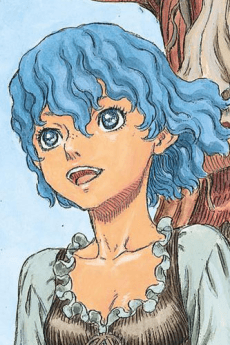
Isma later travels with Guts' party after their encounter on the island associated with the Sea God. Isma's presence reflects the increasingly diverse group that accumulates around a man who once insisted he worked best alone.
Roderick becomes an important ally through Farnese and the voyage toward Elfhelm. Roderick commands the Seahorse and earns Guts' respect through competence, courage and his willingness to accept supernatural events without abandoning responsibility for his crew.
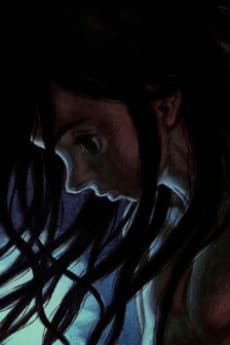
[Moonlight Boy repeatedly appears around Guts and Casca with an unexplained connection to both of them. His presence produces unusually peaceful reactions from Guts despite the mystery surrounding his identity.](#spoiler)
[The truth surrounding Moonlight Boy becomes deeply connected to Griffith and the child conceived by Guts and Casca, tying together relationships that Guts had hoped could eventually be separated from the Eclipse.](#spoiler)
Story Role
Story Role
Guts is introduced during the Black Swordsman arc as a hardened wanderer hunting apostles. He carries the Brand of Sacrifice, the Dragon Slayer and a collection of concealed weapons while displaying little concern for how frightening he appears to ordinary people.
This opening deliberately withholds much of the explanation behind his rage. The Golden Age arc then moves backward in time, showing the mercenary childhood, Band of the Hawk relationships and political warfare that created the man introduced in the opening chapters.
The Band of the Hawk period establishes Guts as more than a lone fighter. His rise within the Raiders gives him command responsibility, friendships and a place inside Griffith's dream. For the first time, wandering away from a mercenary company is no longer emotionally effortless.
His departure from the Hawks creates the central question of personal purpose. Guts wants something that belongs to him rather than remaining simply the strongest weapon in another man's ambition.
The Eclipse completely alters the direction of the story. The Band of the Hawk is sacrificed, Griffith becomes Femto, Casca is traumatized and Guts emerges marked by the Brand. The Black Swordsman introduced at the beginning is therefore revealed as the aftermath of a catastrophe rather than his original nature.
The Conviction storyline begins shifting Guts away from pure revenge. His pursuit of apostles has kept him moving toward Griffith indirectly, but learning that Casca is in danger forces him to decide whether killing enemies matters more than protecting someone who survived with him.
His reunion with Casca changes the structure of the journey. Guts now has to protect another person whose condition makes constant travel difficult while the Brand continues drawing supernatural creatures toward them at night.
Farnese, Serpico and Isidro gradually join the journey, followed later by Schierke. Guts, who once fought almost entirely alone, becomes the center of a traveling party with different skills and emotional needs.
The Millennium Falcon material expands the supernatural scale of the setting while also confronting Guts with increasingly powerful apostles. The Dragon Slayer and his own physical ability are no longer always enough.
The Berserker Armor gives him the power required to survive opponents who would otherwise overwhelm him but makes every victory potentially self-destructive. The more Guts uses the armor, the more his companions become necessary simply to prevent his strength from turning against them.
The journey toward Elfhelm becomes closely tied to the hope of restoring Casca's mind. For much of this period, Guts increasingly places her recovery ahead of direct pursuit of Griffith, marking an enormous shift from the revenge-driven Black Swordsman period.
On Elfhelm, Casca's fractured mind is eventually restored through the efforts of Schierke and Farnese, but severe trauma prevents her from comfortably facing Guts. Their hoped-for reunion therefore does not simply return their relationship to what it was before the Eclipse.
Griffith later reaches Elfhelm through his connection with the Moonlight Boy. Guts attacks him but discovers that even the Dragon Slayer cannot meaningfully reach him. Griffith then takes Casca away while the island collapses, leaving Guts psychologically devastated.
The current manga continues from that defeat, with Guts and his companions carried into Kushan territory while the conflict surrounding Griffith, Falconia and the approaching war enters another stage.
Character Development
Character Development
Guts begins life believing survival is fundamentally solitary. His earliest caregivers die, exploit him or betray him, leaving physical strength as the only dependable protection he understands.
The Band of the Hawk slowly changes that belief. Guts does not join willingly, but repeated battles create relationships he cannot reduce to temporary mercenary contracts. The Hawks become the first group whose acceptance begins reshaping how he understands himself.
His decision to leave therefore reflects growth rather than rejection. Guts wants to know who he is when he is not fighting for Griffith. The tragedy is that seeking independence happens at precisely the moment Griffith has become emotionally dependent on Guts in ways neither fully understands.
The Eclipse destroys much of that progress. Guts responds to trauma by retreating toward an even harsher version of the worldview he held before the Hawks: rely on nobody, keep moving and turn pain into violence against whoever caused it.
Puck becomes an early challenge to this state because he refuses to let Guts pretend cruelty has no moral cost. The elf cannot match him physically but repeatedly forces him into contact with emotions he would prefer to suppress.
Casca creates an even more direct conflict. Pursuing revenge requires leaving her behind; protecting her requires accepting responsibility for someone who cannot simply follow him into every battle.
Guts eventually chooses protection. The choice does not eliminate his hatred of Griffith, but it establishes that hatred is no longer the only thing determining where he goes.
His growing party deepens that change. Farnese, Serpico, Isidro and Schierke are not substitutes for the Band of the Hawk, yet they provide another form of companionship. Guts gradually begins depending on others without viewing that dependence solely as weakness.
The Berserker Armor externalizes the remaining danger. His rage is now capable of granting literal combat power while simultaneously threatening the people he wants to protect. Strength and self-destruction become inseparable.
Schierke's ability to reach him inside the armor demonstrates how different the later Guts has become. The Black Swordsman once tried to survive by cutting every emotional bond; the armored Guts survives precisely because another person can reach him when he loses control.
Casca's restoration gives him something he has pursued for years, but it does not erase either person's trauma. Guts must confront the fact that protecting someone does not guarantee that their relationship can return to an earlier state.
His failure against Griffith on Elfhelm produces another crisis. For years, Guts has survived partly through confidence that struggle itself can eventually create a path forward. Discovering that all of his accumulated strength still cannot touch Griffith shakes the foundation of that belief more deeply than an ordinary battlefield defeat.
Etymology
Etymology
Guts' name is written ガッツ (Gattsu) in Japanese. "Guts" is the standard English rendering used throughout officially licensed editions.
Within the story, Gambino gives him the name after he is found beneath a hanging corpse. No elaborate family name or inherited title accompanies it, fitting his upbringing among mercenaries without conventional family status.
The English word guts refers both to internal organs and, figuratively, to courage or fortitude. The association suits the character unusually well, although the series does not treat his name as an explicit in-universe symbolic explanation.
His most famous epithet, Black Swordsman, describes the dark armor, cloak and enormous blade associated with his post-Golden Age travels. It becomes a feared name among both humans and apostles.
Hundred Man Slayer originates from one of his best-known Golden Age battles, in which Guts holds off roughly one hundred enemy soldiers while Casca escapes.
Creator Kentaro Miura developed the character before the fully realized version of Berserk. Guts' design and personality evolved through prototype material, with Miura later citing influences ranging from Fist of the North Star and Dororo to Mad Max and Conan the Barbarian in discussions of the series' development.
Trivia
Trivia
-
The Berserk Official Guidebook gives Guts an estimated height of 204 cm, weight of 115 kg and age of 24 during the Fantasia-era material.
-
Guts begins sword training as a child using weapons disproportionately large for his size, establishing the basis for his later ability to wield the Dragon Slayer.
-
His official English name is Guts, corresponding to ガッツ (Gattsu) in Japanese.
-
Nobutoshi Canna voices Guts in the 1997 Japanese anime. Hiroaki Iwanaga voices him in the Golden Age film trilogy and the 2016–2017 television adaptation.
-
Marc Diraison voices Guts in the principal English versions of the 1997 anime and Golden Age adaptations, while Kaiji Tang performs the role in the 2016 television series.
-
The Dragon Slayer is described as being too large, thick and heavy to be considered an ordinary sword, essentially functioning as a massive slab of iron.
-
Guts' prosthetic left arm contains both a hidden cannon and mechanisms allowing him to secure his grip on the Dragon Slayer.
-
Guts predates the serialized version of Berserk: an earlier version of the character appears in Miura's 1988 Berserk Prototype.
In Other Media
In Other Media
Guts has been portrayed in several separate anime adaptations of Berserk, each covering different portions or interpretations of the manga. The 1997 television series concentrates primarily on the Golden Age material, beginning with a glimpse of the Black Swordsman period before moving into Guts' life with the Band of the Hawk.
Nobutoshi Canna voices Guts in the 1997 Japanese production, while Marc Diraison voices him in the widely distributed English dub. The adaptation established many of the performances and musical associations that remained strongly identified with Guts among international audiences.
The Berserk: The Golden Age Arc film trilogy retells the Golden Age with a different production and cast. Hiroaki Iwanaga voices Guts in Japanese, while Marc Diraison returns in English. The films cover his entry into the Band of the Hawk, relationship with Griffith and Casca, departure and the climactic Eclipse material.
The films were later re-edited and expanded as Berserk: The Golden Age Arc – Memorial Edition, adding scenes and television formatting while preserving the same core storyline.
The 2016–2017 television anime moves into post-Golden Age material, adapting portions of the Black Swordsman/Conviction-era aftermath and Millennium Falcon storyline. Hiroaki Iwanaga again voices Guts in Japanese, while Kaiji Tang performs him in the English dub.
The anime adaptations therefore do not cover most of the later manga developments surrounding Elfhelm and the current post-Elfhelm story. Those remain manga-only material and have been spoiler-marked accordingly above.
Guts is the playable protagonist of Sword of the Berserk: Guts' Rage for the Dreamcast, an original story supervised with involvement from Miura and set during his travels with Casca and Puck. Michael Bell voiced him in the English-language game.
He is also central to Berserk: Millennium Falcon Hen Seima Senki no Shō for PlayStation 2, which adapts manga material surrounding the Holy Evil War portion of the story.
In Berserk and the Band of the Hawk, released internationally in 2017, Guts is a major playable character across multiple eras. The game covers material from the Golden Age into later manga arcs and gives players different versions of his equipment, including the Berserker Armor.
His visual design has been widely reproduced in statues, figures and model lines. Officially licensed products regularly distinguish between Golden Age Guts, Black Swordsman Guts and Berserker Armor Guts because each represents a substantially different stage of his appearance.
Reception
Reception
Guts is widely regarded as the defining character of Berserk and one of the most recognizable protagonists in dark fantasy manga. Critical discussion frequently centers on the contrast between his intimidating appearance and the unusually detailed psychological consequences of his experiences.
His influence extends beyond manga readership. Berserk has repeatedly been cited as an influence on dark fantasy games and visual design, and Guts' enormous sword helped popularize the image of the impossibly oversized greatsword later associated with numerous manga, anime and video-game protagonists.
The Dragon Slayer is particularly central to that visual legacy. Rather than functioning as a decorative fantasy weapon, its size becomes inseparable from Guts' physicality: every swing communicates weight, momentum and the years of training required for him to use it.
His characterization has also been praised for refusing to make resilience equivalent to emotional invulnerability. Guts survives experiences that would destroy most people physically, yet the manga repeatedly depicts the psychological damage those experiences leave behind.
The Golden Age relationship among Guts, Griffith and Casca remains one of the most discussed elements of the series. Guts' attempt to develop a purpose independent of Griffith simultaneously represents healthy personal growth and sets off consequences none of the characters can fully anticipate.
The Black Swordsman material gives that earlier story additional weight by introducing Guts after much of the damage has already occurred. Readers initially meet a violent antihero and only later learn how companionship, ambition, betrayal and trauma produced him.
His later traveling party has similarly become important to reception because it prevents the character from remaining permanently fixed in revenge. Guts' willingness to rely on Puck, Farnese, Serpico, Isidro and Schierke shows development through relationships rather than simply through stronger weapons.
The Berserker Armor has become one of his most iconic later designs because it condenses the central contradiction of his fighting style into a single object. It gives him the strength to continue protecting others while simultaneously making his willingness to destroy himself impossible to ignore.
Following Kentaro Miura's death in 2021, discussion of Guts also became closely connected to the continuation of Berserk. The manga resumed under Studio Gaga with supervision from Miura's longtime friend Kouji Mori, based on the story Miura had previously communicated to him.
The post-Elfhelm chapters have pushed Guts into one of his lowest psychological states since the Black Swordsman period. His inability to harm Griffith despite decades of training attacks the belief that effort and struggle can always produce another route forward, leaving his current development centered not on acquiring another weapon but on whether he can find a reason to stand again.
Related Characters
 BACKGROUND
Gambino
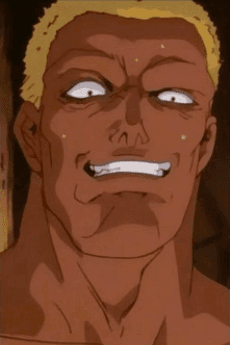
BerserkGuts' adoptive father, and leader of a mercenary band. Gambino trained Guts to be a mercenary like himself and even gave Guts his first scar (across his nose) during a practice fig
 SUPPORTING
Judeau
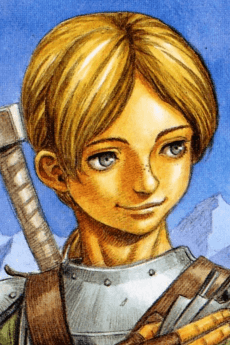
BerserkThe old Band of the Hawk's friendly mediator. A former circus performer who wielded throwing knives, Judeau was also well-aware of the world around him and was seen as a confidant
 SUPPORTING
Pippin
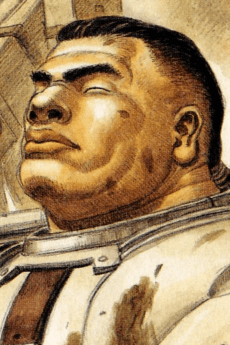
BerserkA massive dark-skinned man who wielded an equally massive mace. A former miner, Pippin lent his strength to the old Band of the Hawk. He was often associated with Rickert, who he s
 SUPPORTING
Corkus
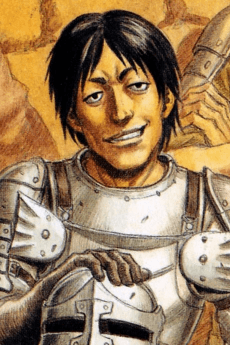
BerserkA loud-mouthed ex-thief. Corkus was fond of delusions of grandeur and constantly at odds with Guts. He was the leader of his own band of thieves before he joined the old Band of th
 MAIN
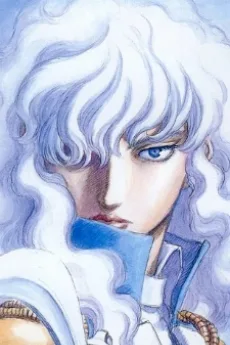
MAINGriffith
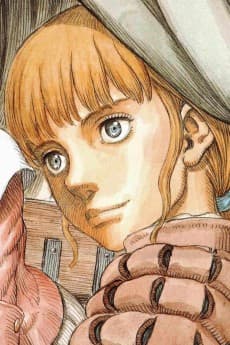
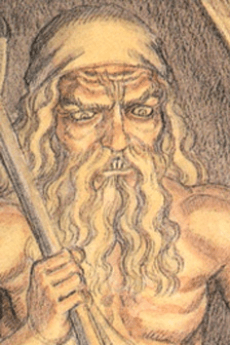
BerserkGriffith was the founder and leader of the mercenary unit known as the Band of the Hawk, named for his helmet which was forged in the shape of a Hawk's head. Extraordinarily charis
 MAIN
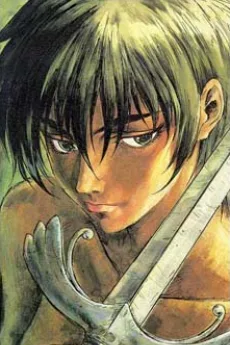
MAINCasca
BerserkCasca was the only female soldier in the original Band of the Hawk and is behind only to Guts and Griffith in swordsmanship. Her ambivalent relationship to both of them makes her m
 MAIN
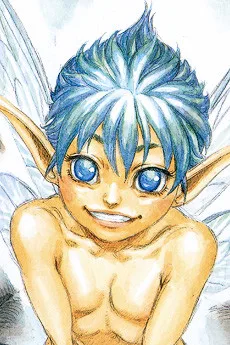
MAINPuck
BerserkA wind spirit from Elfhelm, a utopia on the island Skellig in the Western Sea. Elves in Berserk can only be seen by the open-minded; the devoutly religious cannot see Puck at all,
 SUPPORTING
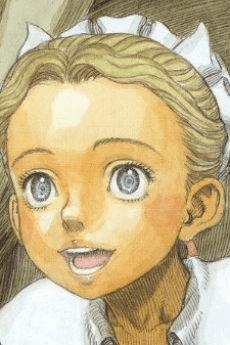
Erica
BerserkAdopted daughter of Godo. She was in a wagon being chased by trolls when the Band of the Hawk and Irvine saved her.
 MAIN
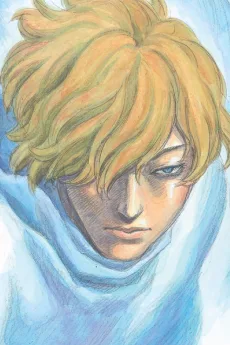
MAINSerpico
BerserkSerpico is Farnese's companion and unbeknownst to her, her paternal half-brother. During his time with the Holy See, Serpico was Herald for the Holy Iron Chain Knights. When aggres
 MAIN
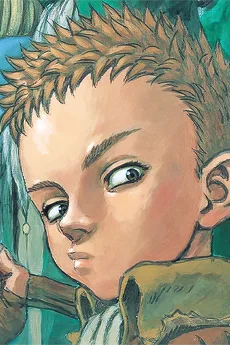
MAINIsidro
BerserkA runaway brat turned thief, Isidro dreams of becoming a great swordsman, which made him tag along with Guts. Despite his lack of strength and skill, he utilizes his small size and
 MAIN
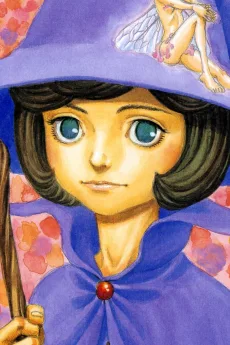
MAINSchierke
BerserkSchierke is a young witch-in-training, a disciple of the witch Flora. She is accompanied by an elf, Evarella. She aided Guts's group with a troll infestation in the nearby village
 SUPPORTING
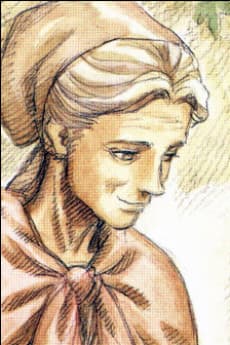
Flora
BerserkFlora is Schierke's mistress, who taught her in the arts of magic and Od (spirit energy, life force, etc). In addition to being a powerful witch of indeterminate age, she is a
 SUPPORTING
Isma
BerserkIsma is a young fishing girl who lives by the outskirts of the village on an island that holds the Sea God. Isma has short hair with long bangs that will cover half her face at tim
 SUPPORTING
Moonlight Boy
BerserkAlong the sea shore, Guts' party came across a young male child who not only looks similar to Guts and Casca but shows an attraction to both of them. When Guts began to be consumed