Appears In
Contents
Background
Background
Little is established about Isidro's family or childhood before he enters the story. He has already left home by the time he appears and supports himself through theft, scavenging and opportunism. Questions concerning his parents make him visibly uncomfortable, but the manga has not supplied enough information to establish the circumstances behind his departure without speculation.
He grows up fascinated by stories of exceptional warriors. Among the figures he admires is the legendary "Hundred Man Slayer," whose identity he initially does not realize belongs to Guts. Isidro wants fame and strength rather than the routine life of an ordinary villager, and running away gives him the freedom to pursue that ideal on his own terms.
His early survival depends more upon speed and cleverness than conventional swordsmanship. Isidro steals food, slips through crowds and uses thrown objects with unusual accuracy. Unlike Guts, who has spent almost his entire life being trained through real warfare, Isidro reaches adolescence with considerable natural talent but little disciplined instruction.
During the turmoil surrounding Albion, Isidro encounters Guts and becomes fascinated by his strength. Rather than accepting Guts' obvious lack of interest in taking on an apprentice, he begins following him and attempting to learn by observation.
That decision draws Isidro into Guts' increasingly unusual traveling party. He moves from surviving among ordinary refugees and thieves to confronting possessed creatures, trolls, apostles and astral beings. The scale of danger grows far faster than his experience, forcing him to develop through actual combat rather than the heroic adventures he originally imagined.
Personality
Personality
Isidro is energetic, boastful and highly competitive. He frequently claims that he will become the world's greatest swordsman and tends to measure himself against people whose experience and abilities are far beyond his own. His confidence often exceeds his actual skill, particularly during his earlier appearances.
He is also observant. Years spent stealing and surviving without stable protection have made him quick at judging opportunities, noticing openings and understanding when conventional rules can be ignored. This practical intelligence becomes one of his strongest advantages in combat.
Isidro dislikes admitting weakness. Being younger, shorter and less experienced than nearly everyone around him frustrates him, especially when Schierke criticizes his behavior or Guts seems uninterested in formally teaching him. He often responds by showing off or insisting that he already understands what he is doing.
His admiration for Guts is genuine despite the complaints. Isidro recognizes the difference between his own imagined version of a great warrior and someone who has actually survived hundreds of battles. He watches Guts closely and tries to copy techniques even when Guts never presents them as lessons.
He can appear selfish because of his background as a thief, but repeated events demonstrate considerable courage. Isidro often chooses to remain in dangerous situations when escaping would be easier, particularly once other members of the group are threatened.
His friendship with Isma brings out a more vulnerable side. Around her, his habitual boasting becomes mixed with embarrassment and genuine affection. The relationship shows that his dreams of greatness do not erase his desire for ordinary companionship.
Appearance
Appearance
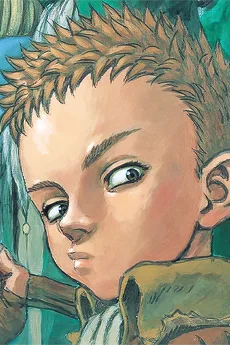
Isidro is considerably smaller than the adult members of Guts' party. The Berserk Official Guidebook gives him an estimated height of 130 cm, weight of 42 kg and age of fourteen during the Fantasia Arc.
He has messy brown hair, large expressive eyes and a compact frame. His face remains recognizably youthful even after considerable time spent traveling through dangerous regions.
His clothes are practical rather than armored. Isidro generally wears simple traveling garments suitable for climbing, running and scrambling through terrain where heavy protection would interfere with his mobility.
His equipment gradually becomes more distinctive as the journey continues. A short cutlass replaces the idea of using the same enormous weapons as Guts, while throwing knives and stones suit his natural accuracy.
The magical Salamander Dagger becomes his most recognizable weapon. Its small size fits Isidro's fighting style, while its association with fire gives him a supernatural offensive option against enemies ordinary steel might struggle to damage.
Abilities & Powers
Abilities & Powers
Isidro is an ordinary human without innate magical power. His abilities come from natural athleticism, survival experience, weapon training and magical equipment provided by allies.
His greatest natural talent is throwing accuracy. Even before receiving formal training, Isidro can hit distant targets reliably with stones and other improvised projectiles. This ability makes him useful against enemies that would be dangerous to approach directly.
He is extremely agile. Isidro climbs quickly, moves through confined environments and changes direction well enough to evade larger opponents. His size, which disadvantages him in contests of strength, becomes useful when fighting through terrain built around obstacles.
His early swordsmanship is crude. He tends to imitate dramatic movements without understanding the balance or timing behind them, and Guts quickly recognizes that trying to copy his own greatsword style would be unsuitable for Isidro's body.
Instead, Isidro gradually develops around lighter weapons. His cutlass allows him to strike quickly without sacrificing mobility, while throwing weapons let him pressure opponents before entering close range.
Guts' influence is most visible in Isidro's willingness to improvise. Rather than treating weapons as sacred extensions of a formal style, he uses whatever is available: stones, knives, terrain, fire and distractions. This resembles Guts' battlefield pragmatism more than traditional swordsmanship.
The Salamander Dagger adds supernatural power to his arsenal. Given to him through Flora's magical preparations, the weapon contains fire-elemental power associated with salamanders and can produce intense flames when used properly.
Isidro also develops better cooperation with other members of the party. He frequently operates beside Schierke, Puck and later Isma, using mobility and ranged accuracy while stronger fighters engage the main threat.
Later battles demonstrate that Isidro has become substantially more competent than the runaway who first followed Guts. He still lacks the raw ability to confront the strongest apostles directly, but he can defeat lesser supernatural enemies through coordinated attacks and intelligent use of his equipment.
Named Techniques
Named Techniques
Isidro does not practice a formally named martial art, and most of his techniques are practical applications rather than announced attacks.
Stone Throwing uses his exceptional natural accuracy to strike enemies at range. Ordinary stones become surprisingly effective because Isidro can target eyes, hands and other vulnerable areas.
Throwing Knives extend the same ability to dedicated weapons, giving him greater lethality while preserving distance.
Cutlass Fighting uses a short curved sword appropriate to Isidro's size. His style emphasizes mobility and opportunistic strikes rather than contests of strength.
Salamander Dagger channels fire-elemental power through the magical dagger given to him during the journey. It gives Isidro an effective weapon against creatures vulnerable to flame.
Fire-Assisted Combination Attacks combine the Salamander Dagger with movement, thrown objects or environmental opportunities. Isidro rarely relies on a single clean duel when a more chaotic solution is available.
Relationships
Relationships
Guts is Isidro's idol, reluctant mentor and primary model of what a great swordsman looks like. Isidro begins following Guts after witnessing his extraordinary combat ability and later learns that he is the famous Hundred Man Slayer whose exploits he had admired. Guts does not establish a structured training program, but Isidro studies his movements and receives occasional practical advice. Their difference in size eventually forces Isidro to understand that copying Guts exactly would be useless; he has to develop a style suited to his own body.
Puck quickly becomes one of Isidro's closest companions. Puck shares his mischievous temperament and frequently joins him in jokes, arguments and exaggerated reactions to the more serious members of the party. Their friendship gives Isidro someone with whom he can behave like a child rather than constantly proving that he belongs among hardened adults.
Schierke has an argumentative relationship with Isidro. Schierke is disciplined, magically educated and often serious, while Isidro is impulsive and dismissive of formal study. They frequently insult or criticize each other, yet repeated battles develop real trust between them. Isidro's physical instincts complement Schierke's magical knowledge, and both gradually become important younger members of the group rather than simple dependents.
Casca travels under the protection of Guts' party during much of Isidro's journey. Isidro initially understands little about her history or connection to Guts, but he participates in protecting her during attacks and travel.
Farnese becomes one of the adult companions traveling with Isidro. Farnese's growing responsibilities within the group contrast with Isidro's tendency to ignore authority, but both develop significantly after joining Guts.
Serpico represents a very different type of swordsman from Guts. Serpico relies on speed, precision and tactical positioning rather than overwhelming force, making his combat methods closer in some respects to what Isidro can realistically emulate.
Flora provides the magical equipment that becomes essential to Isidro's later fighting style. Flora's preparations include elemental tools designed specifically around the strengths of individual members of Guts' group, and the Salamander Dagger gives Isidro access to fire magic without requiring him to become a spellcaster.
Ivalera travels alongside Schierke and frequently participates in the lighter interactions among the group's younger members. Ivalera shares Puck's ability to comment irreverently on events that the human travelers treat more seriously.
Isma becomes especially important to Isidro during the group's voyage. Isma has grown up isolated on an island and responds enthusiastically to meeting outsiders, while Isidro enjoys having someone near his own age who does not immediately treat him as an inexperienced child. Their friendship develops into mutual affection, though Isidro often becomes embarrassed when those feelings are obvious.
Roderick commands the Seahorse during the voyage carrying Guts' party. Roderick's competence at sea gives Isidro another example of leadership and skill that does not depend upon overwhelming physical strength.
Magnifico travels aboard the same vessel and often provides an example of adult incompetence against which Isidro's street intelligence compares favorably. Magnifico's schemes rarely earn the younger boy's respect.
[Isma's later disappearance becomes one of the most emotionally painful events Isidro experiences. When the supernatural structure sustaining Elfhelm collapses, Isma disappears with other astral beings tied to the island, leaving Isidro unable to prevent the loss despite having become considerably stronger since meeting her.](#spoiler)
Story Role
Story Role
Isidro enters during the Conviction-era material after the story has already established Guts as an experienced Black Swordsman. His presence introduces a younger perspective that can observe Guts without knowing most of the history revealed to readers during the Golden Age.
His desire to become a great swordsman immediately draws him toward Guts. He follows the older fighter despite receiving little encouragement and effectively inserts himself into the journey through persistence.
During the crisis around the Tower of Conviction, Isidro's agility and throwing ability let him contribute despite lacking the strength to face major supernatural enemies directly. His actions establish that he is more than a passive child needing constant rescue.
As Guts reunites with Casca and begins traveling with Farnese and Serpico, Isidro becomes part of the emerging group around him. This marks an important change from the Black Swordsman's earlier isolation: Guts now has not only companions but someone actively treating him as a teacher.
The troll conflict surrounding Enoch Village significantly expands Isidro's combat role. Flora's magical equipment allows him to participate against creatures that ordinary weapons cannot reliably defeat, while Schierke's presence introduces a young companion with abilities radically different from his own.
Isidro's relationship with Guts also evolves during these battles. He begins understanding that strength is not created simply by copying dramatic sword swings. Guts' size, experience and physical power are unique to him, requiring Isidro to find techniques built around speed and throwing instead.
The Sea God material gives Isidro a larger personal subplot through his meeting with Isma. The girl provides an emotional connection outside the established traveling party and turns the island from merely another dangerous location into somewhere Isidro has a personal reason to protect.
When the party finally reaches Elfhelm, Isidro experiences a comparatively peaceful period alongside Isma, Schierke and the island's magical inhabitants. The respite gives him a glimpse of ordinary companionship after years of living as a runaway and traveler.
That stability collapses after Griffith reaches the island. The destruction of Elfhelm and disappearance of many astral inhabitants includes Isma, turning the loss into a direct personal trauma for Isidro rather than another catastrophe centered exclusively on Guts and Casca.
The post-Elfhelm journey therefore places Isidro in a position he has rarely occupied before: the energetic boy who normally pushes forward is forced to deal with grief that cannot be solved through training or a clever combat trick.
Character Development
Character Development
Isidro begins with a childish understanding of strength. Becoming the greatest swordsman sounds to him like a matter of finding someone powerful, copying that person's methods and eventually surpassing everyone else.
Guts quickly disproves this assumption without intending to. The Dragon Slayer is completely unsuitable for someone of Isidro's size, and Guts' fighting style rests on decades of experiences the boy cannot simply imitate.
The resulting adjustment is one of Isidro's most important developments. Rather than abandoning his ambition, he begins adapting it. Throwing accuracy, speed and shorter weapons become legitimate foundations for a fighting style rather than signs that he has failed to become another Guts.
Travel also expands his understanding of heroism. At first, fame and personal greatness matter enormously. Repeatedly having to defend people beside him gives combat a more immediate purpose.
His arguments with Schierke contribute to that growth. Isidro frequently mocks her seriousness while Schierke criticizes his recklessness, but both are inexperienced compared with the adults around them. Learning to trust each other's very different strengths helps both function more effectively.
Isma gives Isidro an important emotional connection separate from his admiration for Guts. She likes him without requiring him to become famous first, which challenges the assumption that greatness must precede belonging.
The loss of Isma deepens this development considerably. Isidro has experienced danger before, but much of his confidence rests on the idea that becoming stronger lets him solve more problems. Her disappearance confronts him with a loss his growing combat ability cannot reverse.
His later anger and grief therefore parallel, on a much smaller scale, problems faced by Guts throughout his own life. Whether Isidro responds by becoming consumed by strength or learns from the example of the people around him remains important to his continuing development.
Etymology
Etymology
The name Isidro is a Spanish form of Isidore, ultimately derived from the Greek name Isidoros. The Greek components are commonly interpreted as meaning "gift of Isis," referring to the Egyptian goddess Isis.
The original Japanese manga renders his name as イシドロ (Ishidoro). English releases use Isidro, reflecting the intended Western-style naming used throughout much of Berserk.
The choice fits the broad European influences visible across the setting, although the manga does not provide an in-universe explanation for his name or connect its historical meaning directly to his character.
Unlike Guts, Griffith or several members of the Band of the Hawk, Isidro has no widely used formal title. His identity remains tied primarily to his personal name and ambition to become a swordsman.
Trivia
Trivia
-
The Berserk Official Guidebook gives Isidro's Fantasia-era measurements as 130 cm, 42 kg and 14 years old.
-
His exceptional natural talent is throwing accuracy, not conventional swordsmanship.
-
Isidro originally admires the legendary Hundred Man Slayer without realizing that the man he is following is Guts himself.
-
The Salamander Dagger allows him to use fire-elemental power despite possessing no innate magical training.
-
His Japanese voice actor in the 2016–2017 television anime is Hiro Shimono, while Erik Scott Kimerer voices him in the English dub.
-
His name is the Spanish form of Isidore, ultimately derived from the Greek Isidoros.
-
Isidro and Puck frequently provide the lightest interactions within Guts' otherwise grim traveling party.
-
His eventual fighting style reflects Guts' broader lesson that a warrior must use the abilities and equipment suited to his own body rather than blindly imitating another fighter.
In Other Media
In Other Media
Isidro appears in the 2016 television adaptation of Berserk, which begins with material from the Conviction Arc and continues into the earlier portion of the Falcon of the Millennium Empire Arc. The series aired across 2016 and 2017 for a total of 24 episodes.
Hiro Shimono voices Isidro in Japanese, while Erik Scott Kimerer performs him in the English-language version. The same adaptation features Hiroaki Iwanaga as Guts, Kaoru Mizuhara as Puck, Yoko Hikasa as Farnese and Chiwa Saito as Schierke.
The anime depicts Isidro's early pursuit of Guts, his involvement with the expanding traveling party and the development of his fighting style once magical equipment becomes available. His interactions with Puck and Schierke also preserve much of his role as one of the group's younger and more openly expressive members.
The 2016–2017 adaptation does not reach the later sea voyage, Isma storyline or Elfhelm material. Those developments therefore remain exclusive to the manga among major screen adaptations and are treated as spoiler material above.
Isidro also appears as a playable character in Berserk and the Band of the Hawk. His combat representation emphasizes agility, rapid strikes and the fire-producing Salamander Dagger rather than the sweeping heavy attacks associated with Guts.
He has additionally appeared in manga-based merchandise and ensemble artwork featuring Guts' later traveling party, although his representation is considerably less extensive than that of central characters such as Guts, Griffith and Casca.
Reception
Reception
Isidro occupies a distinctive role among Berserk's later cast because he experiences Guts from the perspective of an aspiring warrior. Characters who knew Guts during the Golden Age remember the person he once was, while Isidro meets the already notorious Black Swordsman and initially sees exactly the kind of legendary fighter he wants to become.
That admiration creates an important contrast between appearances and experience. Isidro sees the strength first; readers know the suffering required to produce it. His attempts to copy Guts therefore carry an implicit warning even when the scenes themselves are comparatively light.
His frequent exchanges with Puck also make him one of the series' principal sources of comic relief during later arcs. Their exaggerated reactions and arguments create breaks in otherwise prolonged sequences of horror and violence without removing Isidro from serious battles altogether.
The addition of Schierke gives his character a more useful counterbalance. Both are young travelers entering an adult conflict, but Schierke possesses formal education and magical discipline while Isidro relies on instinct and street experience. Their disagreements allow both approaches to prove useful.
His fighting style has similarly developed an identity independent of Guts. Isidro begins as a boy dreaming of swordsmanship but is most naturally gifted at throwing. Accepting that difference allows him to combine cutlass fighting, projectiles and magical fire rather than attempting to reproduce a greatsword style physically impossible for him.
The Isma storyline gives Isidro considerably greater emotional weight in the manga. Their relationship allows him to experience companionship not built around apprenticeship or rivalry, while her disappearance after Elfhelm gives him a personal loss that cannot be treated as merely another part of Guts' tragedy.
That development leaves Isidro positioned to confront a question central to many Berserk characters: whether suffering must produce obsession. The young thief originally follows Guts because he wants his strength; later events increasingly expose him to the cost that can accompany such strength, forcing his admiration to mature along with him.
Related Characters
 SUPPORTING
Flora
BerserkFlora is Schierke's mistress, who taught her in the arts of magic and Od (spirit energy, life force, etc). In addition to being a powerful witch of indeterminate age, she is a
 MAIN
MAINGuts
BerserkGuts is the protagonist of Berserk. He is a tall, muscular man that swings a huge sword called the Dragon Slayer, he has a prosthetic left forearm that has a magnetic grip that als
 MAIN
MAINPuck
BerserkA wind spirit from Elfhelm, a utopia on the island Skellig in the Western Sea. Elves in Berserk can only be seen by the open-minded; the devoutly religious cannot see Puck at all,
 MAIN
MAINSchierke
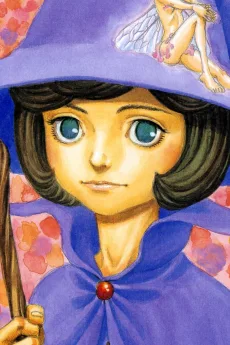
BerserkSchierke is a young witch-in-training, a disciple of the witch Flora. She is accompanied by an elf, Evarella. She aided Guts's group with a troll infestation in the nearby village
 MAIN
MAINCasca
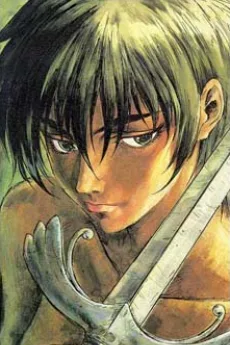
BerserkCasca was the only female soldier in the original Band of the Hawk and is behind only to Guts and Griffith in swordsmanship. Her ambivalent relationship to both of them makes her m
 MAIN
MAINSerpico
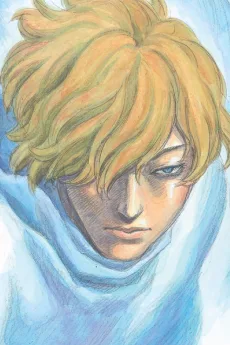
BerserkSerpico is Farnese's companion and unbeknownst to her, her paternal half-brother. During his time with the Holy See, Serpico was Herald for the Holy Iron Chain Knights. When aggres
 SUPPORTING
Isma
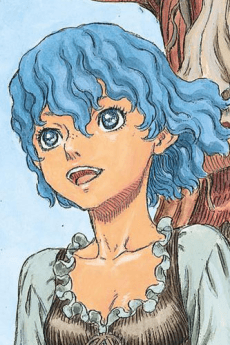
BerserkIsma is a young fishing girl who lives by the outskirts of the village on an island that holds the Sea God. Isma has short hair with long bangs that will cover half her face at tim