Appears In
Quick Facts
| Gender | Male |
| Age | 37- |
| Role | SUPPORTING |
| Series | One Piece |
| Full Name | Buggy |
| Gender | Male |
| Age | 39 before the time skip; 41 after the time skip |
| Birthday | August 8 |
| Height | 192 cm |
| Origin | Grand Line |
| Affiliation | Cross Guild |
| Former Affiliations | Buggy Pirates; Buggy’s Delivery; Roger Pirates; Seven Warlords of the Sea |
| Occupation | Pirate captain; Emperor of the Sea |
| Aliases | Buggy the Clown; Star Clown Buggy |
| Devil Fruit | Bara Bara no Mi |
| Devil Fruit Type | Paramecia |
| Bounty | 3,189,000,000 berries |
| Former Captain | |
| Former Crewmate | |
| Debut | Chapter 9; Episode 4 |
Contents
Background
Background
Buggy was born on the Grand Line and went to sea at a young age. He served as an apprentice aboard the Roger Pirates alongside Shanks, participating in the crew’s voyages during the final years of the Great Pirate Era’s most celebrated captain. Although the two apprentices frequently argued, they shared the dangers and discoveries of a crew that included figures such as Silvers Rayleigh, Scopper Gaban, and Crocus. Buggy developed an early fascination with treasure and wealth, contrasting with Shanks’s more romantic view of piracy.
During his apprenticeship, Buggy acquired a treasure map and obtained the Bara Bara no Mi. He initially intended to sell the fruit for a large sum and pursue the treasure indicated on the map. After Shanks startled him, however, Buggy accidentally swallowed the fruit and dropped the map into the sea. Because Devil Fruit users lose the ability to swim, he was unable to retrieve it without Shanks’s help. Buggy consequently blamed Shanks for both the loss of the fruit’s potential sale value and the apparent destruction of his treasure-hunting plans.
When the Roger Pirates reached the final stage of their voyage, Buggy became ill shortly before the crew’s journey to Laugh Tale. Shanks stayed behind to care for him, leaving both apprentices absent from the voyage’s ultimate destination. Following the crew’s dissolution and Roger’s death, Buggy rejected Shanks’s invitation to join him. He eventually formed the Buggy Pirates, gathering circus-themed officers and subordinates around himself.
By the beginning of the main story, Buggy had established a base in Orange Town and acquired a map of the Grand Line. His crew terrorized civilians and used powerful Buggy Balls to destroy buildings. His defeat there began a long, uneven rise in which personal setbacks repeatedly opened paths to greater influence.
Personality
Personality
Buggy is vain, theatrical, greedy, and intensely conscious of status. He expects dramatic entrances, exaggerated praise, and unquestioning obedience from his followers. Treasure is one of his strongest motivations, and he commonly evaluates opportunities according to their monetary value. He is also willing to plunder settlements, threaten civilians, and execute opponents when doing so serves his pride or ambitions.
His most conspicuous insecurity concerns his large red nose, which is natural rather than part of his clown makeup. Buggy often interprets unrelated words as insults about it and can respond with immediate rage. This sensitivity is not merely a recurring visual trait; it reveals how easily his self-image can be destabilized. The more loudly he asserts his magnificence, the clearer his fear of humiliation becomes.
Despite his cruelty, Buggy is not consistently fearless. He panics in the presence of opponents whose power greatly exceeds his own, avoids unnecessary danger when possible, and readily attempts to escape situations that threaten his life. His cowardice is balanced by a strong survival instinct and a talent for exploiting confusion. He can improvise explanations, redirect attention, and place himself at the center of events even when he has little control over them.
Buggy also possesses genuine leadership qualities. He understands performance, speaks in emotionally charged language, and gives insecure or directionless followers a symbol around which to rally. His subordinates often remain loyal despite his selfishness, while strangers repeatedly mistake his associations and survival for proof of hidden strength. That misunderstanding becomes one of his greatest assets.
Appearance
Appearance
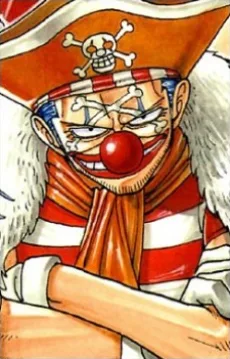
Buggy is a tall, lean man whose appearance combines traditional pirate clothing with the visual language of a circus clown. His defining feature is his round red nose. He wears facial makeup, including lipstick and markings around his eyes, while his long blue hair is often arranged into prominent side ponytails or concealed beneath elaborate headwear.
In his earliest appearances, Buggy wears a large bicorne hat bearing his crew’s Jolly Roger, a striped shirt, loose trousers, a sash, gloves, and a heavy captain’s coat. The broad silhouette makes him appear physically larger and more imposing than he is. His detachable limbs allow the costume itself to become part of his misdirection, since separated hands, feet, and weapons can emerge from unexpected angles.
After being separated from much of his body, Buggy temporarily adopts a smaller, improvised form consisting primarily of his head, hands, and feet. Once reunited with his missing parts, he resumes his full stature. Later outfits become increasingly ornate, reflecting his changing public status. He favors oversized coats, bright patterns, epaulettes, scarves, and towering hats that strengthen the impression of a flamboyant pirate monarch.
As his reputation expands, Buggy’s clothing and presentation become more regal even when his private circumstances are precarious. His Emperor-era image uses scale, pageantry, and subordinates to preserve the illusion of commanding authority.
Abilities & Powers
Abilities & Powers
Buggy ate the Bara Bara no Mi, a Paramecia-type Devil Fruit that allows him to divide his body into separate pieces without injury. He can levitate and direct most detached parts within a limited area around his feet. His feet must remain on the ground, but he can carry or conceal them while maneuvering the rest of his body through the air.
The fruit makes him effectively immune to ordinary cutting attacks. Blades can separate his body, but the pieces remain alive and controllable, allowing him to reassemble himself afterward. This defense is especially useful against swordsmen, though it does not protect him from blunt force, explosions, elemental attacks, restraint, or attacks directed at his vulnerable separated parts.
Buggy uses his power for mobility, deception, theft, surprise attacks, and escape. His hands can wield knives independently, his upper body can fly toward an enemy, and his pieces can surround a target from multiple directions. He can also separate into small sections to avoid attacks or infiltrate confined spaces. If his body parts are restrained or displaced beyond his effective range, however, his control and ability to reassemble are compromised.
Beyond his Devil Fruit, Buggy is skilled with throwing knives and explosives. His crew developed Buggy Balls, compact cannonballs with enough destructive force to devastate rows of buildings. Smaller Muggy Balls compress comparable explosive power into ammunition that can be concealed and fired at close range. Buggy lacks the demonstrated hand-to-hand strength of the series’ foremost combatants, but he is durable, resourceful, and exceptionally difficult to eliminate permanently.
Named Techniques
Named Techniques
Buggy’s techniques usually combine bodily separation with knives, surprise angles, or circus-style presentation. Their names often use “Bara Bara,” the Japanese phrase associated with things being scattered or coming apart. Rather than relying on a single fighting form, he treats his own body as a collection of mobile weapons.
Several named attacks have different English renderings across manga and anime translations. The following descriptions use their commonly recognized romanized names while summarizing their canonical function.
- Bara Bara Ho: Buggy launches one of his hands like a projectile, usually while holding a knife or attempting to seize a target.
- Bara Bara Senbei: He propels his lower body or feet forward in a spinning attack fitted with blades.
- Bara Bara Kinkyu Dasshutsu: An emergency escape technique in which he rapidly separates his body to evade danger.
- Bara Bara Car: Buggy rearranges his body into a low, wheeled configuration for rapid ground movement.
- Bara Bara Festival: He divides himself into numerous pieces and scatters them around an area, creating a chaotic multi-directional assault.
- Bara Bara Punch: A detached fist is launched toward an opponent as a flying punch.
- Bara Bara Kick: Buggy attacks with a detached or independently moving leg.
- Bara Bara Cannon: He sends his upper body or multiple parts forcefully toward an enemy in a direct aerial attack.
- Kuuchuu Kirimomi Dai Circus: Buggy spins through the air in a drill-like motion, turning his separated body into a rotating assault.
- Muggy Ball: He fires or deploys a miniature explosive projectile whose small size conceals substantial destructive power.
The usefulness of these techniques depends heavily on positioning. Buggy is most dangerous when an opponent does not understand the Bara Bara no Mi, cannot locate his grounded feet, or becomes distracted by his airborne upper body. Once his pieces are captured individually, the same flexibility can become a liability.
Relationships
Relationships
Buggy’s most important personal connection is with Shanks. The two grew up together as apprentices and behaved like competitive siblings, arguing over minor questions such as which region was colder while sharing the same dangerous voyages. Buggy blames Shanks for the accident that caused him to eat the Bara Bara no Mi and lose his treasure map. Beneath that resentment lies a more complicated grievance: Buggy once believed Shanks possessed the potential to follow Roger, and he reacted with anger and disappointment when Shanks did not immediately pursue that path after their captain’s death. Buggy’s later outburst reveals that some of his hostility came from abandoned admiration rather than the Devil Fruit incident alone.
Gol D. Roger was Buggy’s captain during his formative years. Buggy witnessed Roger’s charisma, daring, and place at the center of an extraordinary crew. Although Buggy’s values differ sharply from Roger’s, his later style of leadership reproduces a distorted version of that magnetic authority. Rayleigh and the other senior Roger Pirates were older crewmates who protected and guided the apprentices, though the series has not established a conventional family relationship between them.
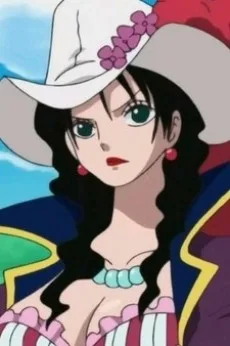
Among the Buggy Pirates, Mohji serves as a senior officer and beast tamer, while Cabaji acts as an acrobat and swordsman. Richie, Mohji’s lion, is another longstanding member of the crew and temporarily becomes captain during Buggy’s absence. Their loyalty survives separation, internal competition, and Buggy’s changing fortunes. Alvida becomes Buggy’s ally after acquiring her own Devil Fruit power; the two cooperate in pursuing the Straw Hat captain and later operate within the same broader organization.
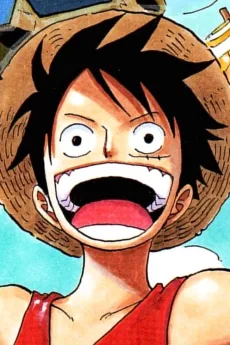
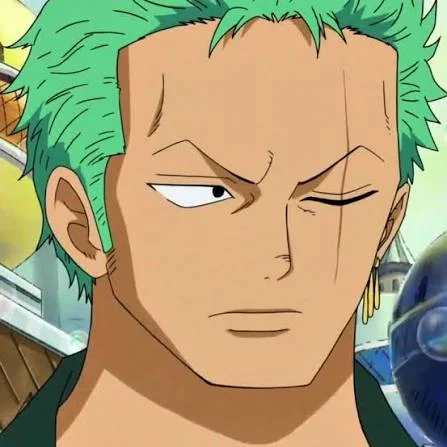
Buggy regards Monkey D. Luffy as an enemy after his defeat in Orange Town. Their relationship changes according to circumstance: Buggy seeks revenge, attempts to execute him in Loguetown, and later cooperates with him during a mass prison escape. Buggy resents Luffy’s ability to attract allies and survive impossible situations, even as his own career develops through a superficially similar pattern. Nami deceives and robs Buggy during the Orange Town conflict, while Roronoa Zoro proves that Buggy’s immunity to slashing does not make him invulnerable to strategy or physical force.
In Impel Down, Buggy forms a reluctant partnership with Mr. 3, whose caution and self-interest resemble his own. Their cooperation becomes one of Buggy’s most durable later alliances. Buggy also encounters Bentham, Emporio Ivankov, and Jinbe during the breakout, though he is primarily motivated by escape rather than their larger objectives.
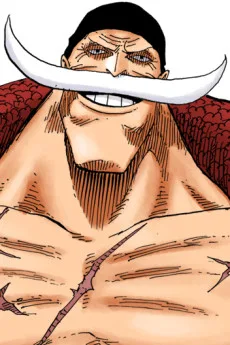
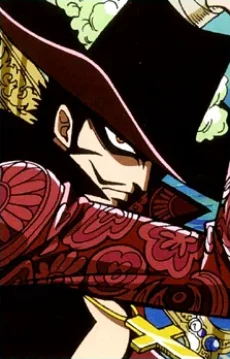
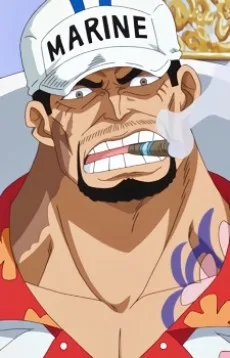
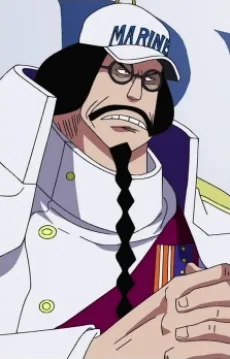
At Marineford, Buggy crosses paths with major pirates and Marines, including Edward Newgate, Dracule Mihawk, Sakazuki, and Sengoku. Whitebeard recognizes that Buggy’s growing group of escaped prisoners could disrupt the battlefield and manages him through calculated flattery. Buggy interprets the exchange as recognition from a legendary rival, further strengthening his followers’ admiration.
[Buggy later becomes publicly associated with Mihawk and Crocodile through Cross Guild. In reality, Crocodile and Mihawk are the organization’s principal power brokers, while Buggy’s subordinates mistakenly present him as their superior. Buggy is beaten and intimidated by both men, yet his existing fame makes his image commercially and politically useful.](#spoiler) Their relationship is therefore built on coercion, mutual utility, and a public hierarchy that contradicts the organization’s internal balance.
Buggy has no confirmed love interest, spouse, children, siblings, or named biological relatives. His strongest relationships are instead defined by apprenticeship, rivalry, shared survival, and the loyalty of followers who often understand far less about his circumstances than they believe.
Story Role
Story Role
Buggy serves as the principal antagonist of the Orange Town storyline. After occupying the town and driving away much of its population, he clashes with Luffy over the Grand Line map and treats Nami’s attempted alliance with suspicion. His conflict establishes several recurring features of the series: the strategic possibilities of Devil Fruit powers, the vulnerability of pirates who rely on fear, and Luffy’s hostility toward anyone who casually destroys another person’s cherished home or community.
After his defeat, Buggy is separated from most of his body and travels through a manga cover story chronicling his attempts to return to his crew. He meets Gaimon, survives a series of humiliations, and eventually reunites with his subordinates. This cover narrative was among the relatively few early cover stories adapted into the television anime.
Buggy returns in Loguetown as part of an alliance with Alvida. He nearly executes Luffy on the same platform where Roger died, but a sudden lightning strike destroys the execution structure. Buggy subsequently enters the Grand Line and continues seeking treasure. His apparent threat level remains inconsistent: he can terrorize ordinary communities, but he is badly outmatched by many of the powerful figures operating deeper in the world.
After being imprisoned in Impel Down, Buggy becomes entangled in Luffy’s infiltration and escapes alongside numerous dangerous prisoners. His history aboard Roger’s ship is exposed to the escapees, causing them to assume he must be a legendary pirate hiding his true ability. At Marineford, his theatrical behavior, accidental access to a broadcast Transponder Snail, and survival in the presence of world-famous combatants greatly magnify his reputation.
Character Development
Character Development
Buggy does not develop through a straightforward transformation from cowardice to courage or selfishness to altruism. Instead, his arc expands the consequences of traits he possessed from the beginning. His vanity becomes public branding, his instinct for self-preservation becomes political durability, and his ability to command a small circus-like crew develops into influence over increasingly large groups.
The contrast between Buggy and Shanks provides the emotional foundation of this progression. Both began as apprentices on the same ship, but their lives diverged sharply. Shanks built power through personal ability, trusted officers, and a deliberate understanding of the world’s balance. Buggy pursued treasure, local dominance, and immediate advantage. Nevertheless, public events eventually place them within the same symbolic category, demonstrating how reputation and institutional perception can obscure enormous differences between individuals.
Following the Battle of Marineford, Buggy is invited to join the Seven Warlords of the Sea. He uses the position to establish Buggy’s Delivery, a pirate mercenary service staffed in part by escaped prisoners. When the Warlord system is abolished, his organization becomes a target of the Marines. A debt to Crocodile and a publicity error then place him at the visible head of Cross Guild, leading the World Government to recognize him as an Emperor.
His most significant assertion of agency occurs when Crocodile and Mihawk discuss building power according to their own priorities. Although terrified of them, Buggy publicly declares that pirates should compete for the One Piece rather than settle for lesser goals. The speech reconnects him with the ambition of his youth and inspires his followers. For once, the grand statement attributed to Buggy reflects an aspiration he genuinely chooses, even though he still lacks the power normally expected of someone in his position.
Etymology
Etymology
The English word “buggy” can refer to a small carriage or cart. The term also evokes something erratic, defective, or associated with bugs, although the series has not established those secondary meanings as the definitive explanation for the character’s name. Buggy’s name is written phonetically in Japanese rather than with kanji that would provide an additional literal meaning.
His epithet is directly tied to his clown imagery. “Buggy the Clown” identifies his makeup, red nose, circus-themed crew, and theatrical manner. His later epithet, commonly rendered as “Star Clown” or “Genius Jester” in different translations, reflects his inflated reputation and emergence as a globally recognized figure rather than a fundamental change in his abilities.
The name of the Bara Bara no Mi comes from the Japanese expression “bara bara,” describing things scattered, separated, or broken into pieces. It succinctly describes the fruit’s power to divide the user’s body while preserving control over the detached sections.
Many of Buggy’s attack names preserve circus vocabulary. References to festivals, cannons, spinning performances, and grand spectacles turn combat into an extension of his stage persona. Even when an attack is tactically simple, its name contributes to the elaborate identity through which Buggy commands attention.
Trivia
Trivia
Buggy’s trivia reflects his unusual position as an early antagonist who remains relevant across multiple eras of the story. Details that initially appeared to be isolated jokes or visual motifs later acquired greater significance through revelations about his past and changing status.
His profile also contains several deliberate contrasts: he is immune to being cut but fears powerful swordsmen, wears an artificial clown face around a completely natural red nose, and gains worldwide authority without a corresponding series of conventional combat victories.
- Buggy is the second known Devil Fruit user introduced in the manga, after Luffy, and the first introduced as an antagonist.
- His red nose is a genuine part of his body rather than a removable clown accessory.
- He shares his birthday, August 8, with the Japanese wordplay associated with “bara bara,” as eight can be read “ba” in certain naming conventions.
- He and Shanks argued as children about whether the North Pole or South Pole was colder.
- Neither Buggy nor Shanks accompanied Roger to Laugh Tale because Buggy became ill and Shanks stayed with him.
- Buggy’s early cover story was adapted into the anime, unlike most manga cover serials.
- His original bounty was 15,000,000 berries, placing him among the notable pirate captains of East Blue without making him one of the sea’s dominant powers.
- His later bounty of 3,189,000,000 berries reflects the World Government’s assessment of his perceived leadership, associations, organization, and public threat rather than a documented leap in individual combat strength.
Buggy has ranked in every major official character popularity poll held during the series’ first seven poll cycles. His results have varied, but his repeated placement demonstrates unusual longevity for a villain introduced near the beginning of a long-running narrative.
In Other Media
In Other Media
The television anime preserves Buggy’s principal manga role while expanding some comic reactions, confrontations, and scenes involving his crew. His cover-story journey after Orange Town was adapted into full episodes, giving the anime audience a direct account of his reunion with his subordinates rather than leaving the events to still-image summaries.
Buggy appears in numerous animated films, specials, stage productions, attractions, and video games, although these portrayals generally exist outside the manga’s central continuity. His adaptable visual design and recognizable Devil Fruit power make him particularly suited to ensemble stories, boss battles, and comic interruptions.
In theatrical and attraction material, Buggy has been used both as a primary villain and as part of a larger antagonist group. He plays a major role in the 2007 One Piece Premier Show, appears through a cloned version in the 2014 production, and is involved in the 2018 show through Buggy’s Delivery. He also serves as the principal antagonist of the Live Attraction: Phantom stage production.
In games, Buggy appears as a playable or supporting character across fighting games, role-playing games, mobile titles, and the Pirate Warriors series. His mechanics commonly emphasize detachable limbs, ranged knife attacks, aerial movement, and Buggy Balls. He also appears in the crossover manga Cross Epoch, where One Piece characters interact with characters from Dragon Ball.
Reception
Reception
Buggy’s long-term reception is closely tied to the way his role has expanded without abandoning his original characterization. Readers first encountered him as a destructive but comparatively localized villain. His reappearances transformed him into a recurring survivor whose cowardice and ambition could operate alongside increasingly consequential world events.
In the first seven official One Piece character popularity polls, Buggy placed seventh, twentieth, thirtieth, twenty-first, thirty-fourth, thirty-fifth, and thirty-fourth, respectively. His highest result came in the first poll, when the cast was considerably smaller, but his continued presence in later rankings reflects sustained recognition among a rapidly expanding group of characters.
The character is frequently discussed as an example of the series’ ability to preserve and repurpose early narrative elements. His rise does not erase his limitations; instead, it makes those limitations essential to the satire. Institutions, subordinates, and enemies construct a version of Buggy that becomes politically real even when it is personally false.
Buggy’s cultural visibility also extends beyond conventional merchandising and adaptation. In 2021, researchers named a fruit-fly immune-response gene “Baramicin A,” with the name drawing on the protein’s division into multiple parts and Buggy’s body-separating ability. The reference illustrates the character’s recognition outside the immediate context of manga and anime fandom.
Related Characters
 SUPPORTING
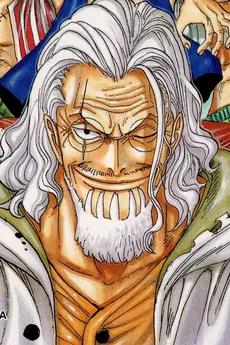
Scopper Gaban
One PieceScopper was a member of the Roger Pirates until the crew's dissolution.
 SUPPORTING
Crocus
One PieceCrocus is Laboon's caretaker and the overseer of the Lighthouse that guides ships coming down from Reverse Mountain into the Grand Line. Though he was a lighthouse keeper for most
 SUPPORTING
Mohji
One PieceMohji is the first mate of Buggy's Crew. Quite pompous and at times silly, Mohji has the ability to control any animal he wishes, or so he says. He has yet to prove it in the serie
 SUPPORTING
Cabaji
One PieceCabaji is the second mate in Buggy's crew as well as their primary swordsman who combines it with acrobatics (mostly on a unicycle) to fight his enemies.
 SUPPORTING
Richie
One PieceMohji's pet. Despite his size and fierce look he mostly acts like a kitten and has his goofy moments when he is doing nothing. He also isn't very bright and occasionally thinks abo
 SUPPORTING
Alvida
One PieceAlvida is first introduced in the first episode of One Piece as a fat looking female pirate captain with freckles all over her face. Coby, a pink coloured hair boy works for her af
 MAIN
MAINMonkey D. Luffy
One PieceLuffy is the captain of the Straw Hat Pirates and is best friends with all of them and values them over all else. At first glance, Luffy does not appear to be very intelligent, oft
 MAIN
MAINNami
One PieceNami is the third person to align herself with Straw Hat Pirates, and the fifth to actually join as an official member. Possibly one of the best navigators currently sailing the Gr
 MAIN
MAINRoronoa Zoro
One PieceZoro was the first crew member to be recruited by Luffy. Zoro is a skilled swordsman who fights with his own unique sword style known as santoryu (three katana fighting style). Thi
 SUPPORTING
Galdino
One PieceA self proclaimed brilliant strategist, Mr. 3 prides himself that his plans are supposedly flawless, and was ordered to kill the Straw Hat Pirates and decided to claim the bounty o
 SUPPORTING
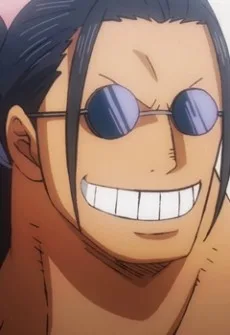
Bentham
One PieceMr. 2 Bon Clay is an "okama", a Japanese slang term for a transvestite. He has a flamboyant attitude, and is prone to singing and dancing. His martial art style is called "Okama Ke
 SUPPORTING
Ivankov Emporio
One PieceEmporio Ivankov, Iva for short, is the former "Queen" of the Kamabakka Kingdom, who is known as a "Miracle Person", and a commander of the Revolutionaries army.
 MAIN
MAINJinbe
One PieceJinbe is a whale shark fishman who was the second captain of the Sunny Pirates after Fisher Tiger, and who became a Shichibukai eight years ago. Jinbe's name comes from jinbei-zame
 SUPPORTING
Newgate Edward
One PieceEdward Newgate, also known as Whitebeard, is the captain of the Whitebeard Pirates.
 SUPPORTING
Dracule Mihawk
One PieceMihawk is said to be the strongest swordsman in the One Piece world, and he is commented as being a monster superior to monsters. Because of his status and power, defeating him is
 SUPPORTING
Sakazuki
One PieceSakazuki - Admiral Akainu, formerly known as Vice Admiral Sakazuki, is an Admiral in the world of One Piece, one of only three to hold such a position and subordinate only to Fleet
 SUPPORTING
Sengoku
One PieceThe supreme commander of all Naval forces in the One Piece world, his status apparent by the life-size seagull attached to his hat. He oversees the workings of the Navy from his ba