Appears In
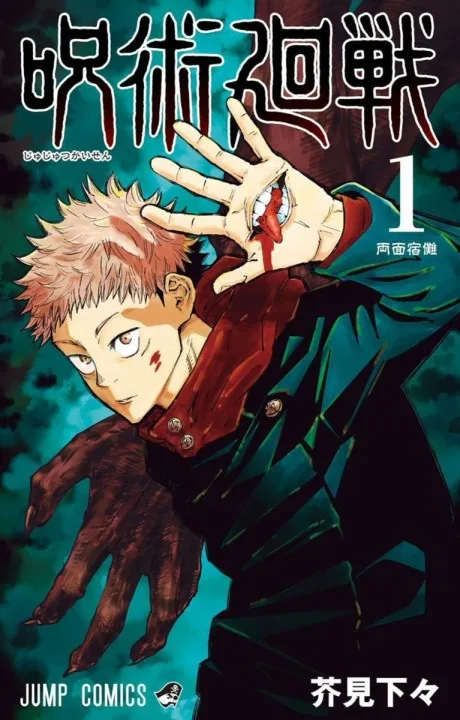
Quick Facts
| Gender | Female |
| Age | 16 |
| Role | MAIN |
| Series | Jujutsu Kaisen |
| Height | Just under 160 cm |
| Age | 16 |
| Birthday | August 7 |
| Gender | Female |
| Eye Color | Orange |
| Hair Color | Dyed Orange-Brown |
| Zodiac | Leo |
| Voice Actor (JP) | Asami Seto |
| Voice Actor (EN) | Anne Yatco |
| Favorite Food | Trendy Foods, Watermelon |
| Dislikes | Lightly Pickled Vegetables |
| Hobbies | Shopping |
| Affiliation | Tokyo Jujutsu High |
| Grade | Grade 3 Jujutsu Sorcerer |
| Mentor | |
| Debut | Jujutsu Kaisen Chapter 3; Episode 3 |
Contents
Background
Background
Nobara grows up in an isolated rural community somewhere in Tohoku, several hours from Morioka. The village is close-knit to the point of intrusion, and Nobara comes to despise what she sees as its suffocating tendency to scrutinize anyone who behaves differently. That resentment becomes one of the strongest reasons she wants to leave for Tokyo.
Her grandmother is a jujutsu sorcerer who uses the same Straw Doll Technique and teaches Nobara how to use it. According to the official fanbook, Nobara already performed some sorcerer work under her grandmother before entering Jujutsu High. Her admission comes through her grandmother's recommendation, although the two argue because her grandmother would prefer to keep training her locally while Nobara is determined to move to Tokyo.
Two people from her childhood shape her feelings about the village particularly strongly. Saori moves into the area from Tokyo when Nobara is young and immediately fascinates her with a more cosmopolitan lifestyle. Nobara and Fumi, another girl from the village, spend time at Saori's house until the local community's hostility eventually drives Saori's family away.
That experience confirms Nobara's belief that the village punishes anyone who does not fit its expectations. Rather than romanticizing her hometown after leaving, she remains openly pleased to escape it. Her decision to become a jujutsu student is therefore practical as well as hereditary: sorcery gives her a legitimate route to Tokyo and the independence she has wanted for years.
Her upbringing also explains the absence of any particular reverence toward jujutsu institutions. Nobara respects competence and people she likes, not tradition for its own sake. Her grandmother's occupation gives her familiarity with curses before school, but her ambition is never presented as becoming a great sorcerer simply for prestige.
Personality
Personality
Nobara is confident, blunt, competitive, and extremely comfortable asserting her own preferences. She can be rude on first meeting, quickly judges other people, and refuses to soften an opinion simply because someone may dislike hearing it. Her first interactions with Yuuji and Megumi immediately establish that she intends to be treated as an equal rather than accommodated as the only girl in the group.
She places considerable value on appearance, shopping, fashion, and enjoying city life. None of those interests conflict in her mind with being a violent close-range sorcerer. Nobara rejects the expectation that toughness should require her to suppress traditionally feminine interests, just as firmly as she rejects the idea that femininity makes her weaker.
That outlook becomes explicit during her argument with Momo Nishimiya at the Kyoto Goodwill Event. Momo explains the harsher standards imposed on female sorcerers, particularly within old jujutsu families, but Nobara refuses to reduce herself or other women to whether they conform to those standards. She can admire Maki Zenin while disliking Mai Zenin, because she judges them as individuals rather than treating shared hardship as an automatic excuse for behavior.
Her self-confidence is not invulnerability. Nobara cares far more about her classmates than she initially admits and reacts strongly when she believes one of them has been harmed. Her habit of insulting Yuuji and Megumi becomes part of an increasingly comfortable friendship rather than genuine hostility.
Nobara also has a pragmatic streak that distinguishes her from more idealistic sorcerers. During battle, she is willing to injure herself if doing so gives her technique access to an opponent, and she does not hesitate simply because an enemy appears human. At the same time, discovering that an opponent possessed genuine human emotions can trouble her afterward, showing that her combat decisiveness does not erase empathy.
Appearance
Appearance
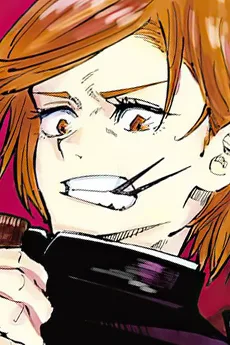
Nobara is a teenage girl standing just under 160 cm tall with a slim, athletic build. Her natural hair is dark brown, but she dyes it a warmer orange-brown shade and wears it in a short bob reaching roughly to her neck.
Her eyes are orange-brown in the anime's color design. She has relatively sharp eyebrows and expressive facial features that often shift between polished confidence, irritation, and exaggerated disgust depending on the situation.
Her standard Tokyo Jujutsu High uniform consists of a dark buttoned jacket with a matching knee-length skirt, black stockings, and brown shoes. She also wears a brown utility belt or pouch arrangement for carrying nails and equipment associated with her cursed technique.
Nobara pays more attention to clothing and presentation than most of her classmates. Shopping is her stated hobby, and arriving in Tokyo gives her access to stores and brands unavailable in her hometown. The official fanbook associates her with labels including Balenciaga and Onitsuka Tiger.
Her combat equipment is visually distinctive enough to function almost as part of her design. She carries a metal hammer, multiple nails, and a straw doll, combining objects associated with traditional curse rituals with an otherwise modern school uniform.
Abilities & Powers
Abilities & Powers
Nobara enters Jujutsu High as a Grade 3 sorcerer with prior practical experience rather than as a complete beginner. Her physical abilities are not at the extraordinary level of Yuuji, but she possesses good reflexes, pain tolerance, coordination, and enough close-range ability to fight while simultaneously preparing technique conditions.
Her inherited Straw Doll Technique allows her to channel cursed energy through a hammer, nails, and straw effigies. The technique is unusually flexible because Nobara does not always need to attack an enemy's body directly. If she obtains something sufficiently connected to the target, she can use that link to transfer damage from a distance.
The effectiveness of that connection depends on factors such as the value of the target fragment and the difference in strength between Nobara and her opponent. A severed limb, blood, or body part can provide an especially useful medium. This makes her exceptionally dangerous against enemies who divide their bodies, leave pieces behind, or assume that distance guarantees safety.
Nobara can also imbue ordinary nails with cursed energy and launch them using her hammer. The nails can pin targets, create delayed traps, redirect an opponent's movement, or become the anchors for Hairpin. Her fighting style therefore mixes direct projectile attacks with preparation and positional control.
She demonstrates unusually high tolerance for self-inflicted injury when strategy demands it. During the battle against the Death Painting brothers, Nobara deliberately drives nails into herself to exploit a cursed connection rather than trying to avoid all incoming damage.
Her cursed-energy control develops noticeably through combat. She experiences Black Flash during the Death Painting confrontation, entering the heightened state of cursed-energy understanding associated with successfully synchronizing a physical hit and cursed energy within an extremely narrow interval.
Nobara does not demonstrate Domain Expansion, Simple Domain, reverse cursed technique, or a Maximum Technique in established canon. Her strength instead lies in exploiting the unusual rules of her inherited technique creatively.
Named Techniques
Named Techniques
-
Straw Doll Technique — Nobara's inherited cursed technique, learned from her grandmother. It allows her to channel cursed energy through ritual implements such as nails, a hammer, and a straw doll to affect targets directly or through connected objects.
-
Resonance — Uses a severed body part or other meaningful connection to the target as an intermediary. Nobara places the material against a straw doll or otherwise establishes the link, then drives a nail through it to transmit cursed damage to the target.
-
Hairpin — Detonates cursed energy stored inside nails Nobara has already driven into a target or surrounding surface. The delayed activation allows nails that initially appear to have missed to become explosive traps.
-
Black Flash — A rare combat phenomenon rather than an innate Nobara-specific technique. Nobara achieves it by applying cursed energy almost simultaneously with a physical impact, causing spatial distortion and dramatically increasing the force of the blow.
Resonance is particularly valuable against enemies whose techniques create physical connections between bodies. Damage does not necessarily need to travel along an ordinary anatomical path; Nobara's technique instead exploits the cursed relationship between the object she possesses and the original target.
Hairpin complements Resonance by giving her more direct battlefield control. Where Resonance depends on obtaining an intermediary, Hairpin turns the nails themselves into delayed weapons, allowing Nobara to threaten enemies who avoid the initial strike.
Relationships
Relationships
Yuuji Itadori is one of Nobara's closest friends and her first-year teammate. Their similar capacity for impulsive behavior quickly creates a sibling-like dynamic built around arguments, shared jokes, and spontaneous cooperation. Nobara frequently insults him, but she becomes genuinely distressed when she believes he has died and later fights beside him with almost instinctive coordination.
Megumi Fushiguro is the third member of their first-year trio. Nobara often finds his seriousness irritating and joins Yuuji in teasing him, but she trusts Megumi's judgment and combat ability. Their personalities differ sharply, yet the three students become close enough that Nobara sees their continued presence in her life as something worth protecting.
Satoru Gojou is Nobara's teacher and the sorcerer who introduces her to Yuuji and Megumi. She does not idolize him in the manner some outsiders might expect from someone studying under the strongest sorcerer; his behavior regularly annoys her, and she is comfortable criticizing him openly.
Saori is one of the most important people from Nobara's childhood. Saori's arrival from Tokyo represents the possibility of a life beyond the village, while the hostility that drives her family away reinforces Nobara's hatred of the community's narrow-mindedness. Nobara continues hoping to see her again after moving to Tokyo.
Fumi is Nobara's childhood friend from the same village. The two bond over their friendship with Saori, and Fumi later remembers Nobara as unusually stubborn even as a child. Their separation when Nobara leaves for Tokyo is one of the few moments in which Nobara openly struggles with saying goodbye.
Maki Zenin is a senior student Nobara respects. Nobara's admiration does not come from Maki fitting a prescribed image of female strength; she simply considers Maki impressive and likes her personality.
Mai Zenin becomes one of Nobara's Kyoto rivals. Nobara dislikes Mai's behavior almost immediately and refuses to excuse it purely because Mai has suffered under the Zenin clan's expectations.
Momo Nishimiya argues with Nobara during the Goodwill Event over what female sorcerers are expected to endure. Nobara rejects Momo's framing that women must meet special standards of beauty and competence to be valued, insisting instead on defining herself according to her own standards.
Kasumi Miwa and Nobara have comparatively limited direct interaction, though they stand on opposite sides during the inter-school event and remain part of the broader network of Tokyo and Kyoto students.
Akari Nitta accompanies Nobara during part of the Shibuya Incident. Nobara ultimately chooses to return toward the active combat zone despite Akari's attempt to keep less experienced sorcerers away from the most dangerous fighting.
Arata Nitta encounters Nobara during the Shibuya Incident and uses his technique after she suffers catastrophic injuries, preventing the damage from worsening while stressing that survival cannot be guaranteed.
Mahito becomes Nobara's principal direct enemy in Shibuya. Her Straw Doll Technique is particularly troublesome for him because Resonance can affect the soul through a connected body, making Nobara one of the relatively few sorcerers capable of meaningfully damaging him.
Eso and Kechizu fight Nobara and Yuuji during the Death Painting investigation. The encounter forces Nobara into one of her most extreme uses of Resonance and produces her first known Black Flash.
Nobara's grandmother is her original jujutsu instructor and the person from whom she learns the Straw Doll Technique. Their relationship is strong enough for her grandmother to recommend Nobara to Tokyo Jujutsu High, but they argue because Nobara refuses to remain in the countryside under her continued supervision.
No canonical romantic partner or confirmed love interest is established for Nobara.
Story Role
Story Role
Nobara enters the main story after arriving in Tokyo for enrollment at Jujutsu High. Gojou brings her together with Yuuji and Megumi and immediately tests the new students by sending Nobara and Yuuji into an abandoned building containing curses.
The mission establishes both her confidence and her weaknesses. Nobara initially treats the assignment competitively, but a curse uses a human child as a hostage and forces her to surrender her weapons. Yuuji's intervention gives her the opportunity to recover and destroy the curse with Resonance, beginning the partnership that defines much of her early story.
After the detention-center incident, Nobara and Megumi believe Yuuji has died. His eventual return shortly before the Kyoto Sister-School Goodwill Event infuriates Nobara as much as it relieves her, particularly because Gojou turned the reveal into a theatrical surprise.
At the Goodwill Event, Nobara clashes with Mai and then Momo. Her confrontation with Momo becomes one of her clearest statements of identity: Nobara refuses to accept the idea that being a woman requires her to choose between strength, beauty, anger, or admiration for another woman.
During the investigation connected to Yasohachi Bridge, Nobara and Yuuji become separated from Megumi and encounter Eso and Kechizu. Their Decay technique infects both students with corrosive blood, apparently forcing them into a race against time.
Nobara reverses the disadvantage by using her own infected body as a medium for Resonance. Because the brothers' technique connects them, she can damage them through herself while tolerating the resulting pain. She and Yuuji then synchronize their attacks and both achieve Black Flash during the battle.
The aftermath troubles her because the brothers were incarnated beings with human bodies and an emotional bond rather than ordinary mindless curses. She and Yuuji acknowledge the burden together without allowing it to destroy their resolve.
During the Shibuya Incident, Nobara enters the city with the sorcerer teams responding to the barrier crisis. She is initially directed away from the most dangerous fighting but refuses to remain safely removed while her friends continue battling inside.
She encounters Mahito's double and discovers that Resonance can damage the original Mahito through the clone's soul connection. Her technique therefore creates a rare opening for Yuuji, whose own attacks can also affect Mahito's soul.
The real Mahito later switches places with his double and uses Idle Transfiguration on Nobara's face at close range. She collapses after briefly recalling the people who occupied the metaphorical "seats" in her life and tells Yuuji to let everyone know that her life was not so bad. Arata Nitta stabilizes her injuries but gives no assurance that she will survive.
For much of the remaining manga, Nobara's condition is deliberately left unresolved. She is absent from the Culling Game and the preparations for the final confrontation with Sukuna, with other characters avoiding a definitive explanation to Yuuji.
Near the climax of the manga, Nobara awakens shortly before the final battle concludes. Because one of Sukuna's fingers remains inaccessible to ordinary destruction, she uses Resonance on it from a distant location, transmitting damage directly into Sukuna's soul and disrupting him at a decisive moment during Yuuji's final confrontation.
She subsequently reunites with Yuuji and Megumi, restoring the original first-year trio after their long separation.
Character Development
Character Development
Nobara begins with an unusually complete sense of who she wants to be. Unlike characters whose stories revolve around discovering confidence, she arrives in Tokyo already determined to dress how she likes, speak how she likes, and reject anyone attempting to define her through hometown expectations or gender.
Her development therefore comes less from changing those principles than from discovering which people deserve space in the life she has deliberately chosen. Early Nobara emphasizes leaving her village behind; over time, her friendships at Jujutsu High make belonging itself less threatening because the new relationships do not require her to sacrifice independence.
The metaphor she later uses for her emotional world is a limited number of chairs. She does not believe everyone deserves access to her life, and she is comfortable allowing most people to remain outside that circle. Saori and Fumi occupy early seats, followed gradually by people from Jujutsu High.
Her partnership with Yuuji is particularly important because the two learn to confront morally uncomfortable violence without pretending they can remain untouched by it. After killing Eso and Kechizu, neither tries to manufacture a simple justification; Nobara instead accepts responsibility while refusing to allow guilt to prevent future action.
Her confrontation with Momo similarly clarifies that self-definition is not simply rebellion for its own sake. Nobara's statement that she loves herself when she is pretty and loves herself when she is strong summarizes a worldview in which apparently contradictory qualities do not require reconciliation.
Her late return reinforces the same stubborn refusal to disappear quietly from other people's lives. Rather than returning through a dramatic transformation or newly invented power, Nobara affects the final battle through Resonance—the same inherited technique she has used from the beginning—applied at precisely the moment her friends need it.
The reunion with Yuuji and Megumi brings her development back to the relationships she once described as seats in her life. The girl who left her hometown primarily to escape a community ends the story with a community she chose for herself.
Etymology
Etymology
Nobara's given name is written 野薔薇. 野 can mean "field" or "wild," while 薔薇 means "rose." Together, nobara can refer to a wild rose.
Gege Akutami has discussed the name in connection with Nobara's design, explaining that the characters give it a thorny quality suitable for her personality. The rose imagery also fits the deliberate coexistence of femininity and aggression in her characterization, though that thematic interpretation should be distinguished from the literal reading of the name.
Her surname Kugisaki is written 釘崎. 釘 means "nail," directly echoing the nails she uses with the Straw Doll Technique, while 崎 means "cape" or "promontory."
Akutami developed her name and fighting style together, making the presence of the "nail" character in her surname a deliberate connection rather than an accidental linguistic resemblance.
Trivia
Trivia
- The official fanbook lists Nobara as sixteen years old, born on August 7, and enrolled at Tokyo Jujutsu High through her grandmother's recommendation.
- Her grandmother is also a jujutsu sorcerer and Straw Doll Technique user, and Nobara learned the inherited technique directly from her.
- Nobara's natural hair is dark brown; the orange-brown color associated with her standard appearance is dyed.
- She is just under 160 cm tall rather than having a published exact height.
- Her hobby is shopping. Her favorite foods are trendy dishes and watermelon, while she dislikes lightly pickled vegetables.
- Her stated source of stress is dry skin.
- Her ideal type, according to supplemental character material, is the historical figure Oda Nobunaga.
- Nobara's associated character songs selected by Gege Akutami are Sunny Day Service's "Seishun Kyousoukyoku" and Natsuko Nisshoku's "Ano Department."
In Other Media
In Other Media
The television anime adapts Nobara's introduction, early missions, Goodwill Event fights, Death Painting battle, and Shibuya storyline. Asami Seto voices her in Japanese, while Anne Yatco performs the English-language dub.
The anime expands the physicality of several of her fights through animation, particularly her exchanges with Momo and the simultaneous battle against Eso and Kechizu. Her Black Flash sequence with Yuuji receives additional audiovisual emphasis through synchronized editing and cursed-energy effects.
Nobara appears in Jujutsu Kaisen: Cursed Clash as a playable fighter. Her gameplay focuses on attaching marks through nail attacks and triggering them with Resonance, adapting the delayed and linked-damage structure of her manga technique into a fighting-game system.
She is also playable in Jujutsu Kaisen: Phantom Parade, where multiple versions of major characters are represented through different units and abilities. The game includes original scenarios alongside adaptations of material from the manga and anime.
Although Jujutsu Kaisen 0 takes place before Nobara enrolls at Jujutsu High, she appears extensively across broader franchise marketing, collaboration art, merchandise, mobile-game events, and ensemble promotional material centered on the first-year trio.
Reception
Reception
Nobara placed sixth in the first official Weekly Shonen Jump Jujutsu Kaisen character popularity poll with 9,590 votes, the highest position she achieved across the four major manga-era polls.
She ranked eleventh in the second poll with 2,152 votes, thirteenth in the third with 1,012 votes, and fourteenth in the fourth with 1,514 votes. Despite dropping numerically as the cast expanded, she remained one of the series' most recognizable female characters throughout serialization.
Critical and fan discussion has frequently centered on her refusal to fit a conventional supportive role within the first-year trio. Her fight with Momo is particularly associated with discussions of gender expectations in the series because Nobara explicitly rejects the premise that women should be evaluated through separate standards of appearance and strength.
Her partnership with Yuuji against Eso and Kechizu is likewise one of her most frequently highlighted combat sequences. The battle places Nobara's willingness to weaponize pain, the technical properties of Resonance, and her ability to achieve Black Flash within the same encounter, establishing her as a combatant whose effectiveness depends more on tactical compatibility than raw cursed-energy output.
The anime further increased her visibility through Asami Seto's performance, the adaptation of her major season-one battles, and her prominent position beside Yuuji and Megumi in promotional material for Jujutsu Kaisen.
Related Characters
 BACKGROUND
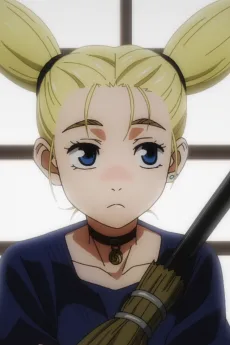
Saori
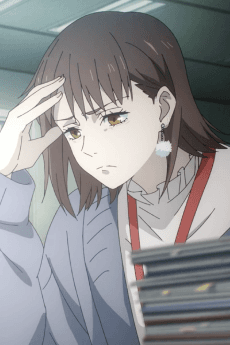
Jujutsu KaisenSaori was a good friend of Nobara Kugisaki, before she left her village.
 BACKGROUND
Fumi
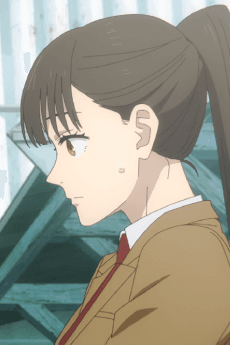
Jujutsu KaisenFumi is a minor character in the Jujutsu Kaisen series. She is Nobara Kugisaki's childhood friend.
 SUPPORTING
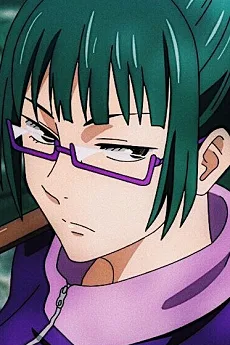
Maki Zenin
Jujutsu KaisenMaki Zenin is the older twin sister of Mai Zenin. Maki is a grade 4 sorcerer and a second-year at Tokyo Metropolitan Jujutsu Technical High School. She is from the main branch of t
 SUPPORTING
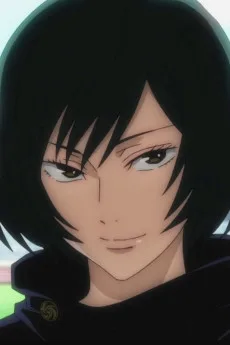
Mai Zenin
Jujutsu KaisenMai Zenin is the younger twin sister of Maki Zenin. Mai is a grade 3 sorcerer and a second-year at Kyoto Jujutsu Technical High School. As a child, Mai always relied on Maki since
 MAIN
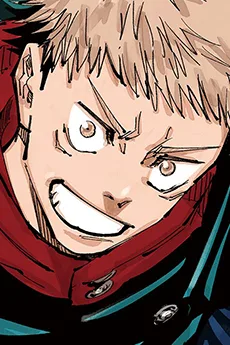
MAINYuuji Itadori
Jujutsu KaisenYuuji is a fair person who cares greatly for not only his comrades but anyone he views as people with their own wills, despite how deep or shallow his connection to them is. He car
 MAIN
MAINMegumi Fushiguro
Jujutsu KaisenMegumi is the deuteragonist of the Jujutsu Kaisen series. He is a first-year student at Jujutsu High and also a descendant of the Zenin Family. While outwardly stoic and calculatin
 MAIN
MAINSatoru Gojou
Jujutsu KaisenSatoru Gojou is one of the main protagonists of the Jujutsu Kaisen series. He is a special-grade jujutsu sorcerer and is widely recognized as the strongest in the world. Satoru is
 SUPPORTING
Kasumi Miwa
Jujutsu KaisenA second-year at Kyoto Metropolitan Curse Technical College. Kasumi is a hard-working, restrained, and considerate pacifist. She is also a big fan of Satoru Gojo.
 SUPPORTING
Arata Nitta
Jujutsu KaisenArata Nitta is a first-year student at Kyoto Jujutsu High and the younger brother of Akari Nitta.
 SUPPORTING
Mahito
Jujutsu KaisenMahito is one of the primary antagonists of the Jujutsu Kaisen series. He is a Cursed Spirit allied with Suguru Geto, Jogo, Hanami and several others. Their ultimate goal is the er
 SUPPORTING
Kechizu
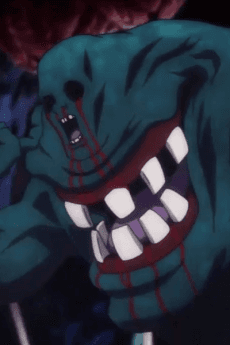
Jujutsu KaisenKechizu is an antagonist in the Jujutsu Kaisen series. He is a Cursed Womb: Death Painting and the youngest brother of Choso and Eso. Kechizu and Eso serve as the primary antagonis