Appears In
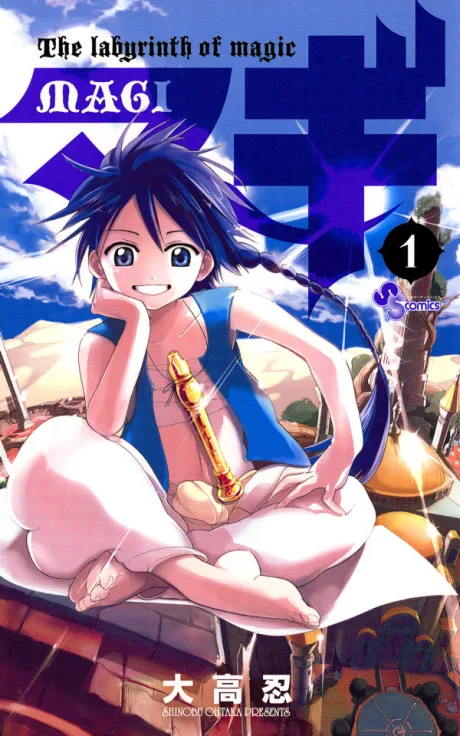
Quick Facts
| Gender | Male |
| Age | 29 |
| Role | SUPPORTING |
| Series | Magi: The Labyrinth of Magic |
| Height | 183 cm |
| Weight | 83 kg |
| Age | 29 at introduction; 34 in the final arc |
| Birthday | April 2 |
| Gender | Male |
| Species | Human |
| Birthplace | Tison Village, Parthevia Empire |
| Likes | Alcohol; women; adventure |
| Magic | Magoi Manipulation; Djinn Equip |
| Djinn | |
| Father | |
| Mother | |
| Affiliation | Sindria Trading Company; Sindria; Seven Seas Alliance; International Alliance |
| Occupation | King Vessel; merchant; former king of Sindria |
| Aliases | Sinbad of the Seven Seas; High King of the Seven Seas; Sinbad the Sailor; First-Class Singularity |
| Debut | Manga Night 35; anime Episode 7 |
Contents
Background
Background
Sinbad was born in Tison Village within the Parthevia Empire. His father, Badr, had served in the empire’s war against Reim and returned after losing a leg. Although villagers treated Badr as a coward for opposing further war, he taught his son that obeying destructive authority was not the same as protecting one’s country.
When Parthevian officials attempted to conscript Badr again, he refused and was taken away. Badr died during the campaign, leaving Sinbad to care for his chronically ill mother, Esra. The loss intensified Sinbad’s opposition to the poverty, war, and political coercion surrounding his village.
At fourteen, Sinbad met the wandering Magi Yunan, who recognized him as a potential King Vessel. Yunan guided him to Baal, the first Dungeon known to have appeared in the world. Sinbad entered alongside Drakon, then a Parthevian officer, and became history’s first Dungeon Capturer by winning Baal’s allegiance.
The wealth recovered from Baal briefly gave Sinbad the means to improve his village. He soon left Parthevia to trade abroad, beginning the journey chronicled in Magi: Adventure of Sinbad. His travels brought him to Imuchakk, Reim, Sasan, Artemyra, Heliohapt, and other nations, where he recruited companions who later became Sindria’s Eight Generals.
Sinbad founded the Sindria Trading Company and attempted to create an independent nation outside Parthevia’s control. The first Kingdom of Sindria was built with the support of allies including Serendine Dikumenowlz Du Parthevia, the displaced Parthevian princess. War with Parthevia destroyed this first kingdom, and the deaths of Serendine and many citizens caused Sinbad to absorb an enormous mass of black Rukh, leaving him half-fallen into depravity.
He later trained for a year with the Yambala Gladiators, mastering Magoi Manipulation and stabilizing the conflicting currents of white and black Rukh within him. Sinbad rebuilt Sindria on a southern island, established the Seven Seas Alliance, and expanded his trading company into an international economic power.
Personality
Personality
Sinbad is charismatic, sociable, and comfortable attracting attention. He speaks easily with royalty, merchants, warriors, and impoverished citizens, adjusting his manner to the audience without losing an air of familiarity. His confidence makes large political ambitions sound practical rather than impossible.
He is also a heavy drinker and habitual flirt. Alcohol often leaves him careless enough to lose clothing, jewelry, or sensitive information, much to Ja’far’s frustration. His reputation as the “Lady Killer of the Seven Seas” is partly self-created and partly reinforced by the ease with which he charms potential allies.
Behind the relaxed behavior is a calculating statesman. Sinbad quickly identifies what another person wants and can make assistance contingent upon cooperation. He genuinely wishes to improve people’s lives, but he is willing to manipulate friends, rivals, and foreign governments when he believes Sindria or the wider world requires it.
Sinbad regards arbitrary suffering as intolerable. His childhood under Parthevia taught him to distrust systems that demand sacrifice from powerless people while protecting rulers. He builds trade routes and political alliances as alternatives to conquest, believing that mutual prosperity can weaken the causes of war.
His confidence can become a conviction that only he sees the correct path. Sinbad’s extraordinary success reinforces the belief that destiny itself favors him. As a First-Class Singularity, he can perceive and redirect the world’s flow more readily than ordinary people, making it increasingly difficult for him to distinguish insight from entitlement.
He cares deeply for his companions and citizens, but his protectiveness sometimes denies them meaningful choice. This contradiction grows central to his later role: the boy who sought freedom from an empire gradually creates institutions powerful enough to determine the future of every nation.
Appearance
Appearance
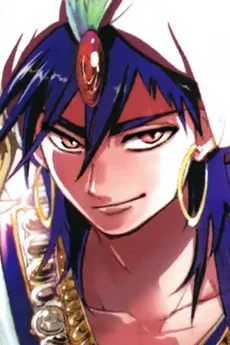
Sinbad is a tall, muscular man with tan skin, golden eyes, and very long purple hair tied into a ponytail. A single strand rises from the top of his head. His confident posture and frequent smile reinforce his public image as an approachable adventurer-king.
As ruler of Sindria, he wears flowing purple and white robes, a white turban decorated with feathers, and pointed red shoes. Gold ornaments, earrings, rings, bracelets, and necklaces cover much of his body.
Most of this jewelry serves a practical purpose. Seven pieces are Metal Vessels containing his Djinn: his father’s sword, two bracelets, two rings, and two necklaces. Their arrangement lets him select different magical attributes without carrying separate conventional weapons.
Sinbad’s clothing changes during his youth as he travels between cultures. He begins in simple Parthevian garments, later wears merchant clothing, and adopts elements from the countries he visits. These changing outfits mark his transition from village boy to sailor, merchant, Dungeon Capturer, and king.
Each Djinn Equip transforms his body differently. Baal produces dragon-like scales, horns, and a tail; Valefor gives him foxlike characteristics and white fur; Focalor creates a winged form; and Zepar reduces him to a small imp-like shape. His later Djinn forms reflect light, magnetism, darkness, and other attributes.
Abilities & Powers
Abilities & Powers
Sinbad is a King Vessel, a person recognized by Djinn and capable of directing Household Members. The Rukh strongly favors him, guiding his instincts and helping him perceive advantageous paths through storms, negotiations, and military crises. This relationship earns him recognition as a First-Class Singularity.
He possesses exceptional physical ability and swordsmanship. Before relying on complete Djinn Equip, Sinbad fights effectively with the scimitar inherited from his father. He combines weapon skill with rapid judgment, martial arts, and the endurance developed across years of travel.
Sinbad masters Magoi Manipulation after training with Shambal Ramal and the Yambala Gladiators. By matching and interfering with an opponent’s flow of Magoi, he can weaken spells, disrupt Djinn Equip, or reinforce his own attacks. The process places considerable strain on his body and cannot be maintained indefinitely.
His seven Metal Vessels give him unmatched elemental flexibility. Baal controls lightning, Valefor ice and stagnation, Focalor wind, Zepar sound and mental interference, Vepar magnetism, Furfur darkness, and Crocell light. Sinbad can perform Weapon Equip or transform completely through Djinn Equip.
The large number of contracted Djinn is itself extraordinary. After Sinbad conquers his seventh Dungeon, the Djinn forbid him and his Household from entering additional Dungeons because further captures would disrupt the intended distribution of power among King Vessels.
Sinbad is half-fallen, carrying both white and black Rukh. This condition allows him to function outside the simple divide between people following the world’s intended flow and those submerged in depravity. It also makes him unusually difficult for Magi and other Rukh-sensitive characters to predict.
After entering the Sacred Palace and displacing Ugo as its guardian, Sinbad acquires authority over the world’s Rukh. He can rewrite how souls perceive reality, change the hierarchy of gods, and impose a new direction upon humanity. This power surpasses ordinary Djinn Equip and makes him temporarily capable of restructuring the world itself.
Named Techniques
Named Techniques
-
Djinn Equip: Baal — merges Sinbad with the Lightning Djinn Baal, producing a dragon-like form that grants tremendous speed, electrical power, and destructive range.
-
Bararaq Saiqa — Baal’s sword and primary Metal Vessel attack, channeling powerful lightning through the blade.
-
Bararaq Inqerad-Saiqa — Baal’s Extreme Magic, summoning a colossal lightning dragon that descends upon the target and devastates a wide area.
-
Djinn Equip: Valefor — merges Sinbad with the Ice Djinn Valefor, giving him foxlike features and control over ice and stagnation.
-
Garufor Zairu — converts available water into numerous ice projectiles and launches them toward an opponent.
-
Garufor Kirestal — traps the target inside a large formation of ice crystals.
-
Stagnation — slows a target’s physical movement, senses, and thoughts by altering the flow of surrounding particles. Victims may not immediately realize how much their perception has decelerated.
-
Djinn Equip: Focalor — gives Sinbad command of wind and creates a winged form suited to aerial movement and large-scale pressure attacks.
-
Foraz Zora — releases a powerful wind attack that tears across the battlefield and can disperse large magical formations.
-
Djinn Equip: Zepar — transforms Sinbad into a small, imp-like form specializing in sound. Zepar’s voice can penetrate defenses and interfere directly with a listener’s consciousness.
-
Zepar’s Mind Control — implants Sinbad’s Rukh into targets through sound, allowing him to influence or control them over an extended period.
-
Djinn Equip: Vepar — grants magnetism, enabling Sinbad to manipulate metallic objects and produce large quantities of magnetically controlled blades.
-
Vepar Istella — creates hundreds of sharp swords and sends them raining onto the target.
-
Djinn Equip: Furfur — grants control over darkness and is associated with ecstasy and rending shadow.
-
Djinn Equip: Crocell — grants light-based power, producing a radiant form capable of high-speed and destructive attacks.
-
Magoi Manipulation — interferes with the Magoi circulating through another person or magical construct, weakening attacks and potentially disrupting an active Djinn Equip.
Relationships
Relationships
Badr is Sinbad’s father and earliest moral influence. Although villagers called Badr a coward for opposing Parthevia’s wars, Sinbad eventually understood that his refusal came from experience rather than fear. Badr’s sword later becomes the Metal Vessel of Baal, allowing Sinbad to carry his father’s legacy through every stage of his journey.
Esra is Sinbad’s mother. Illness confines Esra to their home, and Sinbad begins trading partly to support her. She gives him Badr’s sword before he enters Baal and encourages him to pursue the larger future she believes awaits him. Esra dies soon after Sinbad returns from the Dungeon, but not before seeing that he has survived and chosen his own course.
Yunan discovers Sinbad’s potential and directs him toward the first Dungeon. Yunan recognizes the immense favor Sinbad receives from the Rukh but later becomes wary of what that favor enables. Their relationship moves from guide and candidate to two powerful figures who disagree about whether destiny should be controlled.
Ja’far first encounters Sinbad as a child assassin sent to kill him. After Sinbad frees Ja’far from the organization controlling him, Ja’far becomes one of his closest companions. As Sindria’s chief administrator, Ja’far manages the work Sinbad neglects, rebukes his drinking and womanizing, and challenges manipulative political choices that other followers hesitate to question.
Drakon begins as Sinbad’s rival inside Baal. Though Drakon serves Parthevia and initially seeks the Dungeon’s power for the empire, repeated encounters expose the corruption of his superiors. He eventually becomes Sinbad’s Household Member, military commander, and one of the Eight Generals.
Hinahoho befriends Sinbad in Imuchakk after a difficult first encounter. Sinbad helps Hinahoho complete his coming-of-age trial and recognize his value beyond physical expectations. Hinahoho becomes a founding companion, Household Member, and leading representative of Imuchakk within Sindria.
Mystras Leoxses leaves Sasan after Sinbad challenges the kingdom’s isolation. Sinbad gives Mystras Leoxses the opportunity to see the wider world and treats him as a trusted companion. Mystras dies defending the first Sindria, a loss that remains central to the Eight Generals and to his younger brother Spartos.
Sharrkan Amun-Ra is a Heliohapt prince who joins Sinbad and later becomes one of Sindria’s Eight Generals. Sinbad trusts Sharrkan Amun-Ra as the kingdom’s swordsmanship instructor and grants him a Household Vessel linked to Focalor.
Yamraiha leaves Magnostadt and joins Sindria as its principal magician. Sinbad values Yamraiha’s research and uses her barrier magic to protect the island, while her presence supports his effort to unite people from mutually hostile nations.
Masrur enters Sinbad’s service after living as a Fanalis gladiator. Sinbad gives Masrur a position defined by choice rather than enslavement, and Masrur becomes a Household Member of Baal and one of his most dependable fighters.
Pisti serves as an Eight General and Household Member of Zepar. Sinbad relies on Pisti’s communication with animals, diplomatic upbringing, and mobility, even though her youthful behavior can mirror his own lack of restraint.
Spartos Leoxses joins Sinbad after the death of his brother Mystras. Sinbad accepts Spartos Leoxses as both an Eight General and a representative of Sasan, while Spartos maintains a quieter and more formal loyalty than several of his colleagues.
Serendine Dikumenowlz Du Parthevia is Parthevia’s displaced princess and a major partner in Sinbad’s youth. Their shared opposition to the empire draws them together, but Serendine Dikumenowlz Du Parthevia is more willing to use conquest and royal authority. After becoming connected through Zepar and the black Rukh of the first Sindria, Serendine remains an enduring presence within Sinbad’s identity and power.
Aladdin admires Sinbad’s accomplishments but gradually questions his political methods. Sinbad sees Aladdin as a powerful Magi whose support could legitimize his vision. Their relationship becomes increasingly adversarial when Aladdin insists that humanity must choose its future without a single ruler controlling the Rukh.
Alibaba Saluja receives refuge, instruction, and political support from Sinbad after Balbadd’s collapse. Sinbad recognizes Alibaba Saluja as a promising King Vessel but also uses his position to influence Balbadd and the Kou Empire. Alibaba learns from Sinbad’s achievements while becoming more cautious of his manipulation.
Morgiana is welcomed in Sindria and trains under Masrur. Sinbad respects Morgiana’s Fanalis strength and jokes flirtatiously with her, but she remains principally an ally through Aladdin, Alibaba, and the Eight Generals.
Kougyoku Ren begins as a Kou princess and potential diplomatic connection. Sinbad charms Kougyoku Ren, gaining her affection and trust. He later uses Zepar’s power to place part of his Rukh inside Kougyoku and control her actions, one of the clearest examples of his willingness to violate an individual’s autonomy for political advantage.
Kouen Ren is Sinbad’s principal geopolitical rival before the final arc. Both leaders seek large-scale unity, but Kouen Ren advances the Kou Empire through conquest while Sinbad uses trade, alliances, and covert influence. Each recognizes the other as a potential world ruler.
Hakuryuu Ren initially seeks Sinbad’s aid against the Kou Empire. Sinbad offers resources while calculating how Hakuryuu Ren’s rebellion could weaken Kou. Their cooperation remains transactional, and Hakuryuu later opposes Sinbad’s control over the world.
Judar represents an opposing Magi who is fascinated by war, powerful King Vessels, and black Rukh. Sinbad rejects Judar’s early invitations to become his chosen king, but their half-fallen conditions give them an unusual point of similarity.
David Jehoahaz Abraham is the Singularity from Alma Torran whose ambitions parallel Sinbad’s. David enters Sinbad through the black Rukh and attempts to use him as the means to ascend beyond the world’s established gods. Sinbad eventually opposes David’s desire to control the hierarchy alone, even as he adopts similarly sweeping authority.
Ugo guards the Sacred Palace and maintains the world system established after Alma Torran. Sinbad confronts Ugo because Ugo’s control limits the future he intends to create. Sinbad defeats and replaces Ugo, gaining access to the Rukh of every living person.
Story Role
Story Role
Sinbad first enters the main series after thieves steal his clothing and seven Metal Vessels. Despite the comic circumstances, his identity as Sindria’s king rapidly changes the political scale of Aladdin and Alibaba’s journey. He helps confront Al-Thamen’s influence in Balbadd and later offers the protagonists refuge.
Sindria becomes a central base during the conflict with Al-Thamen. Sinbad introduces the Seven Seas Alliance, the Eight Generals, Household Vessels, and advanced Djinn Equip, expanding the story beyond individual Dungeon exploration into international politics.
During the battle against Al-Thamen’s medium, Sinbad coordinates the alliance of Dungeon Capturers and national forces. His seven Djinn and diplomatic network allow him to act on a scale unavailable to most kings, reinforcing his reputation as the world’s most successful King Vessel.
After the Kou Empire’s internal collapse, Sinbad resigns as king of Sindria and expands the Sindria Trading Company. He establishes the International Alliance, removes Metal Vessels from ordinary national competition, and creates an economy in which his company controls much of global trade.
Sinbad’s commercial peace contains a hidden concentration of power. Through the Sacred Palace, he rewrites the Rukh so that people instinctively agree with his ideals, making international cooperation appear voluntary while suppressing meaningful opposition.
The final conflict places Aladdin, Alibaba, Hakuryuu, and Judar against Sinbad’s system. Within the Sacred Palace, they face trials based upon his seven Djinn and debate whether suffering justifies surrendering individual choice to an all-powerful guardian.
Sinbad ultimately recognizes the danger of imposing one person’s answer upon every soul and joins the effort against David. Their struggle carries both figures beyond the world’s hierarchy, after which Sinbad’s ultimate location and condition remain unknown.
Character Development
Character Development
Sinbad begins as a child who refuses to accept the limits assigned by birthplace and class. His father’s treatment teaches him that official patriotism can conceal exploitation, while Baal gives him the resources to imagine a world built through travel and exchange rather than imperial war.
Each early success strengthens both his generosity and his certainty. Sinbad liberates companions, opens countries to trade, and creates livelihoods for people who lacked political power. Because impossible plans repeatedly succeed, he comes to view his instincts as evidence that destiny has selected him.
The destruction of the first Sindria marks a lasting break. Absorbing its black Rukh leaves him half-fallen and convinces him that protecting a nation may require manipulation, secrecy, and control. His later warmth remains genuine, but it coexists with a growing willingness to use people.
Alibaba and Aladdin expose the contradiction in Sinbad’s project. He wants a world without coercive empires, yet his economic and magical systems leave no independent path outside his influence. He defines freedom as release from old inequalities while reserving the authority to determine what the new order should be.
His ascent to the Sacred Palace completes that progression. The sailor who once rebelled against fate gains the power to write fate for everyone. Sinbad initially regards universal agreement as the solution to war, failing to recognize that agreement produced by altered Rukh is another form of domination.
The Sacred Palace confrontation forces him to listen rather than persuade. Sinbad does not abandon the desire to improve the world, but he accepts that no single ruler—including himself—should possess permanent authority over human possibility. His final cooperation against David turns his exceptional will away from controlling others and toward preserving their capacity to choose.
Etymology
Etymology
Sinbad is named after Sinbad the Sailor, the legendary voyager associated with One Thousand and One Nights. The literary Sinbad recounts seven extraordinary voyages, while the manga’s Sinbad crosses the seven seas and contracts with seven Djinn.
His Japanese name, シンドバッド, is conventionally romanized as Sinbad, though “Sindbad” also appears in translations of the original tales. Several of his titles directly preserve the maritime connection, including Sinbad the Sailor and High King of the Seven Seas.
The names of his Djinn—Baal, Valefor, Focalor, Zepar, Vepar, Furfur, and Crocell—derive from spirits listed in the Ars Goetia. This naming system is shared by most Djinn in the series.
“First-Class Singularity” describes a person who can perceive and alter the world’s flow of destiny. The title distinguishes Sinbad from ordinary King Vessels and links him conceptually to David of Alma Torran.
Trivia
Trivia
-
Sinbad conquered Baal at fourteen, becoming the first known Dungeon Capturer in the present world.
-
He possesses seven Djinn, the largest confirmed collection held by one person.
-
His seven Metal Vessels consist of his father’s sword, two bracelets, two rings, and two necklaces.
-
Sinbad’s weight is listed as 83 kg, and his adult height is 183 cm.
-
His first kingdom and later island nation both bear the name Sindria.
-
He is the protagonist of the prequel manga and anime Magi: Adventure of Sinbad.
-
Daisuke Ono voices adult Sinbad in Japanese, while Matthew Mercer voices him in the English dub of the main anime.
-
Sinbad ranked first in an official Magi character popularity poll, reflecting his prominence across both the parent series and prequel.
In Other Media
In Other Media
Sinbad appears throughout the Magi: The Labyrinth of Magic and Magi: The Kingdom of Magic television anime adaptations. These series cover his meeting with the central trio, Sindria’s political role, and several of his Djinn Equips.
Magi: Adventure of Sinbad expands his youth into a complete prequel. Written by Shinobu Ohtaka and illustrated by Yoshifumi Ohtera, it follows the capture of his seven Dungeons, creation of the Sindria Trading Company, recruitment of the Eight Generals, and rise against Parthevia.
The prequel first received a series of original video animations bundled with manga volumes. A thirteen-episode television adaptation produced by Lay-duce followed in 2016, adapting Sinbad’s childhood through several early international journeys.
Sinbad appears as a playable or supporting character in games including Magi: The Labyrinth of Beginnings, Magi: A New World, and crossover titles connected to Shogakukan properties. His game move sets typically emphasize Baal, Valefor, Focalor, and rapid switching between elemental Djinn powers.
Reception
Reception
Sinbad became one of the franchise’s most recognizable figures, receiving enough narrative prominence to lead a separate long-running prequel. His popularity rests on both versions of the character: the idealistic adolescent adventurer and the politically calculating ruler encountered in the main manga.
He placed first in an official Magi character popularity poll. The result reflected his centrality beyond the anime’s principal trio and the popularity of the developing backstory later explored in Adventure of Sinbad.
Critical discussion of Sinbad often focuses on the transition from heroic king to ideological opponent. His final-arc decisions grow directly from goals presented as admirable earlier in the series, allowing the conflict to center on consent and political power rather than a sudden abandonment of his established values.
The success of Adventure of Sinbad led it from a short bonus manga to a serialized prequel, five OVAs, and a television anime. Few supporting characters from comparable adventure series have received a parallel adaptation covering so much of their life before the parent narrative.
Related Characters
 SUPPORTING
Yunan
Magi: The Labyrinth of MagicYunan is one of the four Magi in the current era. It is revealed that he is the one who raised the first dungeon, Baal, 14 years before the start of the story. His name is based fr

 SUPPORTING
Masrur
Magi: The Labyrinth of MagicOne of the eight generals. He uses the weapon household's vessel "Balalark Kauza." He is also a "Fanalis," like Morgiana. He does not speak a lot usually and is seen as emotionless
 SUPPORTING
Pisti
Magi: The Labyrinth of MagicOne of the eight generals. Due to her looks, she has complicated feelings towards sexy girls. Her only female friend is Yamuraiha. Although she is good at pretending to cry, she sa
 SUPPORTING
Spartos Leoxses
Magi: The Labyrinth of MagicOne of the Eight Generals of Sindria, from the Sasan Kingdom. He is the younger brother of Mystras Leoxses, and youngest son of Darius Leoxses.
 MAIN
MAINAladdin
Magi: The Labyrinth of MagicA mysterious young boy with a huge djinn within his flute. His name is based on 'Aladdin and the Magic Lamp'. He travels in search of metal vessels that contain other djinns. He ha
 MAIN
MAINAlibaba Saluja
Magi: The Labyrinth of MagicAlibaba Saluja is the deuteragonist of Magi. Initially, after an incident, he fled his home country of Balbadd, and resided in Qishan where he worked as a cart driver. He dreams of
 MAIN
MAINMorgiana
Magi: The Labyrinth of MagicDescendant of the hunting tribe, Fanalis. Her name is based on the slave girl who served Alibaba in "Alibaba and the forty thieves". Morgiana was Jamil’s slave before. She was emot
 SUPPORTING
Kougyoku Ren
Magi: The Labyrinth of MagicKougyoku Ren is the Kou Empire's eighth Princess. Kougyoku is a Dungeon Capturer and owner of the Djinn, Vinea. Kougyoku is a very willful person. She tends to act childish, but sh
 SUPPORTING
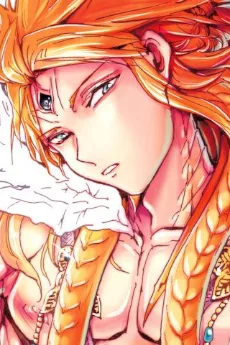
Kouen Ren
Magi: The Labyrinth of MagicHe is the first prince of Kou Empire. He's the General Commander of the Kou Empire's Western Subjugation Army together with his brothers, Koumei Ren and Kouha Ren. Kouen is a Dunge
 SUPPORTING
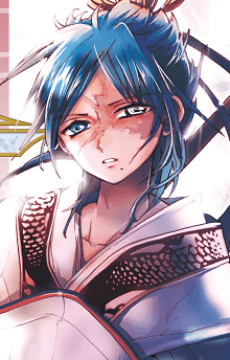
Hakuryuu Ren
Magi: The Labyrinth of MagicHakuei's younger brother, he is currently the fourth prince in the Kou Empire. As he was taught to be able to do everything on his own by his sister, he is good at cooking. Because
 SUPPORTING
Judar
Magi: The Labyrinth of Magic(first appearance), 23 (now) Judar is one of the four Magi in the current era and a Magician who specializes in Ice Magic. He is the former Oracle of Al-Thamen and the Kou Empire a