Appears In
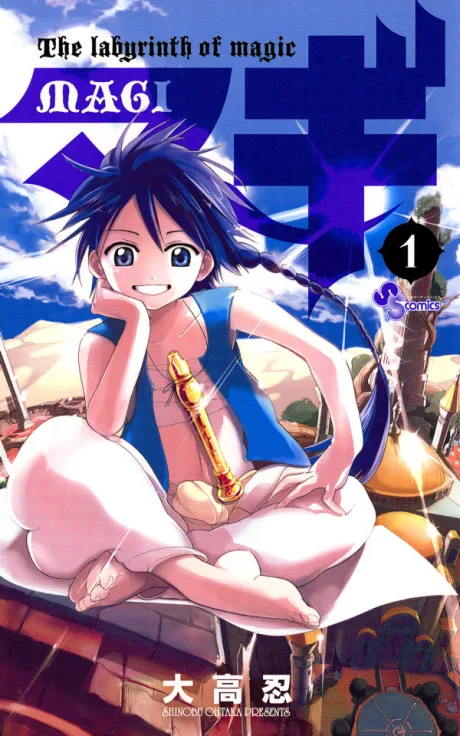
Quick Facts
| Gender | Male |
| Age | 10- |
| Role | MAIN |
| Series | Magi: The Labyrinth of Magic |
| Height | 140 cm |
| Age | Around 12 |
| Gender | Male |
| Weight | 36 kg |
| Eye Color | Blue |
| Hair Color | Blue |
| Voice Actor (JP) | Kaori Ishihara |
| Voice Actor (EN) | Erica Mendez |
| Favorite Food | Watermelon |
| Disliked Food | None |
| Hobbies | Reading |
| Affiliation | Magi |
| Debut | Night 1; Episode 1 |
Contents
Background
Background
Aladdin enters the story with almost no ordinary social experience. He has spent much of his early life separated from normal human society and begins traveling with Ugo's flute while searching for people he can call friends. His curiosity about everything from food and markets to human relationships reflects how little of everyday life he has previously experienced firsthand. Official profile material lists his birthplace as unknown, his specialty as magic, his hobby as reading, and his age during the Magnostadt period as approximately twelve.
His first major encounter is with Alibaba, a young cart driver whose ambition to conquer a Dungeon gives Aladdin a concrete direction for his journey. Aladdin sees qualities in Alibaba that make him suitable as a possible King's Vessel, and the two enter the Seventh Dungeon, Amon, together. Their successful conquest begins the relationship that becomes the emotional center of much of the series. The official anime introduction likewise frames Magi around Aladdin and Alibaba's repeated meetings, separations, and growth during their travels.
Aladdin later becomes increasingly conscious of what being a Magi actually means. Unlike an ordinary magician, a Magi can draw enormous amounts of Magoi from the Rukh around the world rather than relying only on the finite energy within the body. This makes him capable of magic on a scale ordinary magicians cannot easily reproduce and places him in the political role of identifying and supporting potential kings.
After traveling through Balbadd, Sindria, and other regions, Aladdin recognizes that natural ability alone is not enough. He leaves his companions temporarily and enrolls at Magnostadt Academy, initially concealing the fact that he is a Magi so that he can learn magic through the same structured methods used by ordinary magicians. The official second-season character profile specifically identifies his decision to leave Sindria and study in Magnostadt after recognizing his own shortcomings.
Aladdin's true origin is eventually revealed to lie in Alma Torran, the world that existed before the current one. He is the son of Solomon Jehoahaz Abraham and Sheba, born after the catastrophe that destroyed their world and raised under Ugo's protection in the Sacred Palace. His existence therefore connects the current era directly to the creation of its world, the Magi system, and the history concealed from humanity.
Personality
Personality
Aladdin is cheerful, curious, kind, and exceptionally open toward strangers. He befriends people across differences of nationality, class, species, and political allegiance with little hesitation, often responding to somebody's immediate feelings before considering whether they are supposed to be an ally or enemy.
His innocence is paired with a mischievous fascination with women. Official encyclopedia material identifies his preferred "type" simply as pretty women and jokingly lists women who are not kind as his disliked type. His interest frequently manifests through physical affection or fascination with breasts, providing a recurring comic contrast to otherwise serious political and magical situations.
Aladdin has a strong aversion to people being forced into lives they did not choose. Slavery, political manipulation, hatred imposed by others, and systems that reduce individuals to tools consistently disturb him. His response is rarely to demand that everyone adopt his own answer immediately; he first tries to understand what caused a person to reach their current position.
That empathy does not prevent anger. When Aladdin encounters deliberate cruelty or manipulation of the Rukh, he can become unusually severe. Al-Thamen's use of despair to push people toward "falling into depravity" particularly horrifies him because it converts genuine pain into a mechanism for reproducing more suffering.
As the story progresses, Aladdin becomes less naïve without losing his basic optimism. He learns that kings, nations, and even people he admires can pursue incompatible visions while sincerely believing themselves correct. His later conflicts increasingly require him to oppose people he cares about, including Sinbad, without reducing them to simple villains.
Appearance
Appearance

Aladdin is a small boy with long blue hair braided down his back and large blue eyes. During the Magnostadt portion of the story, official encyclopedia material lists him at approximately twelve years old, 140 cm tall, and 36 kg. Earlier profile material placed him around ten years old and approximately 130 cm, reflecting his physical growth over the course of the series.
His early clothing is distinctive and loosely inspired by the Middle Eastern and South Asian visual vocabulary used throughout the series. He wears white garments, loose trousers, sandals, a blue turban, and a cloth wrapped around his chest. His magical flute is carried with him almost constantly because of its connection to Ugo.
Despite being physically small, Aladdin's visual design changes dramatically when he performs high-output magic. Huge formations of Rukh may gather around him, while large magical constructs and heat-based attacks make his battlefield presence far larger than his body would suggest.
During his studies at Magnostadt, his appearance becomes more closely associated with magician clothing and a staff, reflecting his transition from an intuitive Magi who relies heavily on natural gifts into a formally trained magician. Later time skips visibly age and lengthen his body while retaining his long blue hair and characteristic braid.
Abilities & Powers
Abilities & Powers
As a Magi, Aladdin can gather Magoi from the Rukh surrounding him instead of depending solely on the energy contained within his own body. This gives him access to extraordinary reserves of magical power. Magi occupy a special place within the world's system because they guide the flow of Rukh and select King's Vessels who may become rulers. The official anime explicitly identifies Aladdin as one of the beings known as Magi.
Aladdin initially channels much of his power through Ugo. His flute can summon parts of Ugo's enormous body, allowing him to produce giant limbs for movement, protection, and combat. Ugo is not merely an ordinary contracted Djinn, and the unusual nature of their connection becomes increasingly significant as Aladdin learns more about his past.
Aladdin is especially proficient with Heat Magic, which manipulates thermal energy and can produce destructive flames. His signature offensive spell, Har-Har Infigar, demonstrates an output far beyond what his small body suggests and remains one of his most recognizable attacks.
Like trained magicians generally, Aladdin can produce a Borg, a defensive field formed from Magoi that automatically protects its user from hostile magical force. His education at Magnostadt greatly expands his understanding of magical formulas, Rukh behavior, elemental combinations, and the difference between simply supplying power and constructing sophisticated magic.
One of his most important abilities is the Wisdom of Solomon, which allows him to enter and interact with the memories contained within the Rukh. It lets him witness experiences beyond normal personal memory and communicate truths that would otherwise be inaccessible. Aladdin uses it during the Balbadd conflict to reach the Rukh connected to Cassim and Alibaba.
The Wisdom of Solomon later gives Aladdin access to the knowledge and magical experience of Alma Torran, enormously broadening the range of spells he can understand and reproduce. He becomes capable of using magic systems derived from Alma Torran's magicians, including techniques far beyond the ordinary curriculum of the current world.
After the later time skip, Aladdin's control of magic grows to the point where he can use extremely complex spells, manipulate vectors and physical forces, resist some of the world's most powerful magical interference, and fight alongside other top-tier Magi and King Vessels in conflicts centered on the Sacred Palace itself.
Named Techniques
Named Techniques
-
Har-Har Infigar — Aladdin's signature Heat Magic attack. It produces an enormous blast of heat and flame, with its effectiveness depending on the quantity of Magoi and Rukh he channels into the spell. High-output use can exhaust him severely.
-
Borg — A magician's defensive barrier. Aladdin can surround himself with a protective field of Magoi capable of blocking physical and magical attacks until its resistance is exceeded.
-
Ugo Summoning — By using his flute, Aladdin can manifest portions of Ugo's gigantic body. Early in the story, Ugo's hands, arms, and torso provide Aladdin with enormous physical power that he himself lacks.
-
Wisdom of Solomon — An exceptional ability connected to Solomon and the Rukh. It lets Aladdin perceive memories contained within the Rukh and guide other people into contact with those memories, as demonstrated during the Balbadd conflict.
-
Magic Turban / Flight Magic — Aladdin uses magic to fly and eventually becomes capable of sustained aerial movement without relying on ordinary transportation, an important advantage both in travel and battle.
-
Strength Magic — Through formal magical study, Aladdin learns to manipulate physical forces rather than relying exclusively on elemental attack magic, increasing the versatility of his combat style.
-
Water Magic — Aladdin develops competence with water-based spells as his formal magical education broadens beyond his original affinity for heat.
-
Clairvoyant and memory-related applications of the Rukh — Aladdin can use his unusual relationship with the Rukh to perceive information inaccessible to ordinary people, especially when the Wisdom of Solomon is involved.
-
Vector Manipulation — Later in the manga, Aladdin develops highly advanced magic capable of manipulating vectors and changing the direction of physical forces. The technique reflects the depth of magical knowledge available to him after learning the true history of Alma Torran.
Relationships
Relationships
Alibaba Saluja is Aladdin's closest friend, first King's Vessel candidate, and the person around whom much of his journey is organized. [Aladdin] cannot be linked to himself, but Alibaba Saluja is repeatedly the person he chooses to trust even when politics, distance, or conflicting responsibilities separate them. Their friendship begins with the Amon Dungeon and develops into a bond in which each repeatedly restores the other's confidence. The official anime's introductory material explicitly presents the series around the journeys of Aladdin and Alibaba.
Morgiana becomes one of Aladdin's closest companions after he and Alibaba Saluja help free her from slavery. Aladdin admires her strength immediately and treats her as a friend rather than as the property she had been taught to consider herself. Morgiana later saves him during his battle with Judar, strengthening the trio's mutual trust.
Ugo is Aladdin's earliest companion and guardian. To the young Aladdin, Ugo is initially the enormous Djinn-like friend inside his flute who provides guidance, physical protection, and companionship. Ugo's true importance is far greater: he was one of Solomon's closest allies in Alma Torran and became responsible for protecting and raising Aladdin after the destruction of the old world.
Solomon Jehoahaz Abraham is Aladdin's father and the ruler whose actions fundamentally shaped the current world's Rukh system. Aladdin grows up without ordinary memories of him, and learning about Solomon requires confronting the history preserved within Alma Torran's Rukh.
Sheba is Aladdin's mother, one of Solomon's Magi and a major figure in Alma Torran's rebellion. Before her death, she entrusts the unborn Aladdin to Ugo's protection, making her decision one of the reasons he survives the destruction of their world.
Judar is another Magi and one of Aladdin's principal foils. Where Aladdin initially follows the white Rukh and searches for King's Vessels who can create better futures, Judar has been raised within the influence of Al-Thamen and repeatedly allies himself with conflict and conquest. Their clashes are ideological as well as magical.
Sinbad becomes an important mentor, ally, and political influence after Aladdin reaches Sindria. Aladdin respects Sinbad's achievements and ability to unite people, while also learning that overwhelming charisma and good intentions do not automatically make every political decision correct.
Yamraiha becomes Aladdin's principal formal magic teacher in Sindria. She helps him move beyond intuitive use of Magi power by teaching the structure and theory required to function as a skilled magician rather than simply a source of enormous Magoi.
Hakuryuu Ren initially becomes one of Aladdin's friends during the group's time in Sindria and the Zagan expedition. As Hakuryuu's hatred toward the Kou establishment and Al-Thamen drives him toward increasingly radical choices, Aladdin struggles with the fact that understanding his suffering does not mean accepting everything he does.
Hakuei Ren meets Aladdin during his early travels among the Kouga Clan. Her attempt to resolve conflict without simply crushing opposition leaves a favorable impression on him and helps establish his early contact with the Kou Empire.
Titus Alexius begins as Aladdin's academic rival at Magnostadt. Their competition rapidly becomes friendship as Aladdin recognizes the loneliness beneath Titus Alexius's unusual circumstances. Their relationship is one of the major emotional threads of the Magnostadt storyline.
Sphintus Carmen is Aladdin's roommate and school friend at Magnostadt. Their personalities initially clash, but Sphintus Carmen becomes one of the ordinary friendships that allows Aladdin to experience student life rather than existing only as a Magi carrying world-scale responsibilities.
Matal Mogamett becomes both Aladdin's headmaster and ideological opponent in Magnostadt. Aladdin respects Matal Mogamett's knowledge of magic while rejecting the hatred and segregation that have developed from his suffering.
Arba is one of the figures most directly connected to the destruction of Aladdin's original family and the long history of Al-Thamen. Their conflict links his personal origin to the broader struggle over whether humanity should follow Solomon's Rukh system or return to the will represented by Ill Ilah.
Story Role
Story Role
Aladdin opens Magi: The Labyrinth of Magic as a mysterious traveler searching for friendship. His meeting with Alibaba turns that search into the first Dungeon expedition, where Aladdin's ability as a Magi allows him to guide Alibaba toward Amon and establish the concept of King's Vessels. The anime's official introduction describes Aladdin and Alibaba as the two characters at the center of the series' journeys, battles, friendships, and growth.
The Kouga and Balbadd portions of the story widen his understanding of politics. Aladdin repeatedly encounters people trapped by slavery, poverty, conquest, or inherited hatred and learns that simply defeating one villain cannot resolve the structures that produced those conditions.
Balbadd also reveals more of his role as a Magi. His confrontation with Judar demonstrates the existence of other Magi aligned with very different political forces, while the conflict surrounding Cassim introduces the danger of black Rukh and "falling into depravity." Aladdin's use of the Wisdom of Solomon becomes central to reaching Alibaba through the Rukh rather than merely overpowering the crisis through force.
Sindria then functions as both refuge and preparation. Aladdin trains, forms connections with Hakuryuu and other political figures, and confronts Al-Thamen more directly. Realizing that his raw power is insufficient against increasingly complicated magic eventually leads him to Magnostadt.
At Magnostadt Academy, Aladdin enters as an apparently ordinary student and learns the formal structure of magic. The arc places him between Magnostadt's persecuted magician society, the Reim Empire, and the approaching Kou forces, forcing him to understand why each side sees its actions as necessary. The official second-season material identifies Magnostadt as the destination Aladdin chooses specifically to deepen his magical training.
After Magnostadt, Aladdin reveals the history of Alma Torran to the world's leaders, explaining that the current world was created after Solomon's struggle against the old order. This turns his personal origin into knowledge with consequences for every major nation.
The Kou civil conflict later places him opposite Hakuryuu and Judar, while Alibaba's disappearance fundamentally changes the group. Aladdin subsequently spends several years hidden with Morgiana and Hakuryuu before returning to a world transformed by Sinbad's international system.
In the final struggle, Aladdin opposes Sinbad's attempt to reshape the destiny of every soul through the Sacred Palace. The conflict escalates further when David seizes control, forcing Aladdin, Alibaba, Yunan, and their allies to confront a threat to the Rukh system itself. Aladdin ultimately participates in ending the system that made Magi necessary, allowing the world to continue without its former divine structure.
Character Development
Character Development
Aladdin begins with tremendous magical potential but almost no ordinary experience. He understands the Rukh more naturally than he understands society. His early development therefore occurs through simple friendships: eating with people, traveling in caravans, worrying about Alibaba, admiring Morgiana, and discovering that human bonds cannot be reduced to the destiny visible in the Rukh.
Alibaba becomes especially important because Aladdin initially approaches him as a person he believes could become a king, yet their relationship quickly exceeds the Magi–King's Vessel framework. Aladdin wants Alibaba to succeed not merely because destiny designates him as useful but because Alibaba is his friend. That distinction gradually informs how Aladdin approaches every political figure he later encounters.
Magnostadt develops his humility. Aladdin arrives as someone capable of using extraordinary quantities of Magoi but deliberately subjects himself to basic magical education. The experience teaches him that having access to power is not equivalent to understanding it and places him among ordinary magicians whose limitations, prejudices, and achievements differ substantially from those of a Magi.
His relationship with Mogamett also complicates his moral reasoning. Aladdin cannot dismiss the suffering that produced Magnostadt's resentment toward non-magicians, yet he refuses to accept dehumanization as an answer. By the end of that conflict, his compassion has developed beyond instinctive kindness into a more difficult willingness to acknowledge why people become hateful while still opposing the consequences.
Learning his origin creates another major change. Aladdin discovers that the world he has been treating as home is historically descended from decisions made by his own father and his father's companions. He is no longer merely a young Magi searching for his purpose; he becomes one of the few people capable of explaining why the world's underlying system exists at all.
His later opposition to Sinbad represents the mature form of this development. Aladdin can admire Sinbad, understand the suffering behind his decisions, and still reject the idea that one exceptional individual should define happiness for everyone. His final position favors the uncertain freedom of people choosing their own futures over a perfectly ordered destiny imposed from above.
Etymology
Etymology
Aladdin's name comes from Aladdin, the protagonist of the famous tale commonly known in English as "Aladdin and the Wonderful Lamp." Although strongly associated with One Thousand and One Nights, the story was added to the European tradition of the collection through Antoine Galland's French translation after he heard it from the Syrian storyteller Hanna Diyab.
The connection is reflected directly in Aladdin's design and equipment. Instead of the lamp associated with the best-known version of the folktale, the Magi character carries a magical flute connected to Ugo, a Djinn-like being whose enormous body can be summoned to assist him.
The series broadly draws names and concepts from One Thousand and One Nights and related Middle Eastern literary traditions. Japanese reference material for Magi explicitly identifies the work as drawing its motif from Arabian Nights, including character names taken from that tradition.
His Japanese name is written アラジン (Arajin), the standard Japanese rendering of Aladdin.
Trivia
Trivia
Aladdin's official encyclopedia profile during the Magnostadt period gives his age as around 12, height as 140 cm, and weight as 36 kg.
Earlier profile material placed him at roughly ten years old and 130 cm, showing that he grows measurably during the story rather than retaining a static child design.
His favorite food is watermelon, while the same profile lists no food he particularly dislikes.
His principal hobby is reading, fitting both his isolated upbringing and later dedication to formal magical study.
The official encyclopedia humorously identifies his preferred romantic type as pretty women and his disliked type as women who are not nice.
Aladdin appears on the cover of the manga's first collected volume and gives the opening chapter its title, "His Name Is Aladdin." Aniplex promoted a reprint of that first chapter ahead of the television anime's debut in 2012.
Despite being a Magi, he initially lacks the polished theoretical knowledge of professional magicians. His Magnostadt storyline deliberately places him back at an educational starting point despite his enormous natural reserves of Magoi.
Kaori Ishihara voices Aladdin in Japanese, while Erica Mendez performs the role in the official English dub of both The Labyrinth of Magic and The Kingdom of Magic.
In Other Media
In Other Media
Aladdin is one of the central characters of A-1 Pictures' television adaptation of Magi: The Labyrinth of Magic. The first television season began in October 2012, with Kaori Ishihara voicing him in Japanese. The official anime site consistently presents Aladdin alongside Alibaba as one of the two central figures of the adaptation.
The second season, Magi: The Kingdom of Magic, shifts much of Aladdin's storyline to Magnostadt and adapts his formal magical training, relationship with Titus and Sphintus, and role in the conflict surrounding the magician nation. The official character profile for the second season specifically introduces him as leaving Sindria for Magnostadt after recognizing his lack of strength.
Erica Mendez voices Aladdin in the English-language adaptation. Crunchyroll's English-dub announcement for The Kingdom of Magic lists Kaori Ishihara and Erica Mendez as the Japanese and English performers for the character respectively.
Aladdin also appears in the franchise's video games, including Magi: Hajimari no Meikyū, Magi: Aratanaru Sekai, and the mobile title Magi: Dungeon & Magic. These games adapt or remix characters, Dungeons, battles, and settings from the manga and anime.
The franchise also produced official fanbooks and character reference material. Aniplex's 2013 announcement for the first television-anime fanbook highlighted character Q&A material alongside cast comments, setting references, and staff interviews.
Aladdin appears indirectly within the wider franchise created around Magi: Adventure of Sinbad, though that prequel primarily follows Sinbad decades before Aladdin's journey. His importance to the parent series remains the reference point connecting the prequel's political history with the world encountered in the main story.
Reception
Reception
Aladdin has remained one of the principal faces of the Magi franchise since the manga began. The official anime introduction explicitly describes the work as built around Aladdin and Alibaba, rather than presenting him as one member of a larger ensemble without a central role.
His prominence coincided with rapid growth in the manga's readership around the anime adaptation. The series rose from approximately three million copies in circulation across its first twelve volumes in mid-2012 to more than 6.5 million across fourteen volumes by October that year. It later surpassed 25 million copies in circulation.
Magi won the 59th Shogakukan Manga Award in the shōnen category and became one of Weekly Shōnen Sunday's major titles of the 2010s. By 2013, official promotional material reported more than 12 million copies in circulation and cited strong television ratings, a 10,000-person post-broadcast event, and expansions into games, apparel, and other merchandise.
Aladdin's visual position within that expansion was consistent: he appears on the first manga volume, leads the first chapter, occupies the central character material of the anime, and remains one of the franchise's defining figures across games, guidebooks, merchandise, and anniversary promotions.
The character's role also distinguishes Magi from many adventure series centered on a conventional warrior protagonist. Aladdin begins physically small and socially inexperienced, while his greatest influence comes through magic, empathy, and the ability to recognize potential kings. As the story expands from Dungeon exploration into international politics and the origins of the world itself, the same boy who initially travels in search of friends becomes one of the principal people responsible for understanding—and eventually challenging—the system governing fate.
Sources
Facts on this page are checked against official publisher and creator sources. Spotted an error? Tell us.
Related Characters
 MAIN
MAINAlibaba Saluja
Magi: The Labyrinth of MagicAlibaba Saluja is the deuteragonist of Magi. Initially, after an incident, he fled his home country of Balbadd, and resided in Qishan where he worked as a cart driver. He dreams of
 MAIN
MAINMorgiana
Magi: The Labyrinth of MagicDescendant of the hunting tribe, Fanalis. Her name is based on the slave girl who served Alibaba in "Alibaba and the forty thieves". Morgiana was Jamil’s slave before. She was emot
 SUPPORTING
Judar
Magi: The Labyrinth of Magic(first appearance), 23 (now) Judar is one of the four Magi in the current era and a Magician who specializes in Ice Magic. He is the former Oracle of Al-Thamen and the Kou Empire a
 SUPPORTING
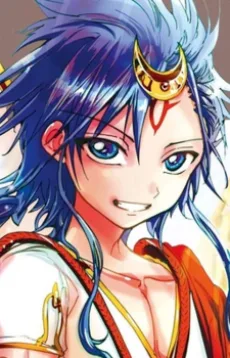
Solomon Jehoahaz Abraham
Magi: The Labyrinth of MagicSolomon was known as "The World Creator." He was leader of the "resistance" before he became the king of Alma Toran.
 SUPPORTING
Sheba
Magi: The Labyrinth of MagicSheba was a Magician from Alma Torran and one of the wielders of the 72 Divine Staves.
 SUPPORTING
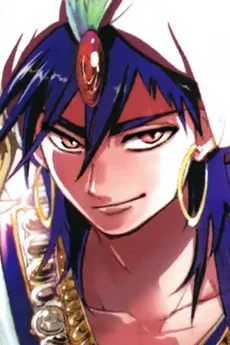
Sinbad
Magi: The Labyrinth of MagicHe is the king of Sindria and the leader of the Alliance of the Seven Seas. He was 14 years old when he first captured a dungeon, the first dungeon "Bael". Since then, he had saile
 SUPPORTING
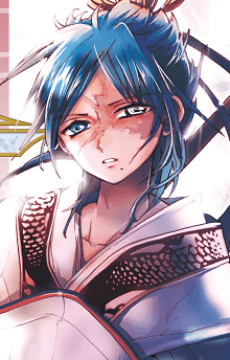
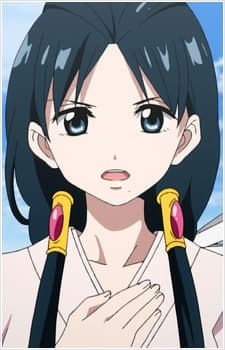
Hakuryuu Ren
Magi: The Labyrinth of MagicHakuei's younger brother, he is currently the fourth prince in the Kou Empire. As he was taught to be able to do everything on his own by his sister, he is good at cooking. Because
 SUPPORTING
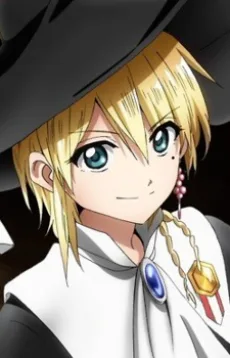
Titus Alexius
Magi: The Labyrinth of MagicTitus appears as a young, short boy in the Magnostadt arc. He has medium long blonde hair with two small, thin braids. His appearance is amazingly similar to that of the Magi, Sche
 SUPPORTING
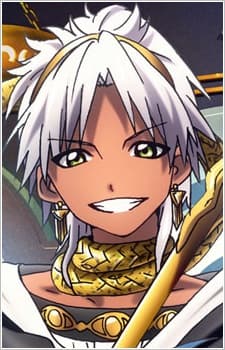
Sphintus Carmen
Magi: The Labyrinth of MagicAladdin's roommate at Magnoshutatt Academy. He is from Heliohapt.
 SUPPORTING
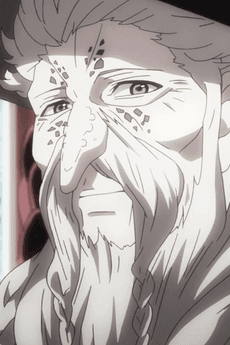
Matal Mogamett
Magi: The Labyrinth of MagicMatal Mogamett is the Magnostadt Academy Chancellor and seems to have a very important role in the politics of his country. Matal is the person who led the rebellion of Magnostadt