Appears In

Quick Facts
| Gender | Female |
| Also known as | The Devil Child of Vandimion, Wandering Princess, Farny |
| Role | MAIN |
| Series | Berserk |
| Height | 162 cm |
| Age | 19 |
| Gender | Female |
| Weight | 48 kg |
| Eye Color | Blue |
| Hair Color | Blond |
| Voice Actor (JP) | Yoko Hikasa |
| Voice Actor (EN) | Erika Harlacher |
| Affiliation | Holy Iron Chain Knights; Guts' Traveling Party |
| Debut | "The Holy Iron Chain Knights" |
| Father | |
| Brother | |
| Attendant | |
| Mentor |
Contents
Background
Background
Farnese is born into the Vandimion family, one of the wealthiest and most politically influential noble houses in the setting. Material comfort surrounds her from childhood, but her parents are frequently absent and the vast Vandimion estate provides little emotional security. Servants obey her because of status rather than affection, leaving the young Farnese with considerable power and almost no understanding of how to form healthy relationships.
Her childhood behavior becomes increasingly unstable. She develops an obsession with fire and discovers that watching things burn produces an intense emotional response. Executions of supposed heretics become especially significant to her because the crowds, religious rituals and flames provide a combination of fear, excitement and sanctioned violence that she has difficulty processing openly.
Farnese eventually finds the impoverished Serpico outside and brings him into her household. He becomes her servant and constant companion, enduring her possessiveness and erratic treatment while quietly managing situations she cannot control herself. Farnese comes to rely on him so completely that his presence feels almost like an extension of her own security.
As a young noblewoman, Farnese is appointed commander of the Holy Iron Chain Knights, a religious military order composed largely of nobles. Her position owes more to lineage and political expectations than battlefield experience. The order itself traditionally places a maiden of noble blood at its head, making Farnese symbolically suitable despite lacking the practical combat experience of veteran soldiers.
The Holy Iron Chain Knights are sent to pursue the Black Swordsman after reports of massacres and supernatural disturbances become associated with him. Farnese interprets Guts through the worldview she has been taught: an armed heretic surrounded by blasphemous rumors who must be captured and punished.
Her encounter with him destabilizes that certainty. Guts is violent and frightening, but the supernatural phenomena surrounding him are real. Spirits possess corpses, the Brand attracts malicious entities, and situations Farnese would previously have categorized as superstition unfold directly in front of her.
The journey toward the Tower of Conviction exposes her to increasingly undeniable evidence that the religious framework supporting her identity is incomplete. Her authority as a knight commander becomes useless against beings that conventional soldiers cannot understand, much less defeat.
Personality
Personality
Farnese initially presents herself as severe, pious and authoritarian. She relies heavily on institutional rules because they provide clear distinctions between purity and corruption, obedience and heresy, safety and damnation. Those categories shield her from the uncertainty she finds terrifying.
Her religious fervor is intertwined with repression. Farnese is ashamed of desires and impulses that conflict with the behavior expected of a noblewoman and devout commander, causing her to externalize that conflict onto people labeled sinful or impure.
Fire occupies a disturbing place in that psychology. As a child and young adult, she is fascinated by burning executions, experiencing emotions that combine fear, excitement, punishment and religious ecstasy. The violence is easier for her to tolerate when authority declares it righteous.
Her relationship with Serpico reinforces this behavior. Farnese expects him to remain available regardless of how she treats him and becomes jealous when his attention moves elsewhere. Because Serpico almost always accommodates her, she rarely has to confront how dependent she has become on him.
Despite these traits, Farnese is not incapable of empathy. Much of her cruelty grows from fear, ignorance and emotional isolation rather than enjoyment of suffering for its own sake. Once experience repeatedly proves her assumptions wrong, she is capable of examining herself with unusual severity.
Guts becomes central to that change because he refuses to respect the structures she uses to define authority. He is stronger than her knights, indifferent to her noble status and openly contemptuous of beliefs unsupported by experience.
After joining his travels, Farnese becomes notably humbler. She recognizes that she lacks practical skills and willingly accepts tasks that would once have seemed far beneath her social position.
Caring for Casca becomes especially important. Feeding, bathing, dressing and protecting another person requires patience without public recognition. The work gives Farnese a form of responsibility entirely different from commanding soldiers who obey because of rank.
Her later interest in magic grows from the same transformation. Rather than condemning what she does not understand, Farnese chooses to study under Schierke, a child much younger than herself whose knowledge vastly exceeds hers.
Appearance
Appearance
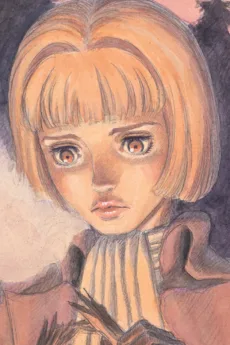
Farnese is 162 cm tall and weighs 48 kg in official guidebook material. She has a slender build appropriate to a young noblewoman who received some military training but was never conditioned as a frontline mercenary.
She has light blond hair, blue eyes and fair skin. During her early appearances, her hair is cut relatively short and framed around her face, complementing the controlled appearance associated with her position in the Holy Iron Chain Knights.
As commander, Farnese wears plate armor and a distinctive uniform reflecting the order's religious identity. Her clothing emphasizes ceremonial authority as much as combat practicality because the Holy Iron Chain Knights function partly as a noble and religious institution.
She carries a sword but is not initially an accomplished swordswoman. The weapon therefore functions as both military equipment and a symbol of rank.
After abandoning the order, Farnese gradually wears less formal traveling clothes. The change reflects the loss of the institutional identity that previously determined almost every aspect of her appearance.
Her later clothing becomes increasingly practical as she accepts responsibilities within Guts' party. Robes and garments associated with magical study eventually replace the rigid armor of her religious-military period.
As Farnese develops into a practicing mage, her visual identity shifts further from knight commander to apprentice witch. She carries magical implements, participates in ritual work and dresses in a manner suited to spellcasting rather than noble ceremony.
Abilities & Powers
Abilities & Powers
Farnese begins with far less practical combat ability than most members of Guts' eventual party. Her appointment to command the Holy Iron Chain Knights is based largely on aristocratic qualifications rather than exceptional swordsmanship.
She nevertheless possesses basic military education. Farnese can ride, handle a sword and understand the formal expectations of an officer, though these abilities initially prove inadequate when confronted with experienced fighters or supernatural enemies.
Her strongest early ability is social authority. As a Vandimion noblewoman and commander, she can direct soldiers, invoke religious law and operate within elite political structures unavailable to common people.
That authority becomes progressively less useful as the journey moves beyond ordinary society. Spirits and apostles do not care about noble lineage, forcing Farnese to develop abilities that belong to her personally rather than her family.
One of her most important acquired skills is caregiving. Although not supernatural, Farnese becomes highly competent at managing Casca's daily needs and protecting her during travel. This responsibility requires vigilance, patience and emotional sensitivity she previously lacked.
Her exposure to Schierke introduces formal magic. Farnese discovers that she has enough spiritual aptitude to learn the basic principles of astral practice, though she remains far less naturally experienced than her young teacher.
She learns to perceive aspects of Od, spiritual energy associated with living beings and objects. This gives her greater awareness of phenomena that once terrified her because they could not be seen or explained.
Farnese practices meditation and visualization as foundations for spellcasting. Unlike martial training, magical development requires controlling precisely the emotions that once dictated much of her behavior.
She also learns protective magic. Barriers and wards allow her to contribute defensively rather than relying entirely upon Guts or Serpico to physically protect everyone nearby.
Her magical education eventually extends to astral projection and participation in complex spiritual rituals. These abilities represent a profound reversal from the woman who once participated in persecuting people accused of witchcraft.
On Elfhelm, Farnese's magical ability develops enough for her to participate directly in the attempt to restore Casca's mind. She accompanies Schierke into Casca's dreamscape, maintaining her own identity while navigating manifestations of trauma and memory.
The success of that journey demonstrates that Farnese has progressed beyond merely imitating Schierke's lessons. Her emotional connection with Casca becomes as important as technical magical knowledge, allowing her to contribute meaningfully to work involving another person's psyche.
Named Techniques
Named Techniques
Farnese does not possess a large catalog of formally named attacks. Her later abilities are primarily magical practices rather than conventional combat techniques.
Od Perception allows Farnese to sense spiritual energy and recognize supernatural qualities that would have been invisible to her earlier in life.
Meditative Trance serves as a foundation for magical work, allowing her to regulate consciousness and approach the astral realm without losing control.
Protective Barrier creates magical protection against hostile spiritual forces. Farnese's growing proficiency with wards makes her increasingly useful when the party faces enemies ordinary armor cannot stop.
Astral Projection allows consciousness to separate from the physical body and enter spiritual spaces. Farnese develops this ability through training under Schierke.
Spirit Communion involves interacting with benevolent astral beings rather than treating all supernatural entities as demonic. This represents both a magical skill and a reversal of her earlier religious worldview.
Dreamscape Traversal allows Farnese to enter Casca's inner world alongside Schierke. The process requires navigating symbolic memories and defending the fragile reconstruction of Casca's identity.
Protective Magical Constructs become increasingly important as Farnese's training advances, allowing her to defend herself and others without relying exclusively on physical fighters.
Relationships
Relationships
Serpico is Farnese's longest-standing companion and the person who understands her behavior better than anyone else. Farnese finds Serpico suffering in the snow as a child and brings him into the Vandimion household, making him her servant. She becomes intensely dependent on his presence and frequently subjects him to emotional tests designed to prove that he will not leave her.
Serpico learns how to manage Farnese's instability without confronting her directly. Their relationship can therefore appear harmonious while concealing deep dysfunction: Farnese assumes Serpico's loyalty is unconditional, while Serpico suppresses much of his own identity to maintain her emotional stability.
[Serpico is actually Farnese's paternal half-brother through Federico de Vandimion. Serpico learns the truth, but Farnese remains unaware for much of the story. Their father instructs Serpico to keep the relationship secret.](#spoiler)
The most disturbing episode of their youth occurs when Farnese demands that Serpico participate in burning a supposed heretic. The condemned woman is Serpico's mother, and he lights the pyre without revealing the truth to Farnese.
Guts initially enters Farnese's life as the heretic she has been ordered to capture. Farnese sees Guts's violence as evidence of corruption, while Guts immediately recognizes how unprepared she is for the supernatural forces surrounding him.
Their encounter destroys several assumptions on which Farnese's identity depends. She witnesses spirits and possession directly, experiences fear that institutional authority cannot control and becomes fascinated by Guts' ability to keep moving through a world she cannot understand.
After the Conviction events, Farnese chooses to follow Guts. She is initially seeking answers and direction as much as companionship, but her place in the group becomes increasingly practical rather than symbolic.
Casca becomes one of the most important people in Farnese's development. Farnese initially helps care for Casca because the group needs someone to manage her daily needs, but the responsibility gradually becomes a genuine emotional bond.
Caring for Casca teaches Farnese patience without obedience or punishment. Casca cannot be commanded into behaving safely, so Farnese must understand fear, routine and comfort instead.
[Farnese's bond with Casca becomes central on Elfhelm when she joins Schierke inside Casca's fragmented dreamscape. Farnese's memories of caring for Casca help guide their effort to reconstruct her identity.](#spoiler)
Schierke becomes Farnese's magical teacher. Farnese's willingness to become the student of a thirteen-year-old witch illustrates how thoroughly her former assumptions have changed. Where she once participated in persecution of supposed witches, she now treats Schierke's knowledge with respect.
The relationship also challenges Farnese's pride. Schierke is younger, socially unfamiliar with nobility and vastly more knowledgeable about the supernatural. Farnese accepts that imbalance because learning has become more important than preserving status.
[As Farnese improves, Schierke begins treating her less as a helpless novice and more as a genuine magical partner. Their collaboration during Casca's restoration demonstrates how far Farnese has advanced.](#spoiler)
Puck is one of the first undeniable astral beings Farnese encounters closely. Puck's playful, compassionate nature directly contradicts the assumption that supernatural beings outside approved religious doctrine must be evil.
Isidro becomes another companion in Guts' growing group. Farnese often occupies a more responsible role than Isidro, but both are initially inexperienced compared with Guts and Serpico and must discover useful roles within the party.
Ivalera accompanies Schierke and becomes part of the magical world Farnese gradually learns to accept. Ivalera's ordinary interactions with Schierke reinforce the idea that astral beings are not inherently objects of fear.
Federico de Vandimion is Farnese's father and the patriarch of the Vandimion family. Federico de Vandimion's wealth and political power provide Farnese with privilege but little emotional warmth during childhood. His plans for her adulthood are heavily influenced by family alliances rather than her personal wishes.
Mrs. Vandimion is Farnese's mother. Mrs. Vandimion spends much of Farnese's childhood occupied with aristocratic life and does not provide the stable maternal relationship her daughter needs.
Magnifico de Vandimion is Farnese's brother. Magnifico de Vandimion is more openly preoccupied with family wealth, business and social advancement than Farnese becomes after leaving the Holy Iron Chain Knights.
Roderick enters Farnese's life through a proposed marriage arrangement between noble families. Roderick initially appears to represent another attempt to determine Farnese's future through aristocratic politics, but his personality differs significantly from the controlling nobles she expects.
Roderick treats Farnese respectfully and does not insist that marriage must immediately override her chosen journey. His willingness to captain the Seahorse and support Guts' group gives Farnese room to continue developing independently.
Father Mozgus represents the religious extremism Farnese once followed. Father Mozgus's absolute certainty and brutal punishment of perceived sinners initially resemble the kind of faith Farnese uses to suppress her own doubts.
The events surrounding Father Mozgus expose the danger of that certainty. Farnese sees institutional religious violence coexist with genuinely supernatural events that the institution cannot properly understand.
[Danann becomes important after the group reaches Elfhelm. Danann's advanced magical knowledge allows Farnese and Schierke to attempt the restoration of Casca's mind.](#spoiler)
Story Role
Story Role
Farnese enters during the Conviction storyline as commander of the Holy Iron Chain Knights. Her initial function places organized religion and aristocratic authority directly against Guts, whose experiences have already shown readers that the supernatural threats dismissed by official institutions are real.
Her pursuit of Guts becomes personally destabilizing almost immediately. Capturing him does not confirm her faith; instead, proximity to the Brand exposes her to spirits and possession, experiences she has no theological framework capable of containing.
This collapse of certainty distinguishes Farnese from antagonists who simply remain committed to their original ideology. She begins asking whether the beliefs that gave structure to her life are actually true.
Albion intensifies the crisis. Religious persecution, mass fear and supernatural catastrophe converge around the Tower of Conviction, turning the systems Farnese once trusted into part of the horror.
When she eventually follows Guts, she enters the group from a position of unusual weakness. She has money and noble status but few skills relevant to surviving the road ahead.
Casca gives her an immediate practical responsibility. By becoming Casca's principal female caregiver, Farnese earns a place through daily work rather than inherited authority.
The Enoch Village material and meeting with Flora create another major transition. Magic is no longer merely something Farnese fears; it becomes a body of knowledge that can be studied.
Schierke's introduction provides the teacher Farnese needs. The former commander must accept instruction from a child, reversing the hierarchy that once defined nearly every relationship in her life.
Her role becomes increasingly valuable as the party encounters more complex astral threats. Instead of standing behind stronger companions entirely, Farnese begins developing abilities capable of contributing directly.
The journey through Vritannis also forces her to confront the aristocratic identity she left behind. Her family expects decisions about marriage and status, while Farnese has discovered a purpose that exists outside both the Vandimions and the Holy See.
She chooses to continue the journey rather than abandon Casca and her magical studies. Serpico's attempts to manage that choice ultimately fail because Farnese is no longer the emotionally dependent girl whose future can be decided for her.
The voyage toward Elfhelm develops Farnese's magical ability further and places her beside Schierke during increasingly dangerous astral encounters.
Reaching Elfhelm gives Farnese access to a community where magic is practiced openly and systematically. The destination also provides the opportunity to address the responsibility that has defined much of her journey: helping Casca recover.
Farnese and Schierke enter Casca's dreamscape and recover symbolic fragments of her shattered consciousness. Their success helps restore Casca's adult personality and memories, making Farnese one of the people directly responsible for achieving the goal that motivated years of travel.
The collapse of Elfhelm shortly afterward removes the secure magical refuge the group had hoped to find. Farnese leaves the island as a substantially different person from the religious commander who first pursued Guts: a practiced caregiver, magical student and voluntary member of a group she chose herself.
Character Development
Character Development
Farnese begins with authority but almost no genuine autonomy. Her noble birth gives her servants, soldiers and institutional power, yet her behavior is shaped by family expectations, religious doctrine and emotional dependence on Serpico.
Her cruelty functions partly as an attempt to control fear. If every frightening impulse can be labeled sin and every unexplained phenomenon can be condemned as heresy, Farnese does not have to admit how little she understands herself or the world.
Guts makes that strategy impossible. His life provides evidence that the supernatural cannot be dismissed, while his refusal to recognize her authority strips away the social mechanisms she usually uses to regain control.
The resulting breakdown is painful but necessary. Farnese cannot become a different person while still believing her previous certainty was valid.
Following Guts is initially an act of desperation. She has lost confidence in the life she knew and hopes proximity to someone who survives the supernatural will provide answers.
Caring for Casca changes this motive gradually. The task cannot be reduced to abstract belief. Casca needs food, cleaning, protection and patience regardless of whether Farnese feels spiritually enlightened.
That daily responsibility develops qualities almost entirely absent from Farnese's childhood. She learns to tolerate frustration without punishment, recognize another person's fear and provide care that does not demand gratitude.
Schierke's mentorship adds intellectual humility. Farnese once judged supposed witches without understanding them; now she studies magic seriously and accepts that expertise matters more than age or social rank.
The choice to continue traveling despite opportunities to return to aristocratic security is another major step. Farnese begins defining herself by what she chooses rather than by the roles assigned to her.
Serpico's relationship with her changes accordingly. The more independent Farnese becomes, the less she requires him to exist solely as an emotional regulator and protector.
Her magical participation in restoring Casca brings several stages of that development together. Farnese applies knowledge learned from Schierke, patience acquired through caregiving and courage developed through years of supernatural travel.
By the time Casca's consciousness returns, Farnese has become capable of helping repair another person's fractured inner world—a striking reversal from the young commander who coped with her own fear by participating in the destruction of people labeled impure.
Etymology
Etymology
The name Farnese is most strongly associated with the historical Italian Farnese family, a powerful Renaissance noble dynasty that produced figures including Pope Paul III and the Dukes of Parma.
The use of such a name suits the Vandimions' position as an extremely wealthy aristocratic family with international political and commercial influence. Berserk does not, however, explicitly state that Farnese de Vandimion is intended as a direct fictional descendant or analogue of the historical family.
Her surname de Vandimion follows a European aristocratic naming pattern in which "de" implies association with a family, estate or place.
The Japanese rendering of her given name is ファルネーゼ (Farunēze), corresponding to the Italian pronunciation pattern behind Farnese.
Her early title as commander of the Holy Iron Chain Knights reflects institutional position rather than personal accomplishment. As her character develops, formal titles become less important to her identity.
Trivia
Trivia
-
The Berserk Official Guidebook lists Farnese at 19 years old, 162 cm tall and 48 kg.
-
Farnese begins the story as commander of the Holy Iron Chain Knights, despite having comparatively little real battlefield experience.
-
Her family, the Vandimions, ranks among the wealthiest and most politically connected noble houses in the setting.
-
She initially participates in the persecution of supposed heretics before later becoming a student of magic under Schierke.
-
Yoko Hikasa voices Farnese in the 2016–2017 Japanese television anime.
-
Erika Harlacher voices Farnese in the English-language version of the 2016–2017 adaptation.
-
Farnese becomes Casca's principal caregiver during a large portion of Guts' journey, a responsibility that strongly influences her later personality.
-
Her relationship with Serpico combines servant-and-master dependence with a concealed paternal half-sibling relationship.
In Other Media
In Other Media
Farnese appears prominently in the 2016–2017 television adaptation of Berserk, which begins with post-Golden Age material and adapts much of the Conviction storyline before moving into the Falcon of the Millennium Empire Arc.
Yoko Hikasa voices Farnese in Japanese, while Erika Harlacher performs her in the principal English dub. The television series is the first major screen adaptation to give Farnese a substantial role because earlier anime productions focus predominantly on the Golden Age, before her introduction.
Her early anime storyline follows the Holy Iron Chain Knights' pursuit of Guts. The adaptation presents her religious certainty, dependence on Serpico and inability to understand the supernatural forces increasingly surrounding the Black Swordsman.
The Albion material depicts the collapse of that worldview as Farnese witnesses possession, monsters and mass supernatural events that contradict the doctrine on which she relied.
The second half of the adaptation follows her decision to travel with Guts and introduces Schierke and Flora, establishing the beginning of Farnese's transformation from religious persecutor to prospective magic student.
The released television anime does not reach the later completion of the voyage to Elfhelm or Farnese's most advanced magical development. Those events remain manga-only material and have been spoiler-marked above.
Farnese appears in Berserk: Millennium Falcon Hen Seima Senki no Shō for PlayStation 2, which adapts material from the period after she has entered Guts' traveling party.
She is also playable in Berserk and the Band of the Hawk. Her representation draws from her post-Conviction role and emphasizes lighter combat and support rather than the overwhelming melee strength of characters such as Guts.
Reception
Reception
Farnese is frequently identified as one of the characters who undergoes the largest sustained changes in Berserk. Her first major appearances present someone frightened, cruel and dependent on inherited authority; later material gradually removes every one of those supports and forces her to build useful skills herself.
Her early characterization is deliberately difficult. Farnese participates in religious persecution, abuses Serpico and uses punishment to manage impulses she cannot acknowledge. Those traits make later development dependent on genuine accountability rather than simply revealing that she was secretly virtuous all along.
The relationship with Casca is central to that change. Farnese learns responsibility through caring for someone who cannot reward her with status or obedience, making the work fundamentally different from commanding knights.
Her apprenticeship under Schierke creates an equally sharp reversal. The commander who once helped persecute suspected witches willingly kneels to the expertise of an actual witch younger than herself.
That student-teacher relationship also gives Farnese a form of achievement unconnected to the Vandimion name. Magical progress cannot be inherited, purchased or granted by political appointment; she has to develop concentration, courage and understanding herself.
Serpico's development is closely tied to hers. His entire childhood is organized around managing Farnese's instability, so her increasing independence gradually releases both characters from the relationship that once confined them.
Her abandonment of unquestioned doctrine does not turn her into a character without faith or spirituality. Instead, direct experience replaces institutional certainty, allowing her to encounter supernatural reality without immediately dividing it into categories of sacred and heretical.
Her role in restoring Casca is one of the strongest demonstrations of that progression. Farnese begins the series participating in psychological and physical violence justified by religious certainty; years later, she enters another woman's traumatized inner world specifically to help reconstruct what violence destroyed.
The later Farnese therefore possesses an identity largely built through chosen responsibilities: caring for Casca, studying under Schierke, remaining with Guts' companions and confronting supernatural danger despite knowing how frightened she once was by anything outside the boundaries of established doctrine.
Related Characters
 MAIN
MAINSerpico
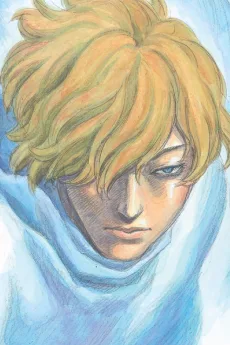
BerserkSerpico is Farnese's companion and unbeknownst to her, her paternal half-brother. During his time with the Holy See, Serpico was Herald for the Holy Iron Chain Knights. When aggres
 MAIN
MAINGuts
BerserkGuts is the protagonist of Berserk. He is a tall, muscular man that swings a huge sword called the Dragon Slayer, he has a prosthetic left forearm that has a magnetic grip that als
 MAIN
MAINCasca
BerserkCasca was the only female soldier in the original Band of the Hawk and is behind only to Guts and Griffith in swordsmanship. Her ambivalent relationship to both of them makes her m
 MAIN
MAINSchierke
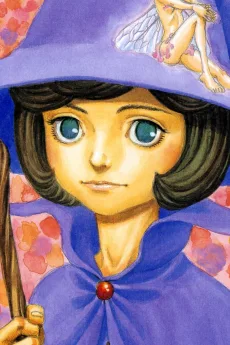
BerserkSchierke is a young witch-in-training, a disciple of the witch Flora. She is accompanied by an elf, Evarella. She aided Guts's group with a troll infestation in the nearby village
 MAIN
MAINPuck
BerserkA wind spirit from Elfhelm, a utopia on the island Skellig in the Western Sea. Elves in Berserk can only be seen by the open-minded; the devoutly religious cannot see Puck at all,
 MAIN
MAINIsidro
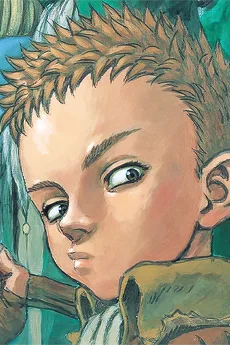
BerserkA runaway brat turned thief, Isidro dreams of becoming a great swordsman, which made him tag along with Guts. Despite his lack of strength and skill, he utilizes his small size and
 SUPPORTING
Danann
BerserkThe Flower Storm Monarch (real name Danan) is the lord of the elves, ruling over Elfhelm on the island of Skellig.