Appears In
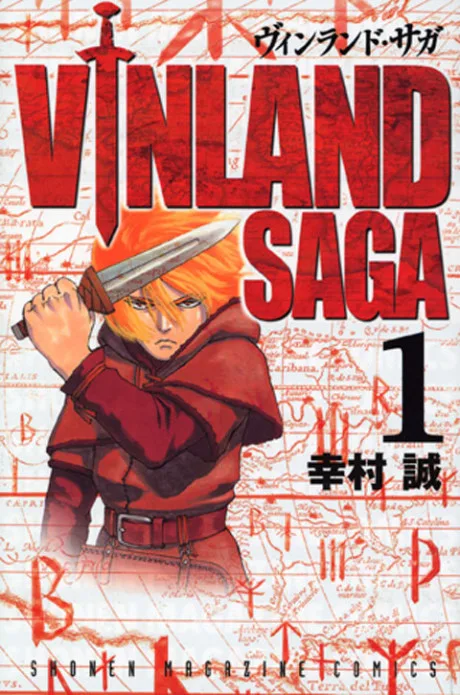
Quick Facts
| Gender | Male |
| Age | 6-25 |
| Role | MAIN |
| Series | Vinland Saga |
| Height | 155 cm |
| Age | 22 in 1018 |
| Birthday | February 3 |
| Gender | Male |
| Weight | 55 kg |
| Eye Color | Brown |
| Hair Color | Blond |
| Voice Actor (JP) | Yuto Uemura |
| Voice Actor (JP, Child) | Shizuka Ishigami |
| Affiliation | Askeladd's band; Ketil's Farm |
| Aliases | Karlsefni |
| Debut | Chapter 1, "Normanni" |
| Father | |
| Mother | |
| Sister |
Contents
Background
Background
Thorfinn is born in Iceland in 996 to Thors and Helga. His father is living quietly as a farmer and family man despite having once been a feared Jomsviking commander. Thorfinn knows little about that past during his early childhood and instead grows up fascinated by the stories of distant lands told by Leif Erikson.
Vinland holds particular importance to him. Leif describes a fertile country far to the west where grapes grow and where the conditions are far gentler than those of Iceland. To the young Thorfinn, it represents adventure. The official anime describes the child Thorfinn as energetic, curious and eager to see the New World for himself after hearing about Vinland from both Thors and Leif.
His childhood changes when Floki arrives in Iceland and pressures Thors into returning for a Jomsviking campaign. Thorfinn secretly hides aboard his father's ship, hoping to experience the adventure he has imagined. The journey instead exposes him to warfare and introduces him to Askeladd's mercenary company.
Askeladd's men ambush Thors under Floki's orders. Thors defeats Askeladd in single combat but allows himself to be killed to protect Thorfinn, his crew and the villagers traveling with him. Thorfinn subsequently follows Askeladd's band rather than returning home, dedicating himself to killing Askeladd in an honorable duel.
For years, Thorfinn survives inside Askeladd's mercenary band. The official anime describes this stage of his life as one in which he has no protector, participates in a company built around warfare and pillage, and relies on his small physique, exceptional agility and twin daggers.
Thorfinn performs dangerous assignments for Askeladd in exchange for opportunities to duel him, including reconnaissance, assassination and attacks against military targets. Every defeat deepens his fixation, leaving him unable to imagine a future outside revenge.
After Askeladd's death, Thorfinn loses the single purpose around which he organized his childhood and adolescence. He attacks Canute in despair and is eventually enslaved, beginning the period adapted in Season 2.
Personality
Personality
Thorfinn's personality changes drastically across the story. As a child, he is energetic, stubborn and intensely curious. He idolizes warriors without understanding the realities of battle and treats Leif's stories about exploration as promises of adventure rather than warnings about the size and danger of the world.
His years with Askeladd strip away much of that openness. Teenage Thorfinn is withdrawn, angry and almost completely consumed by revenge. He speaks little unless necessary, sleeps apart from the other mercenaries and treats the group's raids primarily as opportunities to earn another duel.
Pride remains one of his strongest weaknesses during this period. Askeladd repeatedly exploits Thorfinn's anger in duels, provoking him into reckless attacks even when Thorfinn possesses enough skill to fight more intelligently. The desire to defeat Askeladd "properly" prevents him from simply attacking when the older man is vulnerable.
His attitude toward violence initially resembles the world around him more than he is willing to admit. Thorfinn despises Askeladd but participates in raids, killings and wars under his command. Revenge gives him a justification that allows him to avoid examining the suffering he contributes to.
After losing that purpose, Thorfinn's emotional state changes from rage to emptiness. The young man working on Ketil's farm is initially subdued and disconnected from his surroundings, carrying neither the ambition of his childhood nor the hatred that sustained his years as a warrior.
His growing friendship with Einar begins reopening that emotional world. Einar has suffered directly from Viking violence, forcing Thorfinn to confront the fact that his own past contains the same kind of actions that destroyed Einar's family.
By the later portion of the anime's second season, Thorfinn's values have changed substantially. He no longer sees violence as a natural first solution and begins attempting to create a way of life based on refusing to harm others whenever another path exists.
Appearance
Appearance
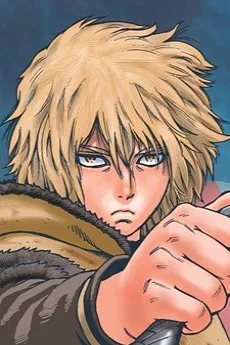
Thorfinn is notably short compared with many of the warriors around him. Published guidebook-based profile information gives him a height of about 155 cm as an adult, while earlier stages place him slightly shorter. His compact stature is repeatedly emphasized visually beside men such as Thorkell and Einar.
He has blond hair, brown eyes and a lean build. As a child his hair is cut relatively short and his face retains the rounded appearance expected of his age. Years of warfare leave him visibly harder and more angular.
During his teenage mercenary period, Thorfinn wears practical clothing suited to travel and combat: a dark tunic, trousers, boots and weather-resistant outer layers. His twin daggers are kept immediately accessible rather than stored as ceremonial weapons.
His body accumulates scars from repeated battles. His hands in particular receive deliberate visual attention from creator Makoto Yukimura, who has discussed hands as important tools for communicating a character's history and personality. Published material on the series notes that the marks on Thorfinn's hands reflect years of fighting largely on his own.
During the farm period, his appearance becomes less overtly martial. His hair grows longer, his face becomes thinner, and the clothing associated with a slave laborer replaces the compact fighting equipment of Askeladd's band.
Yukimura deliberately keeps the adult Thorfinn relatively slight rather than turning him into an imposing warrior. Commentary on the manga's design notes that although Thorfinn matures significantly, Yukimura avoided giving him a beard because he did not want him to appear excessively strong or intimidating.
Abilities & Powers
Abilities & Powers
Thorfinn possesses no supernatural abilities. His combat skill comes from childhood exposure to professional warriors, repeated battlefield experience and a style adapted to his small body.
Speed is his most important physical advantage. Thorfinn can accelerate rapidly, change direction in close quarters and exploit gaps before much larger fighters can adjust. His movement allows him to survive against opponents whose raw strength would overwhelm him in a direct exchange.
He is an exceptional climber and acrobat. Thorfinn uses walls, ships, trees, roofs and uneven terrain as part of his movement, often approaching targets from directions traditional soldiers are not prepared to defend.
His reflexes are developed through years of warfare. He can avoid sword swings, spear thrusts and projectiles at extremely close range and regularly fights multiple armed opponents without relying on armor.
Thorfinn originally specializes in dual-wielded daggers. The short weapons complement his speed and allow him to fight inside the reach of longer swords. Rather than contesting an opponent's power directly, he closes distance, redirects attacks and targets openings.
He also becomes highly skilled at unarmed combat. His experience allows him to identify balance, timing and weak points even when he has deliberately rejected lethal weapons.
Thorfinn's endurance is exceptional. His childhood with mercenaries exposes him to hunger, cold, marches, injuries and repeated fighting, while his farm labor later builds different forms of stamina and physical strength.
His most important later ability is restraint. By Season 2, Thorfinn's challenge is no longer whether he can defeat ordinary fighters but whether he can resolve dangerous encounters without killing them.
Later manga material develops this considerably. Thorfinn retains enough combat ability to confront elite fighters even after years of avoiding violence, but increasingly treats that skill as an emergency resource rather than the foundation of his identity.
He develops a defensive fighting style centered on evasion, redirection, disarming and incapacitation, attempting to protect himself and others while minimizing permanent injury.
Named Techniques
Named Techniques
Thorfinn does not use a formal system of named techniques. His combat style is practical rather than codified, built from battlefield experience instead of an established martial school.
Dual-Dagger Combat uses one dagger in each hand to create rapid attacks from several angles. The short blades suit Thorfinn's preference for entering an opponent's reach rather than exchanging full-force strikes.
Close-Range Evasion combines footwork, body movement and extremely quick reactions to slip around larger weapons. Thorfinn frequently uses an opponent's missed attack to move directly into striking distance.
Terrain-Assisted Movement uses walls, trees, ships and other structures as footholds. His acrobatic movement makes conventional expectations about approach angles unreliable.
Disarming and Redirection becomes increasingly important as Thorfinn moves away from lethal combat. Instead of meeting force with force, he uses timing and positioning to redirect attacks and deprive opponents of weapons.
Unarmed Restraint reflects his later preference for defeating attackers without killing them. He relies on accumulated combat knowledge to evade, throw, strike or immobilize an enemy while limiting damage.
Relationships
Relationships
Thors Snorresson is Thorfinn's father and the person whose teachings ultimately become central to his adult worldview. Thors Snorresson tries to teach his son that nobody is truly his enemy and that a true warrior does not need a sword, but the child Thorfinn initially misunderstands those words as weakness. Thors' death sends Thorfinn into years of revenge, yet the principles Thorfinn rejected as a boy eventually become the foundation of the life he tries to build as an adult.
Helga is Thorfinn's mother. Helga raises him in Iceland and remains part of the peaceful home he abandons after Thors' final voyage. Thorfinn's years away from Iceland separate him from the mother who expected her son to return.
Ylva is Thorfinn's older sister. Ylva is practical, physically strong and far less fascinated by distant adventure than her younger brother. Thorfinn leaves her and the rest of the household behind as a child, creating years of separation during which the family has little reliable information about him.
Leif Erikson fills Thorfinn's childhood imagination with stories about Vinland. Leif Erikson knows the western land as a real destination rather than a myth and becomes one of the strongest links between Thorfinn's peaceful childhood and his adult future. Leif spends years searching for Thorfinn after the boy disappears with Askeladd's band and continues refusing to assume that he is lost forever.
Askeladd is Thorfinn's enemy, commander and unintended teacher. Askeladd arranges Thors' death and becomes the focus of Thorfinn's revenge, yet Thorfinn then spends his formative years following his company. Askeladd deliberately provokes his anger, exploits his skills and repeatedly defeats him in duels. Because Thorfinn grows up under Askeladd's influence, the man he hates also becomes one of the people most responsible for developing his battlefield instincts and understanding of human behavior. Askeladd's death leaves Thorfinn emotionally directionless because revenge has replaced every other purpose in his life.
Canute first encounters Thorfinn during Askeladd's campaigns in England. Canute initially appears physically and politically fragile, while Thorfinn has little interest in royal succession beyond its effect on his revenge. Their paths change in radically different directions as both young men search for ways to respond to the violent world around them. By Season 2, their ideals have become important counterpoints to one another.
Einar becomes Thorfinn's closest friend during his enslavement on Ketil's farm. Einar initially has strong reason to hate Vikings because raiders destroyed his home and family, while Thorfinn himself spent years participating in similar violence. Working together creates trust gradually. Einar gives Thorfinn a relationship not based on fighting, obedience or revenge and becomes essential to his ability to imagine a different future.
Arnheid is another enslaved worker at Ketil's farm and becomes close to both Thorfinn and Einar. Arnheid's circumstances force Thorfinn to confront how slavery and violence continue destroying lives even far from the battlefield. Her suffering and death become among the decisive experiences behind Thorfinn's commitment to building somewhere beyond war and slavery.
Ketil owns the farm where Thorfinn and Einar are enslaved. Ketil initially appears more humane than many slaveholders and offers the two men the possibility of purchasing their freedom through labor. The later collapse of his restraint demonstrates to Thorfinn how quickly a supposedly peaceful social order can revert to violence when ownership, status and fear are threatened.
Snake commands Ketil's farm guards and becomes one of the most formidable fighters Thorfinn encounters during his enslavement. Snake recognizes that Thorfinn is not an ordinary slave and eventually forces him into a serious confrontation. Their interactions help establish that Thorfinn's rejection of killing does not mean that his combat ability has disappeared.
Thorkell is one of the most physically powerful warriors in the story and has a family connection to Thorfinn through Thors. Thorkell is fascinated by strong opponents and warfare, making him almost the inverse of the values Thorfinn ultimately adopts. As a teenager, Thorfinn survives encounters with him through speed, observation and exploiting injuries rather than matching his strength.
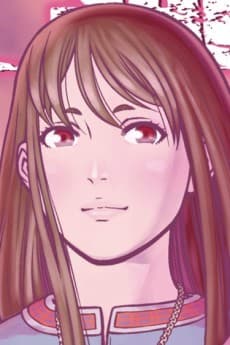
[Gudrid joins Thorfinn's later voyages after fleeing the restricted life expected of her. Gudrid shares his desire to see the wider world and becomes one of his closest companions. Their relationship eventually develops into marriage, making her central to the family Thorfinn builds rather than the family he lost.](#spoiler)
[Hild first approaches Thorfinn as someone with direct reason to hate him. Thorfinn's actions during his Viking years destroyed her family and home, and Hild initially intends to kill him. She allows him to continue living only while judging whether his commitment to atonement is genuine, turning her presence into a constant reminder that remorse does not erase what he did.](#spoiler)
[Karli becomes part of Thorfinn and Gudrid's family after being rescued as an infant. Caring for a child gives Thorfinn another direct responsibility toward creating the peaceful life he once only imagined abstractly.](#spoiler)
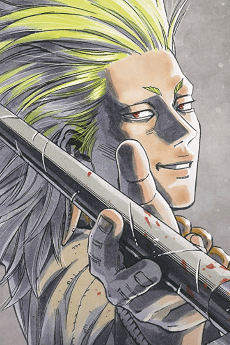
[Garm is a gifted young warrior who becomes fascinated with Thorfinn's ability and repeatedly attempts to draw him into serious combat. Garm's love of fighting confronts Thorfinn with an image of the violent young man he once was, but Thorfinn tries to defeat him without returning to his former mentality.](#spoiler)
Story Role
Story Role
Thorfinn begins as a child listening to stories of exploration, but the prologue turns him into a participant in the Viking warfare that defines much of northern Europe in the early eleventh century. Kodansha's description of the series summarizes his early path as that of a boy raised among the Vikings who destroyed his family, sustained by his determination to kill Askeladd and by memories of the peaceful western land Leif called Vinland.
The prologue follows his years inside Askeladd's mercenary group against the backdrop of Danish campaigns in England. Thorfinn's personal objective remains revenge even as the conflict expands into questions of succession, conquest and the future of the Danish crown.
His relationship with Askeladd prevents the revenge story from remaining straightforward. Thorfinn hates him but depends upon his company for survival and opportunities to fight. The longer this continues, the more Thorfinn's identity becomes inseparable from the man he intends to kill.
Canute's development gradually displaces Thorfinn from the center of political events. While the prince begins making decisions capable of changing kingdoms, Thorfinn remains trapped in the personal grievance he formed as a child.
Askeladd's death ends the prologue without giving Thorfinn the revenge he believed would justify his life. Having spent years refusing to imagine anything beyond killing him, Thorfinn is left without direction and eventually enters slavery.
Season 2 shifts the story away from battlefields and toward Ketil's farm. Thorfinn initially works almost mechanically, showing little resistance to his circumstances. His relationship with Einar gradually forces him to speak about his past and recognize the suffering produced by lives like the one he previously led.
Nightmares and memories become central to this period. Thorfinn is haunted by people he killed and by the weight of the violence he previously treated as ordinary. The conflict becomes internal: acknowledging guilt without allowing guilt itself to become another reason to stop living.
His decision to reject violence is tested when Canute's political ambitions bring an army toward Ketil's estate. Instead of simply defeating enemies through his still-formidable combat ability, Thorfinn attempts negotiation even when doing so requires accepting physical punishment.
The culmination of the anime's second season returns Vinland to the center of his future. The land that once represented childhood adventure becomes an adult project: a place where people who cannot endure warfare and slavery might live beyond those systems.
The later manga follows Thorfinn's attempt to make that ideal practical. He needs money, ships, settlers and political freedom before any expedition to Vinland can succeed, turning a philosophical goal into years of travel and negotiation.
His eastern expedition leads through the Baltic conflict surrounding the Jomsvikings. Kodansha's later deluxe editions describe Thorfinn as becoming an unwilling candidate for leadership because warriors recognize him as Thors' son, while his commitment to peace is tested amid another war.
The final major phase follows the Vinland settlement itself. Thorfinn attempts to build a community without weapons or slavery while negotiating with Indigenous inhabitants, forcing the ideals developed on Ketil's farm to confront scarcity, fear, cultural misunderstanding and settlers who do not share his absolute commitment to avoiding violence.
Character Development
Character Development
Thorfinn's earliest mistake is misunderstanding his father. He hears Thors say that nobody is his enemy but remains fascinated by weapons, warriors and adventure. Only after spending years inside war does he acquire enough experience to understand what those words cost his father to believe.
Revenge gives Thorfinn an identity during adolescence but prevents him from growing beyond the moment Thors dies. He becomes extraordinarily capable at fighting while remaining emotionally fixed as the angry child who watched his father fall.
Askeladd understands this weakness and repeatedly exploits it. Thorfinn could become a more disciplined warrior, but anger makes him predictable. His duels therefore become less a measure of physical skill than evidence of how completely revenge controls his judgment.
The farm arc begins only after that structure collapses. Without Askeladd, Thorfinn no longer knows what to pursue. His numbness reflects the absence of any identity not defined by violence.
Einar gives him the first sustained opportunity to build something rather than destroy it. Clearing forest, cultivating soil and working toward freedom are physically exhausting but fundamentally productive. The contrast with raiding is deliberate: labor produces a future instead of taking one from someone else.
Thorfinn's guilt eventually becomes explicit. He cannot undo the people he killed or return what was stolen. His response is to decide that atonement must involve preventing additional violence rather than merely suffering because of what he has already done.
The phrase "I have no enemies" therefore represents acquired conviction rather than naïveté. Thorfinn has known genuine enemies, killed people and lived among warriors. His rejection of the category comes after understanding exactly what treating another person as an enemy permits someone to justify.
Yukimura has described this pacifism as directly reflecting his own convictions. In a 2025 interview, he said Thorfinn's pacifism matches his personal beliefs and described Vinland Saga as fundamentally a story about watching a child grow into adulthood.
Later arcs repeatedly test whether Thorfinn's principle works outside controlled circumstances. Hild demands accountability for his past, Garm tries to provoke him into combat, the Jomsvikings offer him power and the Vinland expedition faces conflicts where walking away may endanger people who trust him.
His development consequently does not end when he renounces violence. The later story asks whether refusing violence remains morally defensible when other people may suffer because of that refusal. Thorfinn continues searching for alternatives rather than treating pacifism as an excuse to avoid responsibility.
Etymology
Etymology
Thorfinn is based on the historical Icelandic explorer Thorfinn Karlsefni, an early eleventh-century Norse voyager associated with expeditions to Vinland. The historical figure appears in medieval Icelandic traditions including the Saga of the Greenlanders and Saga of Erik the Red.
The Old Norse name Þorfinnr combines Þórr, referring to the god Thor, with finnr, a personal-name element historically associated with Finns or Sámi people. Modern English editions render the name as Thorfinn.
The byname Karlsefni derives from Old Norse karlsefni. It is generally interpreted along the lines of "makings of a man," "promising man" or someone possessing the qualities expected of a capable man.
Makoto Yukimura chose the historical Thorfinn because the surviving historical record leaves considerable room for fictional interpretation. Commentary on the manga notes that Yukimura was attracted by the real figure and found the limited surviving detail useful because it gave him substantial creative freedom.
The fictional Thorfinn differs substantially from what can be established about the historical explorer. Yukimura has openly emphasized that Vinland Saga uses historical material in service of fiction and increasingly departs from known history where the story requires it.
Trivia
Trivia
-
Thorfinn is born on February 3, 996 and is 22 years old in 1018. Profile material places his adult height around 155 cm.
-
His small size is an intentional combat characteristic. The official anime describes him specifically as small-bodied but highly agile and skilled with daggers.
-
Adult Thorfinn is voiced in Japanese by Yuto Uemura, while Shizuka Ishigami voices him as a child.
-
He is based on the historical explorer Thorfinn Karlsefni, but large portions of his childhood, warrior career and personal relationships are fictional constructions.
-
Yukimura created Askeladd specifically because he needed someone who could lead the young Thorfinn onto the battlefield and force him to grow.
-
Yukimura has said that Thorfinn's pacifism reflects his own beliefs completely and that he wanted Vinland Saga to depict the process of a child developing into an adult.
-
Thorfinn's hands receive unusual visual attention throughout the manga. Yukimura considers hands especially expressive and uses their scars and condition to communicate his history.
-
The adult Thorfinn was intentionally kept clean-shaven in the manga so that his mature design would not appear excessively imposing.
In Other Media
In Other Media
Thorfinn is the central character of the television anime adaptation of Vinland Saga. Shizuka Ishigami voices him during childhood and Yuto Uemura voices his older incarnation. The official anime site distinguishes the child Thorfinn from the young Viking version and describes both stages separately.
Season 1 adapts the prologue, beginning with Thorfinn's childhood in Iceland and following his years with Askeladd's company through the Danish invasion of England. Its action-heavy structure foregrounds his dagger fighting, speed and obsessive pursuit of revenge.
Season 2 shifts dramatically in tone and setting. Thorfinn's enslavement on Ketil's farm removes him from conventional Viking warfare and focuses on his relationship with Einar, his guilt over his earlier life and his attempt to understand the philosophy Thors tried to teach him.
The two-season adaptation therefore covers the most dramatic transformation in his characterization: the child fascinated with warriors, the adolescent consumed by revenge and the adult beginning to reject violence. Later expeditions involving Gudrid, Hild and the actual Vinland project have not yet been adapted in the released television anime.
Thorfinn also appears in the official crossover short story combining Vinland Saga with Assassin's Creed, included in Kodansha's Vinland Saga Deluxe, Volume 7. Kodansha lists the story among the volume's exclusive bonus material.
The deluxe English editions have additionally included creator interviews, historical timelines, maps, concept art and other material expanding the context around Thorfinn's journey. Kodansha's deluxe releases explicitly pair the fictional narrative with explanatory material concerning its relationship to Viking Age history.
Reception
Reception
Critical response to Thorfinn has changed alongside the character himself. Early discussion sometimes criticized the teenage version for his hostility and obsessive behavior, while still praising the tragedy of his childhood and the intensity of his combat scenes. Later material attracted much stronger praise for the extent of his transformation.
The farm arc is particularly important to that reception. Instead of rewarding Thorfinn's accumulated combat ability with progressively larger battles, the narrative removes the revenge objective entirely and forces him to confront what those years have done to him and to other people.
His relationship with violence has consequently become one of the defining elements of Vinland Saga's identity. Yukimura has described himself as a committed pacifist and explicitly stated that Thorfinn's pacifism reflects those beliefs.
The character's historical basis has also attracted attention beyond conventional manga readership. Thorfinn Karlsefni provides a real connection to the Norse voyages to North America, but Yukimura uses the large gaps in surviving historical knowledge to construct a personal story around war, slavery, guilt and reconciliation.
Thorfinn's physical design supports that progression. He never becomes the enormous Viking warrior that his experience might suggest. His relatively small body, damaged hands and changing expressions preserve visible continuity between the child who left Iceland and the adult trying to recover a life outside warfare.
Yukimura has described Vinland Saga itself as a kind of coming-of-age record, saying that he wanted to depict how someone introduced at a very young age could become an adult through experience. He has also acknowledged putting a significant amount of himself into Thorfinn.
The later manga extends that reception by refusing to treat Thorfinn's pacifism as an uncomplicated victory. Once he attempts to build the settlement he has imagined, the question changes from whether one man can refuse violence to whether a community can survive when fear, cultural misunderstanding and competing interests make violence increasingly attractive. That continuing pressure keeps his ideals from becoming a fixed conclusion and turns them instead into the central problem he must repeatedly solve.
Sources
Facts on this page are checked against official publisher and creator sources. Spotted an error? Tell us.
Related Characters
 SUPPORTING
Floki
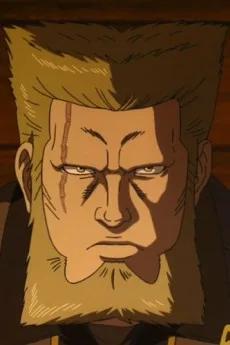
Vinland SagaA Jomsviking commander whom contracted Askeladd to assassinate Thors, Floki's former comrade.
 SUPPORTING
Einar
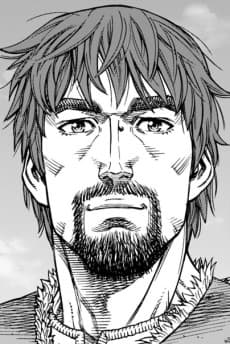
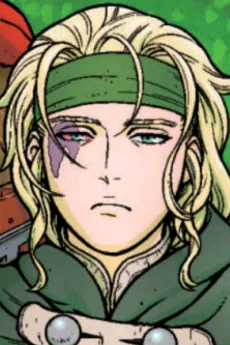
Vinland SagaEinar is a man from Northern England that was sold into slavery. He ends up in Denmark, where he meets Thorfinn. Together with him, Einar is working his way out of slavery by harve
 SUPPORTING
Ylva
Vinland SagaShe is Thorfinn's older sister. After Thorfinn has set on a journey to avenge his father, Thors, she takes care of household and her mother.
 SUPPORTING
Askeladd
Vinland SagaAskeladd is the commander of a small but powerful Viking band, which owed its success to Askeladd's exceptional intelligence. Ten years before the main Vinland Saga storyline, Aske
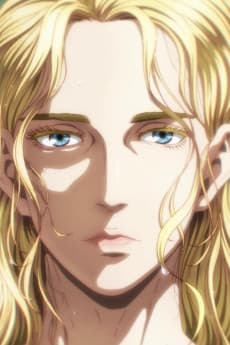 SUPPORTING
Arnheid
Vinland SagaOne of Ketil's slaves, serving as his personal maid and concubine. Arnheid is kind, hard-working, honest, and tries her best to get through her slave life without trouble.
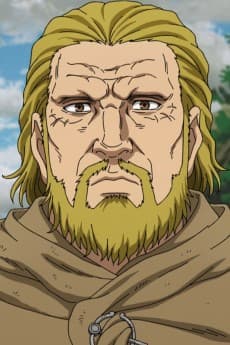 SUPPORTING
Ketil
Vinland SagaOwner of a farm in Southern Denmark, and father of Thorgil and Olmar.
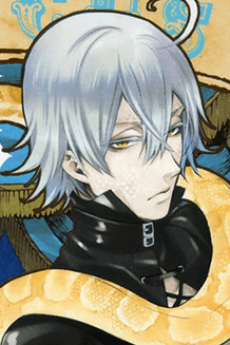 SUPPORTING
Snake
Vinland SagaSnake is a young, relatively skinny male with short white hair with a cowlick, who appears to have small patches of scales all over his body. Snake is quiet, rarely speaking, and w
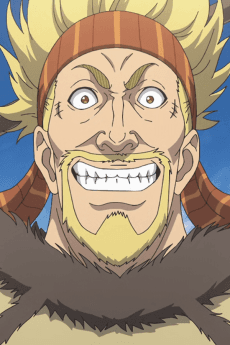 SUPPORTING
Thorkell
Vinland SagaThorkell is a Jomsviking general and brother of the Jomsviking Chief. A giant man who loves combat, Thorkell defected from the Danish army to become a mercenary for the English, be
 SUPPORTING
Gudrid
Vinland SagaA strange woman, given the times, she wishes to be a sailing adventurer, so she stabs her husband, and flees as he is attempting to consummate their marriage. Thorfinn allows her t
 SUPPORTING
Karli
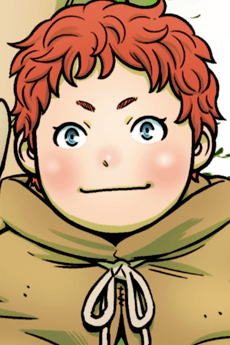
Vinland SagaKarli is the child of a friend of Lief named Arngrim. Karli's mother died due to an attack of Vikings allied with Gisli in his feud with Arngrim. Thorfinn, after finding him in the
 SUPPORTING
Garm
Vinland SagaGarm (ガルム, Garumu) is a very arrogant and brash man looking for thrills in fighting. He is quite intrigued by Thorfinn due to recognizing his prowess in combat and possibly being t