Appears In
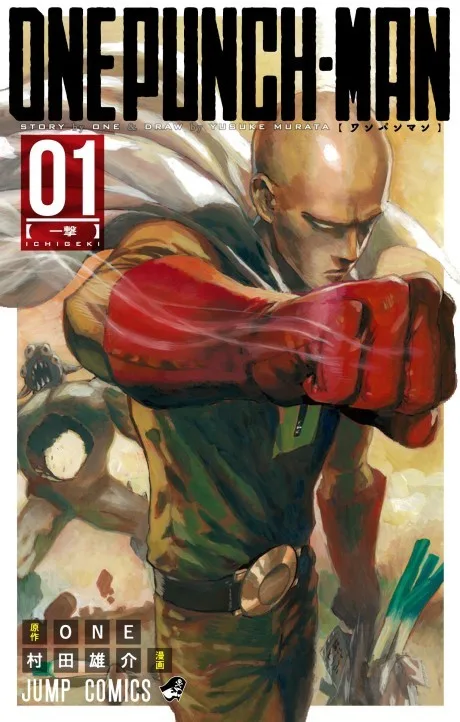
Quick Facts
| Gender | Male |
| Age | 25 |
| Role | MAIN |
| Series | One-Punch Man |
| Height | 175 cm |
| Age | 25 |
| Birthday | April 21 |
| Gender | Male |
| Weight | 70 kg |
| Eye Color | Brown |
| Hair Color | Black before training |
| Zodiac | Taurus |
| Voice Actor (JP) | Makoto Furukawa |
| Voice Actor (EN) | Max Mittelman |
| Likes | Bargain sales, reading manga, udon |
| Affiliation | Hero Association |
| Aliases | Caped Baldy |
| Debut | Chapter 1, "One Punch" |
| Disciple |
Contents
Background
Background
Saitama lives in City Z and spends much of his adult life without a clear direction. Before becoming a hero, he is an unemployed young man struggling through job interviews and looking markedly different from his later self, with a full head of black hair and none of the overwhelming confidence his physical strength eventually permits.
His life changes when he encounters Crablante, a monster preparing to kill a child because the boy drew nipples on his shell while he was sleeping. Saitama initially tries to continue with his own life, but seeing the frightened child reminds him of the childhood dream he once had of becoming a hero capable of defeating villains with a single punch. He turns back, fights Crablante despite being physically outmatched and kills the monster using his necktie and the creature's eyestalk.
Saitama then begins an intensive training routine that he later insists is responsible for his strength: 100 push-ups, 100 sit-ups, 100 squats and a ten-kilometre run every day, accompanied by eating three meals and refusing to use air conditioning or heating. He continues even when his body aches, his bones seem to crack and his hair begins falling out. After approximately three years, he becomes bald and reaches a level of physical ability that no opponent can meaningfully test.
The result does not produce the satisfaction he expected. Saitama becomes capable of destroying monsters instantly, but victory no longer gives him excitement. He continues patrolling City Z as a hero "for fun," often eliminating threats before authorities or professional heroes fully understand what happened.
His life changes again when he encounters Genos during the battle with Mosquito Girl. Genos witnesses Saitama destroy the transformed monster effortlessly and insists upon becoming his disciple. Saitama has no formal martial philosophy to teach him, but eventually accepts the arrangement.
Genos also introduces Saitama to the Hero Association. Saitama is surprised to discover that heroic activity performed without official registration earns little recognition, so the pair undertake the entrance examination together. He completely overwhelms every physical test but performs poorly enough on the written portion to receive only 71 points, entering the organization at C-Class while Genos immediately receives S-Class status.
Personality
Personality
Saitama is emotionally subdued, practical and frequently bored. Years of effortless victories have stripped combat of the anticipation that originally attracted him to heroism. Enemies can announce elaborate ambitions or transformations while Saitama listens with little visible interest, especially when their explanations interfere with something mundane he intends to do afterward.
His indifference does not extend to civilian suffering. Saitama repeatedly intervenes when people are threatened even when nobody will recognize his actions afterward. He does not require payment, publicity or official orders before helping someone, and many of his most important heroic decisions occur before he joins the Hero Association at all.
He is remarkably resistant to status anxiety in some situations and surprisingly vulnerable to it in others. Saitama does not envy the S-Class heroes' authority or assume that rank determines actual strength, yet he becomes frustrated when crowds insult him or when other heroes receive credit for his accomplishments. Recognition matters to him because heroism is one of the few things he genuinely wants to feel successful at.
Money remains an everyday concern. Saitama pays close attention to supermarket discounts, promotional sales and household expenses despite being capable of destroying enemies who threaten entire cities. Missing a bargain can upset him more visibly than encountering a supposedly unbeatable monster.
He is also socially awkward rather than naturally charismatic. His blunt expressions, blank face and tendency to say exactly what he thinks can make him appear insensitive. Saitama does not usually intend cruelty, but he rarely adjusts his speech simply to preserve another person's pride.
When confronted by people struggling with insecurity, however, he can display surprising insight. He often ignores elaborate social explanations and identifies the basic emotional problem underneath them. His advice to Genos, Fubuki, King and others tends to be simple because Saitama himself has little patience for unnecessary complexity.
His treatment of opponents also depends on what they are. Monsters actively killing people receive little mercy, while human adversaries are usually restrained rather than killed. Saitama can distinguish between someone behaving destructively and someone who has genuinely abandoned humanity.
Appearance
Appearance
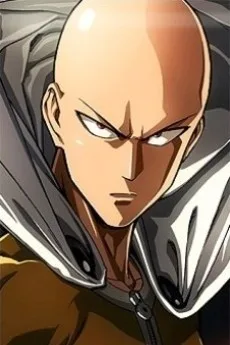
Saitama is 175 cm tall and weighs 70 kg. He has a lean, compactly muscular build that rarely appears as exaggerated as the physiques of many other heroes despite his vastly greater physical strength.
His most recognizable feature is his completely bald head. Three years before the main story he has short black hair, but intense training is accompanied by progressive hair loss until none remains.
His ordinary face is intentionally simple. He has brown eyes, thin eyebrows and a frequently blank expression. When situations become serious, the artwork often shifts sharply toward more detailed facial proportions, emphasizing the difference between his everyday boredom and brief moments of genuine focus.
His hero costume consists of a yellow jumpsuit with a front zipper, red gloves, red boots and a white cape attached at the shoulders by circular fasteners. A black belt with a round golden buckle sits at the waist.
The costume was assembled specifically for his heroic activity rather than representing a uniform issued by the Hero Association. Its bright colors and straightforward superhero design contrast with Saitama's underwhelming official hero name, Caped Baldy.
Outside combat, he dresses plainly. Hoodies, simple shirts, shorts and casual footwear fit the low-key lifestyle he maintains in City Z, and his apartment is correspondingly sparse rather than decorated around his profession.
Abilities & Powers
Abilities & Powers
Saitama possesses physical strength vastly beyond every ordinary human standard established in the series. He can destroy monsters with casual punches, leap enormous distances, shatter durable materials without visible strain and withstand attacks capable of devastating large areas. VIZ summarizes the premise directly: after intense training, Saitama became strong enough to defeat foes with a single punch.
The upper limit of this strength is deliberately difficult to establish. Saitama frequently uses only the amount of force he believes necessary, dividing his attacks informally into ordinary and "Serious" techniques without presenting either as a formal martial arts system.
His durability is similarly extreme. Conventional blades, bullets, physical impacts, heat, explosions and high-level monster attacks produce little or no visible damage. Even opponents capable of hurting elite heroes struggle to create a meaningful physical response from him.
His speed allows him to cross distances before opponents can perceive that he has moved. He can intercept attacks, pursue extremely fast enemies and appear behind combatants whose entire fighting styles depend on speed.
Saitama also possesses extraordinary jumping ability. Because he does not fly, enormous leaps serve as his principal way of covering vertical or aerial distances. He can launch himself hard enough to travel extraordinary distances and survive the resulting impact without difficulty.
His stamina appears effectively inexhaustible under ordinary circumstances. He can perform extreme physical activity without the exhaustion that affects other heroes, and his original exercise routine no longer represents meaningful exertion.
His senses are less overtly supernatural than his physical abilities, but his reactions and perception are sufficient to follow combatants moving at extraordinary speeds. He can detect threatening movements quickly enough to respond even when opponents assume their velocity gives them an advantage.
Saitama has no known supernatural energy system, psychic ability, transformation or technological augmentation. His power is consistently presented as physical ability produced after he "removed his limiter," an explanation Dr. Genus develops when trying to understand how an ordinary human could reach such strength.
Later manga battles demonstrate that Saitama's strength can continue increasing even after he has already surpassed every opponent around him. During the confrontation with Garou, his rate of growth accelerates dramatically as his emotional intensity increases, leaving Garou unable to keep pace despite copying Saitama's abilities.
That same battle produces feats far beyond anything shown in earlier anime material, including interacting physically with spatial portals, surviving in space without meaningful impairment and producing enormous astronomical effects through clashes with Garou.
Named Techniques
Named Techniques
Saitama does not practice a formal martial art. Most technique names are labels he gives to variations of basic physical movements rather than components of an organized combat discipline.
Normal Punch is Saitama's standard punch. Despite the deliberately ordinary name, it is sufficient to destroy the overwhelming majority of monsters he encounters.
Consecutive Normal Punches unleashes a rapid barrage of ordinary punches rather than relying on a single strike. Saitama uses it against opponents durable enough that continuous attacks are more useful than one casual blow.
Serious Punch is one of his best-known Serious Series attacks. Saitama delivers a punch with substantially greater intent than his ordinary strikes, producing force capable of countering attacks on an enormous scale.
Serious Side Hops consists of extremely rapid lateral movement created through repeated side-to-side jumping. The resulting speed produces numerous apparent afterimages and overwhelming air pressure.
Serious Squirt Gun uses the movement of Saitama's hands to propel liquid at tremendous force. The technique illustrates how even mundane gestures become extreme when performed with his physical strength.
Serious Table Flip uses Saitama's strength to tear up and launch an enormous section of terrain, completely disrupting the battlefield and forcing an opponent to fight within a mass of airborne debris.
Omnidirectional Serious Punch uses the fragments produced by Serious Table Flip as footholds, allowing Saitama to attack from numerous directions so rapidly that escape becomes extremely difficult.
Serious Sneeze is exactly what its name suggests: an involuntary sneeze whose force becomes catastrophically destructive because of Saitama's physical power.
Relationships
Relationships
Genos becomes Saitama's self-appointed disciple after witnessing him defeat Mosquito Girl. Genos initially expects formal instruction capable of explaining Saitama's strength, while Saitama repeatedly struggles to provide anything useful because his own training method sounds absurdly ordinary. Genos nevertheless moves into Saitama's apartment, contributes money toward household expenses and begins accompanying him on missions. Saitama gradually treats him less as an intrusive student and more as a trusted companion, even if he rarely verbalizes that attachment directly.
King becomes one of Saitama's closest friends after Saitama discovers the truth behind his reputation. King is publicly celebrated as the strongest man on Earth because several of Saitama's victories were mistakenly attributed to him, but he is actually an ordinary man with no meaningful combat ability. Saitama does not expose him. The two play video games together, and King becomes one of the few people willing to challenge Saitama's assumptions about what he actually wants from heroism.
Speed-o'-Sound Sonic considers Saitama his rival after a humiliating defeat during their first encounter. Speed-o'-Sound Sonic repeatedly trains to surpass him and develops new techniques specifically for rematches, while Saitama has difficulty treating the rivalry as seriously as Sonic does.
Fubuki first approaches Saitama because she wants to absorb promising B-Class heroes into the Blizzard Group. Fubuki becomes frustrated when intimidation fails and increasingly recognizes that Saitama exists outside the hierarchy she has built much of her identity around. She begins appearing frequently around his apartment and social circle despite Saitama never formally joining her group.
Tatsumaki initially views Saitama as an insignificant lower-ranked hero. Tatsumaki's overwhelming psychic ability normally lets her dominate physical environments completely, making Saitama's resistance to her force unusually irritating. Their later confrontation develops into a prolonged clash in which Saitama attempts to keep Tatsumaki away from populated areas while she increasingly tests whether she can overpower him.
Bang becomes interested in Saitama after observing his extraordinary physical ability. Bang attempts to draw both Saitama and Genos toward his martial arts dojo, but Saitama shows little interest in learning formal techniques because he already lacks opponents capable of requiring them.
Garou becomes increasingly important through the Hero Hunter and Monster Association conflicts. Garou seeks to overturn conventional ideas of heroes and monsters through overwhelming martial ability, placing him on a path that eventually intersects directly with Saitama. Their manga confrontation escalates until Garou receives cosmic power and can imitate Saitama's physical abilities, yet Saitama's strength continues increasing faster than Garou can copy it.
Mumen Rider earns Saitama's respect through courage rather than strength. Mumen Rider's stand against the Deep Sea King is hopeless in physical terms, but he fights anyway because civilians need someone to resist. Saitama treats that decision seriously and later shares a meal with him.
Deep Sea King becomes important to Saitama's public reputation even though their battle is extremely brief. After Deep Sea King defeats multiple respected heroes, Saitama destroys him instantly. When civilians begin questioning whether the defeated heroes were weak, Saitama deliberately plays the role of an opportunist claiming easy credit so that the injured heroes' sacrifices will not be dismissed.
Boros is one of the rare enemies who survives more than one casual attack from Saitama. Boros has crossed the universe searching for an opponent capable of giving him a worthwhile battle, creating an obvious parallel with Saitama's own boredom. Saitama allows the fight to continue longer than most encounters, but the difference between them remains decisive.
Dr. Genus attempts to understand Saitama scientifically after the destruction of the House of Evolution. Dr. Genus eventually concludes that Saitama has removed the natural limiter restricting the growth of living organisms, distinguishing his power from evolution, genetic engineering or monsterization.
Suiko encounters Saitama through later Hero Association developments and martial arts circles. She becomes interested in his capabilities after witnessing how completely his actual strength contradicts the reputation implied by his rank.
Story Role
Story Role
Saitama begins the story already possessing the strength a conventional action protagonist might spend an entire series pursuing. The central practical problem is therefore not becoming capable of defeating enemies but finding meaning, recognition and human connection after combat ceases to challenge him. VIZ's official series description foregrounds the same contradiction: life becomes boring when every villain can be defeated with one punch.
The opening battles establish his routine. Vaccine Man and other threats appear with overwhelming destructive potential only for Saitama to eliminate them almost immediately. Crablante's flashback then reveals that his heroic career began before his strength existed, grounding his choice of profession in something other than invincibility.
Genos' arrival creates a more conventional route into the wider hero world. Through him, Saitama joins the Hero Association and gains an official ranking system against which his complete lack of public recognition can be measured.
The meteor incident emphasizes that disconnect. Saitama prevents a far greater catastrophe by destroying the approaching meteor, but fragments still damage City Z and residents blame him for the destruction. His actual achievement is largely ignored.
The Deep Sea King battle goes further. Several heroes nearly die defending civilians before Saitama arrives and ends the threat immediately. When people begin assuming this proves those heroes were frauds, Saitama intentionally damages his own reputation so their courage will retain meaning.
Boros gives Saitama one of his first encounters with an opponent who can survive repeated attacks. The alien conqueror has himself become bored because almost nobody can challenge him, making the battle one of the clearest early demonstrations of what Saitama's future could resemble if power becomes his only source of meaning.
The Hero Hunter storyline develops largely around Garou while Saitama remains comparatively detached. Season 2 introduces the conflict, and Season 3 Part 1, which aired beginning October 12, 2025, continues the Monster Association material. VIZ currently lists Season 3 Part 1 as released, while the official anime site has announced Season 3's second cour for 2027.
Within that currently adapted material, Saitama continues moving through the Monster Association conflict on a path separate from many S-Class heroes. His low official status means strategic command rarely understands that the single strongest combatant available is already inside or near the battlefield.
The manga eventually brings Saitama directly into Garou's climactic transformation. Garou reaches a state capable of copying techniques, manipulating cosmic forces and reproducing Saitama's own attacks, turning their encounter into the largest-scale demonstration yet of Saitama's power.
The battle also temporarily pushes Saitama beyond his usual emotional detachment after Genos appears to be killed. His resulting growth becomes so rapid that Garou's ability to copy his current strength cannot keep pace with how quickly that strength is increasing.
The conclusion involves Garou teaching Saitama a method that sends him backward through time. Saitama stops the catastrophic sequence before it occurs, while the version of himself who experienced the full battle merges with his past body and loses conscious memory of much of what happened.
Character Development
Character Development
Saitama's development is less about increasing his power than discovering what remains meaningful once power no longer provides satisfaction. At the beginning, he assumes the missing element is a worthy opponent. If someone could survive his full strength, he believes combat might feel exciting again.
Daily life repeatedly suggests that the problem is broader. Saitama becomes irritated by financial problems, missed sales, lack of recognition and loneliness in ways no monster can provoke. These mundane frustrations demonstrate that invincibility solves only the narrow problem of winning fights.
Genos changes his routine substantially. Saitama initially accepts him almost accidentally, but living with another person gives structure to a previously isolated existence. Their relationship also places Saitama in situations where he must consider someone else's ambitions instead of only his own boredom.
Joining the Hero Association gives him another external goal. Saitama claims not to care greatly about status, yet being ignored and insulted bothers him. Advancing from C-Class upward gives him a form of progress unavailable through physical training.
King becomes important because he can discuss Saitama's dissatisfaction without being intimidated by him. Rather than accepting the assumption that strength should automatically create fulfillment, King suggests that becoming a great hero involves more than reaching the end of physical improvement.
The Deep Sea King incident reveals that Saitama's understanding of heroism is already deeper than his complaints about fame imply. He gives up public praise rather than allow civilians to conclude that heroes who nearly died protecting them were worthless.
His interactions with Fubuki similarly place him outside the status structures that control many other heroes. Saitama has little interest in factions, rankings or institutional prestige when they interfere with straightforward judgments of character.
The Garou battle reveals a rare extreme emotional response. Saitama's grief and anger briefly give him the kind of intensity he thought he wanted from battle, but the circumstances make it impossible to enjoy. A genuinely serious opponent does not solve his dissatisfaction when the reason for fighting is personal loss.
Later material increasingly emphasizes the community that has formed around him. The isolated hero in an abandoned part of City Z gradually becomes surrounded by Genos, King, Fubuki and other figures who visit, argue with him and rely on him, often without Saitama consciously acknowledging how much his life has changed.
Etymology
Etymology
Saitama's name is written サイタマ in katakana. It directly matches the pronunciation of Saitama, the real Japanese prefecture and city, but the series does not provide kanji or an in-universe surname for him.
Creator ONE has generally used the single name "Saitama" rather than giving the character a conventional full Japanese name. This fits the intentionally plain presentation surrounding a protagonist whose costume and appearance contrast with more elaborate heroes.
His official Hero Association name is Caped Baldy in English translation. The organization chooses the name based almost entirely on his visible costume and bald head rather than his abilities, illustrating how little the Association understands him when he first becomes registered.
Saitama dislikes the name because it reduces him to physical characteristics and lacks the dramatic appeal he expects from a professional hero title. The complaint is particularly striking because his actual abilities would justify almost any grandiose designation.
The series title One-Punch Man is not normally used as Saitama's formal Hero Association name. It describes the central conceit surrounding him: almost every opponent can be defeated with a single punch.
Trivia
Trivia
-
Saitama is 25 years old, 175 cm tall and weighs 70 kg in established character-profile material.
-
His birthday is April 21, making his zodiac sign Taurus.
-
He loses all of his hair during the three years of training that produce his extraordinary strength.
-
His stated daily routine consists of 100 push-ups, 100 sit-ups, 100 squats and a ten-kilometre run, performed every day for three years.
-
He scores exceptionally on every physical component of the Hero Association entrance examination but performs poorly on the written test, entering at C-Class with an overall score of 71.
-
Makoto Furukawa voices Saitama in Japanese, while Max Mittelman voices him in the principal English dub. The official anime site continues to credit Furukawa in the role.
-
Saitama placed first in an official Japanese character popularity poll reported in 2015 and also ranked first in VIZ's September 2022 One-Punch Man popularity poll.
-
His hero name Caped Baldy is assigned by the Hero Association rather than chosen by him.
In Other Media
In Other Media
Saitama is the protagonist of the television anime adaptation of One-Punch Man. Makoto Furukawa voices him in Japanese and Max Mittelman performs the principal English dub. The official anime staff page continues to list Furukawa as Saitama for the current production.
Season 1 adapts his introduction, the formation of his partnership with Genos, entry into the Hero Association and battles through Boros and the Dark Matter Thieves. Its production established the sharp visual contrast between Saitama's deliberately simplified everyday face and the highly detailed animation used when he becomes serious.
Season 2 moves into the Hero Hunter storyline and expands the cast around Garou, Fubuki and the Monster Association. Saitama remains central but often occupies a separate narrative track from the more conventional escalating battles involving the other heroes.
Season 3 began streaming on October 12, 2025, with VIZ distributing it across services including Hulu, Disney+, Netflix and Crunchyroll depending on territory. Part 1 adapts further Monster Association material; the official anime site announced in June 2026 that Season 3's second cour is scheduled for 2027.
Saitama is the central playable concept in One Punch Man: A Hero Nobody Knows. Because allowing him to enter every battle normally would destroy the game's competitive structure, his gameplay is deliberately built around delayed arrival rather than conventional balancing. His canonical ability to end fights immediately becomes part of the match rules rather than being weakened to match other characters.
He also appears across numerous mobile games and collaborations. Official anime promotions have included crossover appearances in games such as Overwatch, where a Saitama-themed Doomfist skin was released as part of a collaboration. The official anime site continued promoting Saitama-based game collaborations through 2025 and 2026.
Saitama has also become central to anniversary exhibitions and merchandise. The official 10th-anniversary One-Punch Man exhibition opened in Tokyo in June 2026, while the anime's 2025 Anime Expo booth included a life-size Saitama display and recreation of his room.
Reception
Reception
Saitama has remained the franchise's most recognizable character since the manga's international expansion. VIZ's September 2022 popularity poll placed him first, ahead of Garou, King, Genos, Tatsumaki, Mumen Rider and Metal Bat.
An earlier official Japanese character poll likewise placed Saitama first, establishing his popularity before the anime became an international success. His position is notable in a series with an unusually large ensemble of individually developed heroes and villains.
The character's design contributes strongly to that recognition. ONE intentionally conceived Saitama as visually plain compared with elaborate superheroes, and Yusuke Murata retained the contrast by switching between simplified and highly detailed renderings depending on the scene. Published commentary on Saitama's creation notes that Murata initially considered making him more conventionally handsome before returning to the deliberately simple design ONE intended.
His yellow suit, red gloves, white cape and bald head have consequently become immediately identifiable despite lacking the complexity of many contemporary action protagonists. The simplicity also makes the contrast with increasingly grotesque monsters particularly pronounced.
Critical interest has frequently focused on the disparity between absolute physical ability and ordinary dissatisfaction. VIZ's official series material repeatedly summarizes Saitama as someone who became so powerful through three years of training that he can defeat enemies in one punch, only to discover that such strength makes hero work boring.
Makoto Furukawa's performance has become closely identified with this duality. The Japanese voice shifts between a flat, low-energy everyday delivery and far more forceful speech during serious scenes, reflecting the separation between Saitama's ordinary boredom and rare moments of emotional intensity. The official anime continues to retain Furukawa in the role through Season 3.
Later manga material has expanded discussion of Saitama by demonstrating that the story's answer to escalating power is not simply to establish a fixed maximum. His fight with Garou shows his strength continuing to rise beyond an already absurd level, while the emotional circumstances of that battle reinforce that finding an opponent capable of matching him would not automatically give him the fulfillment he once imagined.
Sources
Facts on this page are checked against official publisher and creator sources. Spotted an error? Tell us.
Related Characters
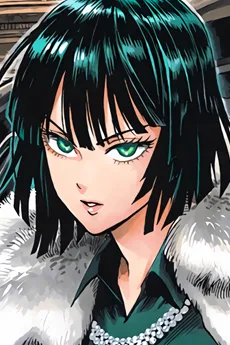 SUPPORTING
Fubuki
One-Punch ManFubuki, also known by her hero alias Blizzard of Hell, is the B-Class Rank 1 professional hero of the Hero Association. She is an esper, the younger sister of Tatsumaki, and the le
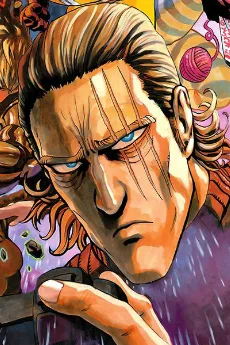 SUPPORTING
King
One-Punch ManDespite not being the highest ranked hero of the Heroes Association, he is considered to be the most powerful man on Earth, and it is due to this strength that he receives praise a
 MAIN
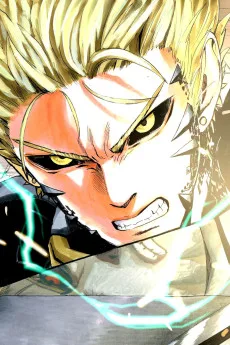
MAINGenos
One-Punch ManA cyborg and a self-proclaimed disciple of Saitama. He is always aiming to become stronger and fights for justice. Genos is an extremely serious character. He has a strong motivati
 SUPPORTING
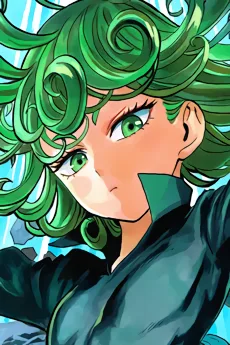
Tatsumaki
One-Punch ManTatsumaki is a petite woman, commonly mistaken for being much younger than she really is. She has an adolescent face with emerald green eyes and green hair that naturally curls up
 SUPPORTING
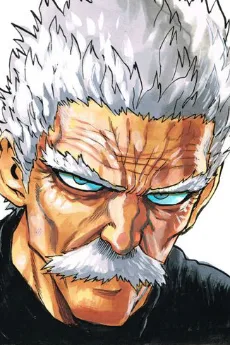
Bang
One-Punch ManBang is an S-Class, rank 3, superhero for the Heroes Association, settled in Z-City. Bang owns a dojo passed down from generations, and uses the fighting style the Rock-Smashing Wa
 SUPPORTING
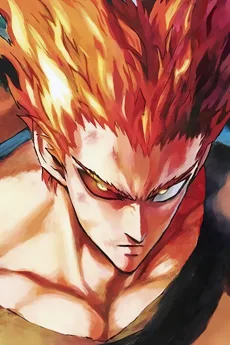
Garou
One-Punch ManGarou is a former disciple of Bang, but was kicked out from his dojo for going on a rampage. He's one of the strongest characters in the series and plays a major role as the main v
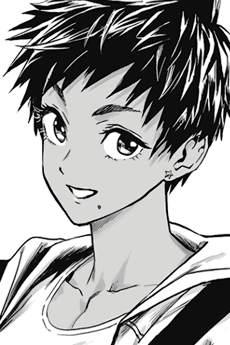 SUPPORTING
Suiko
One-Punch ManShe is a martial artist and a user of the Void Fist. She is the younger sister of Suiryu.