Appears In
Quick Facts
| Gender | Male |
| Age | 15 |
| Role | MAIN |
| Series | PPPPPP |
| Height | 175 cm |
| Birthday | December 21 |
| Blood Type | A |
| Likes | Piano, Omelet |
| Affiliation | Shibuya Music High School |
| Occupation | Student |
| Debut | Chapter 1 |
Contents
Personality
Personality
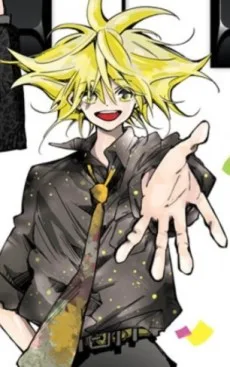
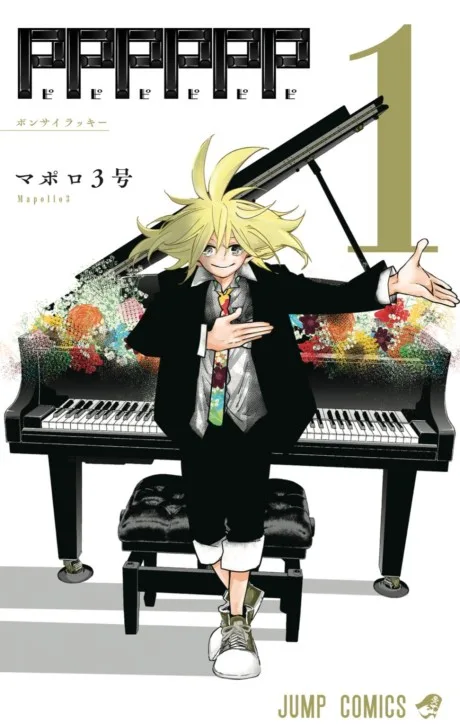
Lucky is gentle, forgiving, earnest, and unusually considerate of other people's feelings. Years of being told that he lacked his siblings' talent leave him with little confidence in his own abilities, and he has developed a habit of apologizing and accepting poor treatment without defending himself. Around his mother in particular, that insecurity becomes pronounced; he blames himself for the hardships surrounding their family and worries that his mediocrity disappointed her.
His decision to pursue the piano gives that otherwise passive personality a clear direction. Lucky wants his music to make people happy, gradually describing his ideal form of performance as "granting wishes." When he learns what another person wants, he tends to become invested in fulfilling that wish even when the person has treated him badly. Reijiro Otogami's hostility, for example, does not prevent Lucky from trying to understand what his brother actually wants.
Lucky is also emotionally perceptive in ways that contrast with his weak technical education. He can misunderstand musical theory while recognizing personal feelings that more accomplished musicians overlook. That instinct becomes both a strength and a limitation: his desire to play for specific people can produce extraordinary performances, but it can also distract him from understanding the composer's intentions and the music itself.
Abilities & Powers
Abilities & Powers
Lucky begins as a technically mediocre pianist by the standards surrounding him. His playing is extremely soft, his musical education contains major gaps, and even after entering Shibuya Music High School he struggles with basic exercises expected of its students. His entrance-exam judges describe his performance as strange and unsophisticated rather than conventionally impressive.
His exceptional quality lies in the experiential effect of his playing. During his entrance examination, Hideo Dada perceives Lucky's performance of "Twinkle, Twinkle, Little Star" as a vivid recreation of the Sonoda family's past, seeing the seven children gathered around the piano from their mother's perspective. Lucky does not initially understand how he produces this effect. His performances draw heavily upon genuine memories, emotions, and experiences rather than the fantastical imagery characteristic of his prodigious siblings.
Lucky gradually develops this ability into the idea of granting wishes through music. His performance for Ako Furusu, for example, creates an experience centered on the emotional desire underlying her ambitions as a pianist. As his playing grows stronger, these musical experiences can engulf increasingly large audiences rather than reaching only unusually receptive listeners.
His training therefore involves more than improving technique. Dada, Wao Niiza, Meloli Yamanaka, and Sadame Hino push him toward greater volume, technical control, and musical analysis. Lucky must learn to distinguish what he personally wants to communicate from what a composition itself expresses.
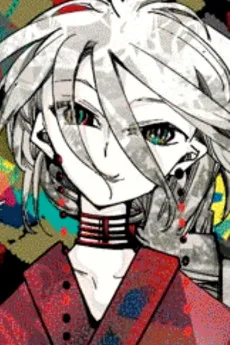
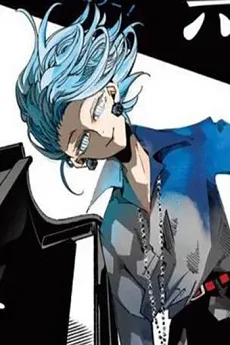
Later developments reveal another aspect of Lucky's musical potential through the personality called Brilliant Lucky. This alternate manifestation represents the prodigious ability that Lucky had suppressed and contradicts the family's long-held assumption that he was inherently the one untalented Otogami sibling.
Story Role
Story Role
Lucky grows up as one of seven children born into the prestigious Otogami family. All seven play piano together as children, but Lucky is judged inferior to his siblings by their father. After his parents separate, Lucky leaves with his mother while his six siblings remain with Gakuon and develop into internationally recognized prodigies.
When Chocho's declining health prevents her from caring for him, Lucky lives with his aunt and cousin Masashi Sonoda, where he is forbidden from playing piano and burdened with household work. He nevertheless continues playing when visiting his mother. Her request that he become a pianist gives him the determination to defy his aunt, resume lessons, and apply to Shibuya Music High School.
His unusual "Twinkle, Twinkle, Little Star" attracts Dada's attention during the entrance examination and earns Lucky admission. At school, he reconnects with Furusu and begins training under Dada. His objective expands beyond simply becoming competent: he wants to catch up with the six Otogami pianists and reunite the siblings through piano for their mother.
That path brings him into competition with Reijiro and later the other members of his family. Each sibling possesses a highly developed musical identity, forcing Lucky to discover what distinguishes his own playing rather than simply trying to imitate their genius.
Lucky's progression eventually exposes a conflict within his own identity. Brilliant Lucky emerges as a representation of the prodigious Otogami ability buried inside him, challenging the identity Lucky constructed around being mediocre. The distinction between the compassionate Lucky who wants to grant other people's wishes and this selfish prodigy becomes central to the later story.
His journey ultimately brings him into direct confrontation with Gakuon and the judgment that defined his childhood. Rather than merely proving that a mediocre pianist can imitate genius, Lucky's development forces the story to reconsider whether he was ever truly devoid of genius in the first place.
Relationships
Relationships
Chocho Sonoda is Lucky's mother and the person most responsible for his return to piano. Lucky loves Chocho Sonoda deeply, visits her regularly in the hospital, and bases his initial ambition on fulfilling her wish to hear her seven children play together again.
Gakuon Otogami is Lucky's father and the source of much of his insecurity. Gakuon Otogami considers Lucky inferior to his six siblings and removes him from serious piano training as a child, leaving Lucky desperate to overcome the judgment placed upon him.
Hideo Dada becomes Lucky's teacher at Shibuya Music High School and is among the first accomplished pianists to recognize something exceptional in his supposedly mediocre playing. Hideo Dada values the experiences behind Lucky's music and pushes him to develop them rather than simply copying conventional virtuosity.
Ako Furusu is Lucky's classmate and fellow student of Hideo Dada. Lucky cares strongly about Ako Furusu's ambitions, and her deeply personal wish becomes one of the earliest demonstrations of what his music can accomplish.
Reijiro Otogami is Lucky's brother and was extremely attached to him during childhood. Although Reijiro Otogami initially treats Lucky's attempt to become a pianist harshly, Lucky eventually recognizes the loneliness behind his brother's behavior and uses his performance to answer Reijiro's wish, allowing the two to begin repairing their relationship.
Mimin Otogami is Lucky's only sister and another of the celebrated Otogami pianists. Lucky's encounters with Mimin Otogami force him to engage with a radically different philosophy of musical performance.
Don Otogami, Fanta Otogami, Sorachika Otogami, and Sikato Otogami are Lucky's other siblings. Reuniting with the six Otogami pianists and eventually playing together again forms the goal behind much of Lucky's early development.
Meloli Yamanaka helps Lucky confront weaknesses in his understanding of musical analysis. Her instruction makes clear that emotional sincerity alone cannot substitute for understanding what a composition is trying to communicate.
Sadame Hino later instructs Lucky in musical analysis and challenges him to think more deeply about how his wish-granting approach can function when performing for people whose individual desires he cannot know.