Appears In
Quick Facts
| Gender | Male |
| Age | 28 |
| Role | MAIN |
| Series | Hunter x Hunter |
| Height | 187 cm |
| Birthday | June 6 |
| Blood Type | B |
| Gender | Male |
| Weight | 91 kg |
| Eye Color | Yellow |
| Hair Color | Red |
| Zodiac | Gemini |
| Voice Actor (JP) | Daisuke Namikawa |
| Voice Actor (EN) | Keith Silverstein |
| Affiliation | Hunter Association |
| Aliases | Magician |
| Debut | Chapter 5 |
Contents
Background
Background
Little of Hisoka's canonical childhood or family history has been revealed. When he appears in the story, he is already an experienced fighter with sophisticated Nen abilities, considerable knowledge of the Hunter world and an established reputation for dangerous behavior. The absence of a conventional origin story distinguishes him from many of the series' major characters: his motives are communicated primarily through his present actions rather than through an explained formative tragedy or ideology.
Before the Hunter Exam in which Gon participates, Hisoka had already attempted the examination once. He was disqualified after attacking an examiner he found objectionable. He returns the following year as applicant number 44, showing little concern about the license itself compared with the opportunity to encounter people capable of entertaining him. Nippon TV's official character profile specifically notes his previous disqualification and his interest in Gon and the other examinees.
His conduct during the exam quickly establishes how different his priorities are from those of ordinary applicants. Hisoka is willing to eliminate people he considers uninteresting, but he deliberately spares individuals whose abilities or potential intrigue him. Gon attracts his attention particularly strongly after repeatedly demonstrating unusual perception, courage and willingness to challenge stronger opponents.
Hisoka eventually passes the Hunter Exam and receives a Hunter License. The achievement gives him access to the institutional privileges associated with Hunters, but professional advancement never becomes a meaningful objective. He values the license mainly insofar as it removes obstacles from whatever activities interest him.
His relationship with Gon continues at Heaven's Arena. Hisoka deliberately blocks Gon and Killua from advancing onto the 200th floor until they learn enough Nen to survive encounters with experienced users. This intervention is not altruistic. Hisoka wants Gon to mature into an opponent worth fighting and refuses to allow someone else to ruin that possibility prematurely.
Their eventual match gives Gon an opportunity to settle a personal debt from the Hunter Exam. Gon succeeds in striking Hisoka and returning the badge Hisoka had previously given him, but Hisoka retains the advantage over the course of the match and ultimately wins.
Hisoka later becomes deeply involved with the Phantom Troupe despite lacking genuine loyalty to the organization. His membership serves another personal objective: obtaining an opportunity to fight its leader, Chrollo Lucilfer.
During the Yorknew City conflict, Hisoka cooperates with Kurapika because their objectives temporarily overlap. Kurapika wants to undermine the Phantom Troupe, while Hisoka wants Chrollo separated from the organization's protection long enough to fight him.
That plan is frustrated when Chrollo becomes unable to use Nen. Hisoka has no interest in fighting an opponent who cannot access his full abilities, so the encounter he has spent considerable time arranging loses its value.
His search for a means of restoring Chrollo's Nen eventually brings Hisoka to Greed Island. There he encounters Gon and Killua again and temporarily joins their side during the confrontation with Razor, demonstrating that hostility has little meaning to him when cooperation produces a more interesting challenge.
After Chrollo eventually regains access to Nen, Hisoka arranges the long-awaited fight at Heaven's Arena. Chrollo uses a carefully prepared combination of abilities and environmental advantages to overwhelm him before the arena audience.
Hisoka is killed during the battle, but he had instructed Bungee Gum to restart his heart and lungs after death. The post-mortem Nen activates successfully, reviving him.
The experience changes his approach to the Phantom Troupe. Rather than continuing to wait for individually satisfying circumstances, Hisoka declares that he will hunt the Spiders wherever he finds them, beginning a conflict that continues into the Black Whale expedition.
Personality
Personality
Hisoka is driven primarily by the anticipation of fighting powerful opponents. Conventional ambitions—wealth, authority, political influence or organizational loyalty—hold little visible importance for him. Strength and future potential determine where he directs his attention.
He is exceptionally patient when that patience promises a better battle later. Hisoka repeatedly restrains himself from killing Gon because he believes the boy may eventually become far more formidable. He compares promising fighters to fruit that should be allowed to ripen before being harvested.
This patience coexists with extreme impulsiveness toward people he considers expendable. Hisoka can kill without hesitation when irritated, challenged or simply bored. The distinction is not moral but personal: some individuals possess value because he wants to fight them later, while others do not.
He enjoys uncertainty. Opponents who can surprise him attract his attention far more strongly than predictable fighters whose power he already understands. This makes him unusually tolerant of risk despite being a highly analytical combatant.
His theatrical demeanor contributes to his unpredictability. Hisoka speaks and moves like a stage magician, uses playing-card imagery and frequently disguises serious tactical intentions behind playful behavior.
He is nevertheless much more calculating than his flamboyance suggests. Hisoka observes opponents closely, identifies assumptions they have made and then weaponizes those assumptions against them.
Deception is fundamental to his personality. He lies readily, conceals motives and manipulates different groups by telling each only the information necessary to influence their next action.
Hisoka's loyalties are therefore transactional. He can cooperate sincerely in accomplishing an immediate objective without becoming emotionally committed to the people beside him.
This is especially apparent during Greed Island. His cooperation with Gon, Killua and Biscuit is effective because defeating Razor interests him, not because his earlier antagonism toward Gon has transformed into friendship.
Hisoka also possesses considerable confidence in his own abilities. He actively searches for exceptionally dangerous fighters and rarely reacts to powerful aura with the caution an ordinary Hunter would display.
That confidence does not usually prevent him from analyzing an opponent. He distinguishes between enjoying danger and fighting blindly, often spending significant time testing how another person's ability works.
His fixation on combat can override ordinary self-preservation. His long pursuit of Chrollo illustrates his willingness to accept unfavorable circumstances simply because the possibility of fighting someone exceptional matters more to him than safety.
His defeat against Chrollo alters one important aspect of this behavior. After reviving, Hisoka abandons the previous assumption that he should permit his opponent to choose ideal conditions and begins attacking Phantom Troupe members without waiting for formal matches.
Appearance
Appearance
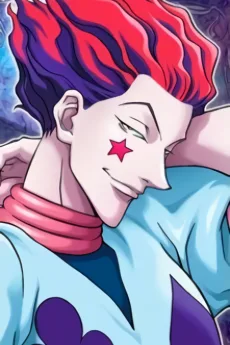
Hisoka is a tall, muscular man with a lean athletic build. Profile material commonly lists him at 187 cm and 91 kg, making him considerably larger than Gon, Killua and most younger Hunters.
His most recognizable facial markings are a star on one cheek and a teardrop on the other. Their placement and coloring vary slightly between adaptations, but the paired magician-like symbols remain central to his design.
Hisoka's hair is swept upward and typically depicted as red or reddish-pink in the 2011 adaptation. Earlier animated material uses different color choices, reflecting the variability of color interpretation in manga adaptations.
His eyes are yellow in the 2011 anime. His expression frequently shifts between relaxed amusement and a much more intense stare when confronted with an opponent he considers exciting.
His clothing reinforces his magician motif. Outfits commonly incorporate card-suit symbols, bright contrasting colors and fitted garments that permit unrestricted movement during combat.
His Hunter Exam attire includes prominent suit symbols across the chest and back. Later outfits retain theatrical elements while changing their exact pattern and color scheme.
Playing cards complete the visual identity. Although ordinary cards appear trivial compared with Nen weapons, Hisoka can reinforce and throw them with enough force to cut flesh, making the magician prop a functional part of his fighting style.
His appearance rarely communicates affiliation. Even while associated with the Phantom Troupe, Hisoka continues to dress according to his personal aesthetic rather than adopting a uniform associated with the group.
Following his battle with Chrollo, Hisoka reconstructs damaged parts of his appearance with Bungee Gum and Texture Surprise, demonstrating that his Nen can serve cosmetic and prosthetic functions as well as combat purposes.
Abilities & Powers
Abilities & Powers
Hisoka possesses exceptional physical strength, speed, reflexes and combat instincts even without relying on complicated Nen effects. During the Hunter Exam, applicants who present serious obstacles to ordinary competitors pose little meaningful threat to him.
His physical control is particularly impressive. Hisoka can throw ordinary playing cards with lethal accuracy, alter direction rapidly during close combat and coordinate Bungee Gum attachments while simultaneously reading an opponent.
He has very high pain tolerance. Serious injuries rarely disrupt his concentration, and he can continue planning strategically while suffering wounds that would panic or incapacitate less experienced fighters.
His greatest advantage, however, is tactical creativity. Bungee Gum is conceptually simple compared with abilities governed by elaborate supernatural rules, but Hisoka repeatedly creates new applications from the same two properties.
Nen
Nen
Hisoka is a Transmuter, a category confirmed by the official 2011 anime character profile. Transmutation allows a Nen user to alter the properties of their aura, and Hisoka uses this affinity to create Bungee Gum.
He is proficient with the fundamental Nen principles of Ten, Zetsu, Ren and Hatsu, along with advanced applications including Gyo and In.
His aura control is refined enough that he can manipulate multiple Bungee Gum attachments during fast combat without losing awareness of other threats.
In is especially useful to him because it allows aura constructs to be concealed. An opponent who fails to use Gyo may therefore be attached to Bungee Gum without immediately realizing it.
Hisoka also demonstrates strong understanding of Nen theory. He can analyze unfamiliar abilities from limited information and recognizes how conditions, activation rules and psychological preferences shape an opponent's Hatsu.
He famously presents his own informal method for predicting Nen categories through personality, although Hisoka himself admits that this method is comparable to judging personality through blood type and should not be considered scientifically reliable.
His Transmuter affinity places Enhancement adjacent to his natural category, contributing to his strong close-combat performance. Hisoka does not need a transformation or specialized enhancement ability to be physically dangerous.
His aura is frequently intimidating even to experienced people. During Heaven's Arena, Gon and Killua cannot initially advance past him because the hostile Ren he projects is enough to stop them physically and psychologically.
Bungee Gum allows Hisoka to compensate for disadvantages in distance, momentum and positioning. A target that believes it has escaped can be pulled back; an incoming object can be redirected; and Hisoka himself can use the elastic force for sudden movement.
Texture Surprise complements this ability by manipulating information rather than force. Hisoka can alter how surfaces appear, making written information, wounds or objects seem different from their actual state.
Together, the two abilities suit his fighting philosophy. Bungee Gum manipulates what opponents physically do, while Texture Surprise manipulates what they believe they are seeing.
Named Techniques
Named Techniques
Bungee Gum: Hisoka's signature Transmutation ability gives his aura properties resembling both rubber and gum. It can stretch, contract, adhere to surfaces and remain attached at considerable distances, allowing Hisoka to pull targets, redirect attacks and change his own movement.
Elastic Recoil: Although not presented as a separately titled Hatsu, one of Hisoka's most frequent applications involves stretching Bungee Gum and allowing its contraction to create sudden acceleration. He can use this on himself, enemies or objects.
Bungee Gum Restraint: Hisoka attaches aura to a target and controls movement through elastic tension. Because he can conceal the aura using In, opponents may not immediately understand why their motion has changed.
Projectile Redirection: Bungee Gum can catch or attach to incoming objects and return them along altered trajectories. Hisoka repeatedly exploits an attacker's own force rather than attempting to stop it directly.
Playing Cards: Hisoka reinforces and throws playing cards as cutting weapons. The cards themselves are not a distinct Nen ability, but his strength and aura make them dangerous enough to sever or penetrate flesh.
Texture Surprise: Hisoka changes the apparent texture and appearance of a flat surface. The ability functions like an extremely convincing visual disguise and can reproduce writing, colors, patterns or the appearance of other materials.
Nen Category Personality Analysis: Hisoka associates personality tendencies with Nen categories—Enhancers with straightforwardness, Transmuters with fickleness and deceit, Conjurers with nervousness, and so forth. The method is his personal theory rather than an established law of Nen.
Post-Mortem Bungee Gum: Before losing consciousness against Chrollo, Hisoka commands his aura to contract around his heart and lungs after death. Post-mortem Nen strengthens the effect enough to restart those organs and revive him.
Bungee Gum Prosthetics: After reviving with severe bodily damage, Hisoka forms missing or damaged sections of his body from Bungee Gum and uses Texture Surprise to restore their outward appearance.
Relationships
Relationships
Gon Freecss attracts Hisoka Morow's attention during the Hunter Exam because Gon possesses enormous undeveloped potential. Hisoka repeatedly spares Gon Freecss, not from affection in an ordinary sense but because killing him prematurely would eliminate a future opponent.
Gon Freecss responds with a mixture of fear, resentment and competitive interest. After Hisoka Morow gives Gon his badge during the Hunter Exam, Gon becomes determined to return it only after proving he can strike Hisoka legitimately.
Their Heaven's Arena match provides that opportunity. Gon Freecss lands the punch he promised himself, returns the badge and demonstrates how much he has progressed, while Hisoka Morow still wins the overall fight.
Killua Zoldyck is another prodigy Hisoka Morow considers potentially interesting, though his fixation on Killua is less central than his interest in Gon. Killua Zoldyck, having been trained to evaluate killers from childhood, understands that Hisoka's apparent cooperation never makes him safe.
During Greed Island, Hisoka Morow temporarily fights beside Gon Freecss and Killua Zoldyck against Razor. Their coordination is remarkably effective because Hisoka has no reason to sabotage a contest he genuinely wants to win.
Illumi Zoldyck has one of Hisoka's longest-standing working relationships. Hisoka Morow and Illumi Zoldyck cooperate during the Hunter Exam and later exchange information and assistance when their interests align.
The relationship contains constant implied danger. Hisoka Morow enjoys provoking Illumi Zoldyck, including by suggesting threats against Killua, while Illumi understands that Hisoka may turn against him whenever the prospect becomes entertaining enough.
[Their later arrangement becomes even stranger when Illumi Zoldyck states that Hisoka has effectively hired him to participate in their mutual hunt, with payment connected to Hisoka's death.](#spoiler)
Kurapika becomes a temporary collaborator during the Yorknew conflict. Hisoka Morow provides information about the Phantom Troupe because Kurapika's actions can help isolate Chrollo.
Kurapika never treats Hisoka Morow as trustworthy. Their cooperation works because both understand that it will last only while their interests overlap.
Chrollo Lucilfer is one of the opponents Hisoka Morow desires most intensely. Hisoka infiltrates or associates himself with the Phantom Troupe largely to create an opportunity to fight its leader.
Hisoka respects Chrollo's strength but has no meaningful loyalty to him as a leader. When Chrollo loses the ability to use Nen, Hisoka abandons the immediate fight because defeating a powerless Chrollo would not satisfy him.
[Their eventual Heaven's Arena battle becomes one of the most elaborate Nen confrontations in the series. Chrollo Lucilfer prepares multiple stolen abilities and uses the crowded arena as part of his strategy, ultimately overwhelming Hisoka.](#spoiler)
[After reviving, Hisoka Morow abandons his previous willingness to let Chrollo dictate the circumstances. His goal broadens into hunting the Phantom Troupe itself.](#spoiler)
Machi Komacine frequently interacts with Hisoka during his period around the Phantom Troupe. Hisoka Morow shows particular interest in Machi Komacine and pays her to use her Nen threads to repair his injuries after the fight with Kastro.
Machi does not reciprocate Hisoka's playful behavior and generally treats him with suspicion or irritation. She nevertheless acknowledges his abilities and understands how dangerous he is.
[After Hisoka's revival, Machi Komacine becomes the person to whom he announces his intention to kill the remaining Spiders. He restrains her with Bungee Gum rather than immediately attacking her, ensuring that she can deliver the warning.](#spoiler)
Kastro develops his fighting career around defeating Hisoka after previously losing to him. Hisoka Morow recognizes Kastro's improved strength but identifies major weaknesses in the way he developed his Nen.
Hisoka turns their rematch into both a battle and a psychological performance. By concealing the mechanism behind his apparent recovery and manipulating Kastro's attention, Hisoka Morow destroys his opponent's confidence before finishing the fight.
Razor becomes one of the rare opponents who forces Hisoka into genuine teamwork. Hisoka Morow recognizes Razor's power during the Greed Island dodgeball match and becomes increasingly engaged as the contest intensifies.
The final exchange requires Hisoka Morow, Gon Freecss and Killua Zoldyck to coordinate directly against Razor. Nippon TV's official episode description highlights the three combining their efforts to receive Razor's full-power throw.
Phinks Magcub, Feitan Portor, Nobunaga Hazama, Franklin Bordeau, Shizuku Murasaki, Bonolenov Ndongo and the other Phantom Troupe members generally regard Hisoka as an unreliable outsider even while he operates among them.
That distrust is justified. Hisoka Morow's association with the group is always subordinate to his interest in fighting strong people.
[Shalnark and Kortopi become the first Troupe members Hisoka targets after reviving from his battle with Chrollo. Their deaths transform the personal duel between Hisoka and Chrollo into an active conflict involving the entire Spider.](#spoiler)
The surviving Phantom Troupe members subsequently board the Black Whale with killing Hisoka among their objectives. Official Shonen Jump summaries for the post-anime manga explicitly describe the Troupe as searching for Hisoka aboard the ship.
Story Role
Story Role
Hisoka enters the Hunter Exam as an immediate demonstration that becoming a Hunter does not automatically correspond with heroism. He seeks the same license as Gon and his friends while openly displaying behavior far more dangerous than that of most conventional antagonists.
The exam also establishes his unusual narrative function. Hisoka threatens Gon, assists him indirectly and protects his future potential, sometimes within the same sequence of events.
At Heaven's Arena, Hisoka becomes a benchmark for Gon's development. Gon's immediate goal is not defeating him outright but proving that he has advanced enough to land the promised punch and return Hisoka's badge.
The fight simultaneously introduces the strategic depth of advanced Nen combat. Hisoka's victory depends not on a larger energy attack but on controlling information, positioning and Bungee Gum attachments.
During Yorknew City, he becomes a destabilizing third party. The principal conflict pits Kurapika against the Phantom Troupe, but Hisoka manipulates both sides because weakening the Troupe's structure may create access to Chrollo.
His fraudulent participation in the organization emphasizes how little conventional factional alignment means to him. Hisoka can inhabit the role of Spider without accepting the loyalty that role normally demands.
Greed Island presents him in yet another position: temporary teammate. His presence in Gon's group during the Razor confrontation shows that Hisoka can cooperate effectively when collaboration itself produces an interesting challenge.
He later appears during the Chairman Election, where his actions remain driven by assessments of individual strength rather than Association politics. He evaluates Hunters according to his own numerical scoring system and becomes involved with Illumi's attempt to interfere with Killua.
The series repeatedly uses Hisoka to destabilize assumptions about what an antagonist must do. He does not pursue Gon's death, world domination or institutional control; his decisions depend on potential future entertainment.
This means his objectives can intersect with protagonists and villains unpredictably. A character who opposes Gon in one arc may be the person helping him win a match in another without undergoing a moral transformation.
The Heaven's Arena fight with Chrollo becomes Hisoka's principal role in the post-anime manga. Shonen Jump's official Volume 34 description centers on their long-awaited battle and Chrollo's use of multiple abilities to corner him.
His revival changes the wider Phantom Troupe storyline. By beginning to hunt its members individually, Hisoka creates a conflict that follows the organization onto the Black Whale.
The ongoing voyage therefore positions him as a hidden threat within an already complicated environment involving the succession contest, mafia warfare and the Phantom Troupe. Official summaries of later volumes continue to identify the Troupe's search for Hisoka as one of the ship's active plotlines.
Character Development
Character Development
Hisoka undergoes less conventional emotional growth than Gon, Kurapika or Killua. He begins the story with a well-developed personal philosophy and remains remarkably consistent in his pursuit of powerful opponents.
His development instead concerns how that philosophy responds when the assumptions supporting it fail. Early Hisoka believes he can afford to cultivate opponents, manipulate circumstances and wait until each target reaches the state he finds most desirable.
Gon represents the clearest example. Hisoka repeatedly postpones gratification because he believes Gon's future strength will make the eventual battle more valuable.
Chrollo presents a more difficult version of the same impulse. Hisoka spends significant time trying to create conditions under which Chrollo can fight him seriously.
Even when Chrollo loses access to Nen, Hisoka does not accept an easy victory. He waits because the outcome matters less to him than the quality of the contest.
This approach demonstrates enormous confidence. Hisoka assumes that if he eventually receives the battle he wants, he will be capable of handling whatever opponent has developed in the meantime.
His tactical sophistication reinforces that confidence. Battles against Kastro and Gon show him adapting successfully to changing conditions without sacrificing his preference for dramatic performance.
Greed Island further demonstrates that his appetite for challenge can produce cooperation. Hisoka is capable of functioning within a team when doing so creates a contest more interesting than sabotaging it would.
The fight against Chrollo finally exposes a weakness in this philosophy. Hisoka allows Chrollo to prepare extensively and accepts an environment chosen to maximize the effectiveness of Chrollo's abilities. The resulting combination overwhelms him.
His post-mortem revival produces the clearest behavioral change in the character. Rather than requesting another carefully arranged duel under his opponent's preferred conditions, Hisoka decides to attack the Phantom Troupe whenever opportunities arise.
The change does not represent remorse or moral development. Hisoka remains motivated by combat, but he becomes less willing to distinguish between a formal fight and the broader process of destroying an opponent's advantages.
Targeting the Spiders associated with Chrollo's strategies also demonstrates that Hisoka has begun treating preparation itself as part of the battle. Instead of allowing Chrollo unlimited access to allies and stolen abilities, he attacks the infrastructure surrounding him.
His fundamental identity therefore remains stable while his methods evolve. Hisoka still wants dangerous opponents, but experience teaches him that granting those opponents complete control over when and how they fight can turn his preferred game against him.
Etymology
Etymology
Hisoka's given name is written ヒソカ in katakana. The Japanese word hisoka can evoke ideas such as secrecy, concealment or something done privately, although the character's name is written phonetically rather than assigned explanatory kanji.
That association fits his deceptive behavior, but the manga does not provide an explicit canonical statement defining the name according to a particular kanji spelling.
His surname is officially rendered Morow in English-language material, although older fan translations and unofficial sources have produced variants such as Morrow or Moro.
The variation comes from rendering the Japanese モロウ into the Latin alphabet rather than from multiple surnames used within the story.
His magician imagery extends beyond his name. Card suits, sleight-of-hand presentation, misdirection and deceptive visual effects all contribute to his characterization.
Bungee Gum and Texture Surprise are named after products Hisoka remembers from childhood. Beyond those brief references, the manga deliberately provides very little information about the childhood in which he encountered them.
Trivia
Trivia
-
Hisoka's Hunter Exam applicant number is 44, a number prominently displayed on the badge he wears during the examination.
-
His Nen category is Transmutation. Nippon TV's official character profile identifies him directly as a Transmuter.
-
Hisoka previously entered the Hunter Exam but was disqualified for attacking an examiner. He returns during Gon's exam and successfully completes it.
-
Bungee Gum is described through two combined characteristics: the properties of both rubber and gum. This simple explanation becomes one of the series' most frequently repeated descriptions of a Nen ability.
-
Hisoka uses playing cards as real weapons, reinforcing them and throwing them with enough speed and force to cut opponents.
-
His informal Nen personality test is not presented as a scientific system. Hisoka himself treats it as comparable to blood-type personality analysis.
-
Hisoka placed fourth with 1,498 votes in the first Weekly Shonen Jump Hunter x Hunter character popularity poll, behind Killua, Kurapika and Gon.
-
In the third character popularity poll published with the official databook, Hisoka ranked seventh with 936 votes.
In Other Media
In Other Media
Hisoka appears throughout both major television adaptations of Hunter x Hunter. The 1999 Nippon Animation series presents him through the Hunter Exam, Heaven's Arena and Yorknew material before the story continues into OVA releases.
Hiroki Takahashi voices Hisoka in the Japanese version of the 1999 adaptation. His performance establishes the playful, theatrical manner later associated closely with animated portrayals of the character.
The 2011 Madhouse adaptation casts Daisuke Namikawa as Hisoka. Nippon TV's official series information lists Namikawa alongside Megumi Han, Mariya Ise, Keiji Fujiwara and Miyuki Sawashiro among the principal cast.
Keith Silverstein performs Hisoka in the English-language dub of the 2011 series. The adaptation covers his Hunter Exam activities, Heaven's Arena battle with Gon, involvement with the Phantom Troupe, Greed Island cooperation and appearances during the Chairman Election.
Hisoka also appears in the theatrical anime projects Hunter × Hunter: Phantom Rouge and Hunter × Hunter: The Last Mission. Their central plots are anime-original rather than adaptations of manga story arcs.
His magician aesthetic translates readily into video games. Hunter x Hunter titles commonly turn Bungee Gum into grappling, pulling or mobility attacks while representing his playing cards as ranged weapons.
He has also represented the series in crossover games featuring Weekly Shonen Jump characters. His fighting style is particularly suited to such adaptations because Bungee Gum provides both recognizable visual effects and mechanically distinct movement options.
A notable officially connected side project is Hisoka's Past, a storyboard manga created by Tokyo Ghoul author Sui Ishida. Yoshihiro Togashi discussed the work publicly with Ishida on the official Shonen Jump site and expressed enthusiasm for Ishida's interpretation. The story is not part of Togashi's primary manga canon and should not be treated as confirmed Hisoka backstory.
The manga's post-anime material gives Hisoka another major sequence unavailable in the completed 2011 television series. Shonen Jump's official Volume 34 description specifically promotes his Heaven's Arena confrontation with Chrollo as the volume's central event.
Reception
Reception
Hisoka has remained one of the most prominent characters outside the central quartet. The first official Weekly Shonen Jump popularity poll placed him fourth with 1,498 votes, immediately behind Killua, Kurapika and Gon and ahead of Leorio.
His popularity remained substantial even as the cast expanded. The third official poll, published with the 2004 databook, placed Hisoka seventh with 936 votes.
His narrative flexibility contributes to his continuing prominence. Hisoka can function as an examiner's threat, Gon's rival, Kurapika's informant, a Phantom Troupe infiltrator or a temporary member of Gon's team without any of those positions requiring a fundamental change in allegiance.
Bungee Gum has become one of the franchise's most recognizable Nen abilities despite having a deliberately uncomplicated premise. The power's reputation comes from the number of applications Hisoka derives from it rather than from an extensive list of separate transformations.
His fights similarly emphasize tactical information. Against Kastro, Gon and later Chrollo, understanding what each participant knows about the other's abilities is as important as the quantity of aura being used.
The magician motif strengthens that connection between combat and deception. His playing cards, facial markings, Texture Surprise and theatrical behavior all reinforce the idea that opponents are being invited to watch one thing while Hisoka prepares another.
His relationship with Gon also differs from a conventional protagonist-antagonist rivalry. Hisoka does not primarily want Gon eliminated; he actively wants him to survive until defeating him becomes more satisfying.
The battle with Chrollo substantially expands this pattern by placing Hisoka against someone capable of manipulating information and preparation as effectively as he does. His defeat forces the series' habitual trickster into the position of having been outmaneuvered.
His subsequent hunt for the Phantom Troupe gives that defeat lasting narrative consequences. Rather than existing as an isolated showcase battle, it changes the strategic relationship among Hisoka, Chrollo and the Spiders and helps drive their presence aboard the Black Whale. Shonen Jump's current volume summaries continue to identify the search for Hisoka as an active part of the post-anime manga storyline.
Sources
Facts on this page are checked against official publisher and creator sources. Spotted an error? Tell us.
Related Characters
 SUPPORTING
Chrollo Lucilfer
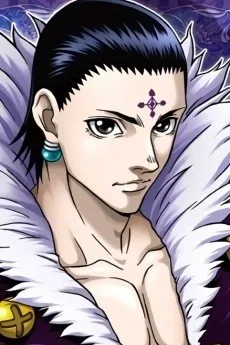
Hunter x HunterChrollo Lucilfer is a calm, young man, coming across as intelligent and charismatic. He seems to be a born leader, able to hold the Genei Ryodan (Phantom Troupe) together despite t
 SUPPORTING
Razor
Hunter x HunterRazor is one of the Gamemasters and a creator of Greed Island. Razor was entrusted by Gon's father that he was not to hold back against his son should he ever comes to Greed Island
 MAIN
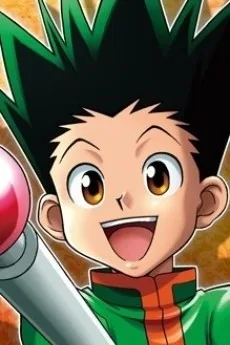
MAINGon Freecss
Hunter x HunterGon is the son of Ging Freecss, a legendary hunter whose current whereabouts are unknown. He never knew his father was alive, much less a hunter until he met Kite; a hunter who was
 MAIN
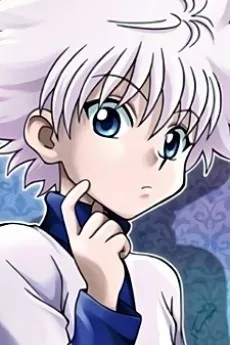
MAINKillua Zoldyck
Hunter x HunterKillua is a member of the Zoldyck family, who are all legendary assassins. Since birth, he trained endlessly in the art of assassination. He eventually ran away from his family and
 SUPPORTING
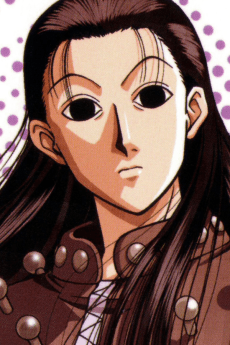
Illumi Zoldyck
Hunter x HunterIllumi is Killua's eldest brother. He is an experienced assassin, whom along with his father was responsible for Killua's training and upbringing.
 MAIN
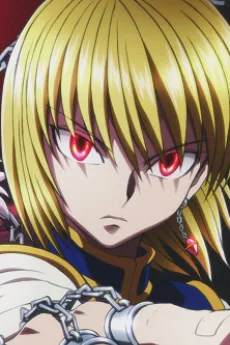
MAINKurapika
Hunter x HunterKurapika is a member of the Kurta tribe who were massacred by the Phantom Troupe (The Spiders) 4 years prior the Hunter exam. The Kurta tribe was an isolated group of people whose
 SUPPORTING
Machi Komacine
Hunter x HunterNot known to show much emotion, Machi seems to be one of the coldest members of the Phantom Troupe. The only person she has shown some feeling towards was Chrollo. Hisoka seems to
 SUPPORTING
Kastro
Hunter x HunterHe is a prominent fighter in the Heavens Arena and an apparent celebrity. Lives on the 200th floor as a fighter, uses martial arts and is very skillful in hand-to-hand combat. He h
 SUPPORTING
Phinks Magcub
Hunter x HunterPhinks is a genius when it comes to unarmed combat. Phinks uses his hands in battle, which have been shown to be extremely powerful. He is rather brash and has a tendency to get in
 SUPPORTING
Nobunaga Hazama
Hunter x HunterLike one of the ronin warriors in Edo period Japan, Nobunaga comes complete with a long Japanese sword that he uses with great finesse and skill. Nobunaga's speciality is the unpar
 SUPPORTING
Bonolenov Ndongo
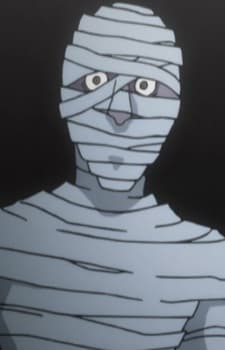
Hunter x HunterBonolenov is member number 13 of the Phantom Troupe. He dresses partially in rags and looks like a mummy. During the Yorknew City arc, his appearance was insignificant. During the
 SUPPORTING
Kortopi
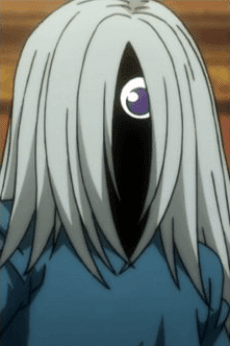
Hunter x HunterAs one of the members of the Phantom Troupe, the most distinctive thing about Kortopi is his haggard appearance. A thick and messy mane of hair flops down his face, obscuring every