Appears In
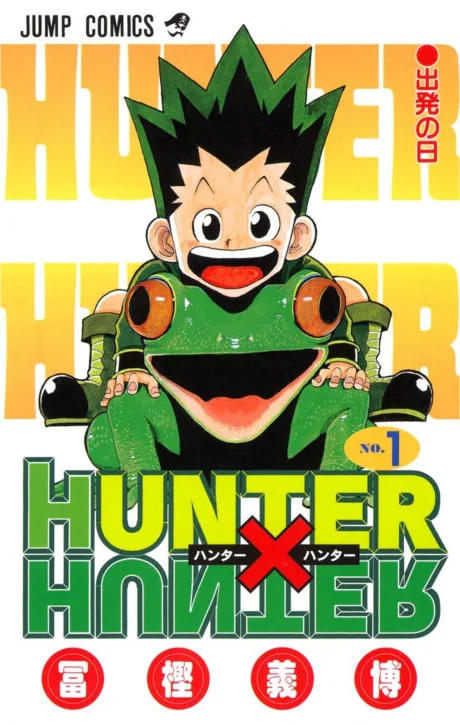
Quick Facts
| Gender | Male |
| Age | 11- |
| Role | MAIN |
| Series | Hunter x Hunter |
| Height | 154 cm |
| Age | 12 at debut |
| Birthday | May 5 |
| Blood Type | B |
| Gender | Male |
| Weight | 49 kg |
| Eye Color | Brown |
| Hair Color | Black with green highlights |
| Zodiac | Taurus |
| Voice Actor (JP) | Megumi Han |
| Voice Actor (EN) | Erica Mendez |
| Affiliation | Hunter Association |
| Debut | Chapter 1 |
| Father | |
| Guardian |
Contents
Background
Background
Gon is raised on Whale Island by Mito Freecss, whom he regards as his mother even though she is biologically his cousin once removed. For much of his childhood, Gon believes that his father Ging died. His understanding changes after an encounter with Kite, a Hunter searching for Ging. Kite tells Gon that Ging is not only alive but one of the world's most accomplished Hunters. That revelation turns the mysterious profession into something deeply personal: Gon wants to understand what could make the life of a Hunter important enough for his father to leave him behind. Official Shonen Jump and Nippon TV summaries both identify this discovery as the starting point for his journey. (shonenjump.com)
Before leaving Whale Island, Gon demonstrates the extraordinary relationship with nature that remains one of his defining traits. He spends much of his childhood outdoors, understands animals unusually well and develops strength, balance and sensory awareness without conventional combat training. Mito initially opposes his decision to become a Hunter, but Gon fulfills the condition she sets for allowing him to leave by catching the enormous local fish known as the Master of the Swamp.
The Hunter Exam becomes his first sustained experience beyond Whale Island. Gon meets Kurapika and Leorio Paradinight on the voyage toward the exam and later befriends Killua Zoldyck, a boy from a notorious assassin family. The four approach the exam for very different reasons, but their cooperation quickly develops into genuine friendship.
Gon's behavior during the exam draws attention because he does not evaluate people according to ordinary moral or social categories. He can recognize that someone is dangerous without automatically hating them and may admire a person's strength even while opposing them. This makes figures such as Hisoka Morow unusually interesting to him.
After qualifying as a Hunter, Gon and his friends travel to the Zoldyck estate to retrieve Killua, who has returned home following the exam. Gon refuses to accept that Killua's family can decide the friendship for him, confronting obstacles far beyond what an ordinary child could survive.
The next major stage of his training takes place at Heaven's Arena. Gon and Killua initially enter to gain money and fighting experience, but Wing introduces them to Nen after recognizing that they are approaching opponents who already know how to use it.
Learning Nen fundamentally changes Gon's capabilities. His enormous natural talent becomes something he can consciously develop, but Wing also repeatedly emphasizes that both boys are advancing at a pace dangerous for children who still lack experience.
The search for Ging eventually directs Gon toward Greed Island, a rare game created by Ging and several collaborators. Entering the game gives Gon another structured path toward his father while exposing him to Nen users operating at a much higher level than most opponents he previously faced.
Biscuit Krueger becomes his most important formal instructor during this period. Her training transforms Gon's raw ability into a more disciplined combat foundation and leads directly to the development of his signature Jajanken technique.
The Chimera Ant crisis takes Gon into an environment unlike the controlled dangers of the Hunter Exam, Heaven's Arena or Greed Island. The enemies are no longer simply contestants or criminals; they are creatures whose emergence threatens entire populations.
His reunion with Kite during this period also connects his current journey to the Hunter who originally inspired it. That emotional connection makes the events surrounding the Chimera Ant operation intensely personal for Gon.
Kite's defeat and transformation by Neferpitou becomes the central psychological trigger for Gon's collapse during the Chimera Ant arc. Unable to reconcile his guilt, grief and belief that Kite can still be restored, Gon increasingly abandons the emotional flexibility that had previously allowed him to recover from setbacks.
His confrontation with Neferpitou culminates in Gon sacrificing virtually all of his future potential through a Nen condition that temporarily transforms his body into a state capable of overwhelming Pitou. The resulting damage leaves him near death until Nanika's power restores his body.
After recovering, Gon finally meets Ging at the top of the World Tree. Their conversation resolves the question that originally drove him from Whale Island, although Ging emphasizes that the experiences and people encountered while pursuing a goal can matter more than the goal itself.
Personality
Personality
Gon is direct, curious and unusually open about what he wants. He rarely hides enthusiasm, anger or confusion behind social formality. This straightforwardness allows him to connect quickly with people from radically different backgrounds, although it can also make him insensitive to emotional subtleties that seem obvious to others.
He possesses extraordinary determination. Once Gon decides that something must be done, arguments based on danger or probability have limited influence over him. The trait frequently appears admirable because it allows him to continue through situations that defeat more cautious people, but the series also presents it as one of his most dangerous weaknesses.
His understanding of fairness is deeply personal rather than abstract. Gon dislikes people hurting his friends and reacts strongly to hypocrisy, but he does not consistently judge violence according to universal principles. Someone may be a murderer and still earn his curiosity or respect if their behavior toward him is honest.
That unusual morality is particularly visible in his interactions with Hisoka. Gon knows Hisoka is dangerous, yet his immediate concern after being humiliated during the Hunter Exam is not bringing him to justice. He wants to become strong enough to return Hisoka's badge and erase the debt between them.
Gon is intensely competitive but rarely motivated by status. He wants to win because overcoming a difficult challenge excites him, not because rankings carry much meaning to him. Strong opponents therefore often produce enthusiasm rather than fear.
He also has a strong tendency toward reciprocity. If someone helps Gon, he feels compelled to repay them. If an opponent defeats him in a way he considers fair, he wants another opportunity rather than revenge.
Animals respond unusually well to him, reflecting both his upbringing and his ability to approach them without the fear or dominance common to other humans. Gon often understands animal behavior intuitively and can remain calm around creatures others perceive as threatening.
His optimism is genuine but not limitless. Early Gon can suffer pain, lose matches and encounter frightening people without fundamentally losing curiosity about the world.
The Chimera Ant arc exposes the conditions under which that resilience fails. Gon is particularly poor at processing guilt when a situation contradicts his belief that determination should be enough to fix it.
His relationship with Killua reveals another flaw: Gon often assumes Killua will support whatever decision he makes because that has repeatedly been true. He sometimes recognizes the danger he is imposing on himself while failing to consider how watching him do it affects Killua.
During the confrontation with Pitou, Gon becomes so consumed by grief and rage that he threatens Komugi's life and treats Killua's attempts to help him with unusual cruelty. His capacity for single-minded commitment, normally one of his strengths, becomes almost completely self-destructive.
After his recovery, Gon apologizes to Killua, acknowledging that his behavior during the Chimera Ant crisis damaged their relationship. Their eventual separation is friendly rather than hostile, but it marks a significant change from the near-constant companionship that defined much of the series.
Appearance
Appearance
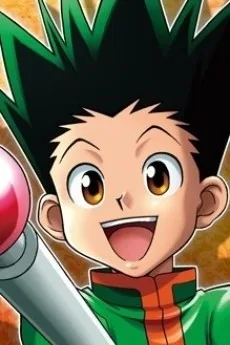
Gon is a short, athletic boy with spiky black hair that often carries green highlights in colored artwork and anime adaptations. His large brown eyes and expressive face reinforce his youthful appearance even after his physical ability becomes comparable to trained adult fighters.
His official profile material gives his height as 154 cm, weight as 49 kg and blood type as B. His birthday is May 5. These measurements remain commonly associated with his early-series profile.
His most recognizable outfit consists of a green jacket with red trim, matching green shorts and green boots. The clothing is practical for travel and physical activity rather than decorative, fitting his upbringing on Whale Island.
Gon frequently carries a fishing rod during the earliest stages of the story. The rod functions as both a link to his childhood and an improvised weapon, allowing him to grab objects from a distance or redirect attacks before he develops Nen-based combat techniques.
His appearance changes comparatively little through most arcs despite increasing combat ability. Unlike characters whose progression is represented by elaborate costumes, Gon remains visually tied to the child who left Whale Island.
During Greed Island and the Chimera Ant operation, his clothing may change according to circumstances, but the core green color scheme remains closely associated with him.
His physical build is deceptively strong. Although small compared with many adult Hunters, Gon develops extreme leg strength, grip strength, speed and durability through natural talent and intensive Nen training.
During his Nen contract against Neferpitou, Gon's body temporarily changes into a far older and massively muscular form representing the physical power he would require after years of development. The transformation is not a normal evolution or permanent adult design; it is the result of an extreme condition exchanging his future potential for immediate strength.
After the transformation ends, his body is left emaciated and critically damaged. Nanika later restores him physically, returning him to his ordinary youthful appearance.
Abilities & Powers
Abilities & Powers
Gon begins with physical abilities far beyond those of an ordinary child. Years spent climbing, fishing and exploring Whale Island give him exceptional strength, agility, balance and endurance before any formal combat education.
His senses are similarly developed. Gon has an extraordinarily sharp sense of smell and can use it to track people or identify subtle environmental changes. His hearing, vision and awareness of animals are also consistently above average.
He is an exceptionally fast learner. Combat experiences that would overwhelm most beginners become opportunities for Gon to identify patterns and develop counters.
This talent does not make him conventionally tactical in the same manner as Killua. Gon often solves problems through instinct, physical experimentation and willingness to accept risk rather than complex advance planning.
He demonstrates remarkable pain tolerance. Injuries severe enough to incapacitate ordinary fighters frequently fail to stop him when he remains emotionally committed to a goal.
His willingness to damage himself is therefore both an advantage and a major danger. Gon sometimes treats his own body as expendable if doing so creates an opportunity to win.
Nen
Nen
Gon's natural Nen category is Enhancement. Enhancers are particularly suited to reinforcing the natural properties of their bodies and objects, making the category compatible with his straightforward fighting style.
Wing introduces Gon and Killua to the basic Nen principles after they reach the upper levels of Heaven's Arena. Both boys initially learn Ten, maintaining aura around the body to defend themselves against hostile Nen.
They subsequently develop Zetsu, suppressing aura to conceal presence; Ren, producing a larger quantity of aura; and Hatsu, the individual expression of Nen through a user's personal abilities.
Gon's natural affinity for Enhancement gives him excellent potential for close-range combat. Reinforcing his fists allows his already considerable physical strength to become extremely destructive.
Biscuit later gives Gon and Killua a far more rigorous training regime covering advanced applications such as Gyo, Shu, Ko, Ken and Ryu.
Gyo concentrates aura into particular body parts, most famously the eyes, allowing hidden Nen to be observed.
Shu extends aura around an object, strengthening it as though it were part of the user's body.
Ken maintains a powerful defensive aura over the entire body, while Ryu rapidly redistributes that aura according to changing offensive and defensive requirements.
Ko concentrates an enormous proportion of aura into one point. The technique can generate tremendous offensive strength but leaves other parts of the body comparatively unprotected.
Gon's aura reserves and growth rate are repeatedly described as exceptional. Experienced Nen users identify Gon and Killua as prodigies whose development dramatically exceeds ordinary expectations.
Even so, Gon remains inexperienced compared with elite adult Hunters. Fighters such as Knuckle Bine expose how much control, stamina and strategic understanding still separate him from veteran Nen users.
During the Chimera Ant operation, Gon's effectiveness rises through training with Knuckle, Shoot McMahon and Biscuit. He becomes substantially stronger but still relies heavily on close-range commitment.
His later transformation against Pitou represents Nen taken to an extreme beyond sustainable combat. Gon places a condition on himself severe enough to receive the power he believes necessary at that moment, effectively trading everything he could have become for immediate strength.
After being healed, Gon discovers that he can no longer perceive or use his aura in the manner he previously could. Ging tells him that his aura still exists because all living people possess it, but Gon has effectively returned to a state where Nen is inaccessible to him. The manga has not established a later restoration of his former Nen abilities.
Named Techniques
Named Techniques
Jajanken is Gon's signature Nen ability, named after the Japanese form of rock-paper-scissors. Gon charges aura while reciting the familiar rhythm associated with the game, then chooses one of three attacks. The preparation creates a major opening, but the resulting strikes can be extremely powerful.
Jajanken: Rock is the strongest and most natural variation because it uses Enhancement, Gon's native Nen category. He concentrates aura into his fist and delivers a close-range punch capable of inflicting enormous damage.
Jajanken: Scissors uses Transmutation. Gon forms aura into a blade extending from his fingers, giving him a cutting attack effective at closer ranges.
Jajanken: Paper uses Emission. Gon releases a projectile of aura from his hand, giving Jajanken a ranged option, although his lower affinity for Emission means it is generally weaker than Rock.
The three forms create a simple tactical system. Opponents cannot assume that Gon's charging stance automatically means he must approach with a punch, and Gon can sometimes exploit their expectations by changing which form he uses.
Fishing Rod Techniques predate his Nen training. Gon uses his rod to hook objects, steal Hisoka's badge during the Hunter Exam and manipulate targets from unusual angles.
Rhythm Echo Tracking and Natural Senses are not formal named abilities, but Gon's tracking skill frequently functions like one. His sense of smell can follow individuals through environments where visual pursuit is impossible.
Ko-Enhanced Strikes are central to the development of Jajanken. By concentrating aura into a single attack, Gon amplifies the already extreme strength associated with Enhancement.
Adult Transformation is not a conventional named technique within his normal repertoire. It results from Gon's Nen vow against Pitou, granting him the body and power required to defeat that opponent at the cost of his future.
Relationships
Relationships
Killua Zoldyck becomes Gon's closest friend after the two meet during the Hunter Exam. Gon Freecss is fascinated rather than intimidated when he learns that Killua Zoldyck comes from a family of assassins, immediately treating him as another boy rather than judging him according to his upbringing.
Their friendship becomes the emotional center of much of the series. Killua Zoldyck is more analytical and cautious, while Gon is instinctive and often reckless. Killua therefore handles much of their tactical planning, while Gon's confidence repeatedly pushes both into situations Killua might otherwise avoid.
Gon also gives Killua Zoldyck an experience largely absent from his childhood: friendship without expectation of obedience, assassination skill or family loyalty. Killua gradually begins choosing his own goals rather than defining himself entirely through the Zoldyck family's expectations.
The relationship is not completely balanced. Killua Zoldyck often places Gon's safety above his own, while Gon can assume his friend's support without fully recognizing the emotional cost.
[During the Chimera Ant crisis, Gon Freecss's grief damages their relationship. Gon becomes increasingly dismissive of Killua Zoldyck's concern and at one point cruelly implies that Killua can remain detached because Kite's fate does not affect him personally.](#spoiler)
After Gon's recovery, he apologizes. The friends eventually separate when Killua chooses to travel with Alluka, while Gon continues toward his meeting with Ging. Their separation is affectionate rather than a permanent break in the friendship.
Ging Freecss is Gon's father and the person whose absence launches his journey. Rather than initially resenting Ging Freecss, Gon becomes fascinated by the profession capable of drawing his father away from Whale Island.
That curiosity shapes his understanding of Ging. Gon Freecss wants to find him less because he expects conventional paternal affection than because he wants to discover what kind of life Ging considered worth pursuing.
Ging leaves clues rather than making himself easy to find. Greed Island itself becomes part of the trail, ensuring that Gon can only reach him by becoming sufficiently capable as a Hunter.
[When Gon Freecss finally meets Ging Freecss, the encounter is strikingly informal. Gon does not receive a conventional reunion with an apologetic father. Instead, Ging speaks to him largely as another aspiring Hunter and emphasizes the value of the journey rather than the destination.](#spoiler)
Mito Freecss raises Gon on Whale Island and functions as his mother in every practical sense. Gon Freecss calls her Aunt Mito and deeply respects her despite repeatedly arguing over his desire to become a Hunter.
Mito fears that Gon will repeat Ging's choices and initially attempts to discourage him from leaving. Gon Freecss nevertheless understands that she loves him and returns to Whale Island without treating their disagreement as rejection.
Kite is the Hunter who first tells Gon the truth about Ging. Kite's intervention therefore indirectly creates Gon's entire journey.
Gon later reunites with Kite during the investigation into Chimera Ants. By then, Gon has become strong enough to accompany the Hunter who once rescued him as a child.
[Kite's defeat by Neferpitou has a devastating effect on Gon. He blames himself for being too weak to help and becomes obsessed with the possibility that Pitou can restore Kite.](#spoiler)
Discovering that Kite cannot be returned to his former condition pushes Gon into the Nen vow that destroys his own body. Kite's later reincarnation complicates Gon's guilt, but does not erase what he did while believing Kite was permanently lost.
Kurapika becomes one of Gon's first friends during the journey to the Hunter Exam. Gon Freecss respects Kurapika's intelligence and seriousness despite rarely sharing his restrained temperament.
During Yorknew City, Gon and Killua help Kurapika in his conflict with the Phantom Troupe. Gon's loyalty makes him willing to become involved even when Kurapika attempts to carry much of the burden himself.
Leorio Paradinight is another friend from the Hunter Exam. Leorio Paradinight initially appears far more selfish than Gon because he openly claims money motivates him, but Gon quickly learns that his actual ambition is becoming a doctor.
Their friendship has an almost familial quality. Leorio can scold Gon with an authority most friends do not attempt, while Gon treats his anger as evidence that he cares.
[When Gon Freecss is critically ill after the Chimera Ant operation, Leorio Paradinight's fury at Ging for failing to visit him becomes one of the defining moments of the Chairman Election.](#spoiler)
Hisoka Morow is simultaneously an enemy, rival and distorted source of motivation. Hisoka Morow recognizes Gon's potential early and deliberately allows him opportunities to grow because he wants to fight him after that potential matures.
Gon detests being treated as weak or indebted to Hisoka. During the Hunter Exam, Hisoka gives Gon his badge after defeating him, and Gon becomes determined to return it only after landing a clean strike of his own.
Their eventual fight at Heaven's Arena lets Gon accomplish that goal. He successfully punches Hisoka Morow and returns the badge, although Hisoka still decisively wins the match.
Gon's fascination with Hisoka demonstrates his unusual morality. He understands that Hisoka is dangerous but can temporarily compartmentalize that knowledge when pursuing a personal contest.
Wing becomes Gon's first Nen instructor. Wing initially tries to prevent Gon and Killua from learning Nen too quickly because their rapid development and lack of caution create an unusually dangerous combination.
Wing eventually teaches them directly after they discover enough to make ignorance more dangerous than instruction. He recognizes both children as extraordinary talents.
Biscuit Krueger later becomes Gon's most demanding formal teacher. Biscuit Krueger initially approaches Gon and Killua during Greed Island with ulterior motives but quickly becomes invested in developing their potential.
Her training gives Gon's Nen structure that instinct alone cannot provide. Jajanken develops during this period, and Biscuit forces him to improve basic aura control before relying on raw strength.
Knuckle Bine begins as an opponent Gon must defeat to earn a place in the Chimera Ant extermination team. Knuckle Bine's far greater combat experience exposes serious weaknesses in Gon's aura efficiency and stamina.
Despite his intimidating appearance, Knuckle is deeply compassionate, giving Gon another example of how poorly first impressions predict a person's actual character.
Shoot McMahon trains alongside Knuckle and becomes another benchmark for Gon and Killua. Gon Freecss respects Shoot's ability even though their direct interaction is less central than his rivalry with Knuckle.
Morel Mackernasey initially doubts whether Gon and Killua belong in the Chimera Ant operation. Gon responds by demonstrating the emotional intensity behind his Jajanken, convincing Morel that underestimating him is dangerous.
Isaac Netero, chairman of the Hunter Association, first encounters Gon during the Hunter Exam. Gon Freecss's attempt to take a ball from Netero during an informal challenge illustrates his refusal to give up even against an opponent whose superiority is overwhelming.
Palm Siberia becomes involved with Gon during his preparation for the Chimera Ant operation. Their interaction begins awkwardly because Palm interprets Gon's politeness and willingness to accompany her as romantic interest.
Neferpitou becomes the object of Gon's most destructive hatred. Gon initially approaches Neferpitou believing they can restore Kite, forcing himself to suppress rage while Pitou treats Komugi.
[When Neferpitou finally confirms that Kite cannot be restored, Gon's emotional restraint collapses. His resulting vow grants enough power to defeat Pitou but destroys his own capacity to continue normally afterward.](#spoiler)
Alluka Zoldyck has comparatively little direct interaction with Gon, but her importance to him is enormous. Killua brings Alluka to Gon's hospital room and uses Nanika's ability to restore the catastrophic damage caused by Gon's Nen vow.
Story Role
Story Role
Gon begins the story with an unusually simple objective: find Ging and understand what makes being a Hunter worthwhile. That goal gives the early narrative direction without requiring Gon to understand the enormous political and supernatural systems surrounding Hunters.
The Hunter Exam introduces him to the wider cast while establishing his defining strengths. Gon succeeds less through academic knowledge than through endurance, instinct, cooperation and refusal to quit.
His friendship with Killua then becomes increasingly central. Although finding Ging remains the nominal long-term objective, much of Gon's actual journey develops through experiences the two boys share.
Heaven's Arena introduces Nen and permanently raises the scale of conflict. Gon moves from being an unusually strong child to a novice within a sophisticated supernatural combat system.
The arc also establishes an important pattern: Gon's victories are rarely effortless. He can possess extraordinary talent and still be punished severely for inexperience.
Yorknew City shifts much of the narrative emphasis toward Kurapika, but Gon remains important through his involvement with the Phantom Troupe. His willingness to endanger himself for a friend demonstrates how quickly personal loyalty overrides self-preservation.
Greed Island reconnects the plot directly to Ging. Because Ging helped create the game, every challenge appears capable of bringing Gon physically closer to his father.
Biscuit's training also turns Greed Island into Gon's most important developmental arc from a technical perspective. His fighting style becomes recognizably his own rather than a collection of basic Nen skills.
The Chimera Ant arc radically recontextualizes many traits previously presented as heroic. Determination becomes obsession, loyalty becomes possessiveness and willingness to risk himself becomes a capacity for self-destruction.
Gon's role within that arc is therefore not simply defeating stronger enemies. His emotional collapse demonstrates that unlimited determination without emotional maturity can become catastrophic.
The battle with Pitou ends the progression that began when Gon repeatedly sacrificed his body to accomplish immediate goals. Rather than merely breaking an arm or accepting temporary injury, he finally wagers his entire future.
The Chairman Election takes place largely while Gon is incapacitated, making his absence itself central to the conflict. Killua's attempt to save him, Leorio's anger at Ging and the Association's political struggles all unfold around a protagonist temporarily unable to act.
After his recovery, Gon meets Ging and completes the goal that began his adventure. He later returns to Whale Island, while the manga's focus shifts toward Kurapika, the succession contest and the expedition toward the Dark Continent.
Character Development
Character Development
Gon's early confidence comes from a world where persistence usually works. Whale Island teaches him that difficult animals can be understood, impossible-looking physical tasks can be overcome and adults can be persuaded if he proves himself.
The Hunter Exam reinforces that worldview. Gon survives challenges designed to eliminate most applicants and repeatedly succeeds by refusing to accept apparent limits.
His encounters with Hisoka introduce a more complicated lesson. Determination alone cannot erase enormous differences in ability, and accepting temporary defeat can be necessary if he intends to surpass someone later.
Nen training expands that principle. Wing and Biscuit repeatedly warn Gon that talent does not replace discipline.
Gon nevertheless retains a tendency to convert long-term problems into immediate physical gambles. During Heaven's Arena, Greed Island and later training, he accepts injuries that more cautious characters would avoid.
This behavior works often enough that Gon receives limited incentive to change. His recovery after earlier risks reinforces the belief that consequences can be endured if the goal matters enough.
His friendships provide partial limits. Killua frequently recognizes when Gon is becoming unreasonable and creates plans that reduce the danger surrounding his decisions.
Gon, however, rarely considers whether relying on Killua in this way is itself unfair. He assumes that friendship naturally includes following each other into danger.
The Chimera Ant arc dismantles that assumption. Gon's inability to protect Kite produces guilt that he cannot transform into another ordinary training objective.
Instead of asking what he can learn from failure, he begins seeking a way to undo it. The difference is crucial because Kite's condition cannot be solved through persistence alone.
When Pitou tells him that Kite cannot be saved, Gon no longer has a future-oriented goal. He therefore exchanges that future itself for enough strength to punish the person he holds responsible.
The transformation is the endpoint of a flaw visible from the beginning rather than a sudden personality reversal. Gon has always been willing to injure himself to accomplish immediate objectives; the difference is that he finally reaches a situation where he places no limit on the price.
His recovery gives him an opportunity to recognize the consequences. Gon apologizes to Killua and later speaks with Kite, who tells him that responsibility for the Chimera Ant mission cannot be reduced to Gon's personal failure.
Meeting Ging then resolves the objective that once justified leaving Whale Island. With no immediate need to chase his father, Gon returns home and confronts a quieter stage of life in which his former access to Nen is no longer available.
The current manga therefore leaves Gon's future deliberately open. The child who began by asking why Ging wanted to become a Hunter has obtained an answer, but his own next reason for moving forward has not yet been defined.
Etymology
Etymology
The name Gon Freecss is written ゴン=フリークス in Japanese, using katakana rather than kanji.
Because "Gon" is written phonetically, it does not carry an official kanji meaning within the series.
The surname Freecss is likewise presented phonetically and does not have a documented canonical translation or explained etymology.
The unusual spelling "Freecss" is the official English rendering widely used for the character and his father Ging.
The family surname connects Gon directly to Ging from the beginning, even while the father's reputation remains mysterious. Discovering what that name means within the Hunter world becomes part of Gon's journey.
Unlike many characters in the series whose names contain obvious puns or linguistic references, no definitive creator explanation establishing a hidden meaning for "Gon Freecss" has been published in the primary story.
Trivia
Trivia
-
Gon's official profile information lists his height as 154 cm, weight as 49 kg, blood type as B and birthday as May 5. (hunterxhunter.fandom.com)
-
His birthday falls on Children's Day in Japan, a national holiday traditionally associated with celebrating children's health and growth.
-
Gon initially uses a fishing rod as his principal weapon before learning Nen, most notably employing it during the Hunter Exam to steal Hisoka's badge.
-
His Nen category is Enhancement, fitting his preference for direct physical solutions rather than complicated conditional abilities.
-
Jajanken is based on janken, the Japanese form of rock-paper-scissors. Rock uses Enhancement, Scissors uses Transmutation and Paper uses Emission.
-
Megumi Han voices Gon in the 2011 anime. Nippon TV also credits Han as Gon in official material for the series and its films. (ntv.co.jp)
-
In the first official Weekly Shonen Jump character popularity poll, Gon ranked third with 3,929 votes, behind Killua and Kurapika. (hunterxhunter.fandom.com)
-
Gon's extreme sense of smell is established before Nen enters the story, making it a natural physical trait rather than a supernatural ability derived from aura.
In Other Media
In Other Media
Gon is the protagonist of both major television adaptations of Hunter x Hunter. The first anime, produced by Nippon Animation, began in 1999 and adapts the early manga through material later continued in original-video-animation releases.
Junko Takeuchi voices Gon in the 1999 Japanese adaptation. Her performance covers the Hunter Exam, Zoldyck Family, Heaven's Arena and Yorknew material before continuing through the OVAs.
The 2011 television adaptation produced by Madhouse restarts the story from the beginning with Megumi Han as Gon. Nippon TV's official program description identifies Gon as the Whale Island boy who learns from Kite that Ging is alive and leaves home to become a Hunter. (ntv.co.jp)
Erica Mendez voices Gon in the English dub of the 2011 adaptation. The series covers considerably more of the manga than the earlier television version, continuing through the Chimera Ant and Chairman Election arcs.
Gon appears in the 2013 theatrical film Hunter × Hunter: Phantom Rouge, which centers on Kurapika and incorporates an original conflict involving stolen eyes and former Phantom Troupe connections. Nippon TV's official listing includes Megumi Han among the film's principal cast. (ntv.co.jp)
He also appears in Hunter × Hunter: The Last Mission, another anime-original theatrical story involving the Hunter Association and a conflict connected to Netero's past. The film again features Gon alongside Killua and their allies. (ntv.co.jp)
Neither theatrical film forms part of the manga's primary canon, although both use characters and concepts established by the series.
Gon has appeared in numerous Hunter x Hunter video games, including fighting, role-playing and mobile titles. His game movesets usually emphasize Jajanken, with Rock functioning as the primary close-range finisher and Paper providing ranged offense.
He has also appeared in crossover games built around Weekly Shonen Jump, where he represents Hunter x Hunter alongside characters such as Killua, Hisoka and Kurapika.
The 2011 anime produced several character songs featuring Gon. Nippon TV's official music listings include recordings performed by Megumi Han, including material pairing Gon with Hisoka. (ntv.co.jp)
Reception
Reception
Gon has consistently ranked among the better-known and more popular characters in the franchise, although official polls frequently place Killua and Kurapika above him. In the first Weekly Shonen Jump character popularity poll, Gon finished third with 3,929 votes, behind Killua's 13,728 and Kurapika's 13,498. (hunterxhunter.fandom.com)
His popularity is closely tied to his partnership with Killua. Rather than functioning only as protagonist and sidekick, the pair develop through complementary weaknesses: Gon supplies confidence and emotional openness, while Killua provides caution, strategy and awareness of danger.
Gon's portrayal has also attracted attention because his cheerful early personality coexists with increasingly unsettling behavior. His morality is not structured around a standard heroic code, and he can react more strongly to personal betrayal than to abstract wrongdoing.
The Chimera Ant arc makes that complexity explicit. Traits traditionally associated with adventure protagonists—determination, loyalty, refusal to surrender and willingness to sacrifice oneself—are pushed far enough that they become destructive.
His confrontation with Pitou has consequently become one of the character's most recognizable sequences, not simply because of the dramatic increase in physical power but because it represents the collapse of the assumptions that guided him through earlier arcs.
Gon's absence from much of the manga following his meeting with Ging further distinguishes the series from protagonist-centered adventure structures. Hunter x Hunter continues through major storylines without requiring Gon to remain the viewpoint character.
Official Shonen Jump promotional material for later manga releases still frames the early series around the Whale Island boy who sets out after discovering that his father remains active as a Hunter, reflecting how strongly Gon's original journey continues to define the franchise's public identity. (shonenjump.com)
His current position in the manga is therefore unusual for a long-running shonen protagonist: the central goal that began his journey has been completed, his former Nen abilities are inaccessible, and the narrative has moved elsewhere without yet establishing what his next major objective will be.
That unresolved state leaves Gon's development open rather than completed. He has learned what Ging found compelling about the Hunter life, but the question of what Gon himself ultimately wants from that life remains unanswered.
Related Characters
 SUPPORTING
Mito Freecss
Hunter x HunterMito Freecss is Gon's adopted mother, and cousin to Ging Freecss. In the manga, Mito did not want Gon to become a Hunter because Ging only came back home once after he took the Hun
 SUPPORTING
Kite
Hunter x HunterKite is the very first Hunter introduced in the story. He is a disciple of Ging Freecss, Gon's father. After saving Gon from a foxbear on Whale Island, Kite revealed to him the tru
 MAIN
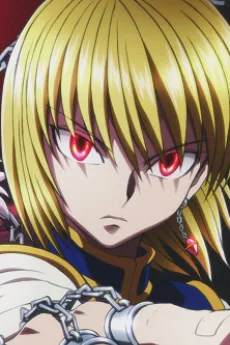
MAINKurapika
Hunter x HunterKurapika is a member of the Kurta tribe who were massacred by the Phantom Troupe (The Spiders) 4 years prior the Hunter exam. The Kurta tribe was an isolated group of people whose
 MAIN
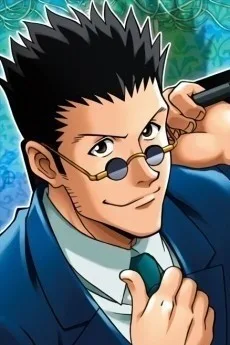
MAINLeorio Paradinight
Hunter x HunterPrior to the hunter exam, Leorio's close friend died to a curable illness, and Leorio was unable to save him due to his lack of money and knowledge. Because of this. he aims to bec
 MAIN
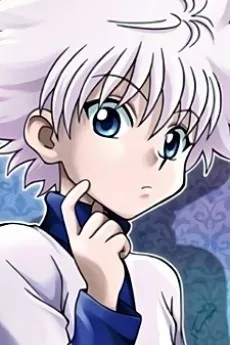
MAINKillua Zoldyck
Hunter x HunterKillua is a member of the Zoldyck family, who are all legendary assassins. Since birth, he trained endlessly in the art of assassination. He eventually ran away from his family and
 MAIN
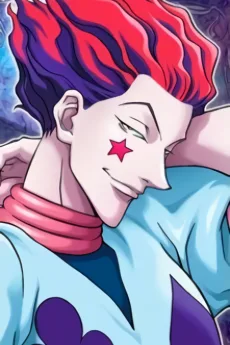
MAINHisoka Morow
Hunter x HunterNotorious for his cruel and deceitful fighting ability, Hisoka has proven to be deadly. His deviousness and volatility have caused many opponents to have difficulty anticipating hi
 SUPPORTING
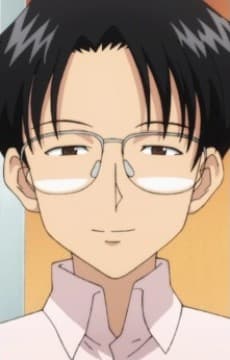
Wing
Hunter x HunterWing is a Nen trainer whose main student is Zushi. He meets Gon and Killua at the Celestial Tower. Although in the beginning he refuses to train Gon and Killua, and even lies to th
 SUPPORTING
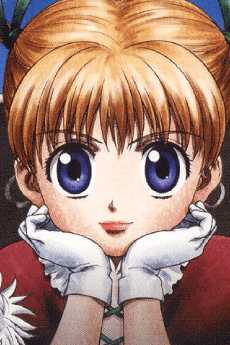
Biscuit Krueger
Hunter x HunterBiscuit is a master and experienced teacher of Nen. She continues the Nen training Wing gave to Gon and Killua during the Greed Island arc. As a Treasure Hunter, Biscuit loves coll
 SUPPORTING
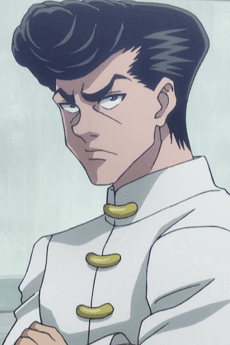
Knuckle Bine
Hunter x HunterKnuckle Bine is an Unidentified Beast Hunter and Morel's apprentice. Despite appearing to be an aggressive man, Knuckle is very compassionate and easily moved to tears. Knuckle als
 SUPPORTING
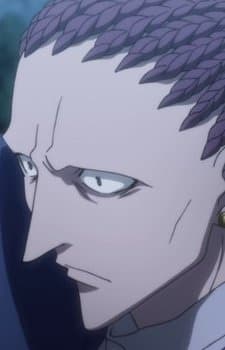
Shoot McMahon
Hunter x HunterShoot McMahon (シュート=マクマホン, Shūto Makumahon?) is an Unidentified Beast Hunter, Knuckle's partner, and the second disciple of Morel. He has a timid personality and is often afraid of
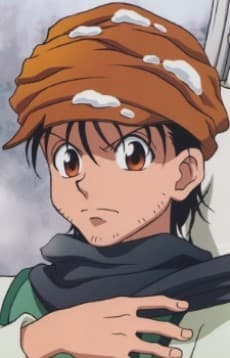 SUPPORTING
Ging Freecss
Hunter x HunterA famous 2-star ancient ruins hunter and the father of Gon Freeccs. When Ging was a child, he left his home on Whale Island to become a hunter and did not return home for 10 years,
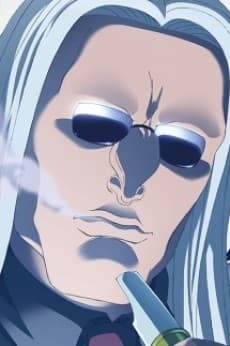 SUPPORTING
Morel Mackernasey
Hunter x HunterMorel is a Hunter who uses a giant smoking pipe and smoke as weapons, and who has a great sense of compassion. As his role progresses during the chimera ant arc, Morel shows himsel
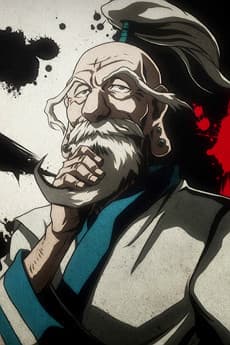 SUPPORTING
Isaac Netero
Hunter x HunterNone other than the Chairman of the Hunter Committee, and the final authority over the entirety of the Hunter Exam. He has enough administrative power to grant anyone the Hunter's
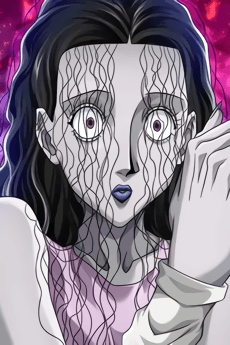 SUPPORTING
Palm Siberia
Hunter x HunterPalm Siberia is Knov's apprentice. She only appears in the manga and develops a crush on Gon at one stage. She, on most occasions, has scruffy hair and too much make-up, not to men
 SUPPORTING
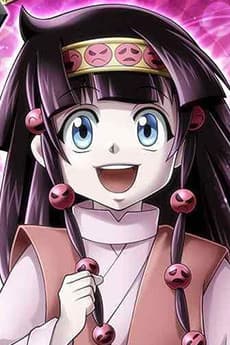
Alluka Zoldyck
Hunter x HunterAlluka Zoldyck is the second youngest sibling of the Zoldyck Family. She is said to be a dark, uncontrollable child. Her younger brother Kalluto is envious of her, perhaps because