Appears In
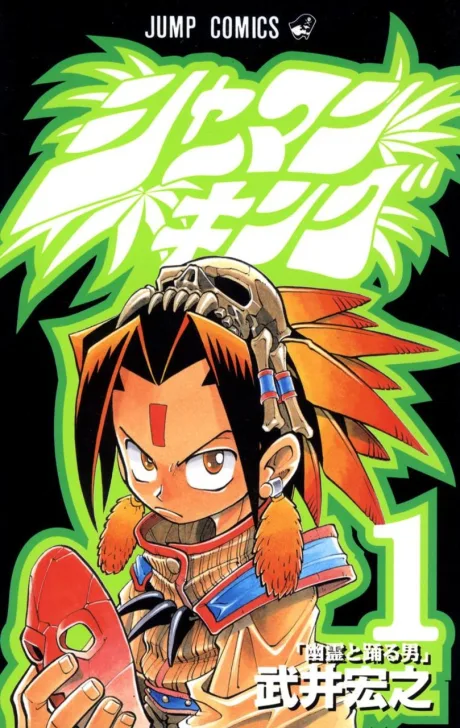
Quick Facts
| Gender | Male |
| Role | MAIN |
| Series | Shaman King |
| Height | 160 cm |
| Age | 15 |
| Birthday | May 12, 1985 |
| Blood Type | A |
| Gender | Male |
| Eye Color | Brown |
| Hair Color | Brown |
| Zodiac | Taurus |
| Voice Actor (JP) | Minami Takayama |
| Voice Actor (EN) | Erica Mendez |
| Favorite Food | Curry bread |
| Affiliation | Hao's Followers |
| Aliases | Hao |
| Debut | Chapter 57 |
Contents
Background
Background
Hao appears during the Shaman Fight as an extraordinarily powerful contestant surrounded by followers who treat him with a mixture of devotion and fear. Unlike many competitors, he does not regard the tournament simply as an opportunity to achieve a personal wish. His stated objective is to become Shaman King and use that position to establish a world reserved for shamans, eliminating ordinary humans whom he considers incapable of living in harmony with the planet.
His knowledge of shamanism is far too extensive for an ordinary teenager. He understands spiritual techniques, the Great Spirit, the Patch Tribe and the deeper structure of the Shaman Fight with an ease that immediately distinguishes him from contestants still learning how the tournament works.
Hao is not merely an unusually talented modern shaman. His soul has existed for roughly one thousand years, beginning with an earlier life during Japan's Heian period. In that incarnation, he was born as Asaha Doji and eventually became the onmyōji known as Hao Asakura.
His childhood is shaped by poverty, persecution and the murder of his mother, Asanoha Douji. The loss leaves him exposed to the cruelty of ordinary humans at an early age. His spiritual sensitivity subsequently develops to the point that he can hear the thoughts and emotions of other people, an ability that makes human malice impossible for him to ignore.
Hao studies Onmyōdō and develops extraordinary command over spirits, eventually creating the Chō-Senjiryakketsu, a collection of advanced shamanic knowledge later preserved by the Asakura family. He also learns Taizan Fukun no Sai, a reincarnation technique that allows his soul to return in future eras.
His first known attempt to become Shaman King ends before he can achieve his objective. Members of the Asakura family oppose him after recognizing how dangerous his plans have become. Matamune, once one of Hao's own companions, eventually participates in the effort that defeats him.
Five hundred years later, Hao reincarnates as a member of the Patch Tribe and once again enters the Shaman Fight. During this life, he steals the Spirit of Fire, one of the Five Grand Elemental Spirits, establishing the guardian spirit that remains associated with him in his modern incarnation.
That second attempt also fails. Hao nevertheless uses reincarnation once more, arranging for his soul to return approximately five centuries later in the Asakura bloodline.
In the modern era, Hao is born as the elder twin of Yoh Asakura to Keiko Asakura and Mikihisa Asakura. The Asakura family recognizes him at birth and attempts to prevent his return from becoming another catastrophe, but the infant Hao escapes with the Spirit of Fire.
He grows separately from Yoh and spends the years before the new Shaman Fight gathering followers. People alienated from ordinary society, persecuted for their supernatural abilities or attracted to Hao's overwhelming strength become part of his faction.
By the beginning of the main tournament, Hao possesses both immense spiritual power and a carefully constructed organization. His entrance therefore represents the culmination of plans spanning far longer than the lives of nearly every other competitor.
Personality
Personality
Hao is calm, self-assured and extraordinarily difficult to provoke. He rarely raises his voice and often responds to threats with an amused smile, because the difference between his power and that of most opponents makes ordinary intimidation meaningless.
His confidence is not empty arrogance. Hao has lived through multiple eras, accumulated enormous Furyoku and mastered techniques unavailable to nearly every modern shaman. When he dismisses an opponent as weak, the judgment usually reflects an actual difference in ability.
He also possesses a deeply elitist view of humanity. Hao considers shamans spiritually superior to ordinary people because they can perceive the world beyond material existence. He views humanity's exploitation of nature, cruelty toward one another and persecution of spiritually gifted individuals as evidence that ordinary humans have forfeited the right to control the world.
His telepathic ability intensifies this contempt. Hao can hear the thoughts of surrounding people, making dishonesty, prejudice and private malice constantly accessible to him. Where another person can ignore what someone privately thinks, Hao has spent centuries exposed to it.
Despite his stated hatred of humans, Hao is capable of affection. He cares about people who genuinely understand him and forms attachments to spirits and followers, although his immense power creates distance even from those who worship him.
He is particularly interested in people who do not fear him. Rather than simply destroying every person who challenges his worldview, Hao can become curious when someone behaves in a way he does not expect.
His followers frequently interpret his confidence as divine authority. Hao himself encourages this hierarchy to some extent, yet he also behaves casually around his group, cooking, relaxing and speaking to them without constantly demanding ceremony.
That contrast makes him difficult to categorize through behavior alone. He can appear gentle in one moment and eliminate an opponent without visible hesitation in the next.
Hao's greatest emotional weakness is isolation. His ability to read minds and his repeated experiences of betrayal have convinced him that understanding other people fully leads inevitably to disappointment.
His contempt consequently functions partly as protection. If humanity is inherently worthless, then trusting people is unnecessary and being hurt by them becomes avoidable.
The final stages of the story expose how incomplete that defense is. Hao's hatred does not erase his desire to be understood, particularly by the family and companions whose presence he repeatedly tries to dismiss as irrelevant.
Appearance
Appearance
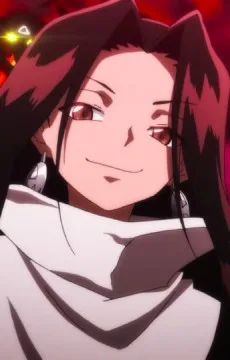
Hao appears as a slender teenage boy with long brown hair, brown eyes and facial features strongly resembling those of Yoh. He stands approximately 160 cm tall during the modern Shaman Fight.
His hair extends well past his shoulders and is typically worn loose. The length gives him a distinctive silhouette compared with Yoh's much shorter hairstyle despite their otherwise striking resemblance.
Hao usually dresses in clothing influenced by traditional Japanese and indigenous spiritual imagery. His outfit includes loose trousers and a poncho-like garment decorated with geometric patterns.
He frequently wears gloves and boots that reinforce the practical, traveling-shaman appearance of his clothing rather than the formal robes that might be expected from someone possessing his knowledge.
His most important visual companion is the Spirit of Fire, an enormous elemental spirit whose flame-covered body towers over ordinary guardian ghosts.
The contrast between Hao's slight human form and the Spirit of Fire's massive manifestation reinforces the scale of his supernatural power.
Earlier incarnations have different appearances. His Heian-period body is portrayed as an adult Japanese onmyōji with long dark hair, while his Patch incarnation reflects the clothing and cultural environment of the tribe into which he reincarnated.
His appearance after becoming Shaman King changes dramatically through his union with the Great Spirit, allowing him to manifest on a scale and in forms no longer limited by an ordinary human body.
Abilities & Powers
Abilities & Powers
Hao possesses one of the largest Furyoku reserves in the series. His modern incarnation begins the Shaman Fight with 1,250,000 Furyoku, a figure so far above most competitors that conventional comparisons become almost meaningless.
This reserve allows him to maintain exceptionally powerful Over Souls while wasting spiritual energy in ways that would exhaust ordinary shamans. He can defeat experienced competitors without approaching his actual limit.
His signature guardian spirit is the Spirit of Fire, one of the Five Grand Elemental Spirits. Although associated primarily with flames, the spirit belongs to a class of entities capable of manipulating matter on an enormous scale.
Hao feeds defeated souls to the Spirit of Fire, increasing its spiritual strength. This practice contributes to the enormous power it displays during the Shaman Fight.
His fundamental shamanic knowledge is equally dangerous. Having lived and trained across multiple eras, Hao understands techniques derived from Onmyōdō, reincarnation, spirit control and advanced Over Soul construction.
One of his defining abilities is Reishi, commonly represented as mind reading. Hao can perceive the thoughts and emotions of people around him, making deception extremely difficult.
The ability also gives him enormous tactical value. An opponent trying to conceal a plan must contend with someone who can detect the intention behind it before the action occurs.
Hao can suppress or selectively ignore Reishi, but centuries of constant exposure to other people's thoughts contribute heavily to his alienation.
He also possesses extraordinary sensory awareness. Spirits, Furyoku fluctuations and supernatural presences that would require concentration from lesser shamans can be recognized almost casually.
His control of the Spirit of Fire extends beyond simple combustion. Through its elemental properties, he can generate enormous heat, consume other spirits and alter the substance from which the spirit's manifestation is composed.
The Spirit of Fire can therefore adapt itself against different elemental conditions rather than functioning as a conventional fire creature vulnerable to water.
Hao is also an accomplished practitioner of Onmyōdō. His ancient techniques include barriers, divination, spirit manipulation and the rituals preserved within the Chō-Senjiryakketsu.
Perhaps his most consequential achievement is Taizan Fukun no Sai, which enables reincarnation. By preserving his memories and Furyoku through death, Hao turns what would normally be the end of one lifetime into preparation for another.
His reincarnation repeatedly increases his spiritual power. Dying, passing through the afterlife and returning allows his soul to accumulate Furyoku across centuries.
After becoming Shaman King, Hao merges with the Great Spirit. In that condition, his power expands beyond ordinary shamanic measurement: the Great Spirit contains the souls and memories of the dead and grants its chosen king authority on a planetary scale.
Named Techniques
Named Techniques
Reishi allows Hao to perceive the thoughts and emotions of people around him. The ability functions continuously enough that private hostility and deception are difficult to conceal.
Taizan Fukun no Sai is Hao's reincarnation technique. Through it, he can direct his soul into a future incarnation while retaining memories and accumulated spiritual development.
Oversoul: Spirit of Fire manifests the Spirit of Fire through Hao's enormous Furyoku. The spirit can attack directly, generate extreme heat and consume other souls.
Kurobina is Hao's armor-type Over Soul with the Spirit of Fire. Rather than manifesting the elemental spirit separately at enormous size, Hao compresses its power into armor surrounding his body.
Spirit of Fire: Elemental Transformation exploits the elemental spirit's deeper properties to alter its composition. Hao can transform its manifestation rather than being restricted to literal flames.
Onmyōdō encompasses Hao's collection of traditional Japanese esoteric techniques, including divination, spirit manipulation and ritual magic developed during his first incarnation.
Chō-Senjiryakketsu is the body of shamanic knowledge Hao creates during his original life. It contains highly advanced techniques later studied by other members of the Asakura family.
Great Spirit Manifestation becomes possible after Hao wins the Shaman Fight. His union with the Great Spirit gives him access to the total spiritual domain associated with the office of Shaman King.
Relationships
Relationships
Yoh Asakura occupies a uniquely important position in Hao's modern life. Hao Asakura displays immediate interest in Yoh Asakura, repeatedly observing his progress and expecting him to become stronger.
[Hao Asakura and Yoh Asakura are twin brothers, born to the same parents after Hao reincarnates into the Asakura family. Their souls originate from the same modern pregnancy, with Hao born first.](#spoiler)
This relationship explains why Hao Asakura treats Yoh Asakura differently from almost every other opponent. He does not simply want Yoh eliminated; he repeatedly encourages his growth.
[Hao intends eventually to absorb Yoh Asakura's soul, believing that reuniting with his twin would make him spiritually complete.](#spoiler)
Yoh Asakura, however, refuses both Hao's hatred of humanity and the assumption that Hao can only be stopped through greater hatred. Their conflict gradually becomes as emotional as it is ideological.
[By the final confrontation, Yoh Asakura recognizes that Hao Asakura's overwhelming power does not eliminate his loneliness. Yoh's attempt to reach him psychologically becomes more important than simply defeating him in combat.](#spoiler)
Keiko Asakura is Hao's modern biological mother. [Keiko Asakura gives birth to both Hao and Yoh after the ancient Hao arranges his reincarnation into the Asakura family.](#spoiler)
Mikihisa Asakura is his modern biological father. [Mikihisa Asakura participates with the Asakura family in the attempt to prevent Hao from surviving his rebirth, but the effort fails.](#spoiler)
Yohmei Asakura represents the branch of the Asakura family that has spent centuries preparing for Hao's return. Yohmei Asakura understands the danger associated with the family's ancient ancestor and prepares Yoh to oppose him.
Anna Kyoyama is one of the few modern shamans who interacts with Hao without submitting to his presence. Hao Asakura recognizes Anna Kyoyama's unusual spiritual strength and her importance to Yoh.
Her personality also presents a problem for his normal intimidation tactics. Anna Kyoyama is willing to confront Hao Asakura directly despite knowing the scale of his power.
Matamune has one of the oldest personal connections to Hao. [Matamune originally serves Hao during his first life and receives substantial spiritual power from him.](#spoiler)
Their relationship becomes tragic as Hao's hatred of humanity grows. [Matamune eventually turns against his former master and helps the Asakura family defeat Hao's first incarnation.](#spoiler)
Centuries later, Matamune's experiences with Hao influence the guidance he gives Yoh. The cat spirit understands both Hao's cruelty and the loneliness that preceded it.
Asanoha Douji is Hao's mother from his original life. Her murder when Hao is still young becomes one of the formative traumas behind his hatred of ordinary humans.
Hao remembers Asanoha Douji across his reincarnations, and the emotional bond survives the centuries in ways his contempt for humanity cannot fully erase.
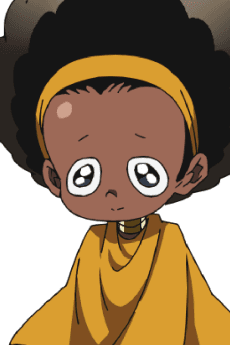
Opacho is one of Hao's most devoted followers. Hao Asakura rescues Opacho and allows the child to remain close to him, creating one of the clearest demonstrations that his capacity for affection has not disappeared.
Opacho trusts Hao completely and can approach him with a familiarity many adult followers would never attempt.
Hao's treatment of Opacho also exposes a contradiction in his worldview. He claims broad contempt for humanity yet can respond gently to individuals who form genuine emotional bonds with him.
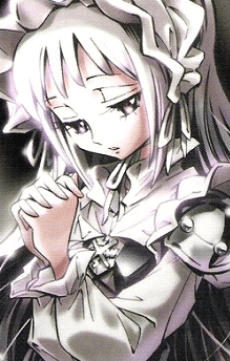
Luchist Lasso becomes one of Hao's strongest adult followers. Luchist Lasso, once associated with the founding of the X-LAWS, ultimately aligns himself with Hao.
His knowledge of both Hao's faction and the X-LAWS makes Luchist Lasso particularly important within the ideological conflict between the two groups.
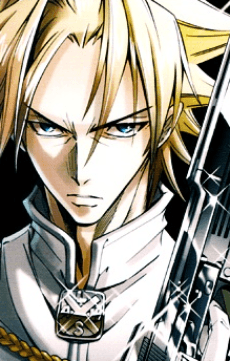
Iron Maiden Jeanne leads the X-LAWS in opposition to Hao. Iron Maiden Jeanne's followers treat Hao Asakura as absolute evil and organize much of their existence around killing him.
Hao generally regards the X-LAWS as another group of weak opponents despite their willingness to sacrifice themselves in pursuit of his destruction.
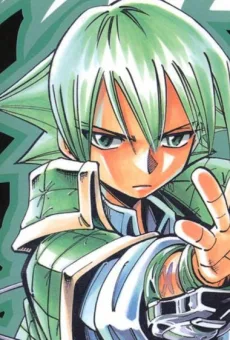
Marco Lasso becomes one of Hao's most persistent enemies through his leadership role within the X-LAWS. Marco Lasso interprets Hao Asakura's continued existence as a challenge that justifies extreme measures.
Lyserg Diethel has intensely personal reasons for opposing Hao. [Hao Asakura kills Lyserg Diethel's parents after Lyserg's father refuses to become his follower.](#spoiler)
The event leaves Lyserg Diethel consumed by revenge and eventually drives him toward the X-LAWS.
Ren Tao opposes Hao as one of Yoh's principal allies. Hao Asakura initially regards Ren Tao's strength as insignificant compared with his own, but Ren's continued growth places him among the shamans chosen to participate in the final confrontation.
Horohoro likewise becomes part of the coalition opposing Hao. His environmental ambitions directly conflict with Hao Asakura's conclusion that protecting nature requires eliminating humanity.
Chocolove McDonell represents another alternative to Hao's philosophy. Both have experienced human cruelty, but Chocolove McDonell eventually responds by trying to interrupt hatred rather than eradicating the people capable of producing it.
Spirit of Fire is Hao's principal guardian spirit during the modern Shaman Fight. Hao acquires it during his Patch incarnation roughly five hundred years before the main story and retains it through his subsequent reincarnation.
Hao Asakura feeds souls to Spirit of Fire, steadily increasing its power until it becomes one of the most terrifying guardian spirits in the tournament.
The relationship differs sharply from Yoh and Amidamaru's companionship. Hao's mastery is so absolute that the Spirit of Fire functions as an extension of his immense spiritual will.
Story Role
Story Role
Hao first functions as a distant threat whose reputation precedes direct confrontation. The tournament includes numerous powerful competitors, but information about Hao gradually establishes that one participant exists on a fundamentally different level.
His followers give the Shaman Fight a political dimension. Hao is not simply competing as an individual; he is building a community of shamans willing to support the world he intends to create.
That faction forces Yoh and his allies to confront the reasons people might willingly choose Hao. Many followers have suffered persecution or exclusion from ordinary society, meaning his ideology draws strength from genuine grievances rather than simple mind control.
The X-LAWS develop as the opposing extreme. Where Hao proposes destroying humanity to protect shamans, the X-LAWS justify increasingly lethal methods through their desire to destroy Hao.
Yoh consequently finds himself between two absolutist positions. Hao considers ordinary humans irredeemable, while the X-LAWS increasingly treat anyone aligned with Hao as deserving immediate destruction.
The revelation that Hao is Yoh's twin brother transforms the conflict from an inherited Asakura responsibility into a direct family confrontation. Hao's interest in Yoh is revealed to involve both spiritual ambition and an unusual emotional attachment.
Hao's Furyoku also alters the structure of the tournament. Defeating him through ordinary competition becomes increasingly implausible once his power is measured against that of the other contestants.
Several factions therefore pursue indirect strategies. The X-LAWS attempt assassination, Gandhara prepares the Five Elemental Warriors, and Yoh's group focuses increasingly on understanding what Hao will do if he reaches the Great Spirit.
Hao eventually advances through the Shaman Fight while opposing teams withdraw or are eliminated. His overwhelming Furyoku leaves no remaining contestant capable of defeating him under normal tournament conditions.
He ultimately wins the Shaman Fight and becomes Shaman King, achieving the objective he has pursued across three incarnations.
After merging with the Great Spirit, Hao gains the authority required to destroy humanity. The conventional tournament is therefore replaced by an attempt to reach him within the spiritual realm before he acts.
Yoh, Ren, Horohoro, Chocolove and Lyserg become the Five Elemental Warriors and confront Hao using the Five Grand Elemental Spirits, but even their combined strength cannot overpower the Shaman King directly.
The decisive confrontation instead involves the souls connected to Hao's long life. His mother Asanoha appears among them, forcing him to face the personal pain he has spent centuries converting into hatred of humanity.
Hao ultimately agrees to postpone the destruction of humans and give humanity an opportunity to change. He retains the position of Shaman King rather than being replaced by Yoh.
Character Development
Character Development
Hao begins the main story seemingly complete. He already knows what he wants, possesses overwhelming power and shows little uncertainty about the inferiority of those opposing him.
Later revelations show that this certainty was built over centuries. His worldview did not appear spontaneously; it hardened through repeated encounters with cruelty, persecution and isolation.
His childhood ability to hear thoughts is particularly important. Ordinary trust depends partly on accepting that another person's private mind cannot be completely known. Hao never receives that protection.
The murder of his mother teaches him early that people can destroy what he loves. Reishi then repeatedly reinforces the lesson by exposing him to thoughts that others can conceal behind polite behavior.
Rather than finding a way to live with that knowledge, Hao gradually decides that ordinary humanity itself is the problem.
Reincarnation compounds the alienation. Most people understand their lives within one historical period, while Hao carries memories and resentment across approximately a thousand years.
Power worsens the situation rather than resolving it. As Hao becomes stronger, fewer people can relate to him as an equal.
Followers worship him. Enemies fear him. The resulting hierarchy validates his belief that he stands apart from everyone else.
His relationship with Yoh destabilizes that assumption. Yoh recognizes Hao's danger without accepting either submission or hatred as the only possible response.
The twin relationship makes Yoh especially difficult for Hao to dismiss. Hao presents absorbing Yoh's soul as a route toward completeness, revealing that absolute superiority has not removed his sense of something missing.
Opacho provides another contradiction. Hao can genuinely care for a human child despite claiming humanity deserves extinction.
Matamune and Asanoha complicate his isolation even further because both belong to relationships Hao cannot reduce to weakness or contempt.
His final confrontation with Asanoha strips away much of the ideological distance he has constructed. Faced with his mother again, Hao reacts not as an omnipotent Shaman King but as the child whose grief helped begin his hatred.
This does not instantly transform him into an ordinary benevolent person. Hao remains Shaman King and continues to judge humanity severely.
What changes is his certainty that extermination must happen immediately. He agrees to observe whether people can improve, giving Yoh and the others the possibility of proving his conclusion wrong.
His development therefore does not depend on losing his power. Instead, the character reaches a point where limitless supernatural authority can no longer protect him from the emotional relationships he has spent centuries trying to transcend.
Etymology
Etymology
Hao's name is written ハオ in katakana during the modern storyline.
His original Asakura identity is associated with the kanji 葉王, which can be read as Hao and literally combines characters meaning "leaf" and "king."
The relationship between Hao and Yoh is deliberate. Yoh's given name is written 葉, meaning "leaf," while Hao's older name incorporates the same character with 王, meaning "king."
The naming reinforces their familial and spiritual connection without requiring the two names to be identical.
His childhood name Asaha Doji uses "dōji," a term historically applied to children or youthful attendants and frequently encountered in Japanese Buddhist and folkloric naming traditions.
Hao's ancient role as an onmyōji connects him with the historical Japanese practice of Onmyōdō, a cosmological and divinatory tradition combining elements drawn from yin-yang theory, the Five Phases and ritual practices.
Many techniques associated with him consequently employ Japanese religious terminology rather than the weapon-centered naming used by younger shamans.
The Spirit of Fire links Hao to the Five Grand Elemental Spirits, each corresponding to one of the classical elements represented within the Great Spirit's structure.
Trivia
Trivia
-
Hao's modern incarnation shares the birthday May 12, 1985 with Yoh Asakura, reflecting their shared birth.
-
His modern profile lists him at approximately 160 cm tall and fifteen years old during the main Shaman Fight.
-
His Furyoku is measured at 1,250,000, enormously exceeding the reserves of nearly every other contestant.
-
His guardian spirit during most of the story is the Spirit of Fire, one of the Five Grand Elemental Spirits.
-
Hao's principal Japanese voice actor is Minami Takayama, who voices him in both the 2001 and 2021 television adaptations.
-
The modern Hao's physical resemblance to Yoh is deliberate and becomes increasingly important as the story explains their connection.
-
Hao has lived through three principal incarnations: his original Heian-period life, a later Patch incarnation and his modern rebirth within the Asakura family.
-
Unlike many major antagonists in battle manga, Hao succeeds in the central competition: he wins the Shaman Fight and becomes Shaman King.
In Other Media
In Other Media
Hao serves as the principal antagonist of the 2001 television adaptation of Shaman King. Minami Takayama voices him in Japanese, establishing the calm, controlled vocal performance associated with the character.
The 2001 adaptation introduces the broad concepts of Hao's reincarnation, connection to Yoh and extraordinary spiritual power but eventually diverges from the manga because the source material had not yet reached its completed ending.
As a result, Hao's final confrontation and ultimate fate differ substantially from the completed manga continuity.
The first anime develops an original climax in which the battle against Hao is resolved through circumstances created specifically for that adaptation rather than the manga's completed Shaman Fight.
The 2021 television adaptation again casts Minami Takayama as Hao and restarts the story with the intention of adapting the completed manga.
This version consequently includes the full revelation of Hao's incarnations, the Five Elemental Warriors, the Patch Plants and the storyline surrounding his achievement of Shaman King.
Erica Mendez performs Hao's principal English voice in the 2021 adaptation, giving the modern English release a different performance from the earlier localized television series.
Hao is also a major playable or boss character in numerous Shaman King games. His attacks typically center on the Spirit of Fire, enormous Furyoku and elemental transformations.
His Kurobina armor is frequently used as one of his advanced game forms because it provides a compact combat representation of the otherwise enormous Spirit of Fire.
Later sequel material continues to use Hao because becoming Shaman King places him in a position that extends far beyond the conclusion of the original tournament.
In Shaman King: Flowers and subsequent sequel continuity, Hao's authority as Shaman King becomes relevant to conflicts involving previous gods and the Flower of Maize rather than ending with the original generation's story.
Reception
Reception
Hao became one of the most recognizable characters associated with Shaman King, due in part to his visual resemblance to Yoh and the gradual mystery surrounding why the series' central antagonist looks so much like its protagonist.
His power also establishes an unusual structure for the Shaman Fight. Rather than steadily approaching an opponent whose abilities remain comparable to everyone else's, the protagonists learn relatively early that Hao possesses Furyoku on a radically different scale.
That disparity shifts attention from simply asking whether Yoh can become stronger than Hao to asking whether overwhelming power can solve the conflict at all.
The Spirit of Fire contributes heavily to Hao's visual identity. Its massive size and elemental design make his guardian spirit immediately distinguishable from smaller human ghosts such as Amidamaru or Bason.
His ideology also complicates the opposition against him. Hao's conclusions are genocidal, but many grievances underlying them are based on genuine persecution, environmental destruction and repeated human cruelty.
The existence of followers who voluntarily choose his side reinforces that complexity. Not all of them are mindlessly evil; some believe Hao is the only person willing to create a world in which shamans will no longer need to hide or suffer persecution.
His relationship with Yoh provides the emotional counterpoint. Yoh cannot accept Hao's plan, but simply hating him would validate the assumption that people inevitably respond to pain with more hostility.
The manga's decision to let Hao actually become Shaman King makes that conflict particularly distinctive. He is not defeated moments before achieving his objective; the protagonists must confront him after he has already obtained the power they were trying to keep from him.
The eventual intervention of Asanoha makes the climax less about surpassing Hao's Furyoku than reaching the part of him that remained emotionally trapped in the loss that began his hatred centuries earlier.
Hao therefore ends the original story not as a powerless defeated antagonist but as the actual Shaman King, temporarily persuaded to give humanity an opportunity to prove that his judgment of it is not final.
Related Characters
 MAIN
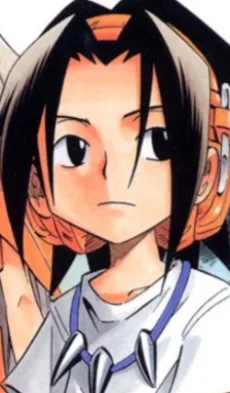
MAINYoh Asakura
Shaman KingYoh was born into the famous Shaman family, Asakura. He has a twin brother named Hao who is a powerful reincarnation of the original HAO who keeps getting reborn. For this reason,
 SUPPORTING
Keiko Asakura
Shaman KingAsakura Keiko is Mikihisa's wife and Yoh's mother. (Source: Wikipedia)
 SUPPORTING
Mikihisa Asakura
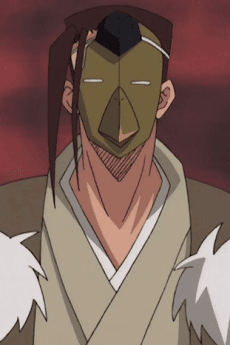
Shaman KingMikihisa Asakura is the father of protagonist Yoh Asakura in the manga and anime series, Shaman King. In the manga, he belonged to Team Kabbalahers together with Redseb and Seyram.
 SUPPORTING
Matamune
Shaman KingMatamune is a character in the Shaman King manga. Matamune, who appears in volume 19 and 20, is not in the Shaman King anime. Matamune is a Nekomata, a type of cat spirit with two
 SUPPORTING
Opacho
Shaman KingHao's most loyal ally. She was a malnourished baby in South Africa when Hao found her.
 SUPPORTING
Luchist Lasso
Shaman KingAs founder and former leader of the X-laws, Luchist by far one of the more powerful shamans working under Hao. Luchist acts as the main rival to Marco. Apparently, the two were clo
 SUPPORTING
Iron Maiden Jeanne
Shaman KingAn 11-year-old young girl from France and powerful shaman in her own right, Jeanne is the leader of the X-Laws. Her title of Iron Maiden refers to the fact spends nearly all her ti
 SUPPORTING
Marco Lasso
Shaman KingHe is the defacto leader of the X-Laws, only overruled by Iron Maiden Jeanne. He originates from Sicily, Italy. Orphaned from an early age, Marco was raised in a Catholic church-or
 MAIN
MAINLyserg Diethel
Shaman KingA British Shaman and a traditional "dowser", whose parents were killed by Hao. Lyserg has dramatic interactions with all of the main characters at some point, and though he travels
 MAIN
MAINRen Tao
Shaman KingLen is a Shaman from China, one of the few remaining members of the Tao Family, who after their years of serving as the guardians of the Forbidden City, became outcasts and condemn
 MAIN
MAINHorohoro
Shaman KingHorohoro is an Ainu from Hokkaidō, a prefecture in Japan. In the English anime, he is described as from "the Northern Woods" instead of from Hokkaidō. He is the older brother of Pi
 MAIN
MAINChocolove McDonell
Shaman KingJoco met his mentor, Orona, on a snowy night when he was young. Orona was among the crowd of people who circled around a victim who was being robbed. The police had the robber surr