Appears In
Quick Facts
| Gender | Male |
| Role | MAIN |
| Series | Shaman King |
| Height | 170 cm |
| Age | 15 |
| Birthday | November 27, 1985 |
| Blood Type | O |
| Gender | Male |
| Eye Color | Blue |
| Hair Color | Light blue |
| Zodiac | Sagittarius |
| Voice Actor (JP) | Yūji Ueda |
| Voice Actor (EN) | Michael Sinterniklaas |
| Likes | Snowboarding |
| Affiliation | Team The Ren |
| Aliases | Horohoro, Trey Racer |
| Debut | Chapter 17 |
| Guardian Spirit | |
| Father | |
| Sister |
Contents
Background
Background
Horohoro comes from an Ainu family in Hokkaidō and grows up surrounded by traditions that emphasize the relationship between people and the natural world. His father, Lycan Usui, raises him according to a severe philosophy centered on survival and the idea that the strong inevitably prey upon the weak. Horohoro absorbs the harshness of that lesson without accepting that weakness should simply be abandoned.
His younger sister, Pirika Usui, takes an active role in his development as a shaman. She trains him relentlessly before the Shaman Fight and prepares the ikupasuy he later uses as an important spiritual medium. Horohoro frequently complains about the severity of her methods, but their relationship is close, and Pirika's confidence in him reinforces his determination to accomplish the dream they share.
That dream centers on the koropokkuru, small nature spirits traditionally associated with living beneath butterbur leaves. Horohoro intends to become Shaman King and create an enormous butterbur field where the spirits can flourish without being displaced by human development. His guardian spirit Kororo is herself a koropokkuru, making the goal personal rather than abstract.
He first meets Yoh as an opponent during the preliminary stage of the Shaman Fight. Horohoro approaches their match with confidence, using Kororo's control over ice and his own snowboarding skills to create a fighting style unlike Yoh's sword-based techniques. He loses, but the defeat produces little lasting hostility. His straightforward personality allows rivalry to turn into friendship quickly, and he soon begins traveling with Yoh and the other contestants.
Horohoro later forms Team The Ren with Ren Tao and Chocolove McDonell. The combination places three strong personalities together: Ren's pride, Chocolove's humor and Horohoro's impulsiveness generate constant arguments, but their differences also force Horohoro to become more disciplined as a teammate.
Beneath his easygoing public identity lies a part of his childhood he refuses to discuss. Horohoro once became close to a girl named Tamiko Kurobe, whom he called Damuko. Because her family was connected to development projects opposed by people in Horohoro's community, his grandfather ordered him to stay away from her. Horohoro began ignoring her despite their friendship.
Damuko continued trying to reach him and hoped they would visit the butterbur fields together. She later died in an accident, leaving Horohoro convinced that his rejection had contributed to her death. The guilt is so intense that he abandons the name Horokeu and clings to the nickname she gave him instead.
Kororo is eventually revealed to be Damuko's spirit, transformed into a koropokkuru after death. Horohoro had been fighting beside the person whose memory he was trying hardest to avoid, without consciously recognizing her true identity.
Personality
Personality
Horohoro appears cheerful, excitable and uncomplicated. He laughs loudly, becomes angry quickly and reacts openly when frustrated. Unlike Ren, who tries to control nearly every visible emotion, Horohoro makes little effort to hide annoyance, excitement or embarrassment.
His competitiveness is intense. A friendly match can become deadly serious once his pride is challenged, and he dislikes feeling as though he is falling behind stronger teammates. That insecurity becomes particularly noticeable around Ren, whose relentless growth can make Horohoro question whether he is contributing enough to Team The Ren.
He is nevertheless fundamentally compassionate. His entire Shaman Fight ambition revolves around protecting a species too small and politically powerless to defend its habitat. Horohoro does not seek kingship for luxury, domination or personal recognition; he wants supernatural authority to accomplish an ecological goal he believes ordinary society will never prioritize.
His understanding of nature is deeper than his academic abilities suggest. Horohoro openly admits that mathematics and conventional study are not his strengths, but he possesses an instinctive grasp of environmental flow, weather and terrain. This becomes important when he studies Fumon Tonkō, a technique requiring awareness of the relationships connecting the natural world.
The philosophy taught by his father also shapes him. Lycan's belief that the strong prey upon the weak initially sounds cruel, yet Horohoro gradually interprets it less as permission for cruelty and more as a warning that survival demands effort. Being weak is not shameful, but surrendering without trying is unacceptable.
His friendliness therefore coexists with a surprisingly ruthless battle mentality. Horohoro can injure opponents severely when necessary and is willing to exploit elemental advantages without hesitation. Against friends he tends to restrain himself emotionally, but serious threats bring out a colder and more efficient side.
The most significant contradiction in his personality is secrecy. Horohoro is outwardly one of the most emotionally transparent characters in the group, yet he conceals the experience that defines his deepest guilt.
His exaggerated cheerfulness partly functions as distance from Horokeu, the boy who believes he failed Damuko. Accepting that past eventually requires him to stop treating his own grief as something his friends are forbidden to see.
Appearance
Appearance
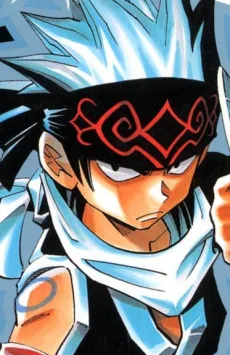
Horohoro is a relatively tall, athletic teenage boy with long light-blue hair. The hair is usually held back by a patterned headband, causing its upper sections to rise into a series of spikes. His blue-and-white palette reinforces the ice and snow imagery associated with his fighting style.
His clothing draws heavily from winter sports. Horohoro commonly wears a white-and-blue outfit with shorts, boots and equipment compatible with his snowboard. The design makes him visually distinct from shamans whose clothing is rooted primarily in ceremonial robes or martial uniforms.
A patterned Ainu-style headband remains one of his most recognizable accessories. Similar motifs appear throughout his clothing and equipment, connecting his visual design to the cultural background that informs both his family and shamanic practices.
His snowboard functions as more than transportation. Early in the series it becomes Kororo's primary Over Soul medium, allowing Horohoro to combine his supernatural abilities with the snowboarding movements he already understands instinctively.
Later, the ikupasuy prepared by Pirika becomes increasingly important. The carved ceremonial object gives Horohoro a more traditional shamanic medium and allows the visual language of his Over Soul to shift away from purely modern sports equipment.
Horohoro's later forms become significantly larger and more elaborate. Ice structures, gigantic arms and elemental constructs surround a human design that remains relatively simple, emphasizing the scale of his progression without abandoning the snowboarder identity established in his first appearance.
Abilities & Powers
Abilities & Powers
Horohoro is a capable shaman whose combat style revolves around ice manipulation. The actual spiritual source of his power is Kororo, a koropokkuru nature spirit capable of interacting directly with the natural environment and generating intense cold.
His earliest Over Soul uses his snowboard as Kororo's medium. By channeling Furyoku through the board, Horohoro can create sheets of ice, freeze terrain and transform the battlefield into an environment suited to his mobility.
This combination makes him difficult to fight conventionally. Horohoro can move rapidly across surfaces he has frozen, change elevation through generated ice and attack from angles that opponents accustomed to static ground combat may not anticipate.
His control over temperature is dangerous in direct combat. Rather than merely producing decorative ice, Horohoro can freeze water surrounding an opponent, create large structures rapidly and immobilize living targets.
Pirika later gives him an ikupasuy, a ritual object traditionally associated with Ainu spiritual practice. Used as a medium for Kororo, it supports stronger and more controlled Over Souls than the snowboard alone.
Horohoro also develops remarkable environmental awareness. The Fumon Tonkō principles taught through advanced shamanic training suit him particularly well because he naturally reads the interactions among water, air, terrain and living systems.
His adaptability becomes especially clear when he temporarily fights using spirits belonging to the Icemen. Despite limited preparation and comparatively restricted Furyoku, he understands their elemental properties well enough to combine them effectively.
Horohoro's raw Furyoku increases dramatically during the later tournament. Like several of Yoh's allies, he benefits from advanced training that expands both the capacity and efficiency of his spiritual power.
He eventually becomes one of the Five Elemental Warriors and receives the Spirit of Rain, one of the Five Grand Elemental Spirits. Although called the Spirit of Rain, the spirit's domain covers water broadly enough to complement Horohoro's existing mastery of ice.
The pairing is particularly appropriate because ice manipulation is fundamentally an extension of water control. Horohoro's final elemental progression therefore expands rather than replaces his original fighting style.
Named Techniques
Named Techniques
Over Soul: Kororo in Snowboard places Kororo within Horohoro's snowboard, allowing him to freeze surfaces, generate ice and combine supernatural attacks with high-speed movement.
Kau Kau Priwenpe creates a large shield of ice. Horohoro uses it defensively against powerful direct attacks and can exploit the resulting frozen surface as part of his movement.
Mososo Kruppe produces an enormous avalanche-like surge of snow and ice designed to overwhelm an opponent through mass and momentum.
Emush Onigiri forms a large ice blade through Horohoro's Over Soul, converting Kororo's freezing ability into a cutting weapon.
Nipopo Punch manifests a large ice fist that strikes an opponent through concentrated force.
Shimonmatak is an advanced Over Soul built through the ikupasuy, creating a much larger manifestation of Kororo's ice power.
Fumon Tonkō is not exclusive to Horohoro but becomes particularly effective in his hands. The technique involves understanding the flow and relationships governing nature so that a shaman can respond optimally to changing conditions.
Spirit of Rain Over Soul gives Horohoro access to one of the Five Grand Elemental Spirits, enormously expanding his command over water and the scale at which his elemental techniques can operate.
Relationships
Relationships
Yoh Asakura is Horohoro's first opponent in the Shaman Fight preliminaries and quickly becomes one of his closest friends. Horohoro initially approaches Yoh Asakura as someone standing between him and his dream, but their match produces respect rather than resentment.
Yoh Asakura's relaxed manner occasionally frustrates Horohoro, particularly when Yoh appears insufficiently concerned about competition. Horohoro is much more openly invested in winning and has a specific ecological project depending on success.
Their friendship becomes especially important because Yoh Asakura rarely pressures Horohoro to explain the parts of himself he keeps hidden. Yoh's willingness to accept people without immediately demanding their history gives Horohoro room to remain part of the group even while concealing his guilt.
Kororo is Horohoro's guardian spirit and the source of his ice abilities. Horohoro treats Kororo affectionately from the beginning, and their relationship is far more cooperative than the master-servant partnerships displayed by some early contestants. Kororo is a nature spirit and therefore possesses unusual independence compared with ordinary human ghosts.
[Kororo is ultimately revealed to be the transformed spirit of Tamiko Kurobe, the girl Horohoro knew as Damuko. This means the companion supporting his dream of restoring koropokkuru habitat is also the person whose death originally filled him with guilt.](#spoiler)
[The revelation forces Horohoro to confront the fact that Tamiko Kurobe continued caring about him after his rejection. Their partnership becomes a form of reconciliation that Horohoro had believed impossible.](#spoiler)
Pirika Usui is Horohoro's younger sister, trainer and one of the strongest supporters of his environmental dream. Pirika Usui subjects Horohoro to severe training routines before and during the Shaman Fight, echoing the demanding relationship between Anna and Yoh.
Horohoro complains about Pirika Usui's methods but rarely questions her commitment. She prepares his ikupasuy and understands the cultural and spiritual obligations behind his goal better than most of his tournament companions.
Lycan Usui is Horohoro's father. Lycan Usui teaches his son the harsh principle that the strong prey upon the weak and expects him to survive without relying on parental intervention once he leaves home.
Although this philosophy causes friction, Horohoro gradually understands that Lycan Usui does not mean weakness justifies surrender. When Horohoro faces opponents connected to Hao while protecting the Icemen, Lycan deliberately refuses to rescue him and instead reminds him that being disadvantaged is not an excuse to stop fighting.
Gororo is Lycan's unusually large koropokkuru guardian spirit. Horohoro is familiar with Gororo's strength and history, and the spirit becomes indirectly important to the truth surrounding Kororo.
[Gororo helps Tamiko Kurobe's spirit become a koropokkuru after her death, eventually allowing her to return to Horohoro as Kororo.](#spoiler)
Ren Tao is Horohoro's teammate, rival and frequent argument partner. Horohoro joins Ren Tao and Chocolove to create Team The Ren, placing two exceptionally proud young shamans in constant proximity.
Horohoro dislikes Ren Tao's arrogance and reacts aggressively when Ren treats him as subordinate. Ren, in turn, considers Horohoro noisy and impulsive. Their bickering rarely prevents cooperation when a genuine threat appears.
The competition between them pushes Horohoro to improve. Ren's rapid increases in Furyoku can make Horohoro worry about being left behind, but that anxiety ultimately drives further training rather than jealousy strong enough to fracture the team.
Chocolove McDonell is the third member of Team The Ren. Horohoro generally reacts more openly than Ren to Chocolove McDonell's jokes, though this does not necessarily mean he finds them funny.
The three gradually become a tightly integrated combat group. Their different temperaments are part of what makes the team work: Ren supplies discipline, Horohoro provides instinctive adaptability and Chocolove contributes speed, humor and unusual spiritual techniques.
Ryuunosuke Umemiya becomes one of Horohoro's regular companions during the journey toward the Patch Village. Both are loud, impulsive and prone to competitive displays, making their interactions naturally combative.
During the match between Team The Ren and Team Funbari Onsen, Horohoro demonstrates how seriously he can take competition by freezing Ryuunosuke Umemiya's arms and shattering the ice around them.
Lyserg Diethel initially travels alongside Horohoro and Yoh's group. Horohoro respects Lyserg Diethel's abilities, though Lyserg's increasing fixation on revenge places distance between them.
When Lyserg Diethel joins the X-LAWS, Horohoro views the decision with concern rather than simply treating him as an enemy. Their earlier friendship remains significant even when they occupy opposing positions.
Mikihisa Asakura becomes an important trainer for Team The Ren. Horohoro participates in the group's encounter with Mikihisa Asakura, learning that raw Furyoku alone does not determine a battle.
The training is particularly useful to Horohoro because Mikihisa Asakura's techniques reward awareness of natural flow. Horohoro's background and instincts make him unusually suited to understanding those principles.
Kalim is the Patch officiant assigned to Horohoro. Kalim oversees his participation in the Shaman Fight and becomes increasingly aware of both Horohoro's potential and the burdens he keeps concealed.
[The later Patch Plant confrontation between Horohoro and Kalim becomes one of the moments in which Horohoro is forced to reveal more of his genuine strength and emotional history.](#spoiler)
Tamiko Kurobe, nicknamed Damuko, is the central figure in Horohoro's hidden past. Horohoro befriends Tamiko Kurobe when both are isolated from their classmates, and she gives him the nickname Horohoro.
[After Horohoro's grandfather orders him to avoid Tamiko Kurobe, he begins pretending she does not exist. She nevertheless continues approaching him and dies before they can reconcile. Horohoro internalizes the event as a personal failure and refuses to use the name Horokeu because it belongs to the version of himself he associates with abandoning her.](#spoiler)
[Learning that Tamiko Kurobe became Kororo transforms Horohoro's understanding of both his guardian spirit and himself. The person whose forgiveness he believed he could never receive has already spent years beside him.](#spoiler)
Story Role
Story Role
Horohoro enters the story during the Shaman Fight preliminaries as one of the first contestants whose motivation has nothing to do with personal luxury or abstract power. His butterbur-field goal establishes early that becoming Shaman King can be pursued for environmental and cultural reasons as easily as for domination.
His battle against Yoh also expands the combat system. Earlier conflicts focus heavily on swords and possession, while Horohoro demonstrates how an Over Soul can interact with terrain and elemental phenomena.
After losing, he refuses the conventional role of defeated rival. He joins Yoh socially almost immediately and becomes one of the earliest examples of the protagonist's tendency to turn tournament opponents into companions.
The journey toward Patch Village broadens Horohoro's role further. His knowledge of wilderness and outdoor survival contrasts with Manta's book knowledge and Yoh's spiritual experience, giving him practical skills that matter away from formal matches.
Joining Team The Ren then gives him a separate identity outside Yoh's immediate team. Horohoro does not become a subordinate member of Team Funbari Onsen; he maintains his own competitive ambitions beside Ren and Chocolove.
This allows his friendship with Yoh to remain genuinely competitive. Horohoro wants Yoh to succeed as a person while still wanting Team The Ren to defeat him in the tournament.
His environmental motivation also grows more serious as the series progresses. The koropokkuru are not merely cute supernatural mascots but part of a natural system threatened by human development. Horohoro's goal requires reconciling shamanic tradition with the pressures of modern society.
The revelation surrounding Damuko changes the meaning of that goal. The butterbur field is tied not only to the survival of koropokkuru but also to the promise Horohoro failed to fulfill with the girl whose spirit became Kororo.
During later training, Horohoro emerges as one of the members of Yoh's wider circle capable of operating at the highest level of the tournament. His intuitive understanding of nature becomes increasingly important as battles shift toward elemental and spiritual systems rather than straightforward duels.
His selection as one of the Five Elemental Warriors confirms that progression. Horohoro receives the Spirit of Rain and joins Yoh, Ren, Chocolove and Lyserg as the five shamans entrusted with the Grand Elemental Spirits.
Character Development
Character Development
Horohoro initially seems emotionally simple because he expresses almost everything loudly. Anger, excitement and embarrassment appear immediately on his face, creating the impression that he has little interest in hiding himself.
The hidden Damuko history reveals the opposite. Horohoro has constructed an entire public identity around avoiding one memory.
Even his nickname participates in that avoidance. "Horohoro" is easier for him to carry than Horokeu because it belongs to the connection with Damuko without forcing him to confront the boy who rejected her.
His environmental dream similarly serves two purposes. He genuinely wants to preserve the koropokkuru, but the enormous butterbur field is also tied to a personal promise.
The result is a goal that allows Horohoro to move toward Damuko while simultaneously refusing to talk about her.
His friendships gradually weaken that defensive structure. Yoh, Ren and Chocolove do not require him to present a perfectly coherent version of himself in order to remain beside them.
Ren is particularly important because both boys struggle with emotional vulnerability in different ways. Ren hides concern behind arrogance; Horohoro hides grief behind exaggerated cheerfulness.
Team The Ren therefore becomes a place where Horohoro can be competitive without needing to pretend independence. He can rely on teammates while still arguing with them constantly.
His father's philosophy also matures in meaning. Horohoro once interprets "the strong prey upon the weak" largely as a brutal natural law.
Experience teaches him that understanding predation does not require celebrating it. Strength can instead create an obligation to protect what cannot protect itself.
That interpretation fits his butterbur-field dream. The koropokkuru are weak in relation to industrial development, but Horohoro does not conclude that their disappearance is therefore justified.
The truth about Kororo forces him to apply the same compassion inward. Horohoro has spent years judging himself according to the cruelest possible interpretation of Damuko's death. Discovering that she remained beside him as Kororo does not erase the mistake, but it destroys the belief that guilt must define the rest of his life.
Accepting the name Horokeu again becomes significant because he can finally acknowledge the person he was without treating that identity as unforgivable.
His final elemental progression reflects the same development. Ice begins as a straightforward battle ability; water later becomes a broader symbol of adaptation, movement and connection with the environment he has always wanted to protect.
Etymology
Etymology
Horohoro's real name is Horokeu Usui, written 碓氷ホロケウ in Japanese.
The name Horokeu derives from the Ainu word horkew, meaning wolf. This connects the character directly to the Ainu linguistic background that informs his family, clothing and spiritual practices.
His commonly used name Horohoro is a nickname rather than his birth name. It is written phonetically in katakana.
"Horohoro" resembles boroboro, a Japanese expression meaning ragged, tattered or worn out. Other characters mispronouncing or misremembering his name becomes a recurring joke.
The nickname carries additional emotional meaning because Tamiko Kurobe gave it to him during childhood. His insistence on using Horohoro rather than Horokeu therefore reflects both affection for her and avoidance of his guilt.
The surname Usui is written 碓氷. It is also a real Japanese surname and place name.
Many of Horohoro's technique names draw from the Ainu language, giving his attacks a linguistic identity markedly different from the Japanese, Chinese and European terminology used by other major shamans.
The ikupasuy used as one of his mediums draws from an actual Ainu ceremonial implement, though Shaman King adapts it into the fictional mechanics of Furyoku and Over Souls.
Trivia
Trivia
-
Horohoro is an Ainu shaman from Hokkaidō whose principal dream is to create a giant butterbur field for koropokkuru.
-
His guardian spirit Kororo is a koropokkuru, a small nature spirit traditionally described in the series as living beneath butterbur leaves.
-
Yūji Ueda voices Horohoro in both the 2001 and 2021 Japanese anime adaptations.
-
The 4Kids English adaptation of the 2001 anime renames him Trey Racer, while Kororo becomes Corey.
-
His real name, Horokeu, derives from an Ainu word meaning "wolf."
-
He is particularly skilled at techniques requiring an understanding of natural flow despite openly admitting that conventional academics and mathematics are not his strengths.
-
Kororo's original identity is Tamiko "Damuko" Kurobe, Horohoro's childhood friend.
-
Horohoro ultimately becomes one of the Five Elemental Warriors and receives the Spirit of Rain.
In Other Media
In Other Media
Horohoro is a major recurring character in the 2001 television adaptation of Shaman King. Yūji Ueda provides his Japanese voice, establishing the energetic performance later retained for the reboot.
The 4Kids English adaptation substantially changes his localization. Horohoro becomes Trey Racer, his Ainu background is softened in some dialogue, and Kororo is renamed Corey.
His broad characterization survives those changes. He remains an ice-using shaman whose snowboarding style, environmental ambitions and friendship with Yoh make him one of the principal members of the traveling cast.
Because the 2001 anime develops an original conclusion, Horohoro's final progression differs from the completed manga. Material surrounding the Five Elemental Warriors and the fullest explanation of Kororo's identity is not adapted in the same way.
The 2021 anime restores his original name internationally and again casts Yūji Ueda in Japanese, while Megumi Nakajima voices Kororo.
This adaptation follows the completed manga much more closely, allowing Horohoro's later battles, Team The Ren development and hidden past to receive substantially more faithful treatment.
Horohoro also appears in numerous Shaman King video games. His playable versions commonly use Kororo, snowboard-based Over Souls, ice projectiles and large freezing attacks.
Games derived specifically from the older English anime often identify him as Trey Racer, while later international releases generally retain Horohoro.
Post-series manga material shows Horohoro returning to Hokkaidō and pursuing environmental work connected to the dream that motivated him during the Shaman Fight. He establishes agricultural projects, including butterbur cultivation, while opposing destructive logging.
His attempts at entrepreneurship are less successful: one project involving a blue marimo-based product performs poorly commercially, but his broader commitment to Hokkaidō's natural environment continues.
Reception
Reception
Horohoro became one of the most recognizable members of Yoh's core group, aided by a design and elemental ability that distinguish him immediately from the rest of the cast. The snowboard, blue-and-white clothing and ice techniques create a consistent visual identity across manga, anime and games.
His role as an early rival also helps define the structure of Shaman King. Like Ren, he begins by competing directly with Yoh and then becomes a close friend, establishing the pattern through which tournament rivalry repeatedly produces relationships rather than permanent hostility.
Unlike many Shaman King candidates, Horohoro's objective is ecological rather than political. He wants supernatural power because ordinary human systems have failed to protect the environment and spirits important to his community.
That motivation gives his ice powers additional thematic coherence. Horohoro does not simply use an elemental ability because it suits a battle archetype; his entire worldview is built around climate, wilderness, indigenous spiritual traditions and the survival of nature spirits.
Team The Ren also prevents him from remaining merely "Yoh's ice-using friend." His constant competition with Ren and Chocolove gives him an independent team identity and allows his ambitions to develop separately from the protagonist.
The later treatment of his childhood substantially changes how his earlier behavior can be read. Horohoro's cheerfulness exists alongside longstanding guilt over Damuko, while his butterbur dream becomes inseparable from the friendship and promise he believes he destroyed.
Kororo's true identity turns his guardian-spirit partnership into one of the series' most personal. Horohoro is not merely carrying a dead friend's memory; he has unknowingly been building his future beside that friend throughout the entire Shaman Fight.
His eventual position among the Five Elemental Warriors confirms that his apparent simplicity should not be mistaken for limited potential. The snowboarder introduced as Yoh's cheerful preliminary opponent ultimately becomes the bearer of one of the Five Grand Elemental Spirits and one of the strongest shamans allied against Hao.
Related Characters
 MAIN
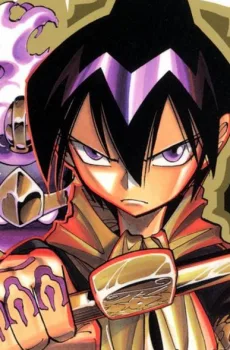
MAINRen Tao
Shaman KingLen is a Shaman from China, one of the few remaining members of the Tao Family, who after their years of serving as the guardians of the Forbidden City, became outcasts and condemn
 MAIN
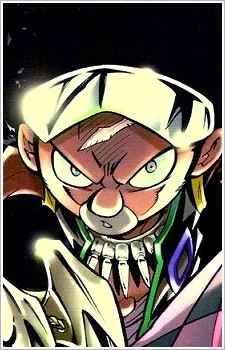
MAINChocolove McDonell
Shaman KingJoco met his mentor, Orona, on a snowy night when he was young. Orona was among the crowd of people who circled around a victim who was being robbed. The police had the robber surr
 MAIN
MAINYoh Asakura
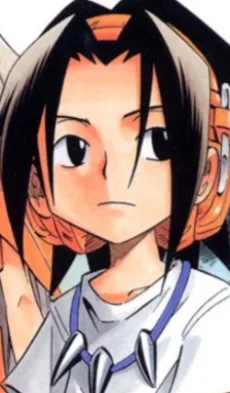
Shaman KingYoh was born into the famous Shaman family, Asakura. He has a twin brother named Hao who is a powerful reincarnation of the original HAO who keeps getting reborn. For this reason,
 SUPPORTING
Kororo
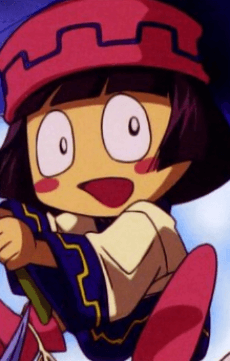
Shaman KingKororo (Corey in the english anime) is the spirit ally of Usui Horokeu, nicknamed Horohoro. Kororo is a Koropokkoru (which means "little people under butterbur leaves" in Ainu, and
 MAIN
MAINRyuunosuke Umemiya
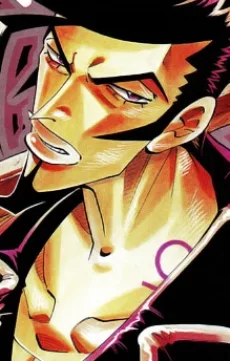
Shaman KingRyunosuke Umemiya, usually called "Wooden Sword" Ryu, is a character in the anime and manga Shaman King. In the English anime, his name is Rio. A direct translation of his nickname
 MAIN
MAINLyserg Diethel
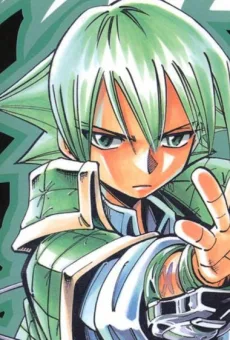
Shaman KingA British Shaman and a traditional "dowser", whose parents were killed by Hao. Lyserg has dramatic interactions with all of the main characters at some point, and though he travels
 SUPPORTING
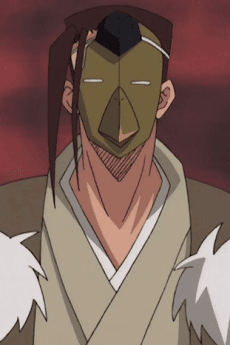
Mikihisa Asakura
Shaman KingMikihisa Asakura is the father of protagonist Yoh Asakura in the manga and anime series, Shaman King. In the manga, he belonged to Team Kabbalahers together with Redseb and Seyram.
 SUPPORTING
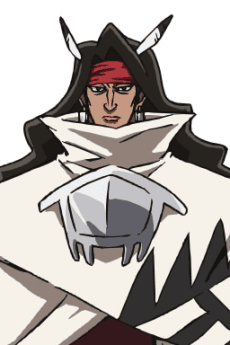
Kalim
Shaman KingOne of Silva's friends and organizers of the Shaman Fight, Kalim tested and deemed Horohoro to be qualified to take part in the Shaman Fight. His spirit partner is a bull named Bla