Appears In
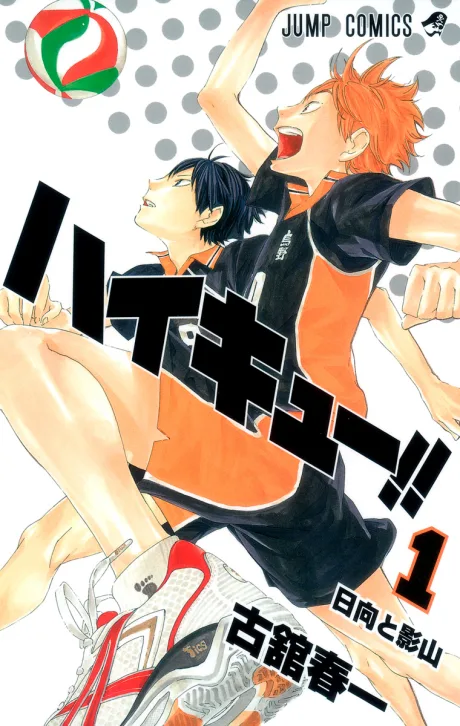
Quick Facts
| Gender | Male |
| Age | 15- |
| Role | MAIN |
| Series | Haikyu!! |
| Height | 180.6 cm |
| Age | 15 |
| Birthday | December 22 |
| Gender | Male |
| Weight | 66.3 kg |
| Eye Color | Dark blue |
| Hair Color | Black |
| Zodiac | Capricorn |
| Voice Actor (JP) | Kaito Ishikawa |
| Voice Actor (EN) | Scott Gibbs |
| Favorite Food | Pork curry with a soft-boiled egg |
| Likes | Volleyball |
| Affiliation | Karasuno High School Volleyball Club |
| Aliases | King of the Court |
| Debut | Chapter 1 |
| Grandfather | |
| Sister |
Contents
Background
Background
Kageyama grows up in Miyagi Prefecture in a family where volleyball becomes part of his life at an early age. His grandfather, Kazuyo Kageyama, plays a particularly important role in introducing him to the sport and encouraging his interest in the setter position. Kageyama's older sister Miwa also plays volleyball when she is younger, giving him another immediate connection to the game.
His attachment to volleyball develops rapidly. Kageyama is fascinated not simply by winning but by the mechanics of setting: controlling the ball, matching its trajectory to a hitter and creating an attack from the second contact. He spends enormous amounts of time practicing and develops unusually precise hands while still young.
At Kitagawa Daiichi Junior High, that technical ability makes him one of the most promising setters in the prefecture. His accuracy, athleticism and intense desire to win give him the ability to run fast offenses, but his social skills fail to develop at the same pace.
Kageyama expects hitters to keep up with sets he considers ideal and becomes increasingly frustrated when they cannot. Rather than adjusting his approach, he demands faster movement and greater effort from the players around him.
His teammates eventually respond by refusing to hit one of his sets during an official match. The moment crystallizes the nickname King of the Court, which does not initially praise Kageyama's ability. It describes a setter who behaves like a dictator and treats hitters as pieces that must obey him.
The rejection deeply affects him. Although Kageyama remains abrasive afterward, he enters high school afraid of repeating the same mistake and of being abandoned by his hitters again.
Before that transition, he encounters Hinata during a middle-school tournament. Kitagawa Daiichi easily defeats Yukigaoka, but Hinata's jumping ability, speed and refusal to give up attract Kageyama's attention.
Hinata promises to defeat him someday. The two unexpectedly reunite at Karasuno High, turning what both assumed would be a rivalry between opposing schools into a partnership inside the same starting lineup.
Their first attempts to cooperate are disastrous. Kageyama sees Hinata as technically incompetent, while Hinata resents Kageyama's arrogance and the humiliating memory of their middle-school match.
Under pressure to prove they can function as teammates, however, Kageyama discovers that Hinata possesses something his former hitters lacked: extraordinary speed combined with complete willingness to jump before knowing exactly where the ball will go.
That discovery produces the original freak quick and changes both players' trajectories.
Personality
Personality
Kageyama is serious, competitive and intensely focused on volleyball. He has comparatively little patience for activities he considers irrelevant and can spend extraordinary amounts of mental energy analyzing a match, a set or a hitter's approach.
He is not naturally sociable. Kageyama often struggles to phrase criticism tactfully and tends to communicate through blunt commands, short observations or irritated expressions.
His middle-school reputation amplifies that problem. After being rejected by his teammates, he becomes acutely sensitive to the possibility that hitters dislike his sets or feel forced into playing according to his preferences.
As a result, early high-school Kageyama sometimes overcorrects. He tries so hard not to become the King of the Court again that he suppresses useful demands he could legitimately make of his teammates.
His competitive drive is enormous. Kageyama dislikes losing, reacts strongly when another setter outperforms him and constantly searches for technical improvements after encountering players who can do something he cannot.
He is particularly sensitive to comparisons with Toru Oikawa. Oikawa is a more experienced setter who understands how to adapt to different hitters, and Kageyama spends much of his early development trying to understand the abilities that make Oikawa dangerous beyond simple setting accuracy.
Kageyama has difficulty understanding ordinary social cues but is highly perceptive about volleyball. He can notice minute changes in a hitter's approach, hand position, preferred contact point or emotional state on court.
His confidence is therefore uneven. He may appear completely assured while choosing a set in a high-pressure rally yet become confused by casual conversation immediately afterward.
Kageyama is also more considerate than his reputation initially suggests. Once he learns that a setter must adjust to the person attacking rather than merely demand perfection, he becomes increasingly attentive to each teammate's preferred rhythm.
His rivalry with Hinata brings out both his harshest and most productive traits. Kageyama constantly criticizes Hinata's fundamentals, but he also takes Hinata's ambition seriously enough to provide increasingly difficult sets rather than treating him as a limited player.
He values improvement almost instinctively. When a teammate demonstrates a new ability, Kageyama's first reaction is frequently to determine how it can be incorporated into the offense.
Appearance
Appearance
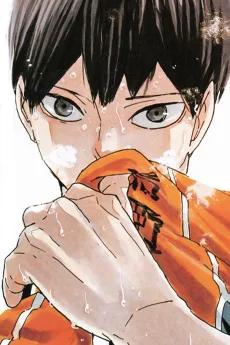
Kageyama is tall for a Japanese first-year high-school student, standing 180.6 cm when he enters Karasuno. His height later increases slightly during his first year.
He has short black hair, usually swept upward in uneven points, and dark blue eyes. His expression is often stern even when he is not consciously angry.
His build is lean and athletic. Unlike Hinata, whose physical identity is centered on explosive jumping from a smaller frame, Kageyama combines height with speed, coordination and strong overall conditioning.
He wears Karasuno's black uniform with orange and white detailing and jersey number 9. His position as setter places him near the center of nearly every offensive sequence.
Outside matches, Kageyama wears Karasuno's standard school uniform or the volleyball team's training clothes. He generally pays little attention to fashion compared with volleyball equipment and practice.
His hands receive particular visual emphasis because of his setting technique. Finger strength, touch and precise contact allow him to manipulate the ball with extraordinary consistency.
As an adult professional, Kageyama grows to approximately 188 cm. His physique becomes correspondingly more developed as he advances into elite-level volleyball.
Abilities & Powers
Abilities & Powers
Kageyama's defining ability is setting accuracy. He can deliver the ball to extremely precise points in space, allowing hitters to approach at high speed without making major last-second corrections.
That accuracy makes the original freak quick possible. Hinata can jump before seeing the ball because Kageyama can place the set directly into the path of his swing.
Kageyama is not limited to one type of set. He can produce high outside balls, rapid quick sets, back sets, jump sets and combinations involving multiple decoys.
His decision-making develops substantially during high school. Early Kageyama sometimes chooses the technically correct set without fully accounting for the hitter's condition or emotional state.
Karasuno gradually teaches him to treat setting as communication. Rather than simply delivering the fastest or most efficient ball, he learns to choose the set that allows a specific hitter to perform best in that moment.
His athleticism is excellent for a setter. Kageyama moves quickly under poor first passes, reaches balls that would force less mobile setters to surrender the second touch and maintains balance while setting from difficult positions.
He possesses strong jumping ability. Although not as spectacular as Hinata's relative to height, Kageyama's jump lets him contact the ball high and disguise whether he intends to set, dump or attack.
His setter dump becomes dangerous because opponents must account for his willingness to send the second ball directly over the net rather than always setting a hitter.
Kageyama is also a powerful server. His jump serve combines speed and control, allowing him to score aces or disrupt opposing formations before the rally develops.
His serving improves through observation of players such as Oikawa. Kageyama does not merely imitate technique; he studies placement, timing and how servers use pressure to narrow an opponent's offensive options.
He blocks effectively because of his height, timing and reading ability. As a setter positioned in the front row during certain rotations, he can contribute directly to Karasuno's net defense.
Kageyama is also capable of attacking. Setters rarely function as primary hitters, but his athletic ability and experience allow him to spike when a play breaks down or when Karasuno uses an unexpected combination.
His greatest technical gift may be adaptability under pressure. Kageyama can turn imperfect receives into hittable balls and frequently keeps Karasuno's offense functional even when the initial pass limits conventional options.
At the professional level, his serving, blocking, setting speed and tactical control develop further, allowing him to operate as one of the elite setters in Japanese volleyball.
Named Techniques
Named Techniques
Freak Quick Attack is Kageyama and Hinata's original signature combination. Hinata jumps without watching the set, and Kageyama fires the ball directly into the exact point where Hinata's hand will meet it.
Falling Toss is the evolved set developed for Hinata. Rather than sending the ball through the hitting point at maximum speed, Kageyama applies unusual control so that it appears to decelerate or "fall" near Hinata's reach, giving the hitter time to see the block and choose a target.
Jump Set allows Kageyama to contact the ball at a higher point, shortening the time between reception and attack while making his intentions harder for blockers to read.
Back Set sends the ball behind Kageyama's body to an attacker approaching from the opposite side of his visual field. His accuracy makes this option particularly difficult to read.
Setter Dump sends the second contact directly over the net. Kageyama uses it when defenders commit too strongly to his hitters.
Jump Serve is one of his principal offensive weapons from the service line. He combines high contact with substantial pace and increasingly accurate placement.
One-Handed Set is used when Kageyama cannot place both hands beneath the ball. His hand strength and control allow him to salvage difficult rallies while maintaining attackable height.
Emergency Set refers broadly to his ability to send hittable balls from poor positions, including passes drifting close to the net or away from the ideal setting zone.
Synchronized Attack Coordination uses Kageyama's court awareness to send multiple attackers into simultaneous approaches, forcing blockers to delay commitment until very late.
Quick Attack Distribution allows him to vary tempo between middles and wing spikers so that opponents cannot focus exclusively on Hinata.
Relationships
Relationships
Shouyou Hinata is Kageyama's closest rival and most distinctive attacking partner. Tobio Kageyama first encounters Shouyou Hinata during middle school, where Kitagawa Daiichi defeats Hinata's improvised Yukigaoka team.
Despite the one-sided score, Tobio Kageyama notices Shouyou Hinata's exceptional jump and determination. Their reunion at Karasuno turns Hinata's promise to defeat him into a rivalry that has to coexist with daily teamwork.
The original freak quick depends on an extreme imbalance. Tobio Kageyama makes almost every technical decision, while Shouyou Hinata closes his eyes and trusts the set.
That arrangement eventually becomes unacceptable to Hinata. Shouyou Hinata wants to see the block and choose his own attack, while Kageyama initially believes altering the quick will reduce its greatest advantage.
Their conflict forces Tobio Kageyama to invent the falling toss. The evolved attack allows both players to contribute independently, transforming the combination from Kageyama controlling Hinata into a genuine partnership.
Competition never disappears. Tobio Kageyama and Shouyou Hinata track wins, races and improvements obsessively, each using the other's progress as motivation.
Their rivalry continues beyond high school and eventually reaches professional volleyball, where they play on opposing club teams before also sharing the court at international level.
Toru Oikawa is Kageyama's senior from Kitagawa Daiichi and one of the setters who most strongly influences his development. Tobio Kageyama admires Toru Oikawa's skill even while desperately wanting to surpass him.
Oikawa initially resents Kageyama's natural talent and fears that the younger setter will eventually overtake him. That tension makes their relationship more complicated than simple mentorship.
Kageyama nevertheless studies Oikawa carefully. What impresses him most is not merely Oikawa's setting technique but his ability to understand every hitter and draw out that player's maximum performance.
This becomes one of Kageyama's central developmental goals. He gradually learns that being technically more precise than Oikawa would not automatically make him the better setter.
Hajime Iwaizumi is another older Kitagawa Daiichi figure whom Kageyama knows through Oikawa. Tobio Kageyama respects Hajime Iwaizumi's reliability and the trust between him and Oikawa.
Daichi Sawamura becomes Kageyama's captain at Karasuno. Tobio Kageyama quickly learns that Daichi Sawamura will not tolerate the destructive behavior that damaged his middle-school team.
Daichi's authority gives Kageyama a stable environment in which mistakes can be corrected without immediately becoming abandonment. His defensive consistency also gives Kageyama more reliable opportunities to run the offense.
Koshi Sugawara is Kageyama's senior and direct competition for the starting setter position. Tobio Kageyama initially possesses superior raw setting ability, but Koshi Sugawara understands the older Karasuno players far better.
Rather than treating Kageyama solely as a rival, Sugawara supports his development. This relationship gives Kageyama an example of competition that does not require hostility.
Kageyama also learns from Sugawara's communication with hitters. Koshi Sugawara's ability to encourage teammates demonstrates a dimension of setting that Kageyama's middle-school experience neglected.
Asahi Azumane is one of the primary hitters Kageyama must learn to serve. Tobio Kageyama gradually adjusts his setting choices to Asahi Azumane's power and rhythm rather than expecting him to attack like Hinata.
Ryunosuke Tanaka gives Kageyama another contrasting hitter. Tobio Kageyama trusts Ryunosuke Tanaka to keep demanding the ball even under pressure, allowing him to make aggressive choices late in rallies.
Kei Tsukishima has an abrasive relationship with Kageyama from the beginning. Tobio Kageyama dislikes Kei Tsukishima's sarcasm, while Tsukishima readily uses the "King of the Court" nickname to provoke him.
Their volleyball relationship nevertheless becomes increasingly effective. Kageyama learns to use Tsukishima's height and analytical blocking ability, while Tsukishima eventually accepts difficult offensive demands from him.
The conflict surrounding Kageyama's renewed "king" behavior is especially important. When teammates tell him that being demanding is not inherently wrong, Tsukishima becomes one of the players who demonstrates that Kageyama can make forceful requests without becoming the dictator he once was.
Tadashi Yamaguchi is another first-year teammate. Tobio Kageyama respects Tadashi Yamaguchi's improvement as a server and treats his specialized weapon as a legitimate part of Karasuno's tactical options.
Yu Nishinoya provides Kageyama with one of Karasuno's strongest defensive foundations. Tobio Kageyama can run a far more aggressive offense because Yu Nishinoya turns difficult attacks into usable first contacts.
Keishin Ukai becomes Kageyama's coach and helps channel his technical talent into Karasuno's broader offensive structure. Tobio Kageyama receives from Keishin Ukai both tactical freedom and correction when his decision-making becomes too narrow.
Ittetsu Takeda contributes indirectly to Kageyama's development by arranging practice matches and creating opportunities for Karasuno to encounter stronger teams. Tobio Kageyama benefits greatly from the external competition Ittetsu Takeda helps secure.
Kenma Kozume represents a very different kind of setter. Tobio Kageyama relies on exceptional precision and athleticism, while Kenma Kozume controls matches through observation and strategy.
Their encounters broaden Kageyama's understanding of how setters can influence the opponent rather than only their own attackers.
Atsumu Miya becomes one of Kageyama's most significant national-level setter rivals. Tobio Kageyama recognizes Atsumu Miya's technical ability almost immediately.
Atsumu's aggressive setting philosophy challenges Kageyama. He is willing to demand more from hitters and considers giving them a set they cannot use a failure of the setter.
This contributes to Kageyama reconsidering his fear of the King of the Court label. He begins understanding that demanding excellence is not identical to refusing to listen.
Wakatoshi Ushijima becomes one of the strongest hitters Kageyama faces in high school. Tobio Kageyama sees Wakatoshi Ushijima's power as a challenge to Karasuno's entire defensive and offensive system.
Kourai Hoshiumi later becomes another elite opponent. Tobio Kageyama immediately appreciates Kourai Hoshiumi's all-around quality and the tactical possibilities a hitter with that range provides.
Kazuyo Kageyama is Kageyama's grandfather and a central figure in his early relationship with volleyball. Tobio Kageyama learns much of his love for the sport through Kazuyo Kageyama's influence.
Kazuyo's death leaves Kageyama without the family member who most directly shared his volleyball obsession. The loss helps explain why the sport becomes such an overwhelming part of Kageyama's identity and why he struggles to connect with people outside it.
Miwa Kageyama is Kageyama's older sister. Tobio Kageyama shares early volleyball experiences with Miwa Kageyama, although her relationship with the sport develops differently from his own.
Story Role
Story Role
Kageyama first appears as the overwhelmingly superior opponent in Hinata's only official middle-school match. His setting, serving and control immediately establish the standard Hinata must reach.
The apparent antagonist becomes a co-protagonist when both enroll at Karasuno. Their inability to cooperate initially threatens their place in the club and forces them to confront the difference between competing against one another and competing beside one another.
The freak quick becomes Karasuno's first major weapon during its rebuilding. Kageyama's accuracy effectively turns Hinata's raw athleticism into a usable offensive system.
Practice matches against Nekoma demonstrate that speed alone cannot solve every problem. Kageyama begins learning to vary his distribution when disciplined defenses survive the initial attack.
Aoba Johsai gives his personal development greater urgency because Oikawa represents both his past and a version of the setter Kageyama has not yet become.
Oikawa repeatedly demonstrates that knowledge of hitters can outweigh superior raw precision. Karasuno's struggles against Seijoh therefore become as much a lesson in setting philosophy as a team rivalry.
After Karasuno's early defeat, Kageyama and Hinata begin redesigning their quick. Their disagreement is important because it forces Kageyama to relinquish some control over the attack.
The resulting falling toss becomes evidence of Kageyama's technical creativity. Instead of simply telling Hinata to accept the existing set, he invents a new one that gives the hitter agency.
The Spring High qualifiers allow Kageyama to use a wider range of Karasuno's attackers. His distribution becomes increasingly difficult to predict as teammates develop specialized weapons.
Against Shiratorizawa, he must manage an offense under pressure from a team accustomed to winning through overwhelming individual quality. Karasuno's ability to vary attacks becomes the counterpoint to Ushijima's dominance.
The national youth training camp exposes Kageyama to elite players outside Miyagi. In particular, Atsumu Miya's criticism of Kageyama's behavior toward hitters forces him to reconsider how far he has gone in avoiding his old "King" identity.
The result is not a return to middle-school dictatorship. Kageyama begins making stronger demands while listening when teammates reject or modify them.
At nationals, this more assertive version of Kageyama helps Karasuno maintain increasingly sophisticated offensive patterns against elite defenses.
After high school, Kageyama enters professional volleyball directly and develops into one of Japan's leading setters. His career advances through the V.League and international competition.
His later professional match against Hinata reverses the structure that defined their high-school years. Instead of creating attacks together, the two must solve one another from opposite sides of the net.
Kageyama eventually represents Japan internationally, fulfilling the elite potential visible from his first appearance while retaining the rivalry with Hinata that repeatedly pushed him forward.
Character Development
Character Development
Kageyama begins with a paradox: he understands the technical purpose of setting better than almost anyone his age, yet misunderstands the human relationship at the center of the position.
At Kitagawa Daiichi, he sees the ideal set as something hitters should rise to meet. If they cannot, his instinct is to demand more rather than adjust.
The teammates who refuse his set force him to confront the consequence of that approach. A setter with nobody willing to hit his ball has no offense to control.
At Karasuno, Kageyama initially responds by becoming overly cautious about repeating the mistake. The King of the Court nickname becomes something he fears rather than a label he dismisses.
Sugawara, Daichi and the other Karasuno players gradually give him a healthier environment. They criticize him without abandoning him and establish boundaries without treating his talent as a problem.
Hinata produces the most radical change. The first freak quick allows Kageyama to control virtually everything, recreating in a successful form the same relationship he once wanted with his middle-school hitters.
Hinata eventually refuses that arrangement.
This forces Kageyama to understand that trust does not mean obedience. A hitter can trust the setter completely while still demanding freedom to make decisions.
The falling toss becomes the technical expression of that realization. Kageyama uses his precision to expand Hinata's choices rather than eliminate them.
Oikawa adds another lesson. Natural talent does not replace understanding. Kageyama repeatedly sees Oikawa create effective attacks with hitters whose abilities differ dramatically.
Atsumu later challenges the opposite problem. By worrying so much about avoiding dictatorship, Kageyama sometimes becomes too accommodating.
He learns that a setter may legitimately demand more from a hitter if the request is rooted in what that hitter can actually achieve.
The distinction between king and tyrant becomes important. Kageyama can direct the offense aggressively without ignoring the people participating in it.
His teammates eventually accept this more demanding version because he also listens. If a hitter says a set is wrong, Kageyama asks why and adjusts instead of simply assuming the hitter failed.
His professional career shows the completed form of that growth. Kageyama remains intense and demanding, but those qualities function as assets because he has learned to connect technical perfection with the needs of individual attackers.
He does not become sociable in a conventional sense. His development preserves the awkward, volleyball-obsessed personality established at the beginning while teaching him how to communicate where it matters most: on court.
Etymology
Etymology
Tobio Kageyama is written 影山 飛雄. His surname Kageyama combines 影, meaning "shadow," and 山, meaning "mountain."
His given name Tobio contains 飛, meaning "to fly," and 雄, which can mean "male," "heroic" or "brave."
The imagery creates an appropriate contrast with Hinata. Hinata's name strongly evokes sunlight, while Kageyama's surname contains "shadow."
Their names are frequently noted for this sun-and-shadow opposition, fitting two players whose identities become closely connected despite radically different personalities.
The "flying" element in Tobio also suits volleyball imagery, particularly jumping and airborne play.
His nickname King of the Court carries two very different meanings during the series. At Kitagawa Daiichi it is an insult describing a selfish dictator.
Later, the idea is partially reclaimed. Kageyama learns that directing the court is not itself wrong; the problem was treating teammates as subjects rather than collaborators.
Trivia
Trivia
-
Kageyama begins high school at 180.6 cm and 66.3 kg.
-
His birthday is December 22, placing him under Capricorn.
-
His favorite food is pork curry with a soft-boiled egg.
-
He wears jersey number 9 for Karasuno.
-
Kageyama attends the prestigious All-Japan Youth Intensive Training Camp during his first year, marking him as one of the country's most promising players in his age group.
-
His Japanese voice actor is Kaito Ishikawa, while Scott Gibbs voices him in the principal English dub.
-
Kageyama originally receives the nickname King of the Court as criticism rather than praise.
-
His setting accuracy is exceptional enough to create the original freak quick with Hinata, an attack that depends on the ball reaching an extremely precise contact point.
In Other Media
In Other Media
Kageyama is one of the two central characters throughout the television adaptation of Haikyu!!, with Kaito Ishikawa providing his Japanese voice.
Scott Gibbs voices Kageyama in the principal English-language dub. His performance preserves the character's terse speech, competitive outbursts and gradual improvement in communication.
The first anime season covers his middle-school conflict, reunion with Hinata and development of the original freak quick at Karasuno.
Haikyu!! Second Season places particular emphasis on Kageyama and Hinata's disagreement over changing their signature attack. The development of the falling toss becomes one of the season's major technical storylines.
Haikyu!! Karasuno High School vs Shiratorizawa Academy shows Kageyama directing Karasuno's offense during a prolonged five-set match against the prefecture's strongest established team.
Haikyu!! To the Top adapts Kageyama's invitation to the All-Japan Youth Intensive Training Camp. His exposure to players such as Atsumu Miya becomes important to his evolving setter philosophy.
Haikyu!! The Dumpster Battle places Kageyama against Nekoma's defense during Karasuno's long-awaited official match with its traditional rival.
He appears in the franchise's video games, mobile titles and crossover projects, usually with setting mechanics and combination attacks involving Hinata.
Kageyama has also been portrayed in the Haikyu!! stage productions, where his rivalry with Hinata and central role in Karasuno's offense remain fundamental to the adaptations.
Reception
Reception
Kageyama has consistently ranked among the most prominent and popular characters in Haikyu!!, with his partnership with Hinata forming the franchise's central visual and narrative pairing.
His introduction gives the series a rival who immediately becomes a teammate, preventing the Hinata-Kageyama dynamic from functioning like a conventional sports rivalry between separate schools.
That structure allows nearly every practice to contain competition. Kageyama and Hinata do not have to wait for official matches to challenge one another because their rivalry continues inside ordinary team drills.
Kageyama's setting also provides one of the series' clearest demonstrations of how volleyball distributes responsibility. His talent is impressive precisely because it exists to create opportunities for someone else to finish.
The King of the Court storyline adds a social weakness to a character who begins with unusually advanced technical ability. Kageyama does not need to learn how badly he wants to win; he needs to learn how a setter enables five other players to participate in that goal.
His relationships with Oikawa, Sugawara and Atsumu each illuminate a different aspect of setting. Oikawa represents understanding hitters, Sugawara represents communication and Atsumu represents the value of demanding excellence.
Hinata combines all of those lessons into one continuously evolving partnership. Kageyama initially treats him as a weapon whose speed can be controlled through perfect sets, then gradually learns to give him more freedom as his ability develops.
His continued difficulty with ordinary social interaction keeps that growth specific rather than transforming him into a completely different personality. Kageyama becomes a better teammate without becoming naturally outgoing.
The professional-era material confirms that his early reputation for extraordinary talent was justified. He develops into an elite international setter rather than plateauing as a gifted high-school player.
More importantly, the adult Kageyama's success rests on a skill his younger self lacked: adapting his exceptional precision to the individual hitter in front of him. The player once abandoned for demanding obedience ultimately becomes a setter capable of using demanding standards to make his teammates better.
Related Characters
 MAIN
MAINShouyou Hinata
Haikyu!!Hinata has an unusually high ability to jump. Since he was young, Hinata trained his legs to compensate for his lack of height. He joins the Karusuno High School Volleyball team an
 SUPPORTING
Atsumu Miya
Haikyu!!Atsumu Miya is an second year highschool student who lives in Hyogo Prefecture, Japan. Outwardly, Atsumu appears to be a carefree, confident person who's usually seen with a lazy s
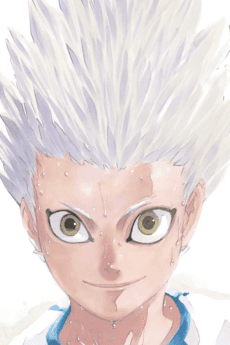 SUPPORTING
Kourai Hoshiumi
Haikyu!!Hoshiumi Originally planned on playing basketball, but he decided to join the volleyball team in second grade. His reason was listed as wanting to be free from his older brother, A