Appears In
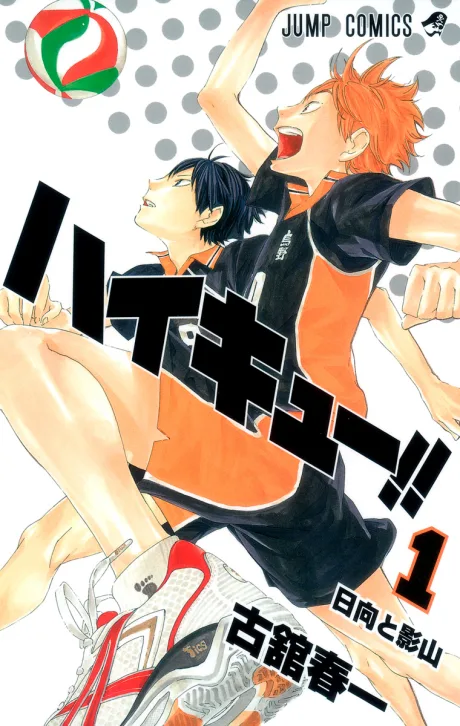
Quick Facts
| Gender | Male |
| Age | 15- |
| Role | MAIN |
| Series | Haikyu!! |
| Height | 162.8 cm |
| Age | 15 |
| Birthday | June 21 |
| Gender | Male |
| Weight | 51.9 kg |
| Eye Color | Brown |
| Hair Color | Orange |
| Zodiac | Gemini |
| Voice Actor (JP) | Ayumu Murase |
| Voice Actor (EN) | Bryson Baugus |
| Favorite Food | Tamago kake gohan |
| Likes | Volleyball |
| Affiliation | Karasuno High School Volleyball Club |
| Aliases | Chibi-chan, Strongest Decoy |
| Debut | Chapter 1 |
| Sister |
Contents
Background
Background
Hinata grows up in Miyagi Prefecture with his mother and younger sister Natsu. Volleyball enters his life after he happens to see a televised high-school match featuring Karasuno High. One of Karasuno's players, despite being unusually short for a front-row attacker, repeatedly scores against taller blockers and is introduced as the Little Giant. The image convinces Hinata that height does not have to prevent him from becoming a dominant volleyball player.
His enthusiasm develops before he has access to a proper team. At Yukigaoka Junior High, the boys' volleyball club effectively consists of Hinata alone for much of his time there. He practices whenever possible, recruits friends from other sports and trains largely without the structured coaching or regular match experience enjoyed by players from established schools.
Hinata finally assembles enough players to enter an official middle-school tournament during his final year. His team immediately encounters Kitagawa Daiichi, one of the strongest schools in the area, led on court by the highly skilled setter Tobio Kageyama. Yukigaoka is decisively defeated, but Hinata's speed and jumping ability catch Kageyama's attention despite his lack of technique.
The loss becomes a major motivation. Hinata declares that he will defeat Kageyama someday, only to enroll at Karasuno and discover that his intended rival has joined the same team.
Their incompatibility initially prevents them from functioning as teammates. Hinata dislikes Kageyama's controlling attitude, while Kageyama is frustrated by Hinata's weak fundamentals and reliance on pure athleticism.
The conflict leads to one of the most important discoveries in Karasuno's rebuilding. Kageyama realizes that Hinata's speed and trust allow him to attack a set without even watching the ball, while Hinata realizes that Kageyama's accuracy can place the ball directly into the path of his swing.
This creates the original version of their freak quick, a near-instantaneous attack in which Hinata closes his eyes and jumps while Kageyama handles almost all of the ball placement. The combination turns two individually incomplete first-years into one of Karasuno's most dangerous offensive weapons.
Personality
Personality
Hinata is energetic, expressive and intensely competitive. He approaches volleyball with an enthusiasm that is immediately visible in his movements and conversation, and he becomes excited by strong opponents rather than discouraged by them.
He is sensitive about his height, particularly when taller players dismiss him before seeing him jump. That insecurity becomes less pronounced as he gains experience and begins treating his size as a tactical characteristic rather than simply a disadvantage.
Hinata possesses remarkable resilience after failure. Defeats frustrate him deeply, but he rarely remains discouraged for long. Instead, he tends to identify something another player can do that he cannot and begins searching for a way to learn it.
His early volleyball thinking is extremely attack-focused. Spiking represents volleyball to him, and he initially views receiving, blocking and positioning largely as things that happen before he gets another opportunity to jump.
That narrow perspective gradually changes. Hinata becomes fascinated by the small actions that allow a rally to continue and begins understanding that scoring is only one way to influence the court.
He is highly observant when given a reason to concentrate. Although he initially lacks technical vocabulary, he notices movement patterns, timing and the behavior of opponents with surprising speed.
Hinata is also socially adaptable. He can be intimidated by imposing players, but he frequently forms friendships with rivals because his enthusiasm for volleyball overrides school allegiances.
His competitive relationship with Kageyama is unusually productive. Hinata genuinely wants to defeat him, but that desire does not prevent him from learning from Kageyama or celebrating improvements that make their combined attack stronger.
He dislikes being treated as someone who merely follows the setter. As his confidence grows, Hinata increasingly demands agency within the quick attack and develops techniques that allow him to choose where and how to hit.
Appearance
Appearance

Hinata is notably short for a high-school middle blocker. He measures 162.8 cm and weighs 51.9 kg when first joining Karasuno, making him one of the smallest regular front-row players shown in major competition.
He has bright orange, naturally unruly hair and brown eyes. His facial expressions are highly animated, shifting rapidly between excitement, frustration, fear and competitive intensity.
Hinata's build is lean rather than bulky. His greatest physical advantages come from lower-body explosiveness, coordination and speed instead of sheer mass.
He wears Karasuno's black volleyball uniform with orange and white detailing and jersey number 10. The number previously belonged to the player who inspired him, Karasuno's Little Giant.
Outside matches, he normally wears Karasuno's black school uniform or the team's athletic clothing.
His physical development is visible over the course of high school. He becomes somewhat taller and more conditioned as his training expands beyond repeated jumping and attacking.
As an adult, Hinata grows to approximately 172 cm. His build becomes substantially more developed through years of conditioning, beach volleyball and professional training, though he remains short by elite men's volleyball standards.
Abilities & Powers
Abilities & Powers
Hinata's defining physical ability is his vertical jump. Despite his short stature, he can reach a striking point comparable with much taller attackers, allowing him to function effectively as a middle blocker.
His approach jump combines rapid acceleration with strong leg power. Hinata does not simply leap high from a stationary position; he uses speed through his approach to generate explosive elevation.
His speed creates a second major advantage. Hinata can transition between positions unusually quickly and appears from behind teammates or across the width of the net before blockers have completely adjusted.
This mobility becomes the foundation of his role as Karasuno's greatest decoy. Opposing blockers know that Hinata can score from quick sets, forcing them to track him even when Karasuno intends to attack elsewhere.
The threat he creates therefore benefits hitters such as Asahi Azumane, Ryunosuke Tanaka and others without requiring Hinata to touch the ball.
Hinata's initial weaknesses are substantial. His serving is inconsistent, his receiving fundamentals are poor, his blocking relies too heavily on instinct, and he has limited control over attacking angles.
He gradually improves each area through practice and observation. His growth in receiving is particularly important because it changes him from a specialist who needs teammates to create opportunities into a player capable of participating in the entire rally.
Hinata develops a strong understanding of tempo. By adjusting the speed and timing of his approach, he becomes less predictable and better able to exploit openings in a block.
He also learns to fight in the air rather than merely jumping and swinging. Instead of treating every attack as a race to maximum height, he begins delaying contact, looking at the opposing court and choosing between available targets.
His stamina is excellent, but his intensity can also become a weakness. Hinata's desire to remain involved in every play sometimes causes him to expend energy inefficiently or ignore his physical condition.
His later training substantially broadens his skill set. Beach volleyball forces him to receive, set, serve, attack and defend without relying on specialized teammates, turning weaknesses that were once hidden by Karasuno's system into areas of deliberate study.
By the professional stage of the story, Hinata becomes an all-around player with high-level receiving, setting, serving, blocking awareness and attacking technique. His value no longer depends primarily on Kageyama creating a perfect quick for him.
Named Techniques
Named Techniques
Freak Quick Attack is the original signature combination between Hinata and Kageyama. Hinata jumps at full speed without watching the set, while Kageyama sends the ball directly into his hitting point. Its extraordinary tempo gives blockers almost no conventional reaction time.
Falling Toss Quick is the evolved version of the freak quick. Kageyama produces a set that appears to stop near Hinata's hitting point rather than shooting directly through it, giving Hinata time in the air to observe the block and choose his attack.
First Tempo Attack uses an approach in which the hitter begins moving before the setter makes contact with the ball. Hinata's speed makes his first-tempo attacks particularly difficult to follow.
Broad Attack sends Hinata laterally across the net before he attacks, stretching opposing middle blockers and creating additional space for Karasuno's offense.
Back Attack allows Hinata to attack from behind the three-meter line, expanding his threat beyond the front row and forcing defenders to account for him from deeper positions.
Delayed Attack uses Hinata's improved aerial awareness to alter his timing after jumping, disrupting blockers who expect him to hit immediately.
Block-Out deliberately targets the hands of opposing blockers so that the ball deflects outside the court, turning the block itself into a scoring tool.
Tip and Feint replace a full-power swing with controlled contact into undefended space. These attacks become more effective as Hinata learns to look at the opposing court before making contact.
Receive becomes one of the clearest symbols of Hinata's broader development. His improved platform, positioning and reading eventually allow him to keep difficult attacks in play rather than waiting for teammates to defend for him.
Beach Volleyball All-Around Play is not a single named technique but represents Hinata's later transformation. Playing two-person volleyball forces him to become responsible for every phase of a rally, greatly improving his ball control and court awareness.
Relationships
Relationships
Tobio Kageyama is Hinata's primary rival, setter and most important volleyball partner. Shouyou Hinata first meets Tobio Kageyama as an opponent at middle school and promises to defeat him after Yukigaoka loses decisively to Kitagawa Daiichi.
Their reunion at Karasuno initially frustrates both players. Shouyou Hinata wants to surpass Tobio Kageyama, while Kageyama regards Hinata as physically gifted but technically inexperienced.
Their freak quick gives both something unavailable individually. Tobio Kageyama's extraordinary setting precision turns Shouyou Hinata's speed into a practical weapon, while Hinata gives Kageyama a hitter capable of reaching and trusting sets that other players could not attack.
The partnership gradually becomes more equal. Hinata eventually refuses to remain an attacker who closes his eyes and leaves every decision to Kageyama, forcing both players to redesign the quick so that Hinata can participate in choosing the shot.
Their rivalry continues even while playing on the same side. Almost every improvement by one gives the other a new target, creating a cycle in which cooperation and competition continually reinforce each other.
Daichi Sawamura is Hinata's captain during his first year. Shouyou Hinata respects Daichi Sawamura's authority and learns from his emphasis on stability, defense and responsibility.
Daichi is also one of the players who gives Hinata a practical understanding of receiving. His consistency shows that a spectacular point means little if the team cannot first control the opponent's attack.
Koshi Sugawara provides Hinata with a different experience of playing with a setter. Shouyou Hinata appreciates Koshi Sugawara's supportive personality and learns that an effective setter can influence hitters through communication as much as technical precision.
Asahi Azumane is Karasuno's ace and initially represents the role Hinata dreams of holding. Shouyou Hinata gradually understands that Asahi Azumane's ability to defeat a formed block differs fundamentally from Hinata's role of drawing that block away.
That realization helps Hinata accept being called the greatest decoy. The title initially sounds secondary to becoming an ace, but he learns that manipulating blockers can control an entire opposing defense.
Yu Nishinoya becomes one of Hinata's models for defensive enthusiasm. Shouyou Hinata admires Yu Nishinoya's ability to make spectacular saves and begins seeing receiving as an active skill rather than simply the part of volleyball that prevents him from attacking.
Ryunosuke Tanaka treats Hinata as a younger teammate and shares his openly competitive temperament. Shouyou Hinata responds strongly to Ryunosuke Tanaka's refusal to be intimidated by stronger opponents.
Kei Tsukishima provides a sharp contrast to Hinata. Shouyou Hinata approaches volleyball with near-constant enthusiasm, while Kei Tsukishima initially maintains emotional distance and treats the sport as merely a club activity.
Hinata finds Tsukishima's attitude difficult to understand, while Tsukishima frequently criticizes Hinata's recklessness. Their differences eventually become productive because Hinata's instinctive movement and Tsukishima's analytical blocking provide contrasting approaches to the same sport.
Tadashi Yamaguchi is another first-year teammate. Shouyou Hinata respects Tadashi Yamaguchi's development as a pinch server, particularly because Yamaguchi improves through deliberate specialized practice rather than extraordinary natural athleticism.
Ittetsu Takeda helps create the environment in which Hinata can develop by organizing practice matches and bringing the team into contact with strong opponents. Shouyou Hinata gradually understands the significance of Ittetsu Takeda's efforts even though Takeda lacks extensive playing experience.
Keishin Ukai becomes Karasuno's coach and teaches Hinata how his unusual abilities fit into a broader offensive system. Shouyou Hinata receives from Keishin Ukai the tactical structure that his improvised middle-school training lacked.
Ikkei Ukai also influences Hinata indirectly through Karasuno's traditions and later through training. Shouyou Hinata benefits from Ikkei Ukai's experience with fast offensive volleyball and his uncompromising approach to fundamentals.
Kenma Kozume becomes one of Hinata's closest rivals outside Karasuno. Shouyou Hinata first meets Kenma Kozume without immediately knowing that he is Nekoma's setter.
Hinata is fascinated by Kenma because the two approach volleyball from opposite directions. Hinata is physically expressive and driven by instinct, while Kenma treats the court as a strategic puzzle.
Kenma Kozume initially lacks Hinata's emotional attachment to competition, and Hinata becomes determined to make him say that a match was genuinely fun. Their connection gives the long-standing Karasuno-Nekoma rivalry a personal center.
Tetsurou Kuroo becomes another significant Nekoma connection. Shouyou Hinata learns from Tetsurou Kuroo's blocking knowledge and sees through Nekoma how disciplined floor defense can neutralize explosive offense.
Toru Oikawa becomes one of Hinata's most important opposing setters. Shouyou Hinata first experiences Toru Oikawa as the player capable of maximizing Aoba Johsai's entire offense rather than relying on one extraordinary partner.
Oikawa's intelligence and ability to draw out the strengths of different hitters broaden Hinata's understanding of what setters do. He also represents an opponent whom both Hinata and Kageyama are strongly motivated to overcome.
Hajime Iwaizumi is one of the powerful opposing aces Hinata encounters through Aoba Johsai. Shouyou Hinata sees in Hajime Iwaizumi another example of an attacker whose strength comes from reliability rather than novelty.
Wakatoshi Ushijima represents one of the clearest measures of the gap between Hinata's ambition and established elite volleyball. Shouyou Hinata responds strongly when Wakatoshi Ushijima dismisses Karasuno and becomes determined to demonstrate that a team does not need a nationally celebrated ace to challenge Shiratorizawa.
The match against Ushijima reinforces Hinata's decoy role. His value comes not from matching Ushijima's raw scoring output individually but from creating enough uncertainty for Karasuno's entire offense to function.
Satori Tendou challenges Hinata's quick attacks through instinctive guess blocking. Shouyou Hinata must confront a blocker whose reactions can disrupt plays before conventional timing should allow it.
Kourai Hoshiumi becomes especially important because he demonstrates a more complete version of what a short elite player can become. Shouyou Hinata immediately recognizes Kourai Hoshiumi as someone whose height has not prevented him from becoming an exceptional all-around player.
Rather than functioning only as a fast decoy, Hoshiumi can receive, serve, block and attack at a very high level. His example challenges Hinata to stop defining his potential only through jumping.
Atsumu Miya is another elite setter who takes particular interest in Hinata. Shouyou Hinata's speed and attacking instincts impress Atsumu Miya, whose technical ability allows him to recognize possibilities beyond Karasuno's existing quick.
[Atsumu Miya eventually tells Hinata that he intends to set for him someday, a statement that becomes significant much later in Hinata's career.](#spoiler)
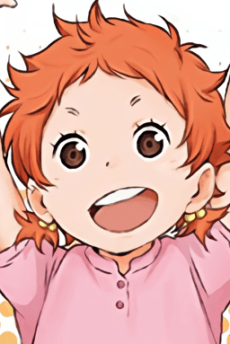
Natsu Hinata is Hinata's younger sister. Shouyou Hinata's volleyball obsession becomes a familiar part of Natsu Hinata's childhood, and she supports him despite not sharing his early competitive path.
[Later material shows that Natsu Hinata also becomes involved in volleyball, reflecting the sport's influence within the family beyond her older brother.](#spoiler)
Story Role
Story Role
Hinata begins the story as an athlete whose ambition exceeds his available experience. The opening middle-school match establishes both his greatest strength and his central limitation: he can reach extraordinary heights but does not yet know enough volleyball to use that ability consistently.
Karasuno gives him the structure he lacked. Joining the school places him within a team whose history already includes the Little Giant who inspired him, but the current program is rebuilding rather than dominating nationally.
His partnership with Kageyama immediately changes Karasuno's offense. The freak quick provides a weapon capable of bypassing conventional blocks and also gives the team's established hitters more opportunities through Hinata's decoy movement.
The early practice matches against Nekoma expose the limits of simply attacking faster. Nekoma's disciplined defense teaches Hinata that an opponent does not need to stop his spike at the net if it can repeatedly receive the ball afterward.
The Interhigh qualifiers confront Karasuno with stronger regional teams and eventually Aoba Johsai. Hinata experiences the difference between having a surprising weapon and being capable of winning a complete match against an organized opponent.
Defeat becomes productive. Rather than simply repeating the original freak quick, Hinata insists on learning to control his own attacks, creating tension with Kageyama over how much responsibility each should have.
Their revised quick becomes central during the Spring High qualifiers. Hinata can now open his eyes, observe the block and choose his target while remaining within the extraordinary tempo that made the original combination effective.
The Shiratorizawa match tests whether Karasuno's varied offense can overcome a team centered around one of the country's most powerful aces. Hinata's decoy work is essential because forcing blockers to follow him creates opportunities that raw power alone cannot produce.
National competition exposes him to a wider range of elite players. Hoshiumi is particularly important because he demonstrates that short stature does not require specialization into a single gimmick.
The training period preceding nationals also changes Hinata's approach dramatically. Unable to participate normally in a prefectural first-year training camp, he takes the opportunity to observe rather than attack.
He begins watching footwork, posture, positioning and the preparation that occurs before a player touches the ball. The experience contributes directly to his rapid improvement as a receiver.
After high school, Hinata recognizes that remaining dependent on exceptional setters and specialized team structures would limit his development. He travels to Brazil and trains in beach volleyball, where two-person competition forces him to become responsible for serving, receiving, setting, attacking and defense.
He later returns to Japan as a professional and joins the MSBY Black Jackals, playing alongside Atsumu Miya, Koutarou Bokuto and Kiyoomi Sakusa. His match against Kageyama's Schweiden Adlers demonstrates that the former specialist decoy has become a complete professional player.
Hinata eventually competes internationally for Japan, while Kageyama also represents the national team. Their rivalry therefore continues beyond Karasuno rather than ending with high school.
Character Development
Character Development
Hinata's earliest goal is essentially visual: he wants to jump high and become the next Little Giant. He associates the player he saw on television with proof that a short athlete can still dominate at the net.
Karasuno immediately complicates that dream. Hinata receives the Little Giant's number 10 but does not inherit his role as ace. Instead, his greatest early value comes from functioning as a decoy for other hitters.
He initially dislikes the implication that he exists primarily to help someone else score. Gradually, he recognizes that controlling the opposing blockers can influence more points than simply demanding every set.
His relationship with Kageyama creates a parallel problem. The freak quick makes Hinata dangerous before his individual skill level deserves to be, because Kageyama handles virtually every technical decision.
Hinata eventually rejects that dependency. Wanting to see the block while attacking is a demand for personal responsibility, not simply a request for a better set.
The resulting improvement changes his identity as a hitter. He becomes capable of aiming around blocks, using tips and adjusting his timing rather than relying exclusively on speed.
Receiving produces an even larger conceptual shift. Hinata originally treats defense as something performed by players like Nishinoya while he prepares for the next attack.
Observing the youth training camp teaches him that a successful receive can create the same sense of control he once associated exclusively with a spike. Keeping the ball alive allows the next attack to exist.
His rivalry with Hoshiumi further dismantles the limitations Hinata has placed on himself. Hoshiumi does not accept the premise that being short means becoming only a specialized quick attacker.
The Brazil period completes that transition. Hinata deliberately places himself in a version of volleyball where he cannot hide behind specialists, forcing every weakness into the open until he can contribute in all phases of play.
When he returns to indoor volleyball, his greatest change is not simply greater jumping power. He can receive difficult serves, set accurately when necessary, choose intelligent attacks and remain composed through long rallies.
His original dream also changes meaning. Hinata eventually stops needing to become a replacement for Karasuno's former Little Giant and establishes an identity built around his own style of volleyball.
Etymology
Etymology
Shouyou Hinata is written 日向 翔陽. His surname Hinata contains 日, meaning "sun" or "day," and 向, meaning "facing" or "toward." The word hinata can also refer to a sunny place or a place exposed to sunlight.
His given name Shouyou contains 翔, associated with flying or soaring, and 陽, meaning sunlight or the positive/yang principle. The combination strongly reflects the character's imagery of jumping, height and brightness.
The sun imagery also contrasts with several rival or partner names within the series. Hinata's repeated association with flight, birds and upward movement reinforces the meaning without requiring an explicit supernatural interpretation.
Karasuno's name means "crow field", and Hinata's development is frequently represented through crow imagery. The metaphor connects his desire to fly despite apparent physical limitations with the school's attempt to return to national prominence.
His first name is often romanized Shoyo Hinata in official English-language material, while Shouyou Hinata more closely represents the long vowels in the Japanese pronunciation.
Trivia
Trivia
-
Hinata begins high school at 162.8 cm and 51.9 kg, unusually small for a middle blocker.
-
His birthday is June 21, corresponding closely with the summer solstice and reinforcing the sun imagery associated with his name.
-
His favorite food is tamago kake gohan, rice topped with raw egg.
-
Hinata wears number 10 for Karasuno, the same jersey number associated with the Little Giant who originally inspired him.
-
He travels to school by bicycle and possesses unusually strong legs partly because of the distances he regularly rides.
-
His Japanese voice actor is Ayumu Murase, while Bryson Baugus voices him in the principal English dub.
-
Hinata begins volleyball with remarkably little formal experience compared with most of his major rivals, having played only one official middle-school match before entering Karasuno.
-
His position as a middle blocker is unusual for his height; Karasuno uses his speed and jumping ability to turn the apparent disadvantage into a tactical problem for opposing blockers.
In Other Media
In Other Media
Hinata is the principal protagonist of the television anime adaptation of Haikyu!!, beginning with his middle-school loss to Kageyama and following his first year at Karasuno. Ayumu Murase voices him in Japanese throughout the principal animated productions.
Bryson Baugus performs Hinata in the English-language dub. His performance preserves the character's rapid shifts between nervousness, competitive shouting and intense excitement during matches.
The first anime season covers Hinata's entry into Karasuno, formation of the freak quick and the team's early official competition. Subsequent seasons follow the development of the improved quick and Karasuno's attempts to qualify for the Spring High national tournament.
Haikyu!! Second Season gives substantial attention to Hinata and Kageyama's disagreement over changing the freak quick, one of the earliest points at which Hinata demands greater individual control over his own offense.
Haikyu!! Karasuno High School vs Shiratorizawa Academy centers on the decisive prefectural final and places Hinata opposite players such as Ushijima and Tendou.
Haikyu!! To the Top adapts Hinata's training-camp observation period and the beginning of the national tournament. His improving receive and court awareness receive particular emphasis.
The theatrical film Haikyu!! The Dumpster Battle adapts Karasuno's long-awaited official national match against Nekoma, placing Hinata's relationship with Kenma at the center of one of the series' most important rivalries.
Hinata appears in numerous Haikyu!! video games, mobile titles and crossover projects. His gameplay representations generally emphasize speed, jumping ability and the quick combination with Kageyama.
He also appears extensively in stage adaptations, merchandise, promotional collaborations and franchise events, usually alongside Kageyama as the most recognizable pairing associated with the series.
Reception
Reception
Hinata has consistently ranked among the most recognizable and popular characters in Haikyu!!, with his rivalry and partnership with Kageyama forming the central relationship used in much of the franchise's promotional material.
His design makes the premise immediately legible. A short middle blocker with bright orange hair standing among much taller volleyball players visually communicates the physical disadvantage he is trying to overcome before a match begins.
The series avoids resolving that disadvantage by simply treating height as irrelevant. Hinata repeatedly struggles against taller blocks, longer reaches and stronger attacking points, and his development depends on finding skills that compensate for rather than erase those realities.
His relationship with Kageyama is particularly central to his popularity because neither character fits neatly into a mentor or rival role. They cooperate constantly while continuing to measure themselves against one another.
The freak quick provides the most recognizable visual expression of that relationship. Hinata contributes the speed and jumping ability, while Kageyama supplies the technical accuracy necessary to make those traits immediately dangerous.
Hinata's later interest in receiving broadens the character beyond the original underdog premise. Rather than solving every problem by jumping higher, he learns to value the less visible parts of volleyball that allow an offense to function.
His interactions with Kenma, Hoshiumi, Oikawa, Ushijima and other rivals further expand that education. Each represents a different approach to volleyball rather than simply another opponent for Hinata to defeat.
The professional-era material completes his long-term progression by transforming him from one of Karasuno's most specialized players into an all-around athlete capable of functioning at elite level without depending on Kageyama's setting.
His eventual career therefore fulfills the ambition behind his childhood admiration for the Little Giant without requiring him to become that player's duplicate. Hinata remains short by professional standards, but his final strength comes from eliminating the weaknesses that once made his height seem like the only important fact about him.
Related Characters
 MAIN
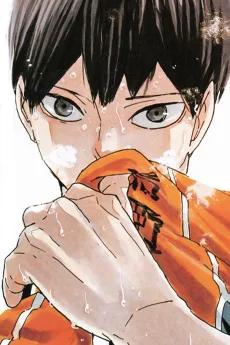
MAINTobio Kageyama
Haikyu!!A famous setter in his middle school who joins the Karusuno High Volleyball team. He was known as the "King of the Court" in his middle school because of his arrogant demeanor and
 SUPPORTING
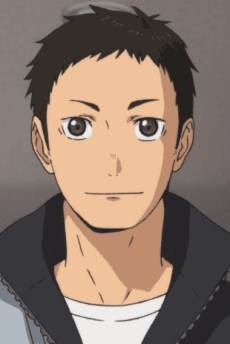
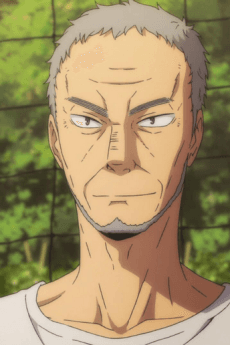
Ikkei Ukai
Haikyu!!Ikkei is the former coach of Karasuno High's Boys' Volleyball Club. He once led the team to nationals and was well-known. After being hospitalized, he resigned from coaching the te
 SUPPORTING
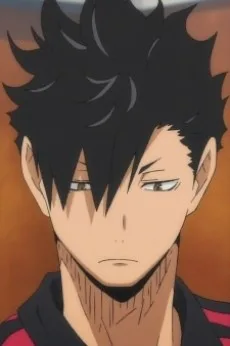
Tetsurou Kuroo
Haikyu!!The captain of the Nekoma High School volleyball club. Kuroo has a somehow manipulative and cunning personality, but cares about his friends and teammates very deeply. As Nekoma's
 SUPPORTING
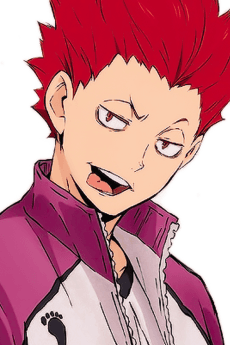
Satori Tendou
Haikyu!!Satori Tendō is a third year middle blocker in Shiratorizawa Academy. He is often referred to as Guess Monster by other teams. He is cheerful and loud, though a bit sardonic. Tendō
 SUPPORTING
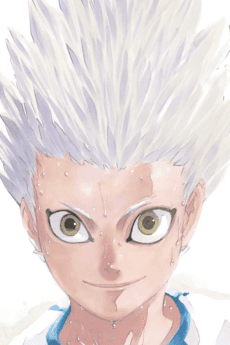
Kourai Hoshiumi
Haikyu!!Hoshiumi Originally planned on playing basketball, but he decided to join the volleyball team in second grade. His reason was listed as wanting to be free from his older brother, A
 SUPPORTING
Atsumu Miya
Haikyu!!Atsumu Miya is an second year highschool student who lives in Hyogo Prefecture, Japan. Outwardly, Atsumu appears to be a carefree, confident person who's usually seen with a lazy s