Appears In
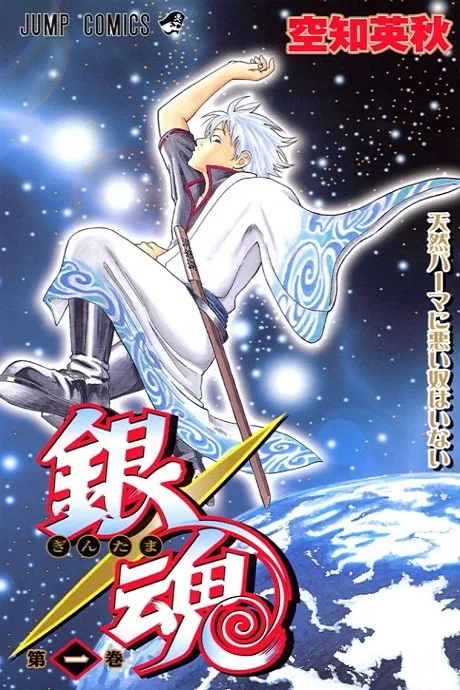
Quick Facts
| Gender | Male |
| Age | 27 |
| Role | MAIN |
| Series | Gin Tama |
| Height | 177 cm |
| Age | 27 |
| Birthday | October 10 |
| Blood Type | B |
| Gender | Male |
| Weight | 65 kg |
| Eye Color | Gray-green in the manga; reddish-brown in the anime |
| Hair Color | Silver |
| Zodiac | Libra |
| Voice Actor (JP) | Tomokazu Sugita |
| Voice Actor (EN) | Michael Daingerfield |
| Likes | Sweets, Weekly Shōnen Jump, drinking, pachinko |
| Dislikes | Paying rent, unnecessary responsibility |
| Affiliation | Yorozuya Gin-chan |
| Aliases | White Yaksha, Gin-san |
| Debut | Lesson 1 |
| Mentor |
Contents
Background
Background
Gintoki's childhood begins under unusually brutal circumstances. He is found alone on a battlefield, surviving among corpses and taking weapons or food from the dead. Rather than growing up inside a conventional family, he learns early that survival can depend on violence and that battlefields leave little distinction between victory and loss.
His life changes when Shouyou Yoshida finds him and brings him to Shouka Sonjuku, a small school where Shouyou teaches children without demanding payment. Gintoki receives an education, a home and the first stable parental figure of his life. He also meets Shinsuke Takasugi and Kotarou Katsura, beginning friendships that later survive radically different political paths.
When Shouyou is arrested, Gintoki, Takasugi and Katsura become involved in the Joui struggle against the Amanto-backed authorities. Gintoki's talent with a sword quickly earns him the battlefield name Shiroyasha, or White Yaksha, referring to both his pale appearance and the ferocity with which he fights. His reputation spreads among allies and enemies even though he never develops much interest in being celebrated as a war hero.
The war ultimately forces Gintoki into the event that defines much of his later emotional life. Captured alongside Takasugi and Katsura, he is placed in a situation where saving his comrades requires him to kill Shouyou himself. Shouyou accepts the choice and asks Gintoki to protect the others, but Takasugi witnesses the execution and carries the trauma differently, helping fracture the former students' relationship for years.
After the war, Gintoki abandons formal rebellion and drifts through Edo. His eventual encounter with Otose gives him another anchor. After eating food placed at the grave of her husband Tatsugorou, he promises the deceased man that he will protect Otose.
Gintoki subsequently establishes the Yorozuya, an odd-jobs business that accepts virtually any form of legal—or occasionally questionable—work. The arrival of Shinpachi and Kagura transforms what initially resembles a way for Gintoki to survive from one month to the next into a household resembling the family he lost repeatedly during childhood and war.
Personality
Personality
Gintoki is lazy, sarcastic, financially irresponsible and openly resistant to conventional adulthood. He procrastinates on jobs, gambles despite being chronically short of money, neglects rent payments and frequently spends whatever income the Yorozuya receives before dealing with practical expenses.
His appetite for sugar is extreme. Parfaits, strawberry milk, sweets and other desserts are recurring weaknesses, to the point that concerns about his blood-sugar level are mentioned within the series. He also reads Weekly Shōnen Jump obsessively despite being well beyond its nominal teenage readership.
Gintoki's careless behavior coexists with a surprisingly rigid personal code. He has little respect for official authority simply because it calls itself legitimate, but he takes promises seriously and reacts strongly when people exploit the weak or treat human relationships as disposable.
He rarely describes himself as heroic. When possible, he avoids grand ideological language altogether, and he is often motivated by individuals rather than causes. A stranger's request, an unpaid debt or a promise made years earlier can matter more to him than the official interests of a government.
The Joui War leaves him deeply uncomfortable with needless bloodshed. Gintoki is capable of killing when circumstances become extreme, but he generally fights to stop opponents rather than accumulating bodies. His apparent cowardice in trivial situations often reflects a genuine reluctance to return to the kind of life in which violence became normal.
He is also emotionally evasive. Gintoki frequently answers serious affection with jokes and turns painful subjects into vulgarity or sarcasm. This behavior makes his moments of direct emotional honesty comparatively rare and therefore significant.
His relationship with responsibility is contradictory. He complains when anyone depends upon him, yet continually places himself between danger and the people who have come to rely on him. He often acts most decisively when there is no reward and when helping someone creates additional problems for himself.
Gintoki's self-image remains harsher than the way others see him. He remembers his failures during the war more readily than his accomplishments and often assumes that protecting people in the present cannot erase what happened in the past.
Appearance
Appearance
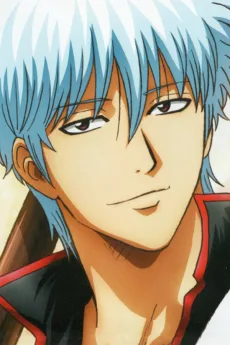
Gintoki is a 177 cm adult man with a lean but muscular build, silver naturally wavy hair and half-lidded eyes. His hair's unusual texture is a recurring subject of conversation and provides the title of the manga's first lesson, "Nobody with Natural Wavy Hair Can Be That Bad."
His standard clothing consists of a black shirt and matching trousers under a white yukata patterned with blue swirls. The garment is usually worn loosely from one shoulder, contributing to his habitually informal appearance.
He normally wears black boots rather than traditional sandals, reflecting the mixture of Edo-period Japanese and modern or extraterrestrial influences that characterizes the series' setting.
Gintoki's most important weapon is the Lake Toya bokuto, a wooden sword with the words "Lake Toya" carved into it. Despite its appearance as a tourist souvenir, he uses it against steel blades, firearms, machines and exceptionally powerful opponents.
His appearance during the Joui War is more militaristic. The long white clothing and blood-covered battlefield image associated with that period contribute directly to the title White Yaksha.
Although he often appears physically unimpressive while lounging around the Yorozuya, battle scenes reveal extensive conditioning. His strength, grip, reflexes and endurance are those of a veteran who spent years fighting trained soldiers and Amanto warriors.
Abilities & Powers
Abilities & Powers
Gintoki possesses no supernatural energy system comparable to the special powers used by many of the aliens and enhanced fighters he faces. His effectiveness comes primarily from extraordinary physical conditioning, battlefield experience, instinct and swordsmanship.
His sword technique is highly adaptable rather than ceremonial. Gintoki uses orthodox strikes when useful but readily incorporates kicks, punches, grappling, headbutts, environmental weapons and deliberate feints. Years of actual warfare matter more to his style than preserving the elegance of a formal school.
His strength is sufficient to clash with considerably larger opponents and to produce tremendous impact with a wooden sword. He regularly breaks weapons, knocks enemies through structures and blocks attacks that should physically overwhelm an ordinary human.
Gintoki's durability is similarly extreme. He withstands severe cuts, blunt-force trauma, falls and extended battles while continuing to fight. Although much of Gin Tama exaggerates injury for comedy, his endurance remains consistently exceptional during serious arcs.
His reflexes allow him to deal with firearms at close range, evade projectiles and respond to opponents whose physical abilities exceed ordinary humans. He is particularly dangerous once he has observed an enemy's habits long enough to understand their rhythm.
Gintoki is also unusually effective at improvised combat. Broken swords, wooden fragments, umbrellas, debris and household objects can become viable weapons in his hands.
His greatest combat advantage may be experience. The Joui War exposes him to prolonged battlefield conditions from a young age, giving him an ability to continue functioning under fear, injury and chaos that many technically skilled fighters lack.
He also has exceptional perception of killing intent and shifts in an opponent's emotional state. Against people he knows personally, this can make battles psychological contests as much as physical ones.
Named Techniques
Named Techniques
Gintoki does not maintain a formal catalogue of supernatural techniques. Most of his major attacks are applications of swordsmanship, physical power and improvisation rather than named special moves.
Lake Toya Swordsmanship refers broadly to his use of the wooden bokuto. He can strike with sufficient power to compete against real swords while exploiting the weapon's blunt construction to avoid lethal cuts when he does not intend to kill.
Two-Sword Fighting is used when circumstances provide a second weapon. Gintoki is fully capable of adapting his normally single-sword style to dual wielding.
Improvised Weapon Combat allows him to turn nearby objects into functional weapons. The technique reflects battlefield pragmatism rather than adherence to a fixed martial discipline.
Bare-Handed Combat supplements his swordsmanship with punches, kicks, grappling and other close-range attacks whenever his sword is unavailable or an enemy closes inside his preferred striking distance.
During his time as the White Yaksha, Gintoki's battlefield style emphasizes relentless forward pressure, rapid target switching and the ability to continue fighting while surrounded. The title represents a reputation and combat identity rather than a supernatural transformation.
Relationships
Relationships
Shinpachi Shimura becomes the first regular employee to join Gintoki's Yorozuya. Gintoki Sakata initially helps Shinpachi Shimura during a conflict involving Tae Shimura, and what begins as temporary assistance develops into a permanent working relationship.
Gintoki Sakata frequently mocks Shinpachi Shimura, ignores his objections and leaves much of the Yorozuya's practical organization to him. Shinpachi Shimura, in return, functions as one of the few people willing to criticize Gintoki Sakata directly.
Their relationship gradually resembles that of an irresponsible older brother and a younger sibling who has been forced into the responsible role. Gintoki Sakata rarely says so openly, but Shinpachi Shimura's safety consistently matters more to him than any job or payment.
Kagura becomes the other permanent member of the Yorozuya. Gintoki Sakata initially meets Kagura while she is trying to escape the violent work into which others have drawn her.
Gintoki Sakata and Kagura bicker constantly over food, money and household behavior, but their relationship is strongly parental or sibling-like. Gintoki Sakata gives Kagura a home where she is valued as a person rather than primarily for her Yato strength.
When Kagura's family conflicts become dangerous, Gintoki Sakata repeatedly involves himself despite having no blood connection to her. His definition of family is based much more strongly on shared life than ancestry.
Shouyou Yoshida is Gintoki's teacher and the closest figure he has to a father during childhood. Shouyou Yoshida finds Gintoki Sakata surviving alone on a battlefield and gives him a place at Shouka Sonjuku.
Gintoki Sakata's moral code owes much to Shouyou Yoshida. Although Gintoki rarely speaks in formal philosophical terms, the idea that a samurai protects what matters to him rather than obeying authority becomes fundamental to his adult life.
[Gintoki Sakata is forced to execute Shouyou Yoshida during the Joui War in order to save Shinsuke Takasugi and Kotarou Katsura. The decision fulfills Shouyou Yoshida's request but leaves all three students permanently scarred.](#spoiler)
Shinsuke Takasugi grows up beside Gintoki under Shouyou. Gintoki Sakata and Shinsuke Takasugi begin as fiercely competitive classmates whose rivalry develops into genuine trust.
After the war, their responses to loss diverge. Gintoki Sakata attempts to build a small life around new relationships, while Shinsuke Takasugi increasingly directs his grief toward destroying the world that took Shouyou from them.
Their conflict therefore remains deeply personal. Gintoki Sakata understands Shinsuke Takasugi's anger because he carries much of the same pain, while Shinsuke Takasugi sees Gintoki's apparent acceptance of ordinary life as a choice he cannot make himself.
Their later confrontations increasingly reveal that neither has ever stopped caring about the other. The hostility is built upon shared guilt, love for Shouyou and opposing methods of surviving the same catastrophe rather than simple hatred.
Kotarou Katsura is another classmate from Shouka Sonjuku and fellow veteran of the Joui War. Gintoki Sakata frequently mocks Kotarou Katsura's revolutionary schemes and refuses most attempts to recruit him back into organized rebellion.
Despite the comedy surrounding their interactions, Gintoki Sakata and Kotarou Katsura possess complete battlefield trust. When circumstances become genuinely serious, their old coordination reappears immediately.
Tae Shimura becomes one of Gintoki's closest civilian friends through Shinpachi. Gintoki Sakata and Tae Shimura argue frequently, and she is perfectly willing to respond to his behavior with physical force.
Their bond nevertheless extends well beyond comedy. Tae Shimura trusts Gintoki Sakata with Shinpachi Shimura's safety, while Gintoki repeatedly fights to protect both siblings and their dojo.
Otose is Gintoki's landlord and another surrogate parental figure. Gintoki Sakata promises Tatsugorou, Otose's late husband, that he will protect her after encountering his grave.
Gintoki Sakata is chronically late with rent and constantly irritates Otose, but their arguments conceal deep affection. The promise to protect her becomes one of the clearest examples of his tendency to build his adult life around personal commitments.
Tama becomes part of the extended Yorozuya and Snack Otose household after Gintoki becomes involved in her story. Gintoki Sakata treats Tama as a person despite her mechanical nature, reinforcing the series' broader refusal to define humanity strictly by biology.
Sadaharu lives with the Yorozuya after Kagura adopts him. Gintoki Sakata often suffers from Sadaharu's habit of biting his head, but the enormous dog becomes another permanent member of the household.
Toushirou Hijikata functions as one of Gintoki's most persistent adult rivals. Gintoki Sakata and Toushirou Hijikata clash because of personality, occupation and pride despite sharing several fundamental traits.
Both Gintoki Sakata and Toushirou Hijikata are highly competent swordsmen who hide strong loyalty behind abrasive behavior. Their rivalry frequently becomes ridiculous, but serious situations reveal considerable mutual respect.
Isao Kondou repeatedly crosses paths with Gintoki through the Shinsengumi and through his pursuit of Tae. Gintoki Sakata mocks Isao Kondou mercilessly, yet fights beside him when political threats endanger the Shinsengumi or Edo.
Sougo Okita frequently interacts with Gintoki as both ally and troublemaker. Gintoki Sakata recognizes Sougo Okita's combat ability, while Sougo Okita appears to enjoy Gintoki's willingness to participate in destructive schemes.
Tsukuyo meets Gintoki through the conflicts surrounding Yoshiwara. Gintoki Sakata earns Tsukuyo's trust by fighting for people she has devoted herself to protecting.
Tsukuyo develops romantic feelings for Gintoki Sakata, although Gintoki does not enter a formal relationship with her. Their bond is grounded primarily in mutual respect between two people accustomed to carrying responsibility for others.
Ayame Sarutobi is openly infatuated with Gintoki. Gintoki Sakata generally rejects Ayame Sarutobi's aggressive pursuit, though he recognizes her exceptional ability as an assassin and repeatedly works with her in serious conflicts.
Hasegawa Taizou develops a friendship with Gintoki through shared financial failure and frequent misfortune. Gintoki Sakata regularly insults Hasegawa Taizou as a "MADAO," but the two understand each other's inability to fit comfortably into respectable society.
Sakamoto Tatsuma fought alongside Gintoki during the Joui War. Gintoki Sakata frequently becomes irritated by Sakamoto Tatsuma's loud behavior, but their shared wartime history gives them a bond that survives years apart.
Kamui becomes connected to Gintoki primarily through Kagura. Gintoki Sakata opposes Kamui's obsession with strength because it threatens the family Kagura is trying to preserve.
Umibouzu initially regards Gintoki with suspicion as the irresponsible adult responsible for Kagura's living situation. Gintoki Sakata and Umibouzu nevertheless share a genuine desire to protect Kagura, producing a complicated form of mutual respect.
Story Role
Story Role
Gintoki enters the manga as an apparently unremarkable freelancer who intervenes when Shinpachi becomes entangled with Amanto trouble. The first chapters establish the Yorozuya formula: someone arrives with a problem, Gintoki complains about payment or effort, and the job expands into something far more serious than advertised.
Kagura's arrival completes the central Yorozuya trio. From that point forward, episodic jobs alternate with larger conflicts involving Kabukicho, the Shinsengumi, alien factions, criminals and people from Gintoki's wartime past.
The Benizakura conflict is one of the earliest occasions on which the carefree Yorozuya owner is forced into direct contact with his old Joui relationships. Takasugi's growing extremism demonstrates that Gintoki's choice to leave organized rebellion behind has not freed him from the war's consequences.
Yoshiwara places Gintoki against fighters whose physical abilities exceed those of ordinary humans and expands his role as a defender of communities outside Kabukicho. His willingness to fight for people he has only recently met reflects the same values that eventually turned the Yorozuya into more than a business.
The Four Devas conflict centers directly on Gintoki's promise to Otose. When that promise is threatened, his normally evasive attitude disappears, revealing how seriously he treats the obligations he has chosen for himself.
The Courtesan of a Nation storyline reconnects personal history with national politics, particularly through Shouyou, Takasugi and the structures that controlled Edo during the Joui era.
The Shogun Assassination and Farewell Shinsengumi conflicts shift the series decisively toward its final political confrontation. Gintoki is forced to cooperate with people and organizations he once fought or mocked as Edo's existing order begins to collapse.
The Rakuyou conflict reunites Gintoki, Katsura and Takasugi more directly with the unresolved history surrounding Shouyou. Their childhood relationship and the events of the Joui War become essential to understanding the enemy they now face.
Gintoki eventually learns that Shouyou and Utsuro are connected through an immortal Altana-derived existence. Utsuro represents the accumulated despair of repeated lives and persecution, while Shouyou emerged as an identity that chose compassion and teaching instead.
The Silver Soul conflict brings the battle back to Earth as Utsuro's plans threaten the planet itself. Gintoki fights not to restore the old Joui cause but to preserve the ordinary Edo and relationships he built after abandoning that war.
After the subsequent time interval, Gintoki again separates himself from the Yorozuya while pursuing the final unresolved consequences of Utsuro and Shouyou's existence. His eventual return brings the series back to its central household rather than ending with Gintoki as an isolated legendary warrior.
Character Development
Character Development
Gintoki begins the series after the most conventionally transformative period of his life has already happened. He has already lost his teacher, fought a war, become famous and abandoned the identity of a heroic revolutionary.
His development therefore works through gradual disclosure and renewed engagement rather than a straightforward rise from weakness to strength. Each serious arc reveals more of why the apparently lazy Yorozuya owner refuses ambition, ideology and military glory.
The Yorozuya gives him something fundamentally different from Shouka Sonjuku or the Joui army. Shinpachi and Kagura do not follow Gintoki because he is a legendary fighter; they live with him while seeing his laziness, debts, vulgar habits and failures at close range.
That ordinary intimacy becomes central to his recovery. Gintoki cannot undo the war, but he can prevent his guilt from making him emotionally unavailable to everyone who comes afterward.
Takasugi functions as the clearest alternative path. Both survive Shouyou's loss, but Takasugi directs his pain outward toward destruction while Gintoki gradually creates relationships worth protecting despite believing he has little left to offer.
The revelation surrounding Utsuro forces Gintoki to revisit Shouyou more literally than he ever expected. The teacher whose death shaped his life becomes inseparable from an immortal existence that repeatedly regenerated through Altana, turning Gintoki's old guilt into an ongoing conflict rather than a closed memory.
His eventual clashes with Takasugi also change from attempts to stop an enemy into efforts to understand and protect the last pieces of their shared childhood. The rivalry reaches its conclusion only after both recognize that neither was ever truly free of the promise Shouyou left them.
Gintoki never becomes conventionally respectable. He remains lazy, indebted and resistant to authority even after the largest conflicts in the series.
That consistency is important to his development. Growth does not require turning the Yorozuya owner into a solemn leader; it requires accepting that the ridiculous daily life he built after the war is worth returning to.
Etymology
Etymology
Gintoki is written 銀時. The first character, 銀 (gin), means "silver," directly matching his silver hair and contributing to the title Gin Tama.
The series title 銀魂 literally combines the characters for "silver" and "soul." It is pronounced Gintama, making Gintoki's own name immediately identifiable within the title.
The surname Sakata and Gintoki's broader conception draw upon the Japanese folkloric hero Sakata Kintoki, better known through the childhood name Kintarou. Hideaki Sorachi has identified Sakata Kintoki as an inspiration while making Gintoki an independent character rather than a literal descendant.
Sorachi's early plans for the protagonist were significantly different. The central silver-haired character initially developed from ideas involving a Hijikata Toshizou-based protagonist, but Sorachi abandoned the concept of making the lead a member of an organization and rebuilt him as the independent freelancer Gintoki.
The epithet Shiroyasha combines shiro ("white") with yasha, a term derived from yaksha and commonly used for a fierce supernatural warrior or demon-like being. Within the story, the name refers to Gintoki's appearance and ferocity during the Joui War.
Trivia
Trivia
-
Gintoki's official profile lists his birthday as October 10, his height as 177 cm and his weight as 65 kg.
-
His blood type is B, and his age was eventually clarified as approximately 27 at the beginning and 29 after the later two-year interval.
-
The bokuto Gintoki normally carries bears the inscription Lake Toya and resembles a souvenir wooden sword rather than the weapon of a famous veteran.
-
Gintoki has an intense sweet tooth and is particularly associated with strawberry milk and parfaits; his sugar consumption is high enough to become an in-series health concern.
-
He regularly reads Weekly Shōnen Jump, the same magazine in which the Gin Tama manga was serialized.
-
His natural wavy hair is established immediately as one of his distinguishing traits and is referenced directly in the title of Lesson 1.
-
The character was partly inspired by folkloric figure Sakata Kintoki, although Sorachi did not make Gintoki his canonical descendant.
-
Gintoki has repeatedly ranked at or near the top of official Gin Tama popularity polls and has remained the franchise's principal merchandising and promotional character.
In Other Media
In Other Media
Gintoki is voiced in Japanese by Tomokazu Sugita, whose performance covers the long-running television series, films, original animations and later adaptations. Sugita's delivery became closely associated with the character's abrupt movement between deadpan comedy and serious dramatic scenes.
English-language releases have used multiple actors because different portions of the franchise were dubbed by different companies. Chris Patton voices Gintoki in the English version of the first theatrical film, while Michael Daingerfield performs the role in the Ocean-produced English dub of Gintama° and Gintama: The Final. Roly Gutiérrez has also voiced him in an English version of the earlier television series.
Gintoki appears prominently in Gintama: The Movie, an animated retelling and expansion of the Benizakura storyline. The film became the first animated Gintama production to receive an official English-language dub in North America.
Gintama: The Movie: The Final Chapter: Be Forever Yorozuya places an original version of Gintoki at the center of a time-displacement storyline involving a devastated future Edo and alternate versions of the people closest to him.
Gintama: The Final adapts the concluding portion of the manga and resolves the principal conflicts involving Gintoki, Takasugi, Shouyou and Utsuro. Michael Daingerfield reprised Gintoki for the English-language release.
In live action, Gintoki is portrayed by Shun Oguri in the 2017 Gintama film and its 2018 sequel. The adaptations reproduce his silver hair, loose yukata and Lake Toya sword while translating several manga storylines to live action.
Gintoki is playable in numerous Gin Tama video games and appears in crossover titles built around Weekly Shōnen Jump. These include Jump Super Stars, Jump Ultimate Stars and J-Stars Victory VS.
He has also appeared through collaborations with other games and franchises. His costume, imagery and characteristic wooden sword have been used in promotional crossovers, including appearances connected with God Eater 2.
The spin-off setting 3-Nen Z-Gumi Ginpachi-sensei reimagines him as Ginpachi Sakata, a schoolteacher in a modern academy parody populated by alternate versions of the Gin Tama cast.
Reception
Reception
Gintoki has consistently been the highest-profile character associated with Gin Tama. He has ranked first in multiple franchise popularity polls and has been used extensively for figures, promotional collaborations and other merchandise.
Critical discussion has frequently focused on the contrast between his behavior in comedy and serious arcs. His everyday characterization deliberately avoids the conventional image of an aspirational action protagonist: Gintoki has no ambition to become the strongest, lead the country or reclaim his former reputation.
The White Yaksha history gives those traits a different meaning once revealed. His apparent lack of ambition follows a period in which he already experienced war, fame, extraordinary violence and catastrophic loss, making his ordinary Yorozuya life a deliberate alternative rather than evidence that he has never been capable of more.
Reviewers have also highlighted the way his crude or lazy behavior can transition into strong protective instincts without requiring a separate heroic persona. Western critical coverage has described the combination of carefree behavior and willingness to protect others as central to his appeal.
His relationships with Shinpachi and Kagura are especially important to the character's reception because they transform the Yorozuya from a recurring comedy premise into a recognizable found family. Gintoki can refuse titles and organizations while still becoming responsible for people who choose to remain beside him.
The rivalry with Takasugi provides the darker counterpart to that domestic life. Both men emerge from the same teacher and war, but their inability to process Shouyou's loss in the same way turns their surviving friendship into one of the series' longest-running conflicts.
Later revelations surrounding Shouyou and Utsuro deepen this contrast by forcing Gintoki to confront the possibility that the defining trauma of his youth was never truly finished. His eventual response is not to restore the White Yaksha as a permanent identity but to protect the imperfect life that came afterward.
By the conclusion, the Yorozuya remains the clearest measure of how far Gintoki has moved from the battlefield where he was first found. He begins life surviving among the dead and ultimately builds a home whose value lies precisely in mundane arguments, unpaid rent, ridiculous jobs and people who refuse to leave him alone.
Related Characters
 SUPPORTING
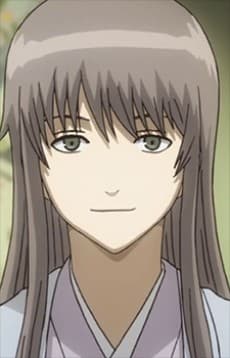
Shouyou Yoshida
Gin TamaMentor to the Old Jouishishi members in their youth. Trained Sakata Gintoki, Katsura Kotarou and Takasugi Shinsuke in swordskills and the bushido. He died before the Gintama storyl
 SUPPORTING
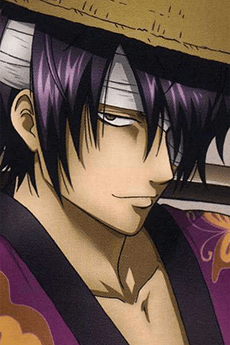
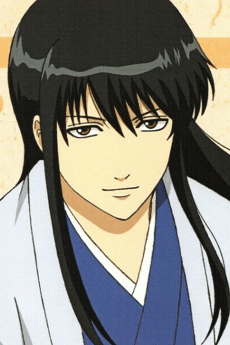
Shinsuke Takasugi
Gin TamaA former comrade of Gintoki and Katsura and a major antagonist. He is easily recognisable through his bandaged left eye, his colorful kimono, his eerie smile, and the pipe he is of
 SUPPORTING
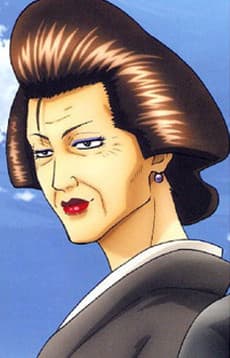
Kotarou Katsura
Gin TamaKatsura is Gintoki's former comrade during the Joi war. Even after the Amanto take-over of Japan, Katsura continues to resist the Amanto, and has amassed a band of followers. He is
 SUPPORTING
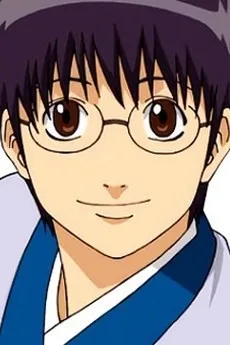
Otose
Gin TamaGintoki's landlady. He swore to protect her when he ate food offerings to her dead husband. Her real name is Ayano Terada, Ms. Otose (お登勢 Otose) being a "genji" alias. She was very
 MAIN
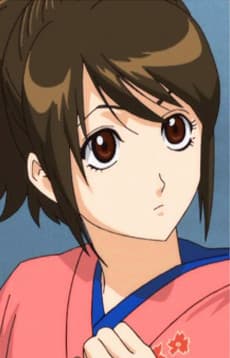
MAINShinpachi Shimura
Gin TamaShinpachi Shimura works under Gintoki to learn the ways of the samurai. He used to stay at his family's dōjo. However, it seems more like he's just trying to help Gintoki pay the r
 SUPPORTING
Tae Shimura
Gin TamaTae Shimura is Shinpachi's older sister. She runs the Kakidokan Dojo—which was her father's failing dojo—with her brother. She is usually addressed as "Otae"; the "O" is an honorif
 MAIN
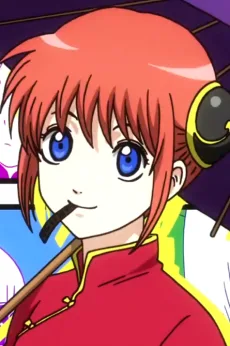
MAINKagura
Gin TamaAlthough she appears to be a normal, cute, human girl in Chinese-style clothing, she actually belongs to the Yato Clan, one of the strongest and most bloodthirsty of the Amanto rac
 SUPPORTING
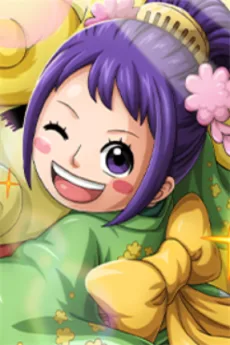
Tama
Gin TamaO-Tama is a girl from the region of Kuri in Wano Country. She is a kasa weaver and a kunoichi in training who is affiliated with the Kozuki Family.
 SUPPORTING
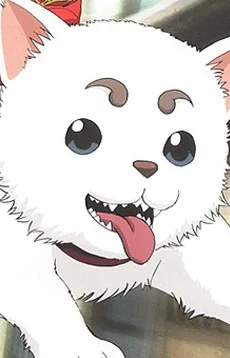
Sadaharu
Gin TamaSadaharu has the outward appearance of a giant dog, but is actually an inugami. When sitting on his haunches, he is taller than most humans. He was left in front of Gintoki's apart
 SUPPORTING
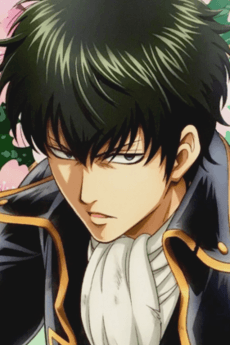
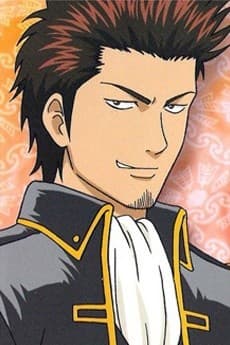
Toushirou Hijikata
Gin TamaToshiro Hijikata is the famed chain smoking, vice commander of the Shinsengumi so named by his subordinates, because of his fearsome demeanor. Purportedly the brains behind the for
 SUPPORTING
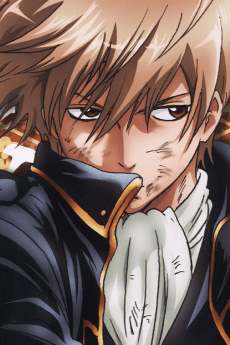
Isao Kondou
Gin TamaIsao Kondo is the Commander of the Shinsengumi. When not working, he is the stalker of Tae Shimura, earning him the nickname Gorilla-stalker. His superior is Katakuriko Matsudaira,
 SUPPORTING
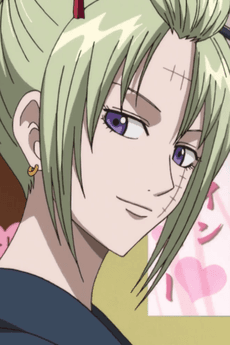
Sougo Okita
Gin TamaOkita is the best swordsman in the Shinsengumi. Personality-wise, he tends to be light-hearted and somewhat childish though his speech is heavily deadpan. He outwardly displays ann
 MAIN
MAINTsukuyo
Gin TamaTsukuyo is a blonde-haired woman with a scar over her forehead and left cheek. One of the better known Hundred Blooms of Yoshiwara, a law enforcement squad of Yoshiwara that consis
 SUPPORTING
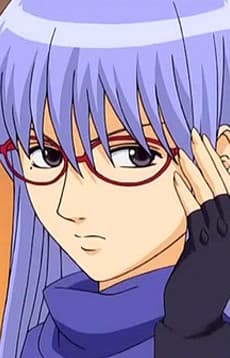
Ayame Sarutobi
Gin TamaSarutobi Ayame is a ninja from the Oniwabanshuu by training, but is currently working as an assassin. She also has a part-time job at the Kunoichi Café. Since her initial appearanc
 SUPPORTING
Kamui
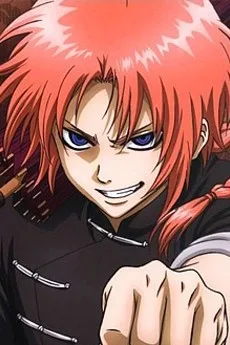
Gin TamaKamui is a member of the Yato Tribe, the son of Umibouzu and older brother of Kagura. His excellent fighting skills helped him become Captain of the 7th Division of Harusame's Thun
 SUPPORTING
Umibouzu
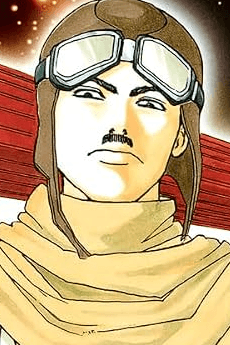
Gin TamaUmibouzu is Kagura and Kamui's father and one of the last members of the Yato clan. Like Kagura, he fights using an umbrella but is also shown to be strong in his own right.