Appears In

Quick Facts
| Gender | Female |
| Age | 16- |
| Role | MAIN |
| Series | Akane-banashi |
| Age | 17 at the beginning; 18 during her first year of apprenticeship |
| Birthday | March 27 |
| Gender | Female |
| Occupation | Rakugoka; waitress at Izakaya Umi |
| Rank | Futatsume |
| Affiliation | Arakawa School |
| Stage Name | Akane Arakawa |
| Father | |
| Mother | |
| Mentors | |
| Debut | Chapter 1, “On That Day” |
Contents
Background
Background
Akane grows up watching her father, Shinta Arakawa, rehearse rakugo at home. Although she is initially hidden behind a closed door, she memorizes his stories, gestures, pauses, and vocal changes. Shinta’s performances make the characters feel present to her, giving Akane an unusually intimate introduction to the art before she receives formal instruction.
Shinta enters an examination for promotion to shin’uchi, but presiding master Issho Arakawa expels every candidate instead. Shinta abandons professional rakugo and returns to ordinary employment. Akane alone recognizes how deeply the decision wounds him, and she resolves to become a shin’uchi so that the profession will have to acknowledge the value of his art.
Akane approaches Shiguma Arakawa, Shinta’s former master, and secretly trains with him for six years. Her mother, Masaki Osaki, knows about the arrangement and ultimately permits her to continue. After high school, Akane formally joins Shiguma’s branch of the Arakawa School and receives the stage name Akane Arakawa.
Her apprenticeship places her at the lowest professional rank, zenza. She performs opening acts, assists senior storytellers backstage, handles errands, and learns that advancement depends on reliability and social awareness as much as stage talent. These duties expose her to the institutional world that Shinta once inhabited and gradually separate her ambitions from a simple desire for revenge.
Personality
Personality
Akane is confident, observant, and intensely competitive. She rarely hesitates once she has chosen a goal, even when established performers regard it as unrealistic. Her composure allows her to answer provocation through the content of a performance instead of an open argument, though her bluntness remains visible away from the stage.
She has a keen instinct for reading people. Akane studies an audience before and during a performance, adjusting her delivery to its age, mood, and expectations. The same habit shapes her everyday interactions: she notices subtle reactions, remembers how people speak, and converts ordinary experiences into material she can use when portraying characters.
Her self-assurance can become stubbornness. Early in her apprenticeship, Akane assumes that technical preparation and audience approval will solve almost every problem. Senior performers repeatedly force her to confront stories that do not suit her personality, audiences that resist her usual methods, and standards that cannot be measured by laughter alone.
Akane is generous toward peers even when they are direct competitors. She helps organize performances, shares information, and respects approaches unlike her own. Defeat frustrates her, but she generally treats it as evidence of a weakness to investigate rather than as a reason to resent the winner.
Appearance
Appearance

Akane is a young woman with dark hair that transitions into reddish-pink tips. She commonly wears it in a high ponytail, leaving shorter strands around her face. Her expressions change dramatically during performances, allowing the artwork to distinguish multiple speakers without altering her seated position.
In ordinary life, she favors casual clothing appropriate to school, work, or rehearsal. Her professional appearance centers on kimono, with designs and colors varying by event. The contrast between her youthful appearance and controlled stage presence often surprises audiences unfamiliar with her reputation.
Rakugo requires one performer to portray characters of different ages, genders, and social positions using limited physical tools. Akane therefore relies on posture, gaze, facial angle, and small shifts of the shoulders rather than elaborate movement. A folding fan and hand towel serve as adaptable props.
After her advancement and extended training, her appearance and bearing become more mature. Her later performances present a calmer figure who can hold a room without depending on constant visible energy.
Abilities & Powers
Abilities & Powers
Akane possesses no supernatural abilities; her skills are those of a trained rakugoka. Her principal strength is audience awareness. She can assess listeners rapidly, establish rapport through preliminary conversation, and alter timing or emphasis without losing the structure of the story.
Her memory and powers of observation allow her to reproduce detailed behavior. Childhood exposure to Shinta’s rehearsals gives her a strong technical foundation, while later experiences teach her not to confuse accurate imitation with genuine interpretation. She becomes increasingly capable of rebuilding a story around her own understanding of its characters.
Akane is especially adept at kibataraki, the supporting activity that keeps a performance or venue operating smoothly. Work at Izakaya Umi strengthens her ability to monitor several people simultaneously, anticipate needs, and maintain the atmosphere of a room. These practical skills transfer directly to her stagecraft.
Her early approach is strongly audience-oriented: she seeks an immediate connection and uses the listeners’ reactions to guide her. Later training develops a more restrained craftsman style, in which technique, characterization, and the story’s internal structure take precedence over her personal appeal. This expansion becomes essential when she must perform without treating laughter as the primary measure of success.
Named Techniques
Named Techniques
Akane’s “techniques” are primarily performance methods and interpretations of traditional rakugo stories rather than attacks or supernatural powers.
- Audience Adaptation: Akane observes the composition and mood of a crowd, then adjusts her pacing, tone, and framing to make the same story effective for different listeners.
- Kibataraki: Her ability to support an event, anticipate practical needs, and preserve its atmosphere; it also trains the broad awareness she uses onstage.
- Art of the Craftsman: A fundamentals-based style that minimizes the performer’s overt personality and allows the construction of the story and its characters to command attention.
- Jugemu: One of Akane’s foundational stories, centered on a child burdened with an extraordinarily long auspicious name; her performance reveals the depth of her early training.
- Praise a Kid: A comic story through which she learns to tailor a familiar routine to a specific audience instead of repeating a fixed version.
- Three Men of Talent: Akane’s Karaku Cup selection, used to demonstrate her expressive characterization and understanding of how several personalities share one narrative.
- Fetching Tea: A story involving a seductive courtesan whose manner is initially incompatible with Akane’s direct personality; training under Urara Ransaika teaches her to embody unfamiliar characters through personal understanding.
- Changing Time: A domestic story inherited from Shinta Arakawa through Maikeru Arakawa. Akane’s rendition examines both her father’s strengths and the limitations of his interpretation.
- Cho-Han Dice: A story taught by Chocho Konjakutei, helping Akane study the warm, open quality associated with his “sunshine” artistry.
- God of Death: A demanding story connected to Shiguma’s artistic lineage. Akane seeks instruction from Shomei Tsubakiya as part of her effort to understand Shiguma’s Art.
Relationships
Relationships
Shinta Arakawa is Akane’s father and first artistic model. She learns rakugo by watching him practice and begins her career intending to prove that his expulsion did not invalidate his work. As Akane matures, she stops treating Shinta’s style as something that must be preserved unchanged; recognizing its weaknesses allows her to honor him without remaining confined by imitation.
Masaki Osaki, Akane’s mother, provides the practical stability that Shinta’s uncertain career cannot. She understands that Akane has been training with Shiguma and permits her to continue, despite knowing the insecurity of professional rakugo. Her support is restrained and pragmatic rather than indulgent.
Shiguma Arakawa trains Akane for six years and becomes her first formal master. He recognizes both her talent and the personal grievance driving her. His patient, audience-conscious philosophy shapes her earliest style, while his reluctance to explain the past leaves Akane with questions about Shinta’s expulsion and the guarded repertoire known as Shiguma’s Art. His collapse and the dissolution of his school abruptly end their formal master–disciple relationship.
Issho Arakawa begins as the institutional adversary behind Akane’s goal. Akane resents him for expelling her father, but Issho takes her talent seriously and repeatedly challenges the assumptions beneath her ambition. After the Shiguma School is dissolved, Issho becomes Akane’s master and sends her abroad for further training. Their relationship remains severe, yet his demands broaden her technique and force her to distinguish artistic judgment from personal anger.
Kyoji Arakawa is Akane’s senior apprentice and one of her earliest practical mentors. His orderly professionalism teaches her how preparation, etiquette, and consideration for an audience support the visible performance. Koguma Arakawa helps her understand narrative structure and the importance of choosing material compatible with a performer’s nature.
Maikeru Arakawa serves as an encouraging senior and an example of how personality can become a coherent artistic style. His connection to Shinta also makes him an important bridge between Akane and her father’s years as an apprentice. Guriko Arakawa, closer to Akane in rank and experience, shares the daily pressures of the Shiguma branch with her.
Kaisei Arakawa alternates between provocation, assistance, and severe criticism. Akane recognizes his exceptional ability even when his intentions are unclear. His assessments often expose weaknesses that friendlier mentors might soften, making him both an obstacle and an important professional reference point.
Hikaru Koragi is one of Akane’s principal rivals. Hikaru’s voice-acting experience produces vivid, highly differentiated characters, while her competitive focus on Akane pushes both performers to refine their identities. Their rivalry remains grounded in mutual recognition rather than personal hostility.
Karashi Nerimaya is another recurring rival and collaborator. His analytical temperament and talent for modern adaptations contrast with Akane’s instinctive audience work. Karashi Nerimaya frequently identifies flaws in her performances before she can articulate them herself, while Akane Osaki challenges his tendency to approach rakugo from an intellectual distance.
Urara Ransaika teaches Akane how to portray sensuality and adult experience in “Fetching Tea.” Rather than asking her to mimic an older woman, Urara Ransaika directs her toward an emotional equivalent she can understand. Chocho Konjakutei later offers a model of bright, welcoming performance, though his instruction is deliberately unpredictable.
Asagao Konjakutei becomes both a friend and professional collaborator. Akane helps devise a strategy for his trial performances, and Asagao Konjakutei entrusts her with the opening act at his futatsume promotion event. Taizen Arakawa, a friend of Shinta, evaluates that appearance and must weigh Akane’s merit against pressure from within the Arakawa hierarchy.
Shomei Tsubakiya resists teaching Akane “God of Death” because her dependence on audience response conflicts with his principles. His refusal becomes a new standard for her to overcome. Akane’s effort to earn Shomei Tsubakiya’s recognition drives her toward a more disciplined and less self-centered understanding of performance.
Story Role
Story Role
Akane enters the story first as a child watching Shinta prepare for his promotion examination. The exam’s unexplained outcome creates the series’ central question: what standard did Issho apply when he expelled every candidate, and can Akane demonstrate that her father’s rakugo possessed real worth? Her decision to train under Shiguma turns that private injury into a professional journey.
Her early apprenticeship follows a sequence of practical tests. Akane learns how to read elderly listeners, analyze the structure of a story, compete before judges, and work backstage beneath established performers. The Karaku Cup introduces Hikaru and Karashi as rivals whose contrasting styles prevent her progress from becoming a simple contest against Issho.
The Zenza Training and Fetching Tea material places Akane inside the working hierarchy of rakugo. She answers an insult through an opening performance, encounters the authority of ookanban performers, and discovers that her repertoire is too narrow. Urara’s instruction then forces her to perform a character far removed from her everyday personality.
During the Zenza Renseikai, Akane chooses “Changing Time,” a story closely associated with Shinta. Her performance marks a decisive change: she identifies a limitation in her father’s version and creates an interpretation that belongs to her. Subsequent work with Chocho, Asagao, and Taizen moves her toward futatsume consideration while drawing her deeper into the politics behind Shinta’s expulsion.
Later developments connect Akane’s advancement to Shiguma’s guarded artistic inheritance. Shiguma’s illness leads to the dissolution of his school, after which Issho becomes Akane’s master. Following an extended period of training in France, she returns to Japan as a futatsume and begins pursuing the stories that constitute Shiguma’s Art. Her participation in the Zuiun Prize tests whether she can succeed without relying on laughter, the audience response that once defined her approach.
Character Development
Character Development
Akane’s first objective is retrospective: she wants to overturn the meaning of an event that happened to her father. This gives her unusual resolve but also narrows her perspective. She initially assumes that becoming shin’uchi and confronting Issho will automatically prove Shinta right.
Her mentors dismantle that assumption in stages. Kyoji teaches her that professional conduct begins before the storyteller reaches the stage. Koguma shows her that the structure and genre of a story matter as much as expressive talent. Urara demonstrates that characterization requires emotional comprehension rather than surface imitation.
“Changing Time” transforms Akane’s relationship with Shinta’s legacy. She can acknowledge that his rendition was incomplete without accepting Issho’s expulsion as just. This distinction allows her to develop her own version and converts her father from an untouchable ideal into a fellow performer whose choices can be studied.
Akane’s later development concerns independence from audience approval. Her responsiveness is a genuine strength, but it risks making the crowd’s immediate reaction her sole standard of value. Issho and Shomei force her to cultivate stillness, tension, and narrative discipline. By expanding into craftsman-style performance, she gains tools that complement rather than erase the warmth inherited from Shinta and Shiguma.
Etymology
Etymology
Akane’s given name is written 朱音. The first character, 朱, can refer to vermilion or a vivid red, while 音 means “sound.” The name suits the red accents in her visual design and her profession as a vocal storyteller.
Her surname is written 桜咲 and romanized Osaki in the official English release. The spelling “Ousaki” reflects the long vowel in the Japanese reading Ōsaki. The characters evoke cherry blossoms and blooming, imagery consistent with the series’ emphasis on growth and artistic emergence.
Her professional name, Akane Arakawa, follows rakugo naming practice by taking the school name of her master’s lineage. It identifies her as part of the Arakawa School while allowing her to retain her given name as the individual portion of her stage identity.
Trivia
Trivia
- Akane is seventeen at the beginning of the main story and turns eighteen during her first year as an apprentice.
- Her birthday is March 27.
- She learns much of her initial repertoire by secretly observing her father’s rehearsals.
- Akane works at Izakaya Umi, where customer service strengthens her awareness of people and atmosphere.
- Her dark hair with reddish-pink tips visually echoes the “vermilion” character in her given name.
- Her official stage name is Akane Arakawa.
- She begins as a zenza and later advances to futatsume.
- Akane placed first in the series’ inaugural official character popularity poll with 8,055 votes.
In Other Media
In Other Media
The television anime adaptation retains Akane as the central viewpoint character. Anna Nagase voices her in Japanese, while Abby Trott performs the English-language role. The anime dramatizes the challenge inherent in adapting rakugo: Akane’s performances require the actor to distinguish several characters while preserving the rhythm of a single seated storyteller.
Before the television series, the opening chapter received a voiced motion-comic adaptation using manga artwork, dialogue, music, and sound effects. This presentation emphasized the vocal dimension of Akane’s childhood exposure to Shinta’s rakugo.
Promotional material for the manga frequently places Akane with a folding fan or seated in formal performance posture. She has also appeared in official illustrations, anniversary artwork, publication campaigns, and merchandise connected with the manga and anime.
Reception
Reception
Akane won the first official Akane-banashi character popularity poll, receiving 8,055 votes when the results were published in Weekly Shonen Jump in 2025. Her first-place finish placed her ahead of the series’ masters, senior apprentices, and recurring rivals.
Critical discussion of the manga frequently identifies Akane’s performances as a central attraction. Reviewers have highlighted how the artwork shifts between the seated performer and imagined scenes inside the story, allowing readers to experience both Akane’s technique and the audience’s perception of it.
Her role is also notable within the contemporary Weekly Shonen Jump lineup: she leads a competitive coming-of-age series built around a traditional performing art rather than combat or organized sport. The structure of her training, rivalries, tournaments, and rank progression has often led readers and critics to compare her career to that of a sports-manga protagonist.
Related Characters
 SUPPORTING
Shinta Arakawa
Akane-banashiHe is Akane Osaki's father and Masaki's husband. He was Shiguma Arakawa's pupil.
 SUPPORTING
Shiguma Arakawa
Akane-banashiHe was Shinta Arakawa's Master. He is one of four Shin'nuchi rank in the Arakawa School. He currently is the master of 5 pupils: Kyoji Arakawa, Maikeru Arakawa, Koguma Arakawa, Gur
 SUPPORTING
Urara Ransaika
Akane-banashiShe is a Shin'uchi rakugoka and the representative of the Ransaika School in the Rakugo Federation and she has a strong sense of justice because she states that nothing is more ups
 SUPPORTING
Maikeru Arakawa
Akane-banashiHe currently is Shiguma Arakawa's pupil. He is usually arrogant when dealing with people since he feels that when a woman is with him she will fall in love.
 SUPPORTING
Chocho Konjakutei
Akane-banashiHe belongs to the Konjakutei School and is the school's representative in the Rakugo Federation.
 SUPPORTING
Shomei Tsubakiya
Akane-banashiShomei Tsubakiya is a Shin'uchi rakugoka, the vice-chairman and the representative of the Tsubakiya School in the Rakugo Federation.
 SUPPORTING
Kyoji Arakawa
Akane-banashiHe currently is Shiguma Arakawa's pupil. He is very serious and polite when talking to people, he is usually very strict when teaching his inferiors about rakugo. Despite this, he
 SUPPORTING
Koguma Arakawa
Akane-banashiHe currently is Shiguma Arakawa's pupil. He is usually shy and usually thinks a lot about things making him indecisive. According to Guriko, he is usually pessimistic most of the t
 SUPPORTING
Guriko Arakawa
Akane-banashiHe currently is Shiguma Arakawa's pupil. Despite his appearance he is a kind person who helps other people, being the youngest of Shiguma's students he has respect for his teacher
 SUPPORTING
Kaisei Arakawa
Akane-banashiHe currently is Issho Arakawa's pupil. He is a proud person who wants to be the best rakugoka, when he talks about his goals he is usually serious. He usually acts in a nice way to
 SUPPORTING
Hikaru Koragi
Akane-banashiShe is a famous voice actress known for her role as Saruel in the anime Eden's Nova. She participates in the anime Eden's Nova for which she is recognized, she entered the Karaku c
 SUPPORTING
Karashi Nerimaya
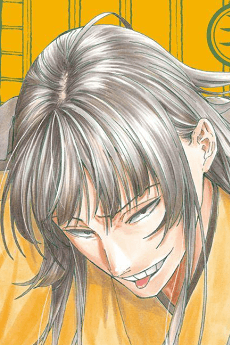
Akane-banashiHe is the two-time champion of the Karaku Cup. He usually has a confident attitude which makes him feel superior to others. He has a cocky attitude due to being the current champio
 SUPPORTING
Taizen Arakawa
Akane-banashiTaizen Arakawa is a Shin'uchi rank in the Arakawa School and member of Arakawa Arch Four.