Appears In
Quick Facts
| Gender | Male |
| Role | MAIN |
| Series | Kingdom |
| Gender | Male |
| Voice Actor (JP) | Jun Fukuyama |
| Affiliation | Qin |
| Aliases | Ei Sei |
| Debut | Chapter 2 |
| Mother | |
| Half-Brother | |
| Close Ally | |
| Advisor |
Contents
Background
Background
Ying Zheng is born into the Qin royal family during a period when his father is living in Zhao as a political hostage. His earliest years therefore take place not in the security of the Qin palace but within enemy territory, where resentment toward Qin is widespread because of the devastation caused by previous wars.
His childhood in Zhao is defined by hostility and isolation. He and his mother are treated as representatives of the enemy state, and Zheng grows up surrounded by civilians whose relatives have died because of Qin. The experience exposes him at a very young age to the human consequences of the wars between the states.
The merchant Zi Xia becomes instrumental in bringing the young prince back toward Qin. Her compassion challenges the emotional numbness Zheng has developed in response to years of abuse and teaches him that people cannot be reduced completely to hatred, nationality or inherited grievance.
After returning to Qin, Zheng eventually becomes the kingdom's young ruler. His accession does not give him unrestricted control, however. Powerful court factions possess their own armies, wealth and political networks, leaving the king dependent upon supporters willing to defend his position.
One of the earliest threats comes from his younger half-brother Cheng Jiao, whose faction seizes the royal capital. Zheng is forced to flee, beginning the crisis through which he meets Xin.
Piao, whose appearance closely resembles Zheng's, is recruited as the king's double. Piao is killed while drawing assassins away from Zheng, but before dying he sends Xin toward the location where the real king is hiding.
Zheng's attempt to reclaim the throne brings together Xin, He Liao Diao, Lord Changwen and eventually Yang Duan He and the mountain tribes. The alliance succeeds because Zheng is willing to revive a relationship between Qin and the mountain people that had deteriorated through generations of mistrust.
Recovering the capital solves only the immediate rebellion. Zheng still lacks complete political authority because the enormously influential Lü Buwei controls a faction powerful enough to rival the king himself. Much of Zheng's early political story therefore concerns the gradual accumulation of authority necessary to become more than a monarch in title.
Personality
Personality
Zheng is controlled, intelligent and unusually difficult to intimidate. Even as a young ruler surrounded by stronger factions, he generally speaks with the expectation that his decisions will eventually be carried out rather than appealing to others for permission.
His composure is rooted partly in childhood hardship. Having endured hatred in Zhao, Zheng develops a high tolerance for fear, hostility and personal danger. Threats that would destabilize a sheltered royal heir rarely produce an obvious reaction from him.
He is not emotionally detached, however. Zheng forms deep attachments to the small number of people he trusts, and his calm public behavior can give way to intense anger when those people are harmed.
His defining political belief is that the endless cycle of war between the states cannot be solved through temporary peace treaties. Alliances collapse, rulers die and old grievances produce new conflicts. Zheng therefore concludes that only the elimination of national borders through unification can prevent future generations from repeating the same wars.
That conviction makes him capable of accepting enormous bloodshed in the present in pursuit of a future without interstate warfare. Kingdom repeatedly places this belief against characters who challenge whether violence on such a scale can legitimately be justified by the peace promised afterward.
Zheng also rejects the idea that birth alone determines human worth. His closest military ally begins as an orphaned servant, and some of his most important supporters come from mountain tribes previously treated as outsiders by Qin's ruling class.
He is particularly skilled at recognizing people who may become important in the future. Xin, Wang Ben and Meng Tian all receive his attention as young commanders whose development could determine whether Qin's unification campaign succeeds. The official anime specifically notes that Zheng regards all three as figures who may carry Qin's future.
Unlike Lü Buwei, who evaluates political problems heavily through wealth, trade and human appetite, Zheng's leadership depends upon conviction. He asks followers to believe that a unified political order is worth sacrifices they themselves may never live to see rewarded.
Appearance
Appearance

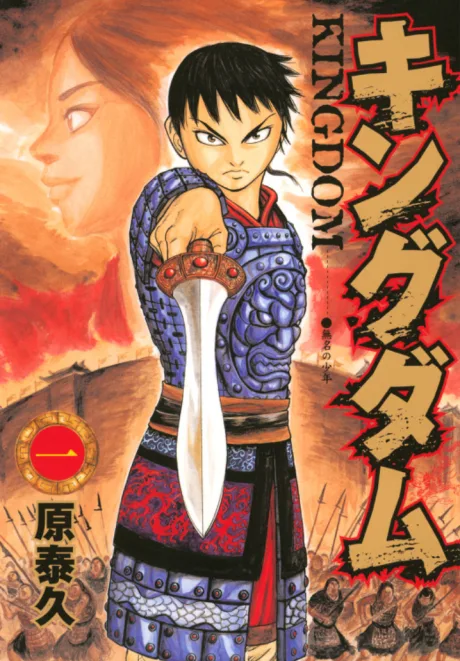
Zheng is drawn as a handsome young man with a slender but increasingly mature build. His appearance closely resembles Piao's, a similarity so strong that the latter can serve effectively as his body double during the coup.
He has straight dark hair and sharp, composed features. His eyes frequently remain calm even during political confrontation, reinforcing the authority he projects despite his youth.
Royal clothing distinguishes him from Xin's rough battlefield appearance. Zheng commonly wears layered Qin court robes, formal garments and ceremonial clothing appropriate to the king.
He is also capable of wearing armor when circumstances require him to operate near active fighting. His battlefield presentation remains less physically imposing than that of Qin's major generals because his role centers on leadership rather than personal martial domination.
As the historical timeline advances, Zheng visibly matures from the young fugitive king introduced during the coup into a more imposing monarch capable of confronting ministers, generals and foreign rulers from a position of established authority.
The resemblance to Piao remains important retrospectively because Xin's first reaction to Zheng is inseparable from seeing the face of his dead childhood companion on a completely different person.
Abilities & Powers
Abilities & Powers
Zheng possesses no supernatural abilities. His principal strengths are political intelligence, leadership, persuasion, endurance and an exceptional capacity to retain clarity under extreme pressure.
His greatest ability is leadership. Zheng can convince people from radically different backgrounds to participate in a common project, including aristocratic officials, former political opponents, mountain tribes and common-born soldiers.
He is an accomplished speaker. Rather than relying exclusively on elaborate rhetoric, Zheng often identifies the fear or desire driving an audience and addresses it directly.
This becomes especially important when commanding civilians or exhausted soldiers. Zheng's authority comes not merely from the crown but from convincing people that resistance remains meaningful even when military circumstances appear hopeless.
He possesses considerable political intelligence. Qin's court contains competing factions whose power comes from economics, bureaucracy, military force, lineage and personal loyalty. Zheng survives by gradually constructing a coalition strong enough to challenge rivals without provoking premature destruction.
His understanding of statecraft develops alongside his struggle with Lü Buwei. Their conflict is not simply a contest for the throne; it places competing beliefs about humanity, government and the purpose of power against each other.
Zheng also demonstrates physical courage. He does not possess Xin's battlefield strength, but he repeatedly places himself in situations where assassination, rebellion or military defeat could personally kill him.
His endurance during the defense of Sai becomes one of his strongest demonstrations of practical leadership. Rather than remaining an abstract monarch far from danger, he places himself among people who believe their city may be destroyed.
Zheng is competent enough with a sword to defend himself when necessary, though personal combat is not his defining talent. His importance lies in creating the political conditions that allow generals and armies to operate.
Named Techniques
Named Techniques
Zheng does not possess formally named martial techniques. His recurring methods are forms of political and military leadership rather than special attacks.
Royal Persuasion describes his ability to convert political authority into personal commitment. Zheng rarely succeeds through title alone; his strongest speeches persuade listeners that their interests or ideals overlap with his own.
Coalition Building allows him to unite factions that would not naturally cooperate. His alliance with the mountain tribes is the earliest major example.
Crisis Leadership becomes especially important during rebellions and invasions. Zheng maintains decision-making ability while people around him are panicking or considering surrender.
Political Consolidation is his long-term method of weakening hostile court factions while expanding the influence of loyal ministers.
Frontline Morale Command places Zheng physically among endangered troops or civilians so that his presence itself becomes evidence that the struggle has not been abandoned.
Relationships
Relationships
Xin Li becomes Zheng's closest connection to the military generation that will carry the unification wars. Ying Zheng first meets Xin Li because Piao has been used as the king's body double, creating immediate hostility: Xin knows that his friend's involvement with the palace caused the circumstances leading to his death.
Their partnership develops during the struggle to retake the Qin capital. Xin Li sees that Ying Zheng is not simply a sheltered noble using commoners for protection, while Zheng recognizes extraordinary potential in the former servant.
They eventually commit themselves to complementary ambitions. Ying Zheng intends to unify China; Xin Li intends to become the Great General who helps make that unification possible. The official anime describes them as mutually trusting friends whose bond begins with the coup surrounding the throne.
Piao becomes connected to Zheng because of their extraordinary physical resemblance. Piao is recruited to serve as Ying Zheng's double during the coup, despite having grown up as a servant alongside Xin.
[Piao's death protects Ying Zheng long enough for the real king to survive. Zheng subsequently respects the promise and ambition Piao shared with Xin, making the dead boy an enduring link between them.](#spoiler)
He Liao Diao joins Zheng and Xin during the struggle for the capital. He Liao Diao's background is almost completely outside royal society, yet Ying Zheng comes to trust her as part of the original group formed during the coup.
Lord Changwen is one of Zheng's earliest and most reliable political supporters. The official Young Jump character material describes Lord Changwen as having developed from Zheng's educator into his closest aide.
Yang Duan He begins as the ruler of mountain peoples who have strong historical reasons to distrust Qin. Ying Zheng personally seeks Yang Duan He's aid during the coup and convinces her that cooperation can restore an older vision of coexistence between Qin and the mountains.
The alliance becomes far more significant than a temporary military arrangement. Yang Duan He and her armies repeatedly support Qin in later wars, while Zheng recognizes her as an independent sovereign rather than merely a subordinate tribal commander.
Cheng Jiao is Zheng's younger half-brother and earliest major internal opponent. Cheng Jiao initially despises people of low birth and considers himself more suited to rule Qin than Ying Zheng.
Their relationship changes significantly after the failed coup. Cheng Jiao gradually becomes politically useful to his brother and develops a more mature understanding of Qin's internal struggle.
[Later political events transform Cheng Jiao from a former usurper into one of Zheng's allies, making his development one of the clearest examples of Zheng converting an old enemy into part of his governing coalition.](#spoiler)
Lü Buwei is Zheng's principal political rival during much of the first half of the story. Lü Buwei possesses wealth, ministers, military allies and influence extensive enough to limit what the king can actually command.
Their conflict is ideological as well as practical. Ying Zheng argues that humanity can be directed toward a shared political future, while Lü Buwei places greater faith in material desire, commerce and the forces created by human greed.
Zheng eventually defeats Lü Buwei's faction politically and obtains the practical authority necessary to begin pursuing unification directly. The official anime profile describes reclaiming state power from Lü Buwei as the point from which Zheng can finally move fully toward his project.
Lord Changping begins within Lü Buwei's political structure but is also Qin's supreme military commander and one of its greatest strategic minds. Ying Zheng recognizes that Lord Changping's military expertise is indispensable to the wars he intends to wage.
Li Si is another major political and legal figure whose abilities become important to Zheng's vision of governing territories beyond Qin itself. Unification requires more than defeating armies; Ying Zheng needs systems capable of administering populations with different customs and laws.
Queen Mother is Zheng's mother, and their relationship is among the most painful in his personal life. Ying Zheng's childhood in Zhao is inseparable from Queen Mother's own suffering and resentment.
Their experiences affect them differently. Zheng eventually develops the belief that hatred can be overcome through human connection, while his mother becomes increasingly consumed by the damage done to her.
The conflict surrounding the Queen Mother's political faction and the state of Ai eventually forces mother and son onto opposing sides of a rebellion against Qin.
Zi Xia is one of the most important people in Zheng's childhood. Zi Xia helps bring the young Ying Zheng out of Zhao and treats him with compassion when he has become almost numb to both kindness and pain.
[Zi Xia's sacrifice during Zheng's escape becomes foundational to his belief that people contain a "light" capable of connecting them despite cruelty and hatred.](#spoiler)
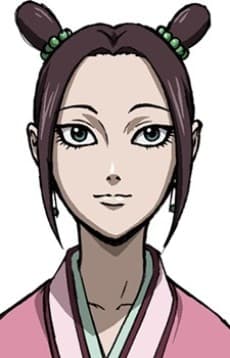
Xiang is a palace woman who becomes personally close to Zheng. Xiang initially approaches the king with nervous reverence but gradually develops a genuine affectionate relationship with him.
[Ying Zheng and Xiang have a daughter, Li, giving Zheng a personal connection to the future generation whose lives his unification project is intended to change.](#spoiler) The official Young Jump character listing identifies Xiang as Zheng's consort and Li as their daughter.
Li Mu is Zheng's greatest strategic obstacle among the rival states for much of Qin's expansion. Ying Zheng recognizes Li Mu as more than another enemy general: his ability to preserve Zhao directly threatens the timetable and viability of unification.
Wang Ben and Meng Tian receive Zheng's attention alongside Xin as representatives of Qin's next military generation. The official anime profile specifically names both as young commanders in whom Zheng places major expectations.
Story Role
Story Role
Zheng provides the political half of Kingdom's central narrative. Xin's story follows the battlefield path toward becoming a Great General, while Zheng's follows the political path toward becoming a ruler capable of directing wars of unification.
The opening coup establishes how limited royal authority can be. Zheng possesses the title of king but is forced into hiding because factions within his own state control enough military force to overthrow him.
His alliance with Xin therefore begins before either has meaningful institutional power. The relationship grows from shared danger rather than a conventional king-and-general hierarchy.
Reclaiming the capital gives Zheng his throne back but does not solve the larger problem. Lü Buwei's faction remains so powerful that many of Qin's most important decisions cannot be made independently by the king.
The conflict with Lü Buwei consequently develops alongside Xin's rise through the army. While Xin fights foreign states, Zheng wages a different kind of war inside the Qin court.
The Coalition invasion pulls the two paths together. Qin faces destruction from multiple states simultaneously, and Zheng can no longer remain only a palace ruler.
At Sai, his role changes from political symbol to battlefield leader. He persuades civilians with little military experience to defend their city against an army whose arrival appears to make Qin's defeat inevitable.
The defense demonstrates one of the story's central ideas about kingship: Zheng's power is strongest when people follow because they accept his purpose rather than merely fearing legal authority.
After the Coalition War, Qin's internal political struggle intensifies. The conflict involving Cheng Jiao, the Queen Mother and Lü Buwei determines whether Zheng will ever possess enough domestic authority to launch a sustained campaign of conquest.
The official Weekly Young Jump profile describes Zheng as a young king dreaming of uniting China and notes that defeating Lü Buwei's faction and resolving the conflict surrounding the inner palace finally allow him to begin moving directly toward that goal.
Once political control is consolidated, Zheng's story shifts toward the practical requirements of unification. He needs generals, administrative systems, laws, supplies and strategies capable of absorbing entire states rather than simply winning individual battles.
Manga material beyond the most recently widely adapted anime moves increasingly into the actual wars of state conquest. Zheng is therefore no longer fighting primarily for the right to rule Qin; he is using that authority to test whether his theory of unification can survive contact with the political and human realities of conquered territories.
Character Development
Character Development
Zheng begins as a ruler who already possesses an extraordinary goal but lacks the power necessary to pursue it. His development is therefore less about discovering ambition than learning what kind of king can legitimately carry it.
His childhood in Zhao gives that ambition personal context. Zheng knows what interstate hatred looks like from the perspective of civilians because he was once the child onto whom that hatred was directed.
Zi Xia's kindness prevents that experience from turning entirely into bitterness. The idea that humans possess a capacity for connection becomes central to the political philosophy he later defends.
The capital rebellion teaches him that kingship depends on alliances. Royal blood means little when someone else controls the palace guards and court officials.
Yang Duan He's support expands that lesson. Zheng succeeds by treating people Qin once alienated as potential partners rather than assuming the state can dominate everyone through inherited authority.
Xin becomes another test of the same belief. A former servant with no family prestige becomes one of the people Zheng trusts most heavily with Qin's future wars.
The rivalry with Lü Buwei forces Zheng to articulate why unification should exist at all. It is not enough to say that conquest will make Qin larger; he must defend the idea that massive present violence can produce a political order capable of ending recurrent war.
His experience at Sai gives that philosophy a human scale. Zheng cannot simply command the population to die. He must persuade ordinary people that their individual resistance matters to the survival of everyone beyond the walls.
The internal conflict involving his mother is more difficult because political reasoning cannot erase personal history. Zheng must act as king while confronting someone whose suffering is partly connected to the same royal system he represents.
By the time Zheng secures full political authority, he has moved from surviving other people's factions to creating the governing structure that will support his own project. That victory therefore marks the beginning rather than the completion of his central ambition.
Later campaigns increasingly test whether the compassionate theory of humanity Zheng developed from Zi Xia can coexist with conquest. Every state Qin attacks contains civilians who may experience Zheng not as a visionary peacemaker but as the ruler whose armies destroyed their homeland.
Etymology
Etymology
The character is based on the historical Ying Zheng (嬴政), king of Qin and the ruler who would historically become Qin Shi Huang, the first emperor of a unified China. The official anime explicitly identifies its character as the 31st King of Qin and the young man who later becomes the First Emperor.
His surname or clan name Ying is written 嬴, while Zheng is written 政. The latter character is associated with government, administration and political rule.
Japanese readings reverse the pronunciation familiar to Mandarin-speaking audiences: 嬴政 is read Ei Sei in Japanese, which is why English-language anime discussions may use either Ei Sei or Ying Zheng depending on translation conventions.
"Zheng Ying" reverses the conventional Chinese name order. The historically standard English rendering is Ying Zheng, with Ying preceding the personal name Zheng.
The historical title Qin Shi Huang means the First August Emperor of Qin. Because reaching that title constitutes the ultimate historical outcome toward which the series is moving, it is better treated as historical context than as an early-series Quick Fact.
Trivia
Trivia
-
The official anime identifies Zheng as the 31st King of Qin.
-
Jun Fukuyama voices Zheng throughout the Japanese television anime.
-
Piao is able to serve as Zheng's body double because their faces are almost identical.
-
Zheng and Xin belong to the original group formed during the coup alongside He Liao Diao; later official character material still treats their bond as foundational to the series.
-
The official anime describes Zheng as a ruler of such unusual talent that he is regarded within the story as a king of exceptional rarity.
-
His project of unification is explicitly framed as an attempt to remove the borders dividing the states and end the recurring Warring States conflict.
-
The character is a heavily fictionalized interpretation of the historical Ying Zheng rather than an attempt to reproduce every event or personality trait attributed to the real ruler.
-
Zheng was included among the candidates in Weekly Young Jump's first official Kingdom character popularity election.
In Other Media
In Other Media
Zheng is one of the principal characters of the television adaptation of Kingdom. Jun Fukuyama voices him in Japanese, and the role continues across the changing visual and production styles of the anime's successive seasons.
The first season adapts his flight from the Qin capital, meeting with Xin, alliance with the mountain people and struggle against Cheng Jiao before shifting increasingly toward Xin's early military career.
Later seasons return repeatedly to Zheng's political battles. While Xin fights foreign campaigns, the anime follows the king's struggle against Lü Buwei and other forces contesting control of Qin.
The Coalition storyline gives Zheng one of his largest animated roles outside the palace. His arrival at Sai and leadership of the city's population place him directly within the military crisis instead of separating royal politics from battlefield events.
The fourth season places particular emphasis on Qin's internal politics after the Coalition invasion. The official anime material describes this portion as a major confrontation between Zheng and Lü Buwei, with creator Yasuhisa Hara characterizing it as a peak of the story's first half.
The later anime portrays Zheng after he has matured substantially from the fugitive king of the opening episodes. His attention increasingly turns toward the young commanders who will be required for Qin's external expansion.
Zheng is portrayed by Ryo Yoshizawa in the live-action Kingdom film series. The adaptation places particular emphasis on the contrast between his controlled royal demeanor and Xin's impulsive personality.
The first live-action film focuses heavily on the coup storyline, making Zheng one of its central protagonists alongside Xin. Later films expand into Qin's external wars while retaining his political role behind the armies.
His historical significance also makes him one of the most recognizable figures in Kingdom adaptations and promotional material, where he is often presented alongside Xin as the second central axis of the narrative.
Reception
Reception
Zheng's characterization provides a counterweight to the military spectacle that dominates much of Kingdom. Battles determine whether Qin can conquer territory, but Zheng's storyline asks why those wars are being fought and what political system is supposed to follow them.
His relationship with Xin is central to that structure. One begins at the bottom of Qin society while the other begins at its nominal summit, yet neither initially possesses the power required to achieve his dream.
The contrast allows their advancement to unfold in parallel. Xin accumulates battlefield rank; Zheng accumulates actual political authority. Each becomes more capable of carrying out the promise made during their youth.
Zheng's childhood in Zhao also makes his pursuit of conquest deliberately complicated. He knows personally that military victories create civilian hatred, yet chooses to launch the largest campaign of conquest in the setting because he believes temporary peace cannot end the cycle.
His ideological conflict with Lü Buwei is therefore one of his defining storylines. The confrontation treats politics as more than a struggle between a hero and corrupt minister; both men propose competing answers to what motivates human beings and how a state should control conflict.
Sai expands his appeal beyond court politics by demonstrating leadership under immediate physical danger. The king who speaks about unification from a throne is required to convince exhausted civilians to defend their homes when no conventional military solution appears available.
His historical identity adds an unavoidable second layer to audience interpretation. Readers know that the real Ying Zheng is associated with one of the most consequential political transformations in Chinese history, while the manga presents the man moving toward that outcome as a young ruler shaped by friendship, trauma and idealism.
As the manga advances deeper into Qin's conquest phase, the tension within his character becomes more pronounced. Zheng insists that humanity possesses a shared light capable of transcending inherited hatred, yet his chosen method for reaching that future requires armies to destroy the states whose people he hopes eventually to unite.
That contradiction does not simply undermine his dream; it defines the standard by which the rest of his story can be judged. The closer Qin moves toward unification, the more Zheng must demonstrate that he is building something meaningfully different from another temporary empire created through superior military force.
Sources
Facts on this page are checked against official publisher and creator sources. Spotted an error? Tell us.
Related Characters
 SUPPORTING
Piao
KingdomHe grew up as a slave together with his best friend and fellow orphan, Xin. When Xin first arrives at the village head's home, Piao befriends him and gives him the dream of becomin
 MAIN
MAINXin Li
KingdomThe hero of the story. A war orphan who aims to become the "World's Greatest General". He later meets Zheng Ying, the future first king that would rule all of China.
 SUPPORTING
Xiang
KingdomA palace maid who is from a poor merchant family in the countryside. Genuinely devoted to Zheng. wikipedia.org