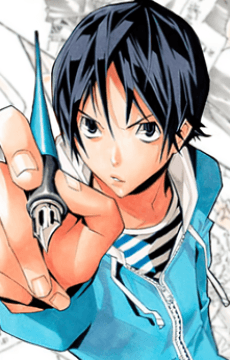
Appears In
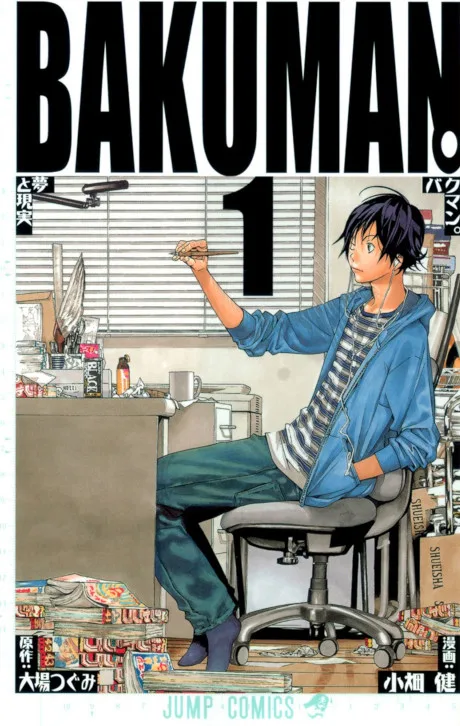
Quick Facts
| Gender | Male |
| Age | 14-24 |
| Also known as | Saiko |
| Role | MAIN |
| Series | Bakuman。 |
| Height | 171 cm |
| Birthday | February 18 |
| Blood Type | B |
| Weight | 58 kg |
| Zodiac | Aquarius |
| Voice Actor (JP) | Atsushi Abe |
| Voice Actor (EN) | Michael Sinterniklaas |
| Favorite Manga | Ashita no Joe |
| Likes | Miho Azuki |
| Hobbies | Drawing manga |
| Affiliation | Weekly Shōnen Jump |
| Aliases | Saiko; Ashirogi Muto |
| Voice | 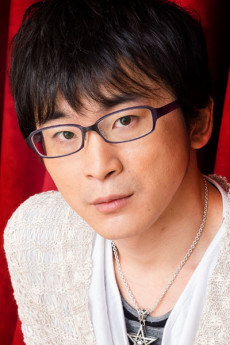 Atsushi Abe 阿部敦 |
Contents
Personality
Personality
Mashiro begins as a talented but pessimistic teenager who has largely abandoned the idea of pursuing an unconventional career. His skepticism about manga comes from seeing what the profession did to his uncle, Nobuhiro Mashiro, a professional mangaka who worked under the pen name Tarō Kawaguchi. Although Mashiro admired him as a child, his uncle's struggles taught him that talent and effort do not guarantee success.
Once he commits to manga, however, Mashiro proves extraordinarily stubborn. He approaches publication as both an artistic ambition and a demanding profession, spending long hours drawing, studying successful series, examining reader surveys, and reworking pages whenever he believes the result is inadequate. His perfectionism frequently turns inward: even as his technical ability improves, he remains dissatisfied with his own artwork and compares himself closely with stronger artists.
Mashiro also has a fiercely competitive side. Eiji Niizuma's extraordinary speed and artistic instincts give him a standard against which to measure himself, and Mashiro does not want success handed to Ashirogi Muto through favorable circumstances. He wants their manga to survive because readers genuinely prefer it.
His romantic outlook is similarly stubborn and idealistic. The promise with Azuki is deliberately difficult: rather than immediately becoming an ordinary couple, they agree to pursue their dreams separately and marry after succeeding. The arrangement sometimes frustrates people around them, but Mashiro treats keeping that promise as seriously as becoming a professional artist.
Abilities & Powers
Abilities & Powers
Mashiro's primary talent is manga illustration. He demonstrated unusual artistic ability from childhood and received recognition for his drawing while still young. His strengths lie in detailed character artwork, serious imagery, dramatic composition, and the ability to translate Takagi's scripts and storyboards into finished manga pages.
His earliest weakness is that technically proficient artwork does not automatically make compelling manga. Under the guidance of editor Akira Hattori, Mashiro learns that manga requires visual storytelling rather than simply attractive individual drawings. He develops greater control over panel composition, pacing, facial expression, movement, backgrounds, and the deliberate allocation of detail according to a scene's importance.
Speed becomes another essential skill. Weekly serialization requires completed chapters on unforgiving deadlines, and Mashiro develops exceptional endurance as a draftsman. His willingness to work through the night is one of his defining habits, though the series repeatedly presents the physical cost of such a schedule rather than treating limitless overwork as harmless.
Mashiro is also highly knowledgeable about manga production. His childhood exposure to his uncle's studio gives him an early understanding of manuscripts, assistants, editors, serialization, rankings, and the competitive structure of Weekly Shōnen Jump. As his career advances, he becomes increasingly capable of judging whether Takagi's concepts can be expressed effectively on the page and contributes substantial visual ideas of his own.
His partnership with Takagi works because their abilities are complementary rather than interchangeable. Takagi develops premises, plots, dialogue, and names, while Mashiro specializes in turning those concepts into polished finished pages. Over time, both learn to adjust their work around the other's strengths rather than maintaining a rigid writer-artist division.
Story Role
Story Role
Mashiro's path toward manga begins when he leaves a notebook containing a drawing of Azuki at school. Takagi retrieves it, recognizes his ability, and proposes that they become manga creators together. Mashiro initially refuses because he understands how uncertain a mangaka's career can be, but Takagi's intervention brings the two boys to Azuki's home and transforms the proposal into something much more personal.
After learning that Azuki dreams of becoming a voice actress, Mashiro impulsively proposes an agreement: if he and Takagi create a manga successful enough to become an anime, and Azuki earns the role of its heroine, he and Azuki will marry. She accepts, giving Mashiro a concrete reason to return to the dream he had abandoned.
Mashiro and Takagi subsequently use the combined pen name Ashirogi Muto and begin submitting work to Weekly Shōnen Jump. Their early attempts teach them the difference between producing an interesting concept and creating something capable of surviving professional serialization. Hattori becomes particularly important in shaping their understanding of the industry.
Their career brings them into competition with Niizuma, whom they quickly recognize as both a rival and an extraordinary manga creator. Ashirogi Muto eventually earns serialization with Detective Trap, forcing Mashiro to confront the workload he once watched consume his uncle. Mashiro's determination to continue drawing despite serious illness eventually leads to hospitalization and an enforced hiatus, making the danger of his work habits impossible for either him or the editorial department to ignore.
After Detective Trap ends, Mashiro and Takagi endure further setbacks and serializations while trying to create a work capable of genuinely defeating Niizuma in the reader rankings. Their eventual major success, Reversi, becomes the series through which the long-standing promise between Mashiro and Azuki can finally be fulfilled.
An anime adaptation of Reversi is approved, and Azuki wins the role of its heroine through an audition rather than preferential treatment. With both sides of their childhood promise achieved, Mashiro proposes to her properly, and the two finally move toward the marriage they had postponed while pursuing their careers.
Relationships
Relationships
Akito Takagi is Mashiro's creative partner and closest professional companion. Akito Takagi discovers his artistic ability, persuades him to pursue manga, and writes the stories that Mashiro illustrates. Mashiro calls him "Shūjin," while Takagi calls him "Saikō." Their disagreements can be serious because both regard Ashirogi Muto as their life's work, but neither could produce the same manga independently.
Miho Azuki is Mashiro's childhood crush and romantic partner. Their promise to marry after achieving their respective dreams becomes one of his strongest motivations. Miho Azuki pursues voice acting while Mashiro pursues manga, and both resist shortcuts that would make their eventual success feel unearned. After Reversi receives an anime and Azuki earns its heroine role, their original promise is fulfilled and Mashiro proposes to her.
Nobuhiro Mashiro, Mashiro's uncle, is the professional mangaka who first inspires his fascination with the medium. Known professionally as Tarō Kawaguchi, Nobuhiro Mashiro's career also teaches Mashiro how harsh the profession can be. His death before the beginning of the main story, following years of exhausting work, is one reason Mashiro initially abandons his childhood ambition.
Eiji Niizuma is Mashiro and Takagi's most important professional rival. Mashiro is frustrated by Eiji Niizuma's seemingly effortless drawing speed and instincts, yet also respects him enormously. Their rivalry becomes mutually productive: each wants to create manga capable of forcing the other to improve.
Akira Hattori is the editor who recognizes Ashirogi Muto's potential and teaches the pair how to think professionally about manga. Akira Hattori's criticism can be demanding, but Mashiro comes to trust his editorial judgment and strategic understanding of Jump.
Kaya Miyoshi becomes a close friend and supporter of both creators through her relationship with Takagi and friendship with Azuki. Kaya Miyoshi frequently handles practical matters around their work and challenges the extreme behavior the two sometimes normalize.
Shinta Fukuda, Kazuya Hiramaru, and Kō Aoki become fellow manga creators within Mashiro's professional circle. Although they compete for reader support in the same magazine, their relationships also involve collaboration, advice, and solidarity when editorial decisions affect creators collectively.
Related Characters
 SUPPORTING
Nobuhiro Mashiro
Bakuman。Moritaka's uncle. He died due to overwork, but Moritaka thought he committed suicide until he saw his work. He uses his pen name Taro Kawaguchi for his works. He liked Miho's mothe
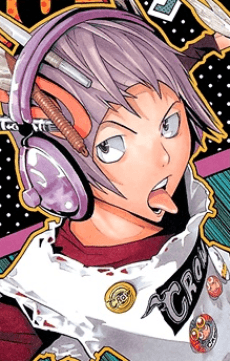 SUPPORTING
Eiji Niizuma
Bakuman。Eiji Nizuma is a high school genius mangaka who has been drawing ever since he was young. Moritaka Mashiro and Akito Takagi consider him their rival. He was supposed to serialize a
 SUPPORTING
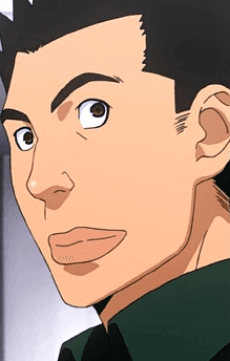
Akira Hattori
Bakuman。One of the editors of the Weekly Shōnen Jump. He is a thin, odd-looking man with a wide-eyed gaze and distinctive lips. Hattori Akira was Akito Takagi's and Moritaka Mashiro's edit
 MAIN
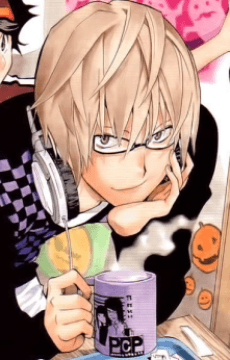
MAINAkito Takagi
Bakuman。Akito is a young 14-year-old who gets some of the best grades in the country and is an award-winning writer. With these brains and writing skills, you would think he would have a
 SUPPORTING
Miho Azuki
Bakuman。Azuki is Mashiro's classmate. Her dream is to be a voice actor. She agreed to marry Mashiro when both of their dreams come true. However, she also told him that in the mean time, t
 SUPPORTING
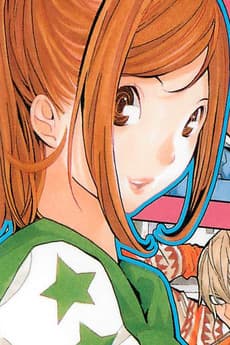
Kaya Miyoshi
Bakuman。Miho's best friend, who is in 9th year, class 2 in the same school as Miho and Mashiro. Though being her best friend, she doesn't know that Miho likes Mashiro. She confronts Takagi
 SUPPORTING
Shinta Fukuda
Bakuman。Fukuda is a main supporting character in Bakuman and the founder of Team Fukuda. He left home after high school and worked as an assistant to Eiji Niizuma for Crow, along with Mash
 SUPPORTING
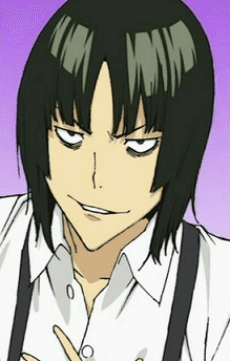
Kazuya Hiramaru
Bakuman。Hiramaru was a salaryman that hated working. On hearing Takagi and Mashiro talking about drawing manga on the subway and finding an abandoned copy of Jack, he quit his job to be a