Appears In
Quick Facts
| Gender | Male |
| Age | 14-24 |
| Also known as | Shujin |
| Role | MAIN |
| Series | Bakuman。 |
| Height | 175 cm |
| Birthday | January 25 |
| Blood Type | B |
| Weight | 66 kg |
| Hair Color | Light brown |
| Zodiac | Aquarius |
| Voice Actor (JP) | Satoshi Hino |
| Voice Actor (EN) | Kevin T. Collins |
| Favorite Manga | Dragon Ball |
| Likes | Reading manga |
| Dislikes | Boring lessons |
| Hobbies | Observing people |
| Affiliation | Weekly Shōnen Jump |
| Aliases | Shujin; Ashirogi Muto |
| Voice |  Satoshi Hino 日野聡 |
Contents
Personality
Personality
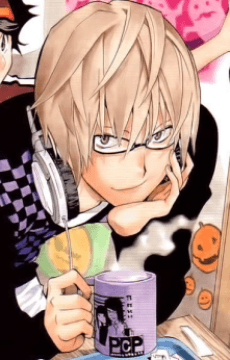
Takagi is intelligent, ambitious, analytical, and unusually confident about abandoning the conventional future his academic performance could provide. He understands that his grades could lead him toward an elite school and stable career, but finds that path unappealing. Manga offers the possibility of creating something himself, and he is prepared to accept the considerable risk involved.
Unlike Mashiro, Takagi enters the partnership without the same intimate knowledge of professional manga production. His strength is conceptual. He observes people carefully, analyzes their motivations, and enjoys finding ways to manipulate expectations. These habits naturally influence his scripts, which frequently depend on strategy, deduction, psychological conflict, or unusual central premises.
Takagi is also highly competitive. Poor reader rankings or an unsuccessful concept send him back to analysis rather than convincing him to abandon the profession. At times, however, his intelligence works against him: stories can become too calculated, too dialogue-heavy, or insufficiently accessible to the broad readership expected of a major shōnen magazine.
Socially, Takagi is much more outgoing than Mashiro. He readily negotiates with editors and fellow creators and often serves as the public-facing half of Ashirogi Muto. He can nevertheless be impulsive, particularly where relationships are concerned, and his attempts to solve personal problems through logic do not always work as cleanly as his manga plots.
Abilities & Powers
Abilities & Powers
Takagi is an exceptionally gifted writer and student. At the beginning of the series, his academic results place him among the strongest students of his age, demonstrating considerable memory, analytical reasoning, and study ability. His decision to pursue manga is therefore not caused by a lack of conventional opportunities.
As Ashirogi Muto's writer, Takagi develops story premises, character motivations, dialogue, plot twists, and chapter structures before Mashiro turns them into finished pages. He is particularly comfortable with serious or intellectually driven concepts. Works built around deduction, criminal schemes, games of strategy, or clashes between intelligent characters suit him naturally.
His habit of observing people becomes a practical writing tool. Takagi studies conversations and personality traits and can incorporate recognizable behavior into fictional characters. His character-book profile identifies observing people as a hobby and reading people's intentions as a particular strength.
Writing for Weekly Shōnen Jump nevertheless forces him beyond his natural preferences. Early criticism teaches him that a clever concept is not enough: chapters require momentum, appealing characters, clear hooks, and reasons for readers to return each week. Takagi gradually becomes better at balancing carefully planned plots with the immediate entertainment demands of serialized manga.
He is also a capable long-term planner. Once Ashirogi Muto is serialized, Takagi must think several chapters ahead while simultaneously responding to rankings, editorial feedback, and unexpected changes. His ability to restructure stories without losing their central premise becomes increasingly important as deadlines tighten.
Story Role
Story Role
Takagi initiates the partnership that drives the story. After finding Mashiro's forgotten notebook and seeing his drawings, he concludes that Mashiro possesses the artistic ability he lacks. Rather than simply praising him, Takagi proposes a division of labor modeled on manga teams in which one creator writes and another draws.
Mashiro initially refuses. Takagi nevertheless recognizes that his classmate still cares about manga and also knows about Mashiro's feelings for Miho Azuki. His decision to take Mashiro to Azuki's home leads to the agreement that transforms their vague ambition into a concrete objective.
The two adopt the pen name Ashirogi Muto and begin creating manuscripts while still in school. Takagi's early stories reveal both his potential and his limitations: editors recognize his intelligence, but professional manga requires him to learn how to entertain rather than merely demonstrate cleverness.
Their contact with Akira Hattori becomes a major stage in Takagi's education as a writer. Hattori helps the pair analyze Jump, reader demographics, serialization strategy, and their own strengths rather than blindly imitating successful battle manga.
As Ashirogi Muto progresses through one-shots and serialization, Takagi assumes increasing responsibility for sustaining stories over months or years. Detective Trap gives him his first major opportunity to prove that his writing can support a weekly series. Its cancellation after Mashiro's illness and subsequent publication problems forces the pair to rebuild their career rather than simply resuming where they left off.
Takagi later experiments with different approaches, including work that pushes him outside his preferred serious storytelling. His experiences eventually help Ashirogi Muto develop Perfect Crime Party and, later, Reversi, the latter becoming the work through which they can compete directly with Niizuma at the highest level.
By the conclusion, Takagi and Mashiro have achieved the creative partnership Takagi imagined when they were fourteen: a professional writer-artist team capable of producing a major hit on their own terms.
Relationships
Relationships
Moritaka Mashiro is Takagi's creative partner and one of the most important people in his life. Takagi recognizes Moritaka Mashiro's drawing ability before Mashiro himself is willing to build a future around it. He calls Mashiro "Saikō," while Mashiro calls him "Shūjin." Their complementary talents form Ashirogi Muto, but their partnership survives because both are willing to criticize and challenge the other's work.
Kaya Miyoshi begins as Miho Azuki's close friend and becomes increasingly involved with Takagi. Their personalities contrast sharply: Takagi tends to intellectualize situations, while Kaya Miyoshi is more emotionally direct. Their relationship develops into a serious romance, and they eventually marry while Takagi is still pursuing his manga career.
Miho Azuki is important to Takagi both as Miyoshi's friend and as the person whose promise with Mashiro helps launch Ashirogi Muto. Miho Azuki's voice-acting ambition parallels the professional goals of the manga team, and Takagi respects the determination with which she and Mashiro maintain their agreement.
Akira Hattori becomes Takagi's most important early editorial mentor. Akira Hattori understands that Takagi's intelligence can produce unusual manga but repeatedly pushes him to consider what readers actually find entertaining rather than writing only what seems clever on paper.
Eiji Niizuma is Ashirogi Muto's principal rival and a writer-artist whose intuitive creativity contrasts strongly with Takagi's deliberate planning. Takagi studies Eiji Niizuma's success carefully, and their competition pushes him toward stories capable of competing with a creator who seems naturally suited to weekly manga.
Kō Aoki becomes professionally connected to Takagi when circumstances lead him to offer advice about writing male characters. Their interaction causes misunderstandings in his personal life but also demonstrates his willingness to exchange creative knowledge with a nominal competitor.
Shun Shiratori later works with Takagi on manga outside his normal partnership with Mashiro. The experience gives Takagi another perspective on collaboration and on the differences between writing for Mashiro's established artistic strengths and developing material around another artist.
Shinta Fukuda and Kazuya Hiramaru are fellow creators and competitors within Takagi's professional circle. The group frequently competes for the same reader votes while also sharing information and supporting one another against problems arising from the demanding manga industry.
Related Characters
 SUPPORTING
Miho Azuki
Bakuman。Azuki is Mashiro's classmate. Her dream is to be a voice actor. She agreed to marry Mashiro when both of their dreams come true. However, she also told him that in the mean time, t
 SUPPORTING
Akira Hattori
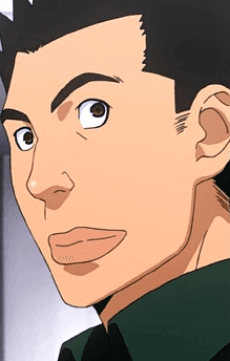
Bakuman。One of the editors of the Weekly Shōnen Jump. He is a thin, odd-looking man with a wide-eyed gaze and distinctive lips. Hattori Akira was Akito Takagi's and Moritaka Mashiro's edit
 MAIN
MAINMoritaka Mashiro
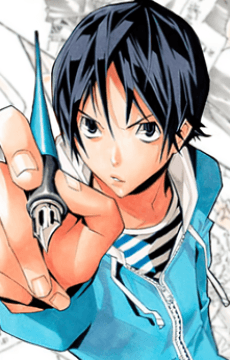
Bakuman。Mashiro is a 14-year-old boy who doesn't know what to do with his life. One day his classmate Takagi finds out about his amazing drawing skills and asks him to help create a manga.
 SUPPORTING
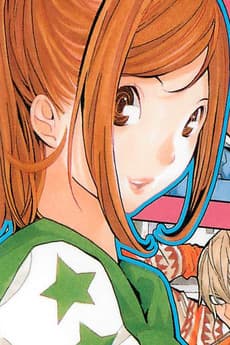
Kaya Miyoshi
Bakuman。Miho's best friend, who is in 9th year, class 2 in the same school as Miho and Mashiro. Though being her best friend, she doesn't know that Miho likes Mashiro. She confronts Takagi
 SUPPORTING
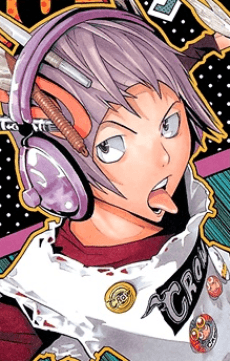
Eiji Niizuma
Bakuman。Eiji Nizuma is a high school genius mangaka who has been drawing ever since he was young. Moritaka Mashiro and Akito Takagi consider him their rival. He was supposed to serialize a
 SUPPORTING
Shun Shiratori
Bakuman。Shiratori Shun is an assistant for Ashirogi Muto's Perfect Crime Party and the mangaka of Rabuta & Peace. Shiratori comes from a wealthy family and has a sister. He applied to
 SUPPORTING
Shinta Fukuda
Bakuman。Fukuda is a main supporting character in Bakuman and the founder of Team Fukuda. He left home after high school and worked as an assistant to Eiji Niizuma for Crow, along with Mash
 SUPPORTING
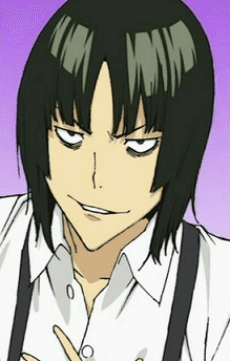
Kazuya Hiramaru
Bakuman。Hiramaru was a salaryman that hated working. On hearing Takagi and Mashiro talking about drawing manga on the subway and finding an abandoned copy of Jack, he quit his job to be a